



How to Master Report Writing
Whenever anyone talks about report writing, images of my academy class and the boring report writing segment always comes to mind. What I didn't know then, but know now, is just how important report writing really is.


Whenever anyone talks about report writing, images of my academy class and the boring report writing segment always comes to mind. What I didn't know then, but know now, is just how important report writing really is.
As first responders, we consistently spend more time writing reports than on any other single task in law enforcement. The only thing that beats it is probably driving around patrolling our zones. And yet, beyond the academy, we get very little training in writing, period. We are just supposed to fumble through and learn other aspects of technical writing on our own. Because of this, we need to find a way of writing reports that will serve us well throughout our entire career.
As a report writing instructor, I am motivated by a school seal that belongs to the Philips Academy, better known as Andover. Andover is a prep school that was established during the American Revolution and is one of the oldest boarding schools in the country. The school seal was crafted by Paul Revere and includes the Latin phrase, "Finis Origine Pendet," which translates to the end depends on the beginning. The beginning is the focus of this commentary and it will cover the process of report writing.
Question of Style
We tend to write police reports for economy. "Detailed yet concise" becomes the battle cry for supervisors and at the same time creates a nexus for officers. In reality we write quickly so we can get to the next call only to write again. It's a convoluted method that demands a great deal but also tends to ignore some of the more technical aspects of writing. There is a middle ground, however, where technical writing and economy can meet to serve the greater good.
Experienced instructors know they can't teach report writing. By the time people come into law enforcement they either know how to write or they don't. You can't cram 12 years of school into a 40-hour block of instruction no matter how good you are. But what instructors can teach is a particular style of writing.
Style becomes the structure that helps form a quality report. If you focus elsewhere, and replace it with something more restrictive like an outline, then you miss the point altogether. For example, an outline is too rigid. It restricts your ability to maneuver. Combining elements or sections becomes more difficult. If you have ever worked a busy shift where your reports start to stack up, you understand the need to write in as tight a package as possible.
The problem is it's very hard to write concisely. Thomas Jefferson allegedly wrote a friend once and advised he was sorry for the length of his letter, as he did not have time to write a short one. You no doubt know this to be true from experience. We therefore have to strike a balance between writing a novel like "War and Peace" and Dave Smith persona Buck Savage's infamous short report "Saw drunk arrested same."
Journalistic Approach
We write to inform, not to impress. The first step involves using the journalistic approach. You need to answer who, what, when, where, why, and how. It sounds counterintuitive, but it's where police officers fail the most. And it's not because we don't have the information but because we haven't organized the information we do have to our advantage.
A highly effective report writing structure goes like this: how the officer got the call, what the complainant/witness/victim said, what the officer observed, and what the officer did. Adhering to this structure allows any first responder to tackle any initial investigation with ease.[PAGEBREAK]
How You Got the Call
We take for granted the numbers of ways we can get a call for service. We can be dispatched or flagged down. It can be a walk-up, or a follow-up. It's important to state how you got the call even if the investigation proves it to be something else. If it's in progress, you would put that information here as well, up until the situation was under control. Once calmed down, you go on to the next section. For example, if you drive up to find two males fighting, you can't begin your interviews until they get separated, calmed down, and checked for injuries.
What They Said
The next portion involves interviewing any witnesses, victims, complainants, and possible suspects. You summarize and paraphrase each of their testimonies. You should use quotes when they directly apply to the crime or violation. Don't be shy about vulgar language either. If they said it, you can quote it. You are just documenting their version and not necessarily what actually happened.
What You Observed
After your interviews, then write down what you observed. If the house has been ransacked, describe the scene in detail. If your victim has been hit, describe the injuries. If the victim swears someone kicked in the front door but you find no evidence to support the claim, you need to write that down too: "I found no evidence to corroborate that the door was kicked in."
What You Did
The last portion covers what you did while investigating the incident. This includes processing the scene, conducting a neighborhood canvass, or any other action material to the investigation. Minor things like handing out an incident number needn't be documented unless your agency's policies require it. Since this constitutes the last portion, also include a closing statement to let the reader know you are done. It can be as simple as, "The report was forwarded for further review."
General Tips
Don't answer a question and by doing so create a new one. A very common mistake occurs when someone writes, "I processed the scene with negative results." It begs the question, "Where and what did you process?"
If you have multiple witnesses, combine the like testimony and discuss the differences. For example, "Mr. Jones, Mr. Hernandez, and Mr. Smith all agreed that the vehicle was a brown compact. However, Mr. Johnson stated it was a green mid-sized car." This saves you from writing the same thing over and over again.
Work on sentence structure and cut out excessive words whenever possible. Never use seven when five will do. For example, "The victim had no suspect information and desired prosecution," is short and sweet.
You should also convert elements of the crime into sentences. Your report has to prove what you labeled it. "The victim stated that someone without consent entered her home and stole $500 worth of her property." In Florida that describes burglary, without having added any extra fluff.
Putting it All Together
Since style creates structure without locking you into an outline, you can easily combine any section. Here is a simple illustration: "I was dispatched to a burglary over with. Upon my arrival, I met with the victim, Mrs. Jones. She stated someone without consent broke into her home and stole $6,000 worth of jewelry." You have easily combined how you got the call and the elements of the crime, and set yourself up for the next part of the report, which is what the victim said. You even informed the reader that it was forced entry without writing a separate sentence.
Sometimes you'll write a long narrative and a reader can get lost in the details. Using a short summary paragraph at the end helps tie things up nicely. It highlights the totality of the situation and the outcome.
This type of structure helps new officers remove some of their anxiety. For first responders, the length of our reports works in reverse; the more complicated the call the easier the report. For example, most recruits are afraid of handling a homicide. In reality it's one of the easiest reports to write. You arrive, you secure, you contain, and then you call out detectives. Upon their arrival you turn everything over to them (assuming your agency works that way). Your biggest role becomes securing the scene. Your report is very short while a detective's may near book length.
On the flip side, a simple incident like someone hitting someone else might seem like it takes forever to write. This is especially true if you have multiple witnesses and victims on both sides. I have seen prosecution packets of this nature almost an inch thick.
Closing Thoughts
Report writing is relatively simple when you follow the structure of how you got the call, what people said, what you observed, and what you did. This particular style of report writing allows you to tackle any incident as a first responder. If you're a supervisor, don't tell your officers what to write or even how to write. Instead, show them what your agency needs and create a writing style. Give them some structure and let them fill in the blanks. They may just surprise you.
Amaury Murgado is a special operations lieutenant with the Osceola County (Fla.) Sheriff's Office. He is a retired Master Sergeant from the Army Reserve, has 23 years of law enforcement experience, and has been involved with martial arts for 37 years.
More Patrol

Adept Armor Introduces Two New Rifle Plates
Adept Armor has launched two new Level IV ballistic plates, the Emperor and the Archon Mark 2, which brings Adept Armor’s new Quatroid ceramic to the high-threat, performance-value center of the range at 5.2 pounds.
Read More →
POLICE Product Test: Benchmade Bailout
The Benchmade Bailout is a slim, lightweight carry knife with a deep-ride pocket clip and comes in a variety of blade steels and scales. Here is a detailed review of the Taiga Green Bailout, released earlier this year.
Read More →
NLEOMF Announces July 2026 Officer of the Month
NLEOMF honored a Michigan deputy sheriff as the July 2026 Officer of the Month for rescuing a trapped driver from a burning vehicle following a Fourth of July crash.
Read More →
Streamlight to Showcase Newest Lighting Products at National Safety Council’s Safety Congress & Expo 2026
Streamlight will showcase its latest lights, including the Portable Scene Light III and the LiteBox 1Million, at the 2026 National Safety Council (NSC) Safety Congress & Expo.
Read More →
The 2027 World Police & Fire Games Set for Perth, Australia
The 2027 World Police & Fire Games (WPFG) will take place in Perth, Western Australia, from Friday, March 12 through Sunday, March 21, 2027.
Read More →
5.11 Partners with National Fallen Firefighters Foundation to Support #ForThe343
5.11 has joined the nationwide movement honoring the 343 New York City Fire Department firefighters lost on Sept. 11, 2001.
Read More →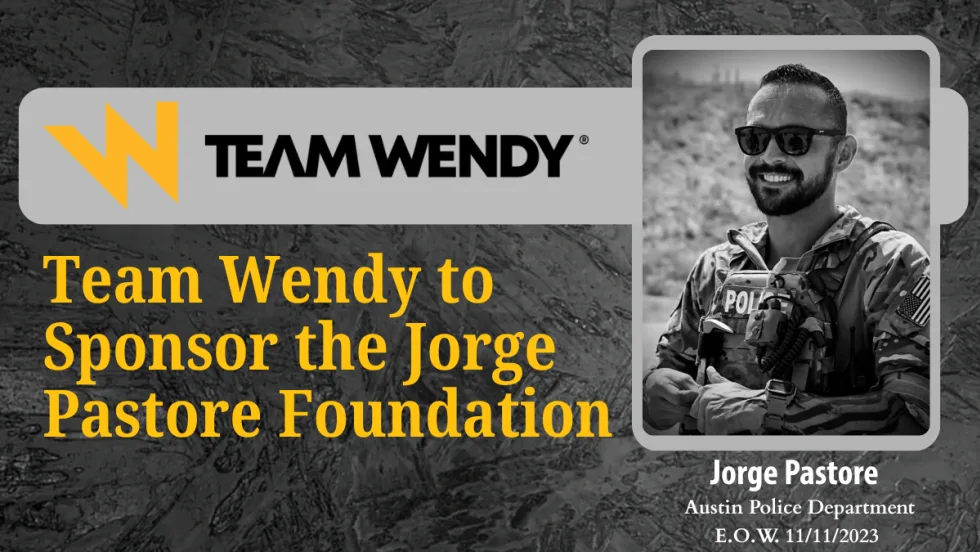
Team Wendy Announces Title Sponsorship of the Jorge Pastore Foundation
Team Wendy’s 3-year partnership with the Jorge Pastore Foundation expands access to programs that strengthen those who serve.
Read More →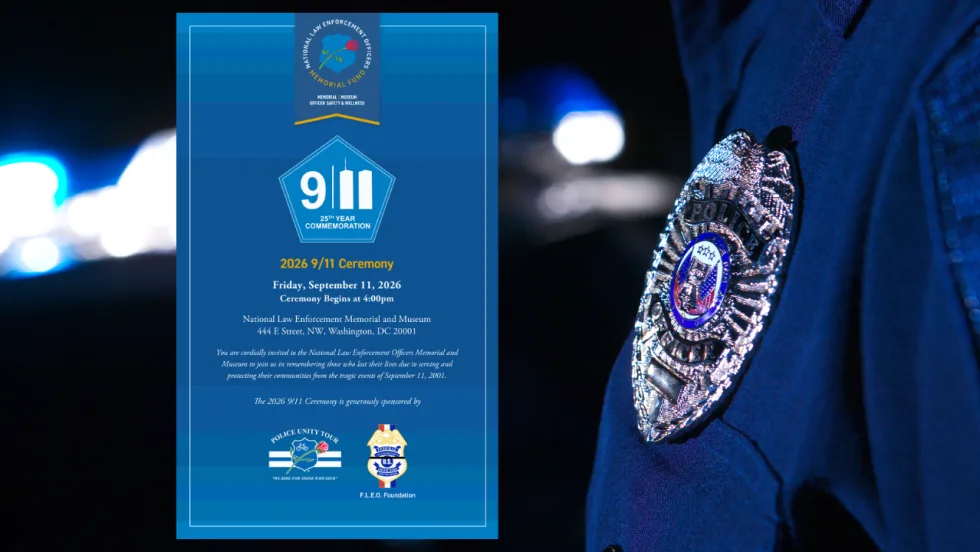
National Law Enforcement Memorial and Museum Hosting 9/11 25th-Year Commemoration Ceremony
The National Law Enforcement Memorial and Museum is hosting a 9/11 25th Year Commemoration Ceremony on Sept. 11 at 4 p.m.
Read More →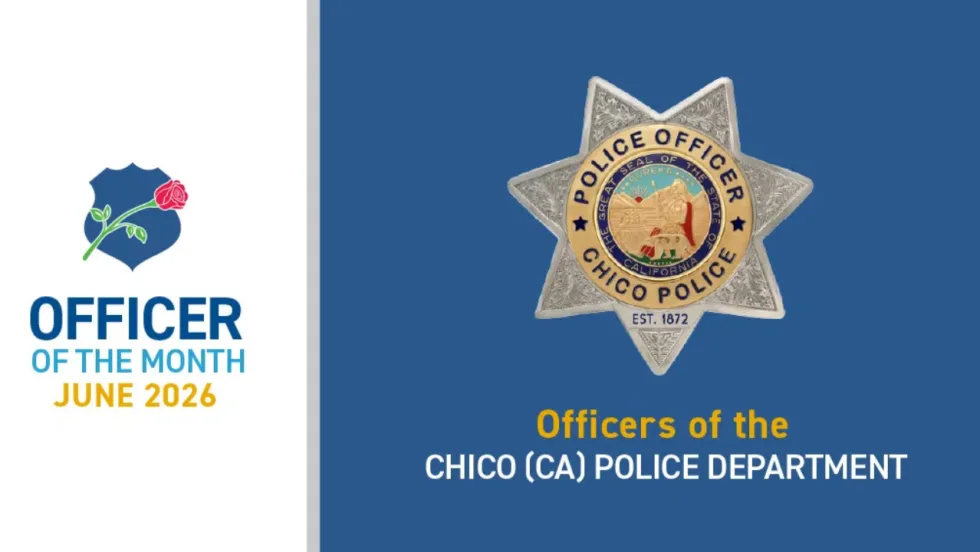
National Law Enforcement Officers Memorial Fund Announces June 2026 Officers of the Month
The National Law Enforcement Officers Memorial Fund (NLEOMF) named 15 officers of the Chico Police Department (California) as the Officers of the Month for June 2026 for their roles in responding to an active-shooter incident at a public library.
Read More →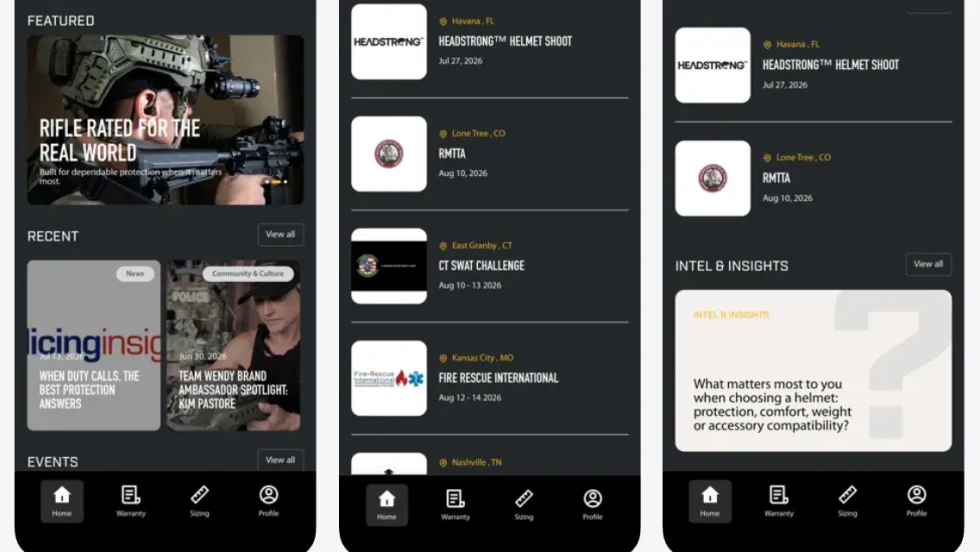
Team Wendy App Creates New Digital Hub for Helmet Owners
The Team Wendy Community App provides one location for warranty registration, size-fit tools, product updates, and community connection. For helmet owners, the new app creates a simpler path to the information and tools that matter most.
Read More →