



Education: Learning to Lead
You can advance your career through organizational leadership education.


The benefits of college-educated officers are not limited to pay and promotion. From a practical standpoint, college experience assists officers in accomplishing their responsibilities more effectively.
Photo: POLICE File
Most employees are motivated to seek a promotion over the span of their career and law enforcement officers are no different. While the underlying reasons may vary, the ambition is the same: career advancement. A college education is one of the primary means by which officers can improve their eligibility for promotion.
College degrees can be the key to the development of one's working knowledge and are often essential to an officer's professional advancement. Over the past 50 years, educational standards have slowly become a norm for police officer hiring requirements. In the late 1960s, recommendations from federal and state government sectors emphasized the importance of bachelor's degrees for all officers to provide them with decision-making skills. They also suggested graduate degree standards for police administrators as a means to better equip them for leadership responsibilities.
In more recent years, the 2015 President's Task Force on 21st Century Policing identified education as a primary tenet of professional policing to assist officers in developing the skills needed to be effective in the diverse communities in which they serve.
Benefits of Education
When police officers invest in higher education, they can potentially gain assignment changes, pay increases, personal growth, and promotions.
From a practical standpoint, college experience assists officers in accomplishing their responsibilities more effectively. Many officers say that the writing skills they obtained through college classes are invaluable when it comes to the numerous reports they complete in their daily duties. Officers also report the dual benefit of obtaining a bachelor's degree or a graduate degree while working. There is the immediate reward of an up to 10% pay incentive, but also the delayed reward of preparing for a second career when they retire or exit from the police force.
Organizational Benefits
The benefits of college-educated officers are not limited to pay and promotion. Volumes of research over the past 20 years illustrate that police officers who possess higher education exhibit greater analytical thinking, better communications skills, and increased maturity in comparison to those who do not. Studies indicate that while approximately 1% of law enforcement departments require a four-year degree for an entry-level officer, roughly 40% to 50% of officers hold a degree, many of which were obtained while employed as a police officer.
Law enforcement departments encourage their employees' pursuit of education through pay incentives, shift adjustments for class attendance, and tuition reimbursements. According to a 2013 survey by the Bureau of Justice Statistics, 31% of U.S. law enforcement agencies provided pay incentives to officers who completed college degrees. In an era of higher education where classes, degrees, and entire universities are readily accessible through online education, officers should take advantage of such departmental support and accommodations.
Promotion via Education
Just as law enforcement agencies vary on educational standards for hiring, they also differ on promotion requirements. Some departments require a four-year degree for any promotion, while others require a bachelor's degree for positions such as sergeant and lieutenant. Some may require a master's degree for captains or chiefs.
Barry Walker, a former police lieutenant, obtained a graduate degree in leadership while he was an officer. He says his education assisted him in achieving his promotion to lieutenant.
"I was prepared to answer the questions in the interview, and I could also write well," Walker says. "The degree didn't get me promoted, the knowledge from the degree did.
"There has been a fundamental change in leadership style that has occurred over the past 15 years. Where law enforcement used to be paramilitary and autocratic, it has now transitioned into a much more empowering model where decisions are pushed down to the lowest level," Walker adds. "During my time in police management, I also adopted a leadership model where I focused on my stars instead of trying to fix the broken officers. This allowed me to recognize and reward those officers who stepped up."
Leadership Education
While a college education may position an officer for promotion, those whose primary goal is upper management—or those who already possess a bachelor's in criminal justice—may find that a leadership-focused program provides the knowledge and skills to excel.
Organizational leadership emphasizes the idea that power and responsibility within an organization are to be distributed rather than held by one person. When organizational leadership exists, the mission, focus, and culture of the organization are not solely dependent on the chief. Instead, the leadership rests among many, providing a democratic voice and stability through change.
Organizational leadership education focuses on topics such as developing missions and goals, communication and decision-making skills, supervision, ethics, and most importantly, leadership.
This particular focus of study prepares officers to participate in the shared leadership roles within their departments. A degree in leadership allows the student to become aware of his or her communication skills and to develop necessary speaking, writing, listening, and interpersonal skills to become an effective supervisor.
Additionally, the emphasis on learning to delegate responsibilities helps to empower employees and allows officers to practice these skills in their department. This rewards the organization with officers who gain ownership of their roles and gain the power and autonomy to make decisions, ultimately producing an environment of higher morale and greater commitment from all.
Sherah L. Basham is a professor at Columbia Southern University. She holds a master's degree in criminal justice from the University of West Florida, a bachelor's degree in criminal justice from Pensacola Christian College, and is currently pursuing a Ph.D. She has more than 20 years of experience in the criminal justice field in investigations, campus security, and education.
More Training
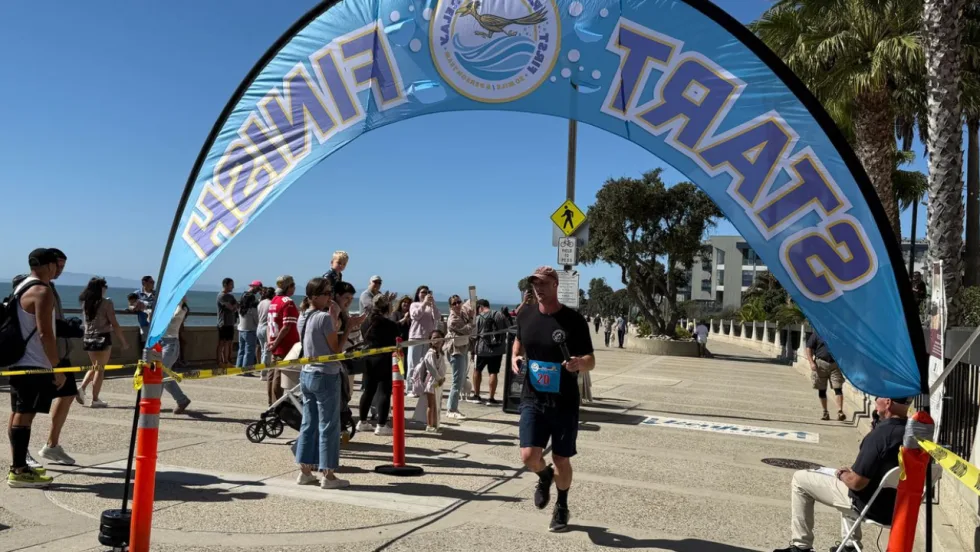
Registration Underway for Sixth Annual First Responders Relay
The California Police Athletic Federation’s annual First Responder Relay will welcome first responder teams from across the globe to compete along Ventura's scenic coastline on Oct. 11. Registration is underway.
Read More →
Vector Solutions Launches Comprehensive Online Dispatch Training Catalog for Emergency Communications Professionals
Vector Solutions’ new catalog of 35 expert-developed online courses can help emergency communication centers strengthen training, meet certification requirements, and simplify continuing education.
Read More →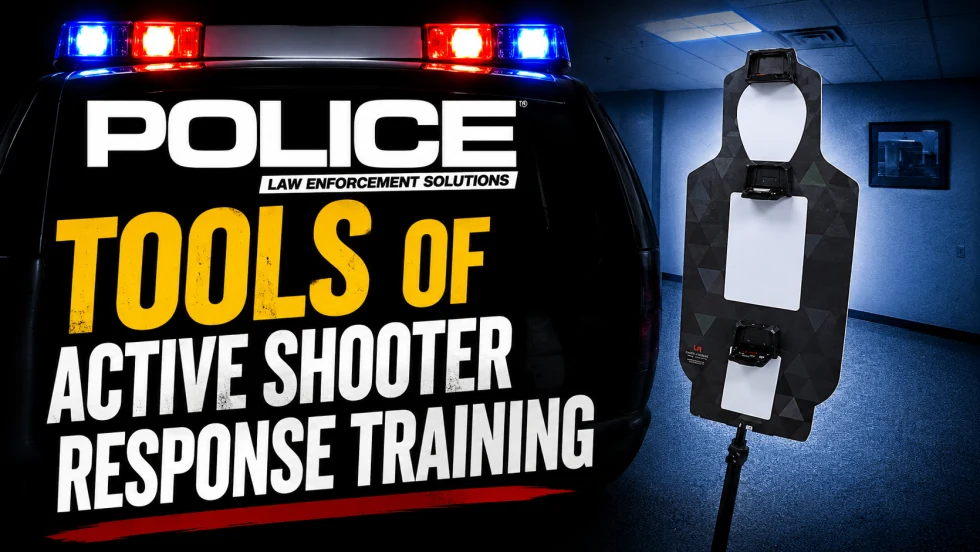
Tools for Active Shooter Response Training
What technologies help prepare officers for active shooter response situations? This behind-the-scenes look at law enforcement training explores shot simulators, smart firearms, laser target systems, and the tools used to build safer, more effective training environments.
Read More →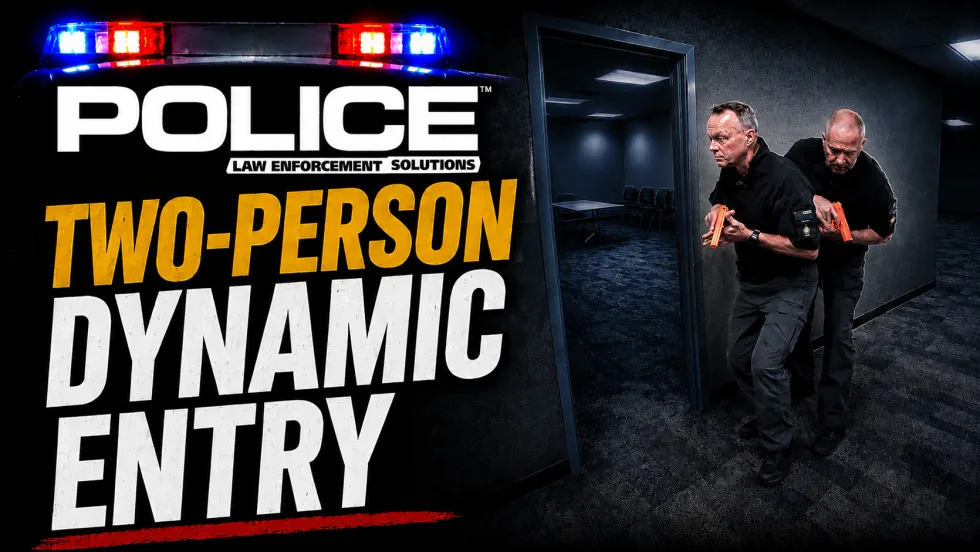
Two-Officer Tactical Doorway Entry Techniques
Entering a room during active-threat situations requires communication, coordination, and disciplined tactical movement. In this video, trainers from the United States Deputy Sheriff’s Association demonstrate critical room entry concepts, including fatal funnel awareness, team coordination, and safe tactical movement.
Read More →
High Compressed Ready Explained | Muzzle Control For Room Entry
In this video, Mike Willis, law enforcement national training and program director for the United States Deputy Sheriffs’ Association, demonstrates the high compressed ready position and discusses muzzle control during room entry.
Read More →
Why Attend the DroneSense Innovation Summit by Versaterm?
Let’s hear from Ryan Bracken, head of product, about why your agency should send someone to the first annual DroneSense Innovation Summit by Versaterm in April.
Read More →
Caswell Live Fire Spins Off from InVeris
Caswell Live Fire has spun off from parent company InVeris, coinciding with the 100th anniversary of Caswell’s founding. Over the past 100 years, Caswell has developed pioneering solutions that support military, law enforcement, and commercial clients worldwide.
Read More →
When Do You Transport a Wounded Officer Instead of Waiting for EMS?
Thumbnail for video series POLICE Topics, Tactics & Tips with a yellow headline that reads When Do You Transport a Wounded Officer Instead of Waiting for EMS?
Read More →
How to Pick Your High-Risk Stop Location for Tactical Advantage
Hear veteran trainer Mike Willis, of the United States Deputy Sheriff’s Association, explain several considerations that can help you wisely pick your best spot to initiate high-risk or felony traffic stops.
Read More →
Coffee Break with Police Experts: Using Your Patrol Vehicle for Cover
In this video, hear from Dustin Mowery, a product specialist at Team Wendy, as he discusses how to best use a patrol vehicle for cover.
Read More →