



'Don't Talk To My Client!'
The Constitution does not forbid you to talk to a person just because that person has an attorney, or just because the attorney tells you not to do it. Instead, the law focuses on whether the suspect is willing to talk without his or her attorney present.

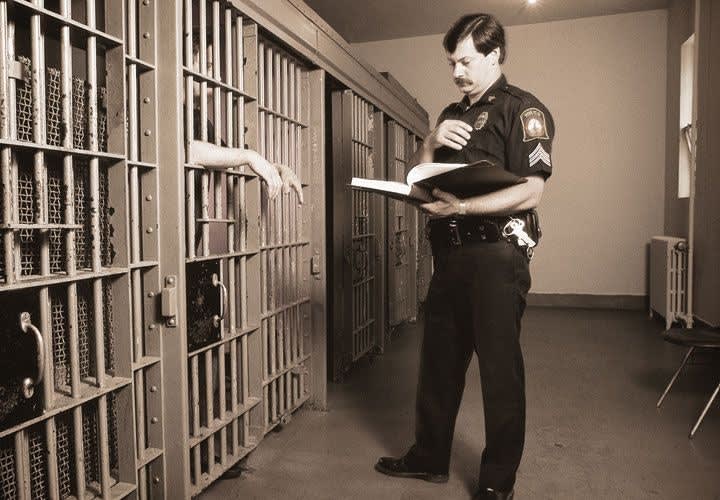
A criminal suspect's lawyer is only doing his job when he calls you during your investigation or after his client's arrest and "instructs" you not to discuss the case with his client unless the lawyer is present. That doesn't mean, however, that you have to follow the attorney's instruction.
The Constitution does not forbid you to talk to a person just because that person has an attorney, or just because the attorney tells you not to do it. Instead, the law focuses on whether the suspect is willing to talk without his or her attorney present. Although this is a well established principle dating back at least a quarter of a century, some officers and attorneys (and some judges) still experience uncertainty and nervousness about police interrogation of a represented suspect.
The U.S. Supreme Court has been very clear, however, in setting forth the constitutional rules.
Moran v. Burbine
In Providence, Rhode Island, Brian K. Burbine beat a woman to death with a metal pipe. Providence officers had no suspect until Burbine was arrested in nearby Cranston for a breaking and entering, and an informant gave police a tip that Burbine had committed the Providence murder.
Burbine's sister learned that her brother had been arrested, and she called a public defender. The public defender phoned the Cranston station, said that she represented Burbine, and instructed police not to talk to him until she arrived at the station. She was told that there were no plans to put Burbine in a lineup or question him about the burglary.
Police did not tell the lawyer that Burbine was suspected in the Providence murder, or that he was about to be questioned in that case. They also did not tell Burbine a lawyer had phoned on his behalf. Instead, Providence officers gave Burbine a Miranda warning, obtained his waiver, and conducted an interrogation, during which he confessed to the killing.
At trial, Burbine moved to suppress his confession on various grounds. His motion was denied and he was convicted. On appeal, the First Circuit of the U.S. Court of Appeals reversed, ruling that Burbine's waiver was invalidated by police deception of the attorney and her client. The state appealed to the Supreme Court, which affirmed the conviction.
At the Supreme Court, Burbine first repeated his arguments that his Miranda waiver was invalid because he had not been told of the attorney's phone call, and because she had not been told of his pending interrogation about the murder. The court rejected these arguments in its 1986 opinion, ruling as follows:
"We have no doubt that defendant validly waived his right to remain silent and to the presence of counsel. Events occurring outside the presence of the suspect and entirely unknown to him surely can have no bearing on the capacity to comprehend and knowingly relinquish a constitutional right.
"Once it is determined that a suspect's decision not to rely on his rights was uncoerced, that he at all times knew he could stand mute and request a lawyer, and that he was aware of the state's intention to use his statements to secure a conviction, the analysis is complete and the waiver is valid as a matter of law.
"The state of mind of the police [being aware of his lawyer's wishes] is irrelevant to the question of the intelligence and voluntariness of defendant's election to abandon his rights. Nor are we prepared to adopt a rule requiring that the police inform a suspect of an attorney's efforts to reach him.
"Because defendant's voluntary decision to speak was made with full awareness and comprehension of all the information Miranda requires the police to convey, the waivers were valid."[PAGEBREAK]
Next, Burbine argued that the interrogation violated his Sixth Amendment right to counsel because he had formed an attorney-client relationship that police failed to honor. The court also rejected this contention. Said the court,
"The suggestion that the existence of an attorney-client relationship itself triggers the protections of the Sixth Amendment misconceives the underlying purposes of the right to counsel.
"The Sixth Amendment's intended function is not to wrap a protective cloak around the attorney-client relationship for its own sake.
"That the existence of an attorney-client relationship could somehow independently trigger the Sixth Amendment right to counsel is a position we reject."
Subsequent Rulings
The Burbine rules were supplemented in later cases, on other points. When a Texas murder defendant argued that his attorney had invoked his Sixth Amendment rights for him (even though he himself had waived and talked), the Supreme Court said that an attorney may not vicariously assert a client's rights because "The Sixth Amendment right to counsel is personal to the defendant." (Texas v. Cobb)
Therefore, if a lawyer contacts you and says that he or she is invoking a client's rights under Miranda or the Sixth Amendment, this notice has no constitutional significance. What matters is whether the client agrees to talk.
In another case, the Supreme Court held that even after a suspect is arrested and has been arraigned and has counsel appointed, he can still be approached by police, in the absence of counsel and without any notice to counsel, to see if he is willing to discuss the case. The court said that a Miranda waiver would then enable officers to take an admissible statement (assuming no previous Miranda invocation during a period of continuous custody).
Said the court, "The defendant may waive the Sixth Amendment right, whether or not he is already represented by counsel; the decision to waive need not itself be counseled. And when a defendant is read his Miranda rights and agrees to waive those rights, that typically does the trick." (Montejo v. Louisiana)
Still later, the court ruled in Berghuis v. Thompkins that the waiver need not be express, but may be implied by the suspect's receipt of Miranda warnings, followed by his acknowledging that he understands his rights and then making a statement or answering questions.
This means that the waiver discussed in such cases as Burbine and Montejo could be obtained by simply admonishing the suspect per Miranda, ascertaining that he understands, and then asking an engaging question that elicits the suspect's response. The waiver would then be established, and additional questioning could take place. (Prior Miranda invocations during continuous custody should be "scrupulously honored.")
Other Considerations
Although neither Miranda nor the Sixth Amendment right to counsel prohibits police interrogation of a willing suspect merely because his attorney has informed police his or her client is not to be questioned, some jurisdictions may have statutory rules restricting such contacts. Officers should consult local prosecutors or legal advisers to determine the existence and application of any such statutes.
In many jurisdictions, statutes prohibit eavesdropping upon confidential communications between a prisoner and his attorney. Also, if police bypass defense counsel and attempt to negotiate a represented defendant's pending charges in exchange for his cooperation against a more serious offender, the Due Process Clause may be implicated. (U.S. v. Morrison; U.S. v. Lopez) To avoid a due process violation, such efforts should generally be made only with prosecutorial consultation.
Devallis Rutledge is a former police officer and veteran prosecutor who currently serves as Special Counsel to the Los Angeles County District Attorney. He is the author of 12 books, including "Investigative Constitutional Law."
More Patrol

Adept Armor Introduces Two New Rifle Plates
Adept Armor has launched two new Level IV ballistic plates, the Emperor and the Archon Mark 2, which brings Adept Armor’s new Quatroid ceramic to the high-threat, performance-value center of the range at 5.2 pounds.
Read More →
POLICE Product Test: Benchmade Bailout
The Benchmade Bailout is a slim, lightweight carry knife with a deep-ride pocket clip and comes in a variety of blade steels and scales. Here is a detailed review of the Taiga Green Bailout, released earlier this year.
Read More →
NLEOMF Announces July 2026 Officer of the Month
NLEOMF honored a Michigan deputy sheriff as the July 2026 Officer of the Month for rescuing a trapped driver from a burning vehicle following a Fourth of July crash.
Read More →
Streamlight to Showcase Newest Lighting Products at National Safety Council’s Safety Congress & Expo 2026
Streamlight will showcase its latest lights, including the Portable Scene Light III and the LiteBox 1Million, at the 2026 National Safety Council (NSC) Safety Congress & Expo.
Read More →
The 2027 World Police & Fire Games Set for Perth, Australia
The 2027 World Police & Fire Games (WPFG) will take place in Perth, Western Australia, from Friday, March 12 through Sunday, March 21, 2027.
Read More →
5.11 Partners with National Fallen Firefighters Foundation to Support #ForThe343
5.11 has joined the nationwide movement honoring the 343 New York City Fire Department firefighters lost on Sept. 11, 2001.
Read More →
Team Wendy Announces Title Sponsorship of the Jorge Pastore Foundation
Team Wendy’s 3-year partnership with the Jorge Pastore Foundation expands access to programs that strengthen those who serve.
Read More →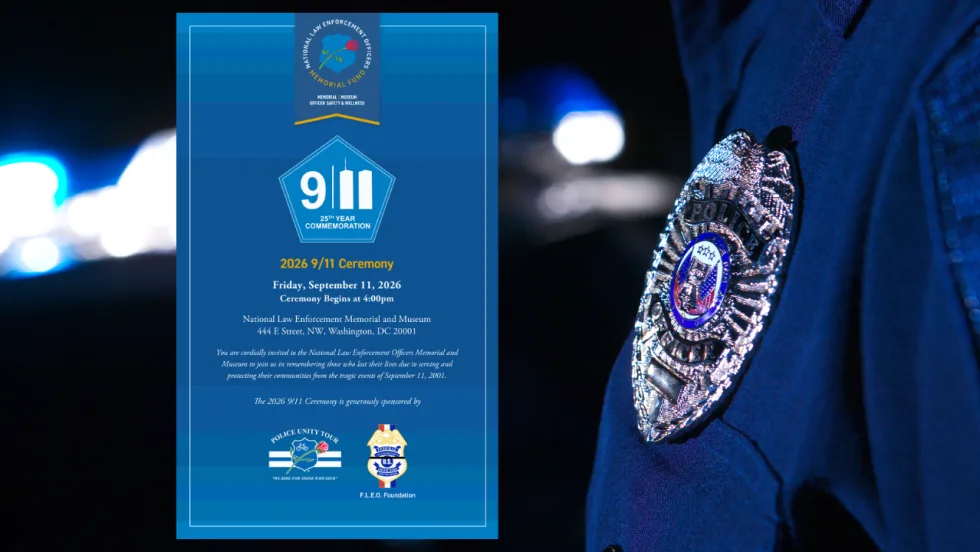
National Law Enforcement Memorial and Museum Hosting 9/11 25th-Year Commemoration Ceremony
The National Law Enforcement Memorial and Museum is hosting a 9/11 25th Year Commemoration Ceremony on Sept. 11 at 4 p.m.
Read More →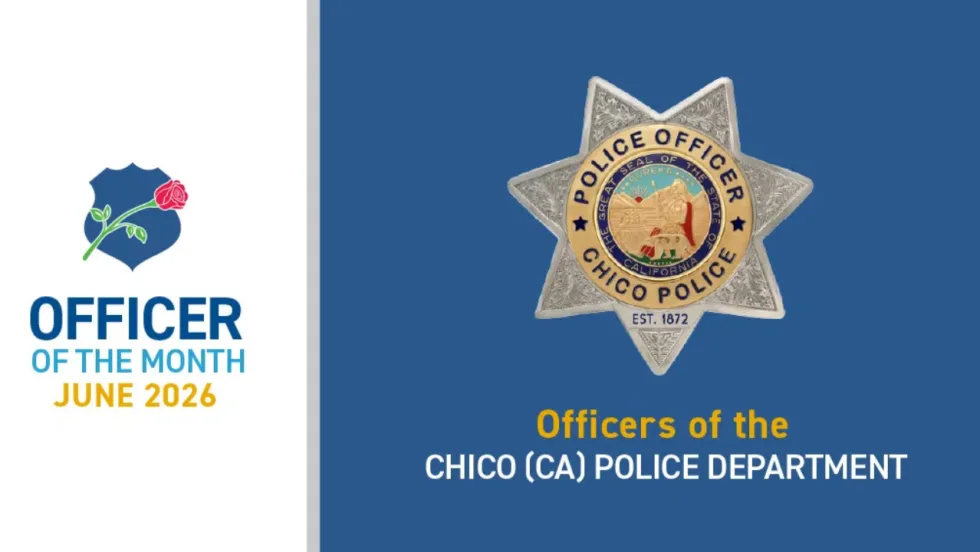
National Law Enforcement Officers Memorial Fund Announces June 2026 Officers of the Month
The National Law Enforcement Officers Memorial Fund (NLEOMF) named 15 officers of the Chico Police Department (California) as the Officers of the Month for June 2026 for their roles in responding to an active-shooter incident at a public library.
Read More →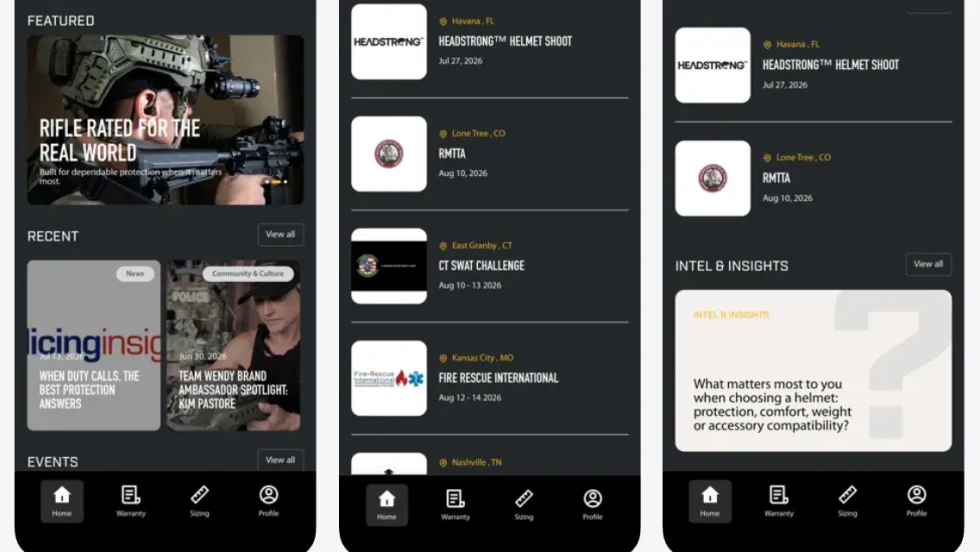
Team Wendy App Creates New Digital Hub for Helmet Owners
The Team Wendy Community App provides one location for warranty registration, size-fit tools, product updates, and community connection. For helmet owners, the new app creates a simpler path to the information and tools that matter most.
Read More →