



Death’s Dogs: Cadaver Search Canines
Any officer who has been involved in a search for a missing victim knows that law enforcement needs every possible break. Cadaver dogs, though not likely to become widely known or ever be the subject of a television series, give cops just the break they need when searching for human remains.

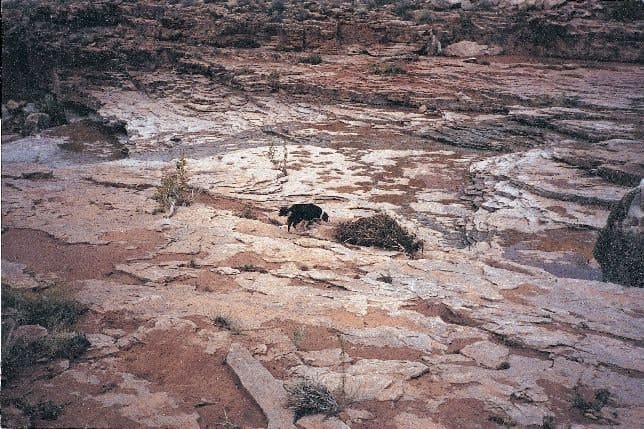
Missy clears a canyon where accused cop killers Jason McVean and “Monte” Pilon may be hiding.
In July 2000, in a courthouse in rural Utah, a grisly tale of violent death and corpse mutilation unfolded. Witnesses recounted the events of
October 25, 1998, when former federal drug informant and alleged methamphetamine cook John Pinder beat ranch hands June Flood and Rex Tanner with a baseball bat, then executed the pair and mutilated their bodies. Pinder, recently convicted of double first-degree murder, was an eccentric rancher with a penchant for weapons and parading his pet male African lion around town. Earlier in 1998, he gained national attention when I prosecuted him for letting his lion cruise Main Street in the back of a pickup truck.
After Pinder shot Flood and Tanner, he wrapped their bodies in explosives and blew them into small pieces. Not satisfied, he gathered the remains with the aid of another ranch hand, then temporarily stashed them in large garbage bags hidden in bushes. Returning the following morning with two ranch hands, he burned the remains in a steel drum. Still distressed that some of the remains were identifiable as human body parts, he once again gathered the remains and blasted them over a large parcel of ground, burying much of the remains and debris.
Cadaver Dogs Find Critical Evidence
It was a homicide investigator's nightmare. The bodies were blasted twice and burned beyond any recognition, with no visually identifying features remaining. Tiny fragments were spread over acres of ground. Fortunately for the detectives of the Duchesne County (Utah) Sheriff's Office, Snoopy and Missy were ready to go to work on the case. Missy, handled by Sgt. Wally Hendricks, and Snoopy, handled by Sgt. Dave Boren, are specially trained as cadaver search dogs. They had recently proven their skills in locating a Native American burial site, following reports that some bones had washed away in a flood. A medical examiner's investigation revealed that the site dated back well into the early 1800s. The dogs' work made it possible for appropriate reburial of the remains.
Snoopy and Missy identified the bushes where the body parts had been temporarily stashed, and the canine duo lead investigators to a pair of feet, clad in distinctive stockings. Mates for the stockings were later discovered in Flood's home. Investigators also found the skull and some facial flesh of the male victim. Prosecutors still worried, however, about proving that Flood was indeed dead, since nothing more than her feet had been identified, even though the Utah State Crime Laboratory had been able to identify some flesh fragments through DNA analysis.
A year after the initial discovery and Pinder's arrest, detectives gained an important lead when Filomena Valencia Ruiz, the ranch hand present at the time of the beating and murder, agreed to testify against Pinder in order to avoid the risk of the death penalty. Investigators learned of the second explosion and burn site. Missy and Snoopy again went to work. Sniffing over acres of ground, they located several fragments of human tissue, and one key find - part of Flood's skull. Now prosecutors would have no difficulty in conclusively establishing Flood's death. More significantly, and highly critical to Pinder's ultimate conviction, the dogs' discoveries corroborated the co-defendant's testimony about the chain of events and the second body mutilation site.
Training a Dog to Locate Dead Bodies
Cadaver dogs often begin their careers as search-and-rescue dogs. Search-and- rescue training helps the dog develop solid search behaviors that ease the graduation to specialized cadaver dog training. Cadaver dogs are trained to utilize their keen sense of smell to detect gases given off by a body's decomposition process. The gases rise through the earth to the surface, or in the case of a water burial, to the surface of the water. It is not uncommon for a cadaver dog to locate the scent of remains buried 30 to 50 feet underground in various types of soil, and up to 200 feet below the water's surface.
Cadaver dogs work best in moderate weather, with temperatures ranging from 40- to 60-degrees Fahrenheit. Temperatures above 85-degrees Fahrenheit result in a marked decrease in a cadaver dog's performance. Moist air and ground conditions are helpful. Humidity should be above 20 percent for optimal results. A slight wind - at least 5 miles per hour - is also important. The higher the wind speed, the narrower the "scent cone" becomes. The scent cone is the area originating at the source of the scent, which spreads out in a conical shape to form the place where the dog can locate the scent of human remains.
Training begins by introducing the dog to scent material on a play toy, similar to the first step for training a narcotics detector dog. The basic concept goes back to the time of the famous Pavlov, who taught dogs to salivate at the sound of the bell by conditioning them to expect dinner after the bell rang. After introduction of the scent material, the dog is taught an appropriate alert behavior, usually barking and sitting, when it locates the source of cadaver odor.
When the dog has shown proficiency with locating and alerting to the cadaver scent, other variables come into play. Various distracting odors, ranging from common garbage to animal carcasses, are placed in the search area. Throughout the course of training, the dog is continually "proofed" on non-cadaver odors to demonstrate that the dog will display the alert behavior only in response to human remains. Numerous organizations, including the National Association for Search and Rescue (NASAR) and the North American Police Working Dog Association (NAPWDA), set certification standards for cadaver detector canines.
Court Acceptance
Evidence of a dog's ability to track and identify particular human scent has been accepted in American courts for the past century. The handler must be able to testify about the dog's initial training, experience and successes in searching, and any certifications achieved by the dog. In a recent Canadian case, prosecutors introduced testimony that a tracking dog "identified" a suspect by scent several miles from the scene of an armed robbery, even though the suspect's scent had been lost at one point during a long, circuitous pursuit. The dog's identification was significant in obtaining a conviction from the trial judge.
Using Dogs as Investigative Tools
Cadaver dogs have played key roles in many high-profile investigations. Prior to their successes in the Pinder murders, Duchesne County Sheriff's canine deputies Missy and Snoopy had been loaned out with their handlers to assist in the manhunt for accused cop killers Jason Wayne McVean and Alan "Monte" Pilon. McVean and Pilon, along with Robert Matthew Mason, were alleged to have murdered Cortez (Colo.) Police Officer Dale Claxton, and wounded two other officers in an assault during a May 1998 traffic stop. Mason allegedly shot Deputy Kelly Bradford, of the San Juan County (Utah) Sheriff's Office, five days after the initial assault. Mason then committed suicide. Hunters discovered Pilon's body in April 2000, although whether he committed suicide or was shot in the head by another person remains a mystery. McVean has not yet been found and the search continues.
Sergeants Hendricks and Boren and their cadaver dogs joined 500 police officers from Utah and Colorado, as well as the Navajo Nation Tribal Police, in the massive manhunt stretching over several months. The dogs were used to clear canyons and remote washes in efforts to maintain some semblance of safety for the searchers. The dogs were able to clear large areas with ease, saving hundreds of hours and keeping officers out of harm's way. One researcher calculated that every hour that a search dog worked saved law enforcement agencies $45 in labor costs alone, without considering the tremendous enhancement to the officers' safety.
Many cadaver dogs are owned and trained by volunteer organizations that freely donate their time and talents to law enforcement. Beth Bradshaw, president of the Georgia Rescue Dog Association, has used her two cadaver search dogs in countless cases to assist officers, always at no charge to the public.
Recently, in a most bizarre turn of events, a headless body and two heads were discovered. Beth and her dogs, Tashi and Jannu, were called in to help find the missing body along a river and surrounding area. Ultimately, the dogs located several garbage bags with body parts not far from where the second head was found. A facial reconstruction is being completed and identification is pending. The dogs may well have helped solve a homicide not even yet reported to law enforcement.
Few cases pose greater frustrations than suspected homicides of missing persons. Any officer who has been involved in a search for a missing victim knows that law enforcement needs every possible break. Cadaver dogs, though not likely to become widely known or ever be the subject of a television series, give cops just the break they need when searching for human remains.
Ken Wallentine is the curriculum development supervisor for the Utah Department of Public Safety and a regular contributor to POLICE. A police service dog handler himself, he frequently writes about legal issues related to police service dogs. He is also a part-time prosecutor and will be prosecuting convicted murderer John Pinder on more weapons charges and charges of possession of exotic wildlife in public without a permit.
More Patrol

Adept Armor Introduces Two New Rifle Plates
Adept Armor has launched two new Level IV ballistic plates, the Emperor and the Archon Mark 2, which brings Adept Armor’s new Quatroid ceramic to the high-threat, performance-value center of the range at 5.2 pounds.
Read More →
POLICE Product Test: Benchmade Bailout
The Benchmade Bailout is a slim, lightweight carry knife with a deep-ride pocket clip and comes in a variety of blade steels and scales. Here is a detailed review of the Taiga Green Bailout, released earlier this year.
Read More →
NLEOMF Announces July 2026 Officer of the Month
NLEOMF honored a Michigan deputy sheriff as the July 2026 Officer of the Month for rescuing a trapped driver from a burning vehicle following a Fourth of July crash.
Read More →
Streamlight to Showcase Newest Lighting Products at National Safety Council’s Safety Congress & Expo 2026
Streamlight will showcase its latest lights, including the Portable Scene Light III and the LiteBox 1Million, at the 2026 National Safety Council (NSC) Safety Congress & Expo.
Read More →
The 2027 World Police & Fire Games Set for Perth, Australia
The 2027 World Police & Fire Games (WPFG) will take place in Perth, Western Australia, from Friday, March 12 through Sunday, March 21, 2027.
Read More →
5.11 Partners with National Fallen Firefighters Foundation to Support #ForThe343
5.11 has joined the nationwide movement honoring the 343 New York City Fire Department firefighters lost on Sept. 11, 2001.
Read More →
Team Wendy Announces Title Sponsorship of the Jorge Pastore Foundation
Team Wendy’s 3-year partnership with the Jorge Pastore Foundation expands access to programs that strengthen those who serve.
Read More →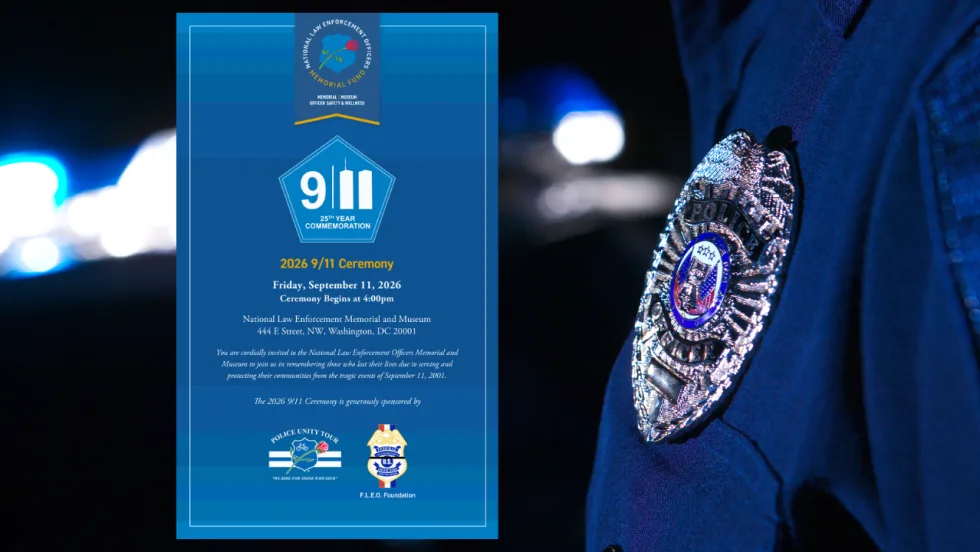
National Law Enforcement Memorial and Museum Hosting 9/11 25th-Year Commemoration Ceremony
The National Law Enforcement Memorial and Museum is hosting a 9/11 25th Year Commemoration Ceremony on Sept. 11 at 4 p.m.
Read More →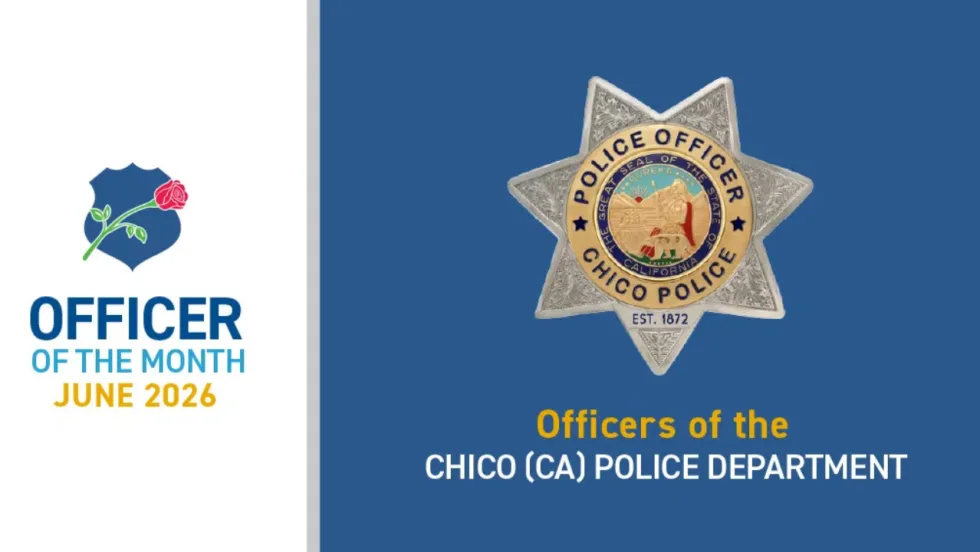
National Law Enforcement Officers Memorial Fund Announces June 2026 Officers of the Month
The National Law Enforcement Officers Memorial Fund (NLEOMF) named 15 officers of the Chico Police Department (California) as the Officers of the Month for June 2026 for their roles in responding to an active-shooter incident at a public library.
Read More →
Team Wendy App Creates New Digital Hub for Helmet Owners
The Team Wendy Community App provides one location for warranty registration, size-fit tools, product updates, and community connection. For helmet owners, the new app creates a simpler path to the information and tools that matter most.
Read More →