



Crowd Management: Preparing for the Storm
The good news is that crowd management and crowd control techniques have been refined over the last few years. The bad news is you're going to need them and more to keep the peace. So this is a good time to review crowd management tactics and prepare yourself for the hard days ahead.

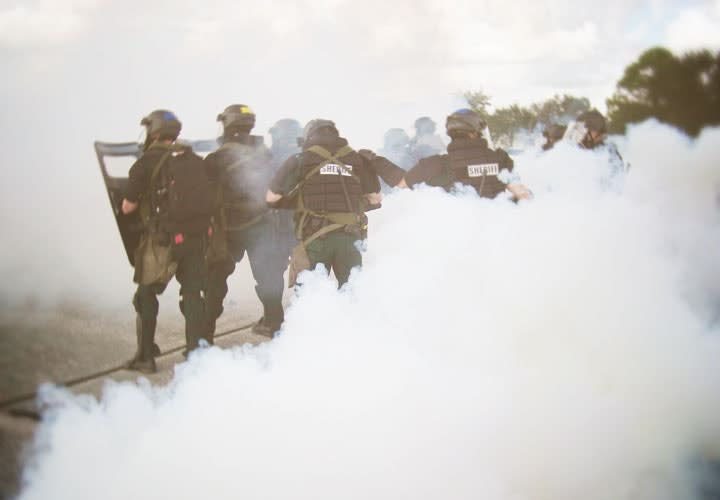
Photo courtesy of Dave Young.
At the end of this month, both major American political parties will hold conventions to nominate their candidates for president of the United States. There will be speeches, and celebrations, and backroom deals, and there will be protests.
Both Tampa, site of the Republican convention, and Charlotte, site of the Democratic convention, are preparing for the worst. Your jurisdiction should be, too. For the election may trigger a resurgence in activity by anarchists, the Occupy movement, and other disruptive and sometimes violent groups.
The good news is that crowd management and crowd control techniques have been refined over the last few years. The bad news is you're going to need them and more to keep the peace.
So this is a good time to review crowd management tactics and prepare yourself for the hard days ahead.
"Crowd management" refers to a department's pre-planned, practiced, and rehearsed response to a small or large disturbance within a specific jurisdiction. Other terms sometimes used for this concept include: civil unrest, riot control, mob and crowd, civil disorder, disturbance control, and mobile field force.
Crowd Control Response
When called out to a small-scale gathering of people who are blocking vehicle or pedestrian traffic or who are simply gathered without a permit, the typical first line response from a police department is to have a show of organized force. This is done by using simple formations, displaying a professional organized appearance, and having basic tools available to handle unforeseen circumstances.
When I first started evaluating the responses of law enforcement agencies to such disturbance situations, I was shocked to see that they had spent a lot of time on drills and ceremonies showing how good they looked and had spent little or no time on the tactics needed to be effective. That made me think of a quote I heard many years ago from John Meyer: "We are not training our officers to be figure skaters but hockey players." Simple translation: It's more important to be prepared to respond effectively than to be concerned with how pretty we look.
There are two very different tactical responses for crowd control, and this is true regardless of whether you are working in a correctional facility suppressing a riot or dispersing an unlawful but peaceful protest in a quiet residential community.
The Soft Squad
The first type of response is called the initial line response or "soft squad" approach. This involves an officer or officers equipped with proper response gear for dispersing a non-violent group that could become violent.
Members of a soft squad should be outfitted with some basic protective gear and equipment. Each officer carries duty gear, a sidearm, soft ballistic body armor, a ballistic helmet with drop shield, a gas mask, non-flammable chest protection against blunt trauma, non-flammable elbow protection, non-flammable knee and shin protection, and non-flammable gloves. In addition, it's a good idea for each member of the soft squad to have access to a first-aid kit with CPR mask; aerosol deterrents such as OC, OC/CS, or just CS; an impact weapon (riot baton not recommended); and at least 10 flex cuffs with assigned cutter.
A soft squad is best used when the crowd is gathering, mounting in numbers, blocking designated areas, being verbally resistant, and using bodies or hands to resist and/or combat officers. The purpose of this initial response is to gain voluntary passive compliance.
The soft squad attempts to gain compliance by displaying a professional appearance, using verbalization tactics, conducting squad formations, using empty hand tactics, deploying aerosols and batons either at the carry or secured position, and having tools at hand to counter unexpected complications. For example, even non-violent crowds may use dragon sleeves, chains, or other connectors to make it difficult for law enforcement to disperse them.
Suppressing Violence
When a crowd becomes violent, officers need more than just standard patrol equipment to quell the disturbance. This is especially true if some members of the crowd are using conventional or unconventional weapons such as Molotov cocktails or sling shots to assault officers.
Violence or active non-compliance by demonstrators requires a tougher response than the soft squad approach. This is appropriately enough called the "hard squad."
Officers assigned to the hard squad carry all of the gear and equipment of the soft squad plus additional protective gear and weapons. Hard squad tools include riot shields, chemical munitions, specialty impact munitions, and in some cases, K-9 units.
Basic Training
Officers need to have adequate training in all of the subcomponents of crowd management before they are assigned to a hard squad during a crowd control incident.
Basic hard squad training should include:
• Defensive tactics for countering attacks by single and multiple subjects
• Riot shield deployment
• Use of batons and impact weapons
• Deployment of electronic control devices such as TASERs
• Use of protective equipment and suits, including gas masks and respirators
• Aerosol deployment
• Chemical and specialty impact munition selection and deployment
• Arrest, restraint, and ground stabilization techniques
• How to render immediate first aid
• Close-quarter combat and firearms training
• Civil rights and legal issues
Hard Squad Organization
The basic hard squad consists of 13 officers organized into three teams of four officers each per squad under the command of one squad leader. Each team can function independently from the other and still accomplish the same objective.
These squads should have everything readily available that they will need on the line for quick deployment. Another advantage is that they can adapt to the environment and can use a variety of formations to accomplish their goals, based on the situation. This allows for a more organized show of force, allowing the squad to be versatile and flexible in its response.
The purpose of the hard squad is to move the crowd and make arrests. Quick response, organized movement, tactical strategies executed precisely in the field, and the ability to quickly adapt to your situation and environment are the key elements to a successful mission. Having a detailed outline and use-of-force model to follow for crowd management encounters also is critical as these steps establish the rules of engagement.
Weapons that should be available for hard squads include: empty hands, batons, riot shields, electrical control devices, specialty impact munitions, chemical munitions, K-9 units, sidearms, shotguns, rifles, and 37mm/40mm launchers.
Getting Ready
If an agency anticipates civil disturbance or wide-scale protests, it should conduct a department-wide assessment to determine its state of readiness. The administration can then rate readiness on the following scale:
State of Readiness One: All personnel are trained, equipped, and certified. The agency is ready to respond to any crowd control incident.
State of Readiness Two: Half of the officers are trained, equipped, and certified. The agency is partially ready.
State of Readiness Three: Less than one-quarter of all officers are trained, equipped, and certified. The agency is not ready.
The training of officers has to prepare them for reality because reality rarely gives us a second chance. Consider the following three elements necessary for preparing an officer to operate in a tactical environment such as a crowd control situation:
• Officers must have confidence in themselves.
• Officers must have confidence in the equipment they are using.
• Once officers have confidence in themselves and their equipment only then can trainers start building student proficiency.
Departments should conduct a quarterly review of crowd management events and tactics used and the results of these methods, in order to enhance their effectiveness. Regardless of what books you have read or courses attended, and no matter what technique or tactic an officer chooses to use, remember the following acronym: ADAPT.
A-nticipate Danger
D-edicate yourself to survival
A-nalize your surroundings
P-ractice proper tactics
T-rain for the unexpected
Keeping this acronym in mind will help keep you alive, not only in riot situations but on patrol.
Crowd vs. Mob
A question that I am constantly asked during my crowd management classes is, "What is the difference between a crowd and a mob?"
A crowd is a group of people who are gathered in one area for a single purpose without any planned, practiced, or rehearsed agenda. It has no controlled, organized structure and displays little to no physical resistance. A crowd of people is just there. It can be either violent or passive, depending on the flow of emotions around them.
Mobs are unruly groups fired up with emotions, or they are motivated groups of people who are gathered in one area for a specific purpose, with a planned, practiced, and rehearsed agenda, which can be triggered by spontaneous outbursts or planned signals. They are much more aggressive than crowds.
Dave Young is the founder and director of ARMA Training and U.S. Fighting Systems, offering training to law enforcement, corrections, security, and military worldwide. He is a member of the POLICE Magazine Advisory Board and has trained officers to perform crowd management operations in the U.S., Africa, Europe, and Asia.
Related:
More Patrol

Streamlight Portable Scene Light III Wins 2026 OH&S New Product of the Year Award
Streamlight’s Portable Scene Light III has won the 2026 Occupational Health & Safety (OH&S) New Product of the Year Award in the Lighting category.
Read More →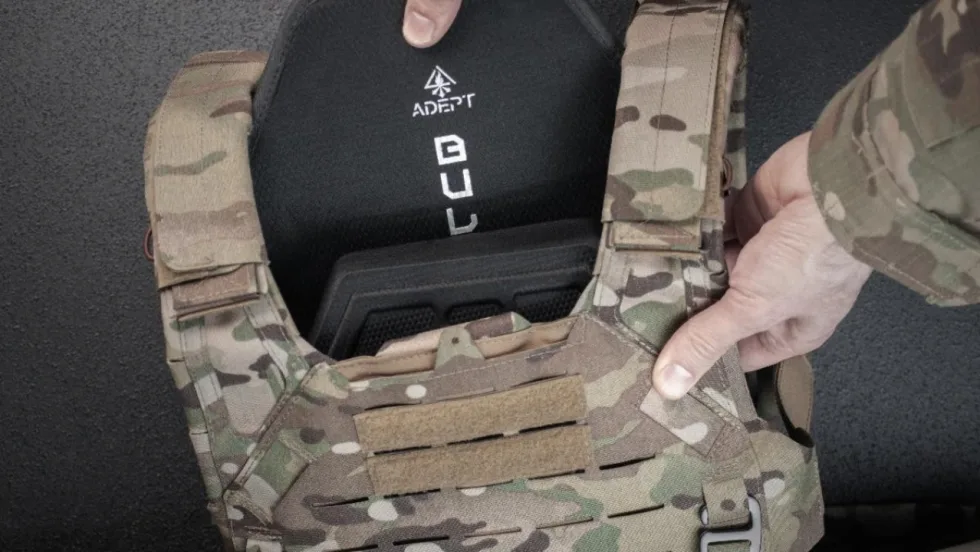
Adept Armor Introduces Two New Rifle Plates
Adept Armor has launched two new Level IV ballistic plates, the Emperor and the Archon Mark 2, which brings Adept Armor’s new Quatroid ceramic to the high-threat, performance-value center of the range at 5.2 pounds.
Read More →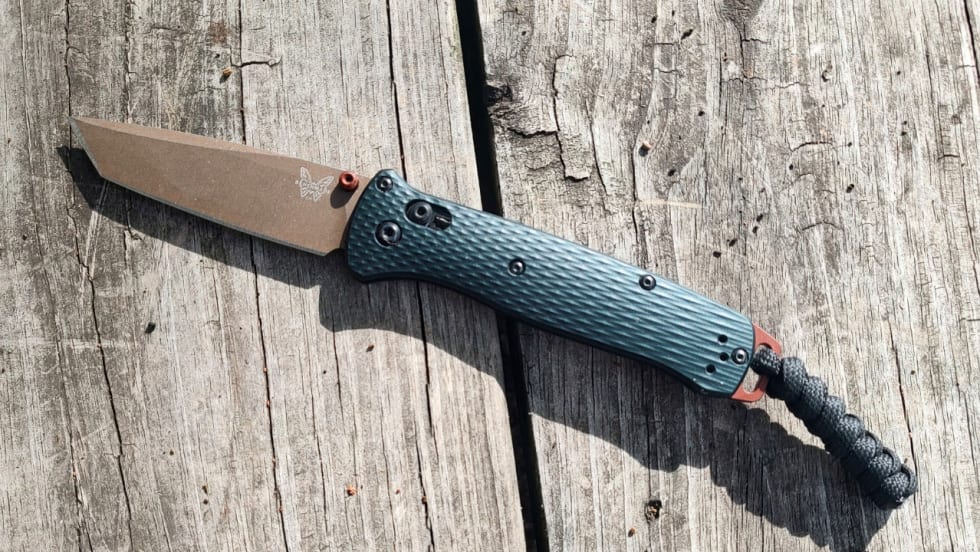
POLICE Product Test: Benchmade Bailout
The Benchmade Bailout is a slim, lightweight carry knife with a deep-ride pocket clip and comes in a variety of blade steels and scales. Here is a detailed review of the Taiga Green Bailout, released earlier this year.
Read More →
NLEOMF Announces July 2026 Officer of the Month
NLEOMF honored a Michigan deputy sheriff as the July 2026 Officer of the Month for rescuing a trapped driver from a burning vehicle following a Fourth of July crash.
Read More →
Streamlight to Showcase Newest Lighting Products at National Safety Council’s Safety Congress & Expo 2026
Streamlight will showcase its latest lights, including the Portable Scene Light III and the LiteBox 1Million, at the 2026 National Safety Council (NSC) Safety Congress & Expo.
Read More →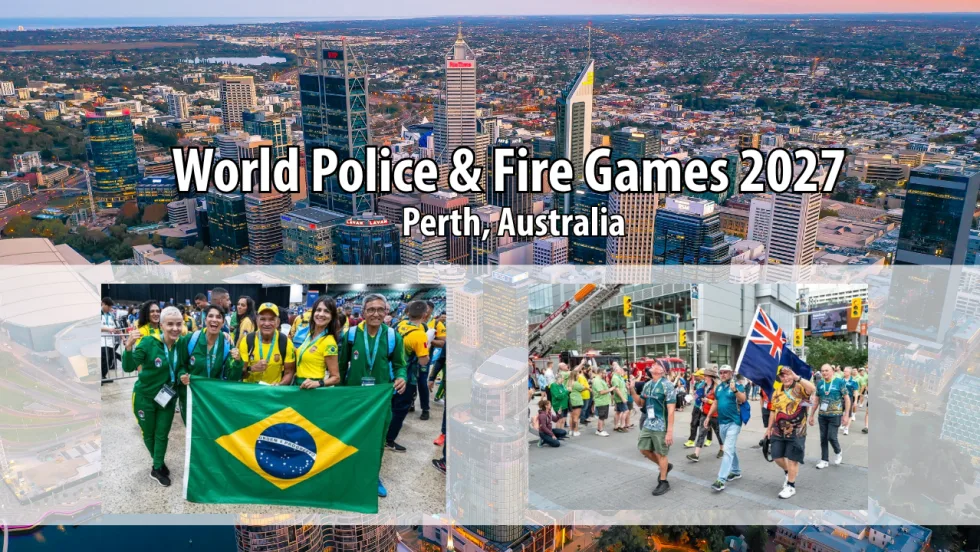
The 2027 World Police & Fire Games Set for Perth, Australia
The 2027 World Police & Fire Games (WPFG) will take place in Perth, Western Australia, from Friday, March 12 through Sunday, March 21, 2027.
Read More →
5.11 Partners with National Fallen Firefighters Foundation to Support #ForThe343
5.11 has joined the nationwide movement honoring the 343 New York City Fire Department firefighters lost on Sept. 11, 2001.
Read More →
Team Wendy Announces Title Sponsorship of the Jorge Pastore Foundation
Team Wendy’s 3-year partnership with the Jorge Pastore Foundation expands access to programs that strengthen those who serve.
Read More →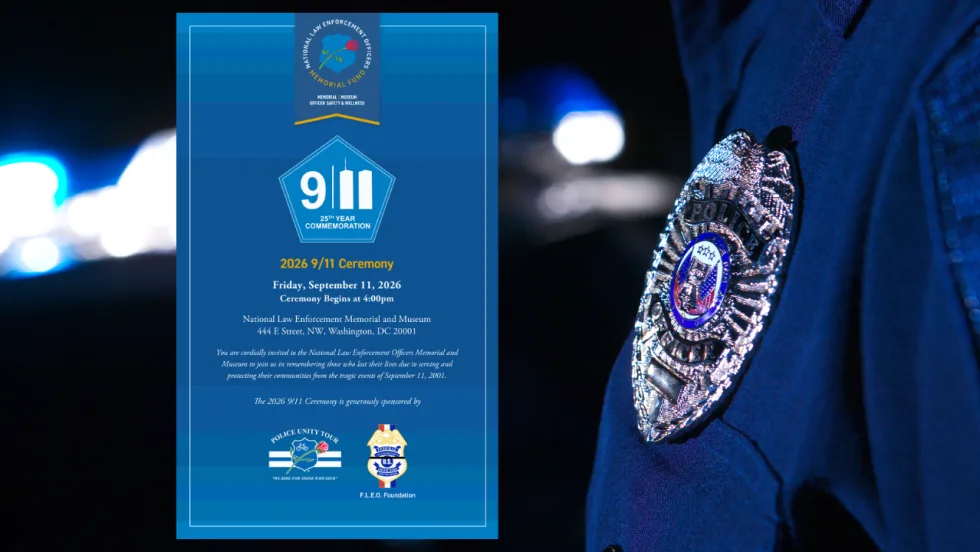
National Law Enforcement Memorial and Museum Hosting 9/11 25th-Year Commemoration Ceremony
The National Law Enforcement Memorial and Museum is hosting a 9/11 25th Year Commemoration Ceremony on Sept. 11 at 4 p.m.
Read More →
National Law Enforcement Officers Memorial Fund Announces June 2026 Officers of the Month
The National Law Enforcement Officers Memorial Fund (NLEOMF) named 15 officers of the Chico Police Department (California) as the Officers of the Month for June 2026 for their roles in responding to an active-shooter incident at a public library.
Read More →