



Constitutional Home Entry
Private residences enjoy the highest levels of Fourth Amendment protection against governmental intrusion. Here are the 10 most common ways to get inside a home without violating the Fourth Amendment.

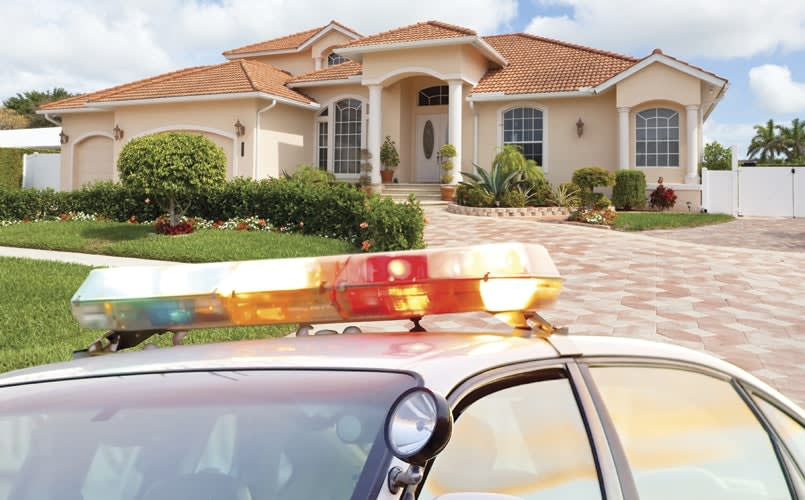
Photo: iStock
"A man's home is his castle," whether it's a mansion, condo, apartment, mobile home, motel room, or camping tent. Private residences enjoy the highest levels of Fourth Amendment protection against governmental intrusion. "The Fourth Amendment protects an individual's privacy in a variety of settings. In none is the zone of privacy more clearly defined than when bounded by the unambiguous physical dimensions of an individual's home." (Payton v. New York)
The U.S. Supreme Court has recognized only a limited number of ways for law enforcement officers to justify lawful entry. An entry made without one or more of these justifications may cause both suppression of evidence and civil liability, so the list should be reviewed from time to time. Here are the 10 most common ways to get inside a home without violating the Fourth Amendment.
1. Search warrant. Warrants are the preferred method of justifying entry. (U.S. v. Ventresca) A search warrant particularly describing the place to be searched and the things to be seized allows forcible entry, following knock-notice (or excused non-compliance), and imbues officers with the authority to break open a door or window if necessary, provided officers do not inflict "excessive or unnecessary damage to property." (U.S. v. Ramirez)
2. Arrest warrant. "An arrest warrant founded on probable cause implicitly carries with it the limited authority to enter a dwelling in which the suspect lives when there is reason to believe the suspect is within." (Payton v. New York) An arrest warrant does not allow entry into a third party's home to arrest someone who may be inside but does not reside there. (Steagald v. U.S.)
3. Consent. "To the Fourth Amendment rule ordinarily prohibiting warrantless entry of a person's house as unreasonable per se, one exception recognizes the validity of searches with the voluntary consent of an individual possessing authority." (Georgia v. Randolph) Apparent authority can also be sufficient. (Illinois v. Rodriguez)
4. Rescue. "Law enforcement officers may enter a home without a warrant to render emergency assistance to an injured occupant or to protect an occupant from imminent injury, if they have an objectively reasonable basis for believing that a person within the house is in need of immediate aid." (Michigan v. Fisher)
5. Threat to officer or public safety. "The Fourth Amendment does not require police officers to delay in the course of an investigation if to do so would gravely endanger their lives or the lives of others." (Warden v. Hayden)
6. Prevent imminent destruction of evidence. "The need to prevent the imminent destruction of evidence has long been recognized as a sufficient justification for a warrantless search." (Kentucky v. King)
7. Fresh pursuit of a dangerous suspect. If you're pursuing a suspect from a just-committed crime involving the infliction or threatened infliction of death or serious bodily injury, you may enter and search for the suspect in a private residence into which he flees.
For example, where officers entered and searched a house into which an armed robber had taken refuge less than five minutes earlier, the Supreme Court said this: "Neither the entry without warrant to search for the robber nor the search for him without warrant was invalid. Officers acted reasonably when they entered the house and began to search for the robber and for weapons which he had used in the robbery or might use against them." (Warden v. Hayden)
8. Prevent escape of detainee/arrestee. You may enter to capture a person who retreats inside when you lawfully attempt to detain or arrest him while he is in a public place. "A suspect may not defeat an arrest which has been set in motion in a public place by the expedient of escaping to a private place." (U.S. v. Santana)
The Supreme Court also said in Santana that a person standing at his open doorway is sufficiently exposed to public view as to be "in a public place," for purposes of this rule. So, if you're talking to someone who's standing at his open door, and having probable cause you say, "Step outside. You're under arrest," you could enter to take custody if he retreats.
9. Prevent substantial property damage. If you reasonably believe that a burglar, vandal, arsonist, or other criminal is within private premises committing or attempting to commit a property crime that may result in substantial loss or damage, you need not await a warrant to enter and prevent or minimize the loss. For example, "A burning building of course creates an exigency that justifies a warrantless entry by fire officials to fight the blaze." (Michigan v. Clifford)
10. Probation or parole search. Convicted criminals who are released under supervision, including probation and parole, are often subject to a condition that they and their property may be searched by peace officers or probation/parole officers without warrant or suspicion. The Supreme Court has approved warrantless entries and searches under these terms, saying the following: "The delay inherent in obtaining a warrant would make it more difficult for probation officials to respond quickly to evidence of misconduct and would reduce the deterrent effect that the possibility of expeditious searches would otherwise create." (Griffin v. Wisconsin)
Community Caretaking?
Some state courts and lower federal courts have spoken of a separate "community caretaking" justification for warrantless, non-consensual entry. To date, the U.S. Supreme Court has only applied a "community caretaking" doctrine to the removal of vehicles and inventory of their contents (Cady v. Dombrowski, South Dakota v. Opperman, and Colorado v. Bertine), but not to police entry into homes.
Typical situations to which the lower courts have applied "community caretaking" include, for example, reports that a particular resident is unaccounted for (hasn't been at work or seen in the neighborhood, car is in the driveway and newspapers are piling up on the porch, indicating that something's amiss), or that a window is broken or a door is standing ajar during the residents' vacation or extended absence.
It may be that the reason the Supreme Court has not found it necessary to adopt the "community caretaking" doctrine for home entry is because the situations considered by the lower courts can usually be treated under the standard exceptions already in place. For example, the missing-resident scenario fits within the rescue doctrine, and the unsecure house suggests a possible burglary, invoking the exception for prevention of substantial property loss.
Unless and until the Supreme Court sees fit to review an issue of "community caretaking" entry, it's not unreasonable to rely on lower court decisions in your jurisdiction to support your warrantless, non-consensual entries that are justifiable under those local court rulings—always provided you take the prudent step of obtaining the advice of your local prosecutor and civil advisor.
Remember the Rule-of-Thumb
When exigencies (4 through 9, above) require immediate action, search warrants are unnecessary; however, if the situation is not immediately threatening, it's best for you, your department, and your local prosecutor that you get a warrant. Warrants increase your protection against civil liability (Messerschmidt v. Millender) and reduce the risks of suppression of evidence. (U.S. v. Ventresca) This is why your rule-of-thumb should be: seek a search warrant whenever practicable.
Devallis Rutledge is a former police officer and veteran prosecutor who currently serves as special counsel to the Los Angeles County district attorney. He is the author of 12 books, including "Investigative Constitutional Law."
More Patrol
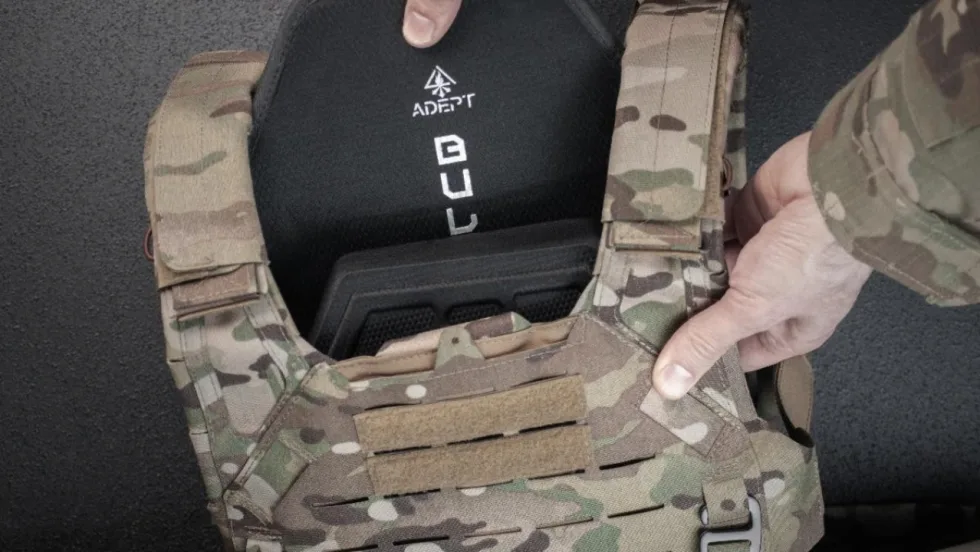
Adept Armor Introduces Two New Rifle Plates
Adept Armor has launched two new Level IV ballistic plates, the Emperor and the Archon Mark 2, which brings Adept Armor’s new Quatroid ceramic to the high-threat, performance-value center of the range at 5.2 pounds.
Read More →
POLICE Product Test: Benchmade Bailout
The Benchmade Bailout is a slim, lightweight carry knife with a deep-ride pocket clip and comes in a variety of blade steels and scales. Here is a detailed review of the Taiga Green Bailout, released earlier this year.
Read More →
NLEOMF Announces July 2026 Officer of the Month
NLEOMF honored a Michigan deputy sheriff as the July 2026 Officer of the Month for rescuing a trapped driver from a burning vehicle following a Fourth of July crash.
Read More →
Streamlight to Showcase Newest Lighting Products at National Safety Council’s Safety Congress & Expo 2026
Streamlight will showcase its latest lights, including the Portable Scene Light III and the LiteBox 1Million, at the 2026 National Safety Council (NSC) Safety Congress & Expo.
Read More →
The 2027 World Police & Fire Games Set for Perth, Australia
The 2027 World Police & Fire Games (WPFG) will take place in Perth, Western Australia, from Friday, March 12 through Sunday, March 21, 2027.
Read More →
5.11 Partners with National Fallen Firefighters Foundation to Support #ForThe343
5.11 has joined the nationwide movement honoring the 343 New York City Fire Department firefighters lost on Sept. 11, 2001.
Read More →
Team Wendy Announces Title Sponsorship of the Jorge Pastore Foundation
Team Wendy’s 3-year partnership with the Jorge Pastore Foundation expands access to programs that strengthen those who serve.
Read More →
National Law Enforcement Memorial and Museum Hosting 9/11 25th-Year Commemoration Ceremony
The National Law Enforcement Memorial and Museum is hosting a 9/11 25th Year Commemoration Ceremony on Sept. 11 at 4 p.m.
Read More →
National Law Enforcement Officers Memorial Fund Announces June 2026 Officers of the Month
The National Law Enforcement Officers Memorial Fund (NLEOMF) named 15 officers of the Chico Police Department (California) as the Officers of the Month for June 2026 for their roles in responding to an active-shooter incident at a public library.
Read More →
Team Wendy App Creates New Digital Hub for Helmet Owners
The Team Wendy Community App provides one location for warranty registration, size-fit tools, product updates, and community connection. For helmet owners, the new app creates a simpler path to the information and tools that matter most.
Read More →