



Beware the Restrained Subject
Over the years, I've heard multiple accounts of handcuffed subjects who later escaped or attempted to escape. One particular incident involved a young kid who fled on foot. His ability to outrun two officers with his hands behind his back demonstrated just how focused a person can be if he wants to escape.

Over the years, I've heard multiple accounts of handcuffed subjects who later escaped or attempted to escape. One particular incident involved a young kid who fled on foot. His ability to outrun two officers with his hands behind his back demonstrated just how focused a person can be if he wants to escape.
Another time, a handcuffed man was able to get the rear cruiser door open, jump out, and start running. The transporting officers recaptured him, but his manipulations while handcuffed showed what a little flexibility and ingenuity can accomplish. The only injuries that the officers sustained in both incidents were embarrassment and some hurt feelings. That unfortunately is not always the case in escape situations.
Too many officers have been seriously hurt or killed by "restrained" subjects who managed to escape their cuffs. It is a reason we are trained to look for hidden handcuff keys during searches. But dangers to police officers are not limited to those who escape their restraints and then attack officers. The risks from cuffed bad guys can be very serious, as well. By being aware and having a strategy if assaulted by a cuffed subject, you can better defend yourself, as well as re-restrain the "restrained" subject.
What Can a Restrained Suspect Do?
As cuffing suspects with their hands behind their backs is pretty standard practice, be prepared for what happens when the suspect uses flexibility to bring the cuffs to the front. It is here where he or she can cause serious havoc. A violent assault even while cuffed can allow a suspect an opportunity to harm or kill you, obtain your handcuff keys or gun, or simply escape. Here are some things to be ready for.
If out in the open, a cuffed suspect can deliver a strong and fast double fist punch to your face. The handcuffs, whether hinged or not, can even help keep the bad guy's fists aligned when delivering the strike. While using the same type of delivery, a suspect can poke his fingers into your eyes. He can also grab along the outside of your face and gouge your eyes with his thumbs. It is important to be aware, too, that just as you can block against his strikes, the cuffed bad guy can also present blocks against your counter strikes.
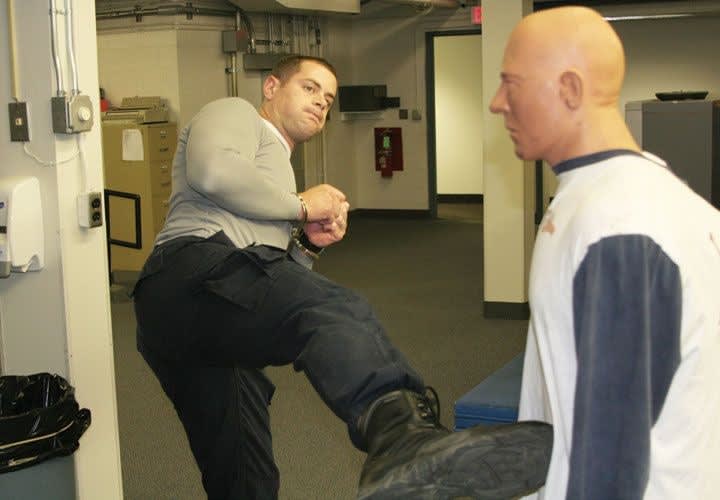
Assaults are not just limited to the hands. A suspect's legs are generally unrestrained during most arrest situations and could allow him to direct a targeted kick or knee strike. If an attack is not the point, escaping may be the objective. Depending on the type of back seat protections that are in place, a suspect can manipulate a door to allow for an escape. Some are probably capable with the cuffs behind their back, as well.
What Can You Do?
One of the most serious threats that you may face is when a handcuffed subject tries to draw your duty handgun and use it against you. Depending on his speed and ability, a cuffed subject can quickly place you in a compromised position. Also, whether inside a cruiser or outside of it, a "restrained" subject can be lethal if able to use the handcuffs in a choking manner. So, what can you do?
Being aware of how dangerous a suspect can be while still handcuffed is the first step. Although the bad guy may have the initial element of surprise, through training you can present an effective defense and counter response to protect yourself. Looking and listening is important as well.
For example, while transporting a prisoner, it is important to listen for his physical movements. When driving, your eyes are generally looking forward, not toward the back seat. This can provide an opportunity for the bad guy to begin manipulating his cuffs to the front or to use a handcuff key to remove them without your knowledge.
Listen for unusual or excessive movement and periodically make visual checks of the suspect. Just letting him know you're paying attention to him may deter his efforts. If there is a second officer in the car, she should regularly make observations of the bad guy. Also, during transports be cautious about listening to the radio or having involved conversations, both of which divide your attention.
Whenever possible, take advantage of any alternative restraints that are available to you, including leg chains, the RIPP hobble, and the RIPP Arm and Ankle Restrainer. Although it may take a little more time to apply these to the subject, the effort is worth it as they add one more hindrance to stop an assault or escape.
[PAGEBREAK]
Defenses Against Body Weapon Assaults
To defend against these types of strikes, practice basic one- and two-hand side blocks, as the trajectory of these strikes will likely come from a center straight focus. These blocks are useful if the attack is sudden and in close proximity, providing just enough time to clear your head of the strike and provide that quick block.
If a suspect suddenly attacks you with kicks, counter with hand and foot strikes until you can gain enough space to use other force options. Having his hands cuffed should hinder a suspect's balance, so be sure to take advantage of this weakness to protect yourself.
Defenses Against Weapon Draws
It goes without saying that gun retention techniques should be part of an agency's defensive tactics training, but learning something once isn't enough. Many police agencies have instructed their officers on excellent gun retention techniques. However, it's vital that you remain reasonably proficient in these tactics so when suddenly confronted you will automatically react. In the martial arts, this is referred to as "mushin," which means "no thought."
If a cuffed suspect grabs your weapon while it is in the holster, you have a number of options to consider. Depending on the type of grab, you can throw a quick closed fist breaking strike or strike the suspect's wrist area-a weak point of the arm-while stepping away. Follow this with counter strikes and create distance from the suspect to set up for further defense and control.
If a bad guy gets a strong grip on your handgun, consider using one or both hands to try to pin the bad guy's hand to the gun and maintain pressure on it to keep it in the holster. From here, you can use a variety of counter strikes to loosen or break his grip on your handgun.
Depending upon the position of the suspect (side, front, or back), head butts, elbow strikes to the head, eye strikes and gouges, biting, foot stomps to his shin or foot, knee strikes, groin grabs and strikes, and arm bars to break his elbows are useful considerations. Use any viable option to stop a gun grab because you are in a fight for your life. Such attacks are another good reason to carry a secondary handgun. You don't want to find yourself disarmed.
Defenses Against Chokes
Although many agencies have protective cages in their cruisers, you may still find yourself transporting a suspect in a cruiser without a cage. If you are sitting in a cruiser and are suddenly choked from behind, it's critical that you remain calm and get those cuffs off your neck. Depending on the size and strength of the suspect, this may be very difficult. Loss of oxygen or blood to the head exacerbated by panic leaves little time for action.
You must create an opportunity to get a breath or make some space, however little, to continue defending yourself. Pull down on the suspect's hands to work your hand, ideally a support hand, between the cuff chain and your neck. You may have to gain access along the side of your neck where the suspect's forearm would likely be. Slide your hand forward while trying to turn your head toward whatever opening you can get. Continue fighting to obtain some breathing space while you work to obtain your firearm to stop the threat.
If the choke attack takes place outside the cruiser, the same principles apply. Work quickly to find space to breathe while trying to get to your firearm. But when outside the cruiser, the bad guy can also use his legs against you. It is useful to learn good self-defense techniques to defend against a choke.
Escape-Proof Doors
Despite adjustments made to stop rear seat passengers from opening the door from the inside, it is still prudent to inspect the handle area for escape opportunities. Although you may not be able to assess the degree of security that these doors provide, your service department or police garage mechanics may. Have them check and make any adjustments to prevent a suspect from manipulating the door open.
Your singular physical presence can make the difference between an escape and many years in prison. Suspects do not look at police officers as human beings. Instead, you are just a physical barrier that they need to overcome to escape. If that escape requires harming or killing you, so be it. Being handcuffed is just another obstacle.
Having a heightened sense of awareness about the dangers of a handcuffed suspect combined with some DT work and simply not letting your guard down when moving a cuffed bad guy may save your life and prevent an escape.
Tom Wetzel is a northeast Ohio suburban police lieutenant, SWAT officer, trainer, and certified law enforcement executive.
What do you do to protect yourself against restrained subjects? Tell us in the comments below.
More Patrol
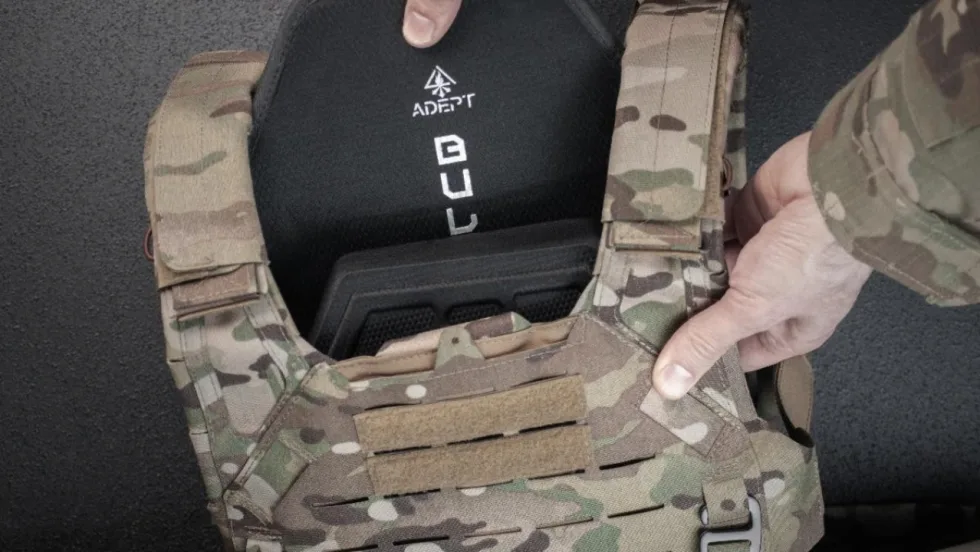
Adept Armor Introduces Two New Rifle Plates
Adept Armor has launched two new Level IV ballistic plates, the Emperor and the Archon Mark 2, which brings Adept Armor’s new Quatroid ceramic to the high-threat, performance-value center of the range at 5.2 pounds.
Read More →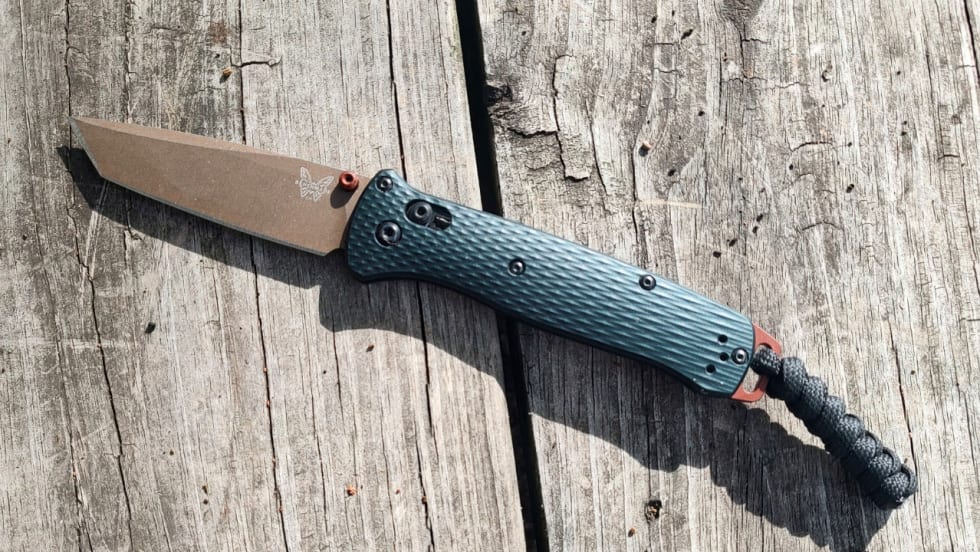
POLICE Product Test: Benchmade Bailout
The Benchmade Bailout is a slim, lightweight carry knife with a deep-ride pocket clip and comes in a variety of blade steels and scales. Here is a detailed review of the Taiga Green Bailout, released earlier this year.
Read More →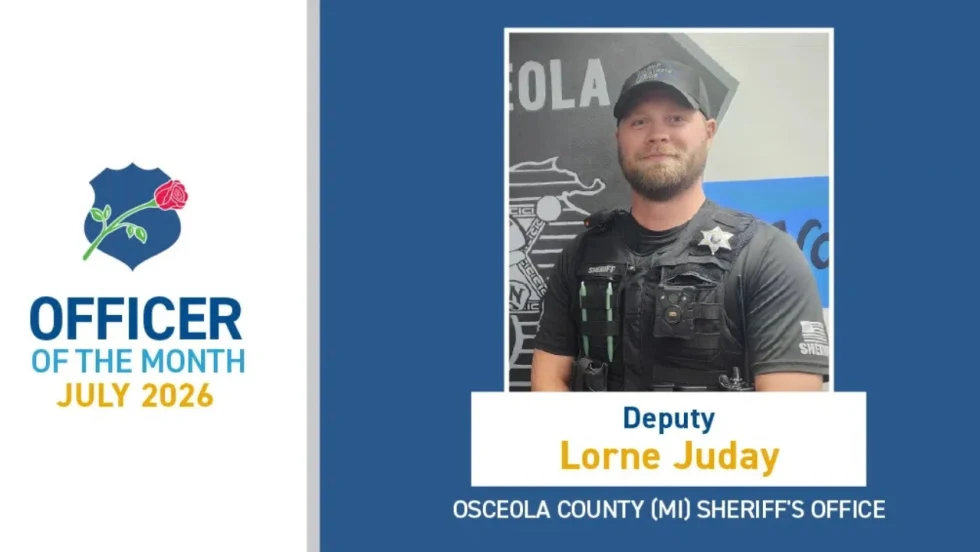
NLEOMF Announces July 2026 Officer of the Month
NLEOMF honored a Michigan deputy sheriff as the July 2026 Officer of the Month for rescuing a trapped driver from a burning vehicle following a Fourth of July crash.
Read More →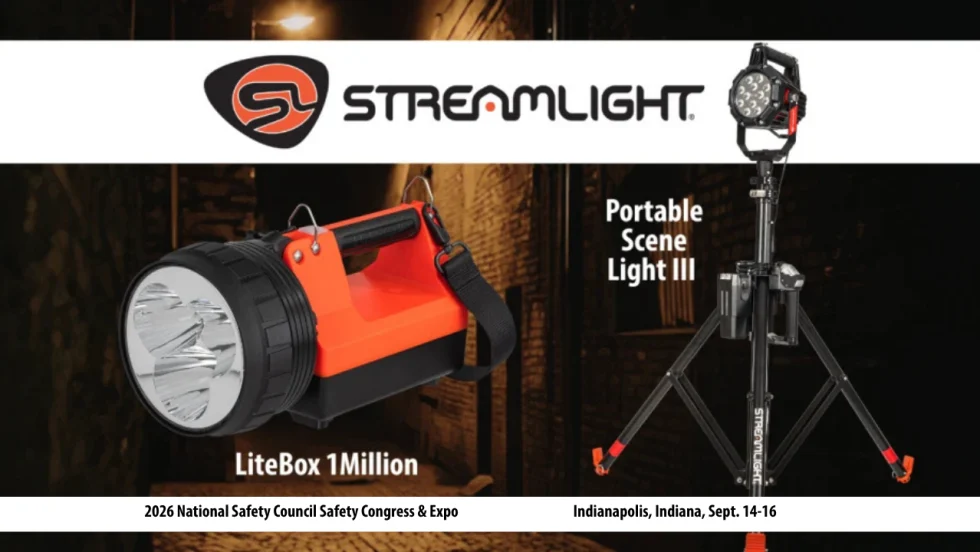
Streamlight to Showcase Newest Lighting Products at National Safety Council’s Safety Congress & Expo 2026
Streamlight will showcase its latest lights, including the Portable Scene Light III and the LiteBox 1Million, at the 2026 National Safety Council (NSC) Safety Congress & Expo.
Read More →
The 2027 World Police & Fire Games Set for Perth, Australia
The 2027 World Police & Fire Games (WPFG) will take place in Perth, Western Australia, from Friday, March 12 through Sunday, March 21, 2027.
Read More →
5.11 Partners with National Fallen Firefighters Foundation to Support #ForThe343
5.11 has joined the nationwide movement honoring the 343 New York City Fire Department firefighters lost on Sept. 11, 2001.
Read More →
Team Wendy Announces Title Sponsorship of the Jorge Pastore Foundation
Team Wendy’s 3-year partnership with the Jorge Pastore Foundation expands access to programs that strengthen those who serve.
Read More →
National Law Enforcement Memorial and Museum Hosting 9/11 25th-Year Commemoration Ceremony
The National Law Enforcement Memorial and Museum is hosting a 9/11 25th Year Commemoration Ceremony on Sept. 11 at 4 p.m.
Read More →
National Law Enforcement Officers Memorial Fund Announces June 2026 Officers of the Month
The National Law Enforcement Officers Memorial Fund (NLEOMF) named 15 officers of the Chico Police Department (California) as the Officers of the Month for June 2026 for their roles in responding to an active-shooter incident at a public library.
Read More →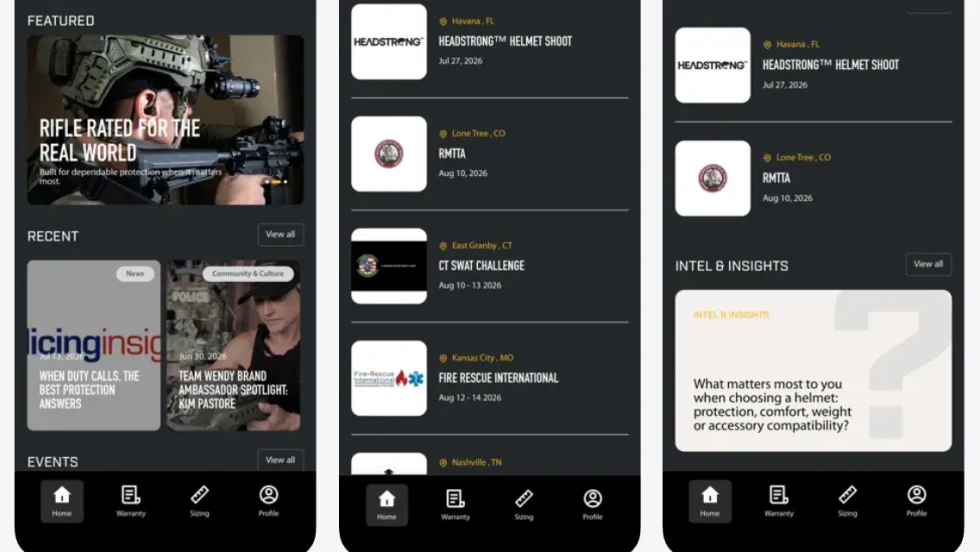
Team Wendy App Creates New Digital Hub for Helmet Owners
The Team Wendy Community App provides one location for warranty registration, size-fit tools, product updates, and community connection. For helmet owners, the new app creates a simpler path to the information and tools that matter most.
Read More →