



Battles on the Homefront
Twenty years ago, typical domestic violence calls were brushed off as trivial disputes to be settled behind closed doors. Police would either admonish the couple to stop fighting or try to mediate their dispute. By the late 1980s, however, states began to treat domestic violence as a crime rather than a private affair.

Twenty years ago, typical domestic violence calls were brushed off as trivial disputes to be settled behind closed doors. Police would either admonish the couple to stop fighting or try to mediate their dispute. By the late 1980s, however, states began to treat domestic violence as a crime rather than a private affair.
Between 1984 and 1989, arrests for minor assaults increased nationally by 70 percent, with domestic violence accounting for a large portion of the increase, according to a report by Lawrence Sherman, a researcher who studied mandatory arrest policies in Minneapolis.
Today, at least 19 states and the District of Columbia have passed mandatory arrest laws that require officers to arrest the perpetrator whenever they have probable cause to believe that abuse has taken place. And the overwhelming majority-at least 90 percent-of police agencies at least encourage arrest for misdemeanor domestic violence, compared to 10 percent in 1984 and 43 percent in 1986. Depending on the state, probable cause may require visible signs of injury, an officer's belief that abuse will continue without an arrest, or the use of a dangerous weapon in the offense.
Mixed Results
The trend toward mandatory arrest laws and prosecution without a victim's cooperation has not occurred without controversy. Even Lawrence Sherman, who coauthored the landmark Minneapolis study suggesting that mandatory arrest decreased recidivism rates. has argued that arrest should be the preferred policy--but not mandatory.
Subsequent experiments with mandatory arrest have presented mixed results. It has deterred recidivism in Minneapolis: Colorado Springs. Colo.: and Metro Dade, Fla.: but backfired in Omaha. Neb.: Charlotte. N.C.: and Milwaukee. Wis. Sherman attributed the differing results to the racial composition of the cities and the suspect's "stake in conformity," or how much the suspect has to lose by being arrested (Sherman found that married and/or employed suspects were more greatly deterred by being arrested).
Other critics have viewed the changed policy as moving a victim from one controlling situation to another where "she has no choice. But domestic violence counselors see mandatory arrest laws as critical in their fight against domestic violence. Asking a victim whether she wants to press charges against her abuser leaves the decision up to someone who is not in control of her own life.
"If you give her control, you've essentially given control to the man (who abuses her). When you live with an abuser, he controls every decision they make." said Sarah O'Shea, executive director of the Nebraska Domestic Violence Sexual Assault Coalition, based in Lincoln. Neb. Mandatory arrest laws also give victims an "out." She can tell her abuser that she's not the one choosing to send him to jail.
Now that more states have passed laws enabling or requiring police to arrest without the victim pressing charges, more prosecutor's offices are choosing to take cases to trial without the cooperation of the victim.
Convictions for domestic violence crimes are possible without a victim's testimony, but only if the police have thoroughly investigated the case and have written detailed reports pertaining to the domestic violence call.
Police should approach the investigation like they would a homicide, because chances are the victim in a domestic violence case won't testify at the trial, said O'Shea. More times than not, the victim probably will not cooperate-at least not by the time the case goes to trial. O' Shea noted. Consequently, a thorough, well documented investigation will increase the likelihood of a conviction. What police see and hear when they first enter the home is key.
"Their minds should be like a video recorder at this point." said Sandra Majors, executive director of the D.C. Coalition Against Domestic Violence.
Law enforcement agencies should have protocols and policies in place to ensure domestic violence reports are not left up to individual officer's discretion, said Debra Robbin of Boston's Casa Myrna Vazquez, the largest domestic violence service organization in New England. These protocols also can protect officers from incurring individual civil liability in lawsuits claiming they failed to protect domestic violence victims.
Such department policies and protocols should address the following items:
Medical Attention-When responding to a call, police must determine if the victim needs medical attention. It's important to routinely have the victim sign a release for her medical records at the time she is transp0l1ed to the hospital.
The victim's medical records can help document the extent of her injuries, even if the victim refuses to testify against her abuser. Ideally, if a victim is taken to the hospital for treatment, the medical personnel in the emergency room will have been trained in understanding domestic violence as well.
Victim's Statements-Officers need to document not only what the victim says when they first arrive, but also her demeanor. What the victim tells the police may be admissible in court--even if she doesn't testify-if her statements qualify as an "excited utterance" exception to the general rule against hearsay.
A spontaneous outburst following a startling event may qualify as an excited utterance if the statement relates to the incident. A statement made sometime afterward may still qualify as an excited utterance if the victim is still stressed from the event.
Some agencies, such as the San Diego Police Department. use a standardized supplemental report form for domestic violence calls (see sample on page 62). This fOl1n allows the officer to check off descriptions of the victim's and suspect's behavior. These descriptive words may be described as angry, apologetic, crying, fearful, hysterical calm, afraid, irrational, nervous and threatening.
These descriptions also can enable an expert witness to determine where the couple is in the cycle of domestic violence and help to explain any unusual behavior. For instance, the suspected abuser may seem so nice and calm when the police arrive that it may be hard for a jury to believe that he would have just attacked his wife or girlfriend.[PAGEBREAK]
An expert witness could use the police descriptions of the couple's behavior to explain that the batterer had released all his frustration by the time the police arrived: therefore, he had moved on to the "honeymoon phase" where he has his "society mask" on, Majors said. In the honeymoon phase, the abuser may be charming, apologetic or cleaning up any messes, she said.
Degree of Pain-Ask the victim about her level of pain, particularly in assaults that did not leave visible injuries. For an incident to qualify as at least a misdemeanor assault, the victim must at least have suffered substantial pain. One way to determine the victim's condition is to ask her to rate her level of pain on a scale of one to 10.
Victim's Written Statement-Have the victim write a brief statement describing the assault and her injuries. Although the written statement will not be admissible as evidence, it can be used to refute the victim's testimony if she claims the assault never happened. Her written statement also can be used to "refresh" her memory if she claims to have forgotten what happened.
Defendant's Statements-Separate the couple if the suspected abuser is present when the police respond to the house. While one officer talks to the victim, the other should try to get the abuser's version of what happened. Try to allow for spontaneous statements, since these statements may still be admissible in court. However, once the officer has determined the suspect is to be arrested-and makes that known to the suspect-then the officer should give the suspect his Miranda warnings.
Photographs-Photographs showing the location and extent of the victim's injuries can help prove how seriously the victim was hurt. Officers should photograph any damage to the home where the domestic violence incident occurred. If the victim will not allow herself to be photographed, the officer at least should make a detailed description of her injuries, including their type and location, in the incident repOt1.
After the police have finished with the initial call, they should follow up by listening 10 the 9-1-1 tapes and checking back with the victim a few days later. if possible.
Follow-Up Investigation-Since bruises typically do not appear until a day or two after an assault, checking back with the victim a few days later is an important part of documenting her injuries.
New photographs should be taken at this time. Even if the victim's injuries are not visible, the officer should ask if she is still in pain. Courts often will consider that a victim suffered substantial pain-as required by their state's misdemeanor assault statute-if the victim was still feeling pain several days after the assault.
9-1-1 Tapes-A victim's call to 9-1-1 also may be admissible as either an excited utterance or a "present sense impression" exception to the general hearsay rule. A present sense impression is a description made at the same time that the event is being observed. The 9-1-1 tape may give prosecutors a chance to let a jury hear a victim describe the abuse, even if the victim will not testify.
Some agencies destroy 9-1-1 tapes after a certain time period has elapsed. Therefore, police should try to preserve the tapes of domestic violence reports, since they can be part of the evidence in the case.
Explain Process-If police do arrest the abuser, it's imp0l1ant to explain to the victim what happens next in the process. For instance, many victims assume that their abuser will be sent to jail if he's convicted of a misdemeanor assault; however, a batterer is more likely to be sentenced to counseling.
In Massachusetts, police are required to tell the victim what her rights are. They'll also inform her that she can get a restraining order 24 hours a day, seven days a week, Robbin said.
In states where the decision to file charges is not left up to the victim, police also should explain this aspect to her. Whether or not they make an arrest, police need to ask the victim if she wants to be taken to a crisis shelter.
The Right Attitude
The majority of domestic violence reports to the police will not escalate to the level where the police have probable cause to make an arrest.
Nonetheless, the police response can be extremely important. Police can make or break the situation by their behavior and attitude, O'Shea said. Even if officers do not make an arrest, they can let both parties know they take domestic violence seriously. Since police are seen as authority figures, their attitude communicates a strong message to the abuser.
Police also can let the victim know she can always call them again. Although law enforcement agencies typically measure their effectiveness by not having to respond to the same homes again and again, "It's probably a success if you got back to the house over and over again," she said, because at least the victim who repeatedly reports domestic violence knows how to get help.
Responding to repeated domestic violence calls from the same couple often frustrates the police. "It's OK to be frustrated," O'Shea commented. But police should avoid communicating that frustration to the victim.
Officers should also focus on the investigation of the crime, she said, since it demonstrates that they're not just acting as mediators.
The police shouldn't be expected to act as social workers either. That's not their job. "We understand the police can only do so much in their job," Majors said. But referring victims to crisis counselors and shelters is vital. Even if the victim says she doesn't want the information, police should leave her a card with information about where she can get help. A victim may decide to call for help several months after the police respond to her house. "You're rarely going to see the impact you've had," O'Shea said.
However, leaving information behind with the victim may not be as helpful in situations where the abuser isn't arrested, Majors said.
The batterer may just rip up the information after the police leave. Or, after being repeatedly told that the abuse is her fault and that she is stupid, the victim may decide that the batterer is correct and decide not to call for counseling.
Rather than leaving it up to the victim to get help, some domestic violence counselors would like the police to pass along the report or at least the victim's name and phone number so they can follow up and offer help to the victim.
If police are not willing to make a policy of releasing the victim's name on their own, they could at least ask her if she would like to be contacted by someone who can provide her with help, Majors said.
"If we initiate (the call) and tell her lots of women go through this, it gives her a sense of relief. It lets her know someone else cares about her." Feeling that other people are concerned about her counteracts the abuser's message that "nobody cares about her like he does," she said.
Training to help police understand the dynamics of domestic violence is crucial to ensuring that officers respond appropriately to these calls.
Such training should also include information to help officers understand how racial, ethnic and class differences affect a victim of domestic violence.
For instance, some racial or ethnic groups have had mixed experiences with the police or may feel reluctant to tell their stories to a stranger, said Robbin. She added that cultural sensitivity is an important aspect of police training for all cases, not just domestic violence.
Kathyrn Bourn is a deputy district attorney in Clatstop County, Ore.
More Patrol
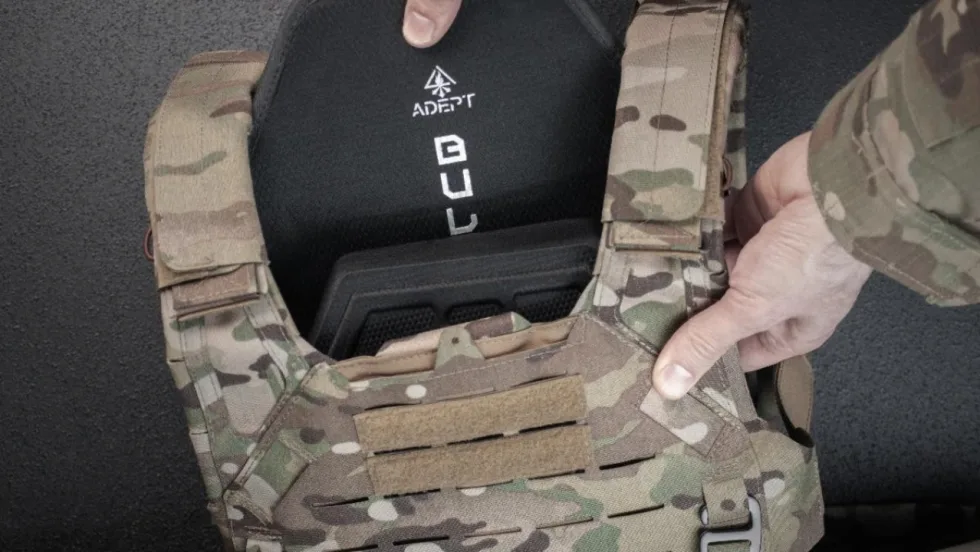
Adept Armor Introduces Two New Rifle Plates
Adept Armor has launched two new Level IV ballistic plates, the Emperor and the Archon Mark 2, which brings Adept Armor’s new Quatroid ceramic to the high-threat, performance-value center of the range at 5.2 pounds.
Read More →
POLICE Product Test: Benchmade Bailout
The Benchmade Bailout is a slim, lightweight carry knife with a deep-ride pocket clip and comes in a variety of blade steels and scales. Here is a detailed review of the Taiga Green Bailout, released earlier this year.
Read More →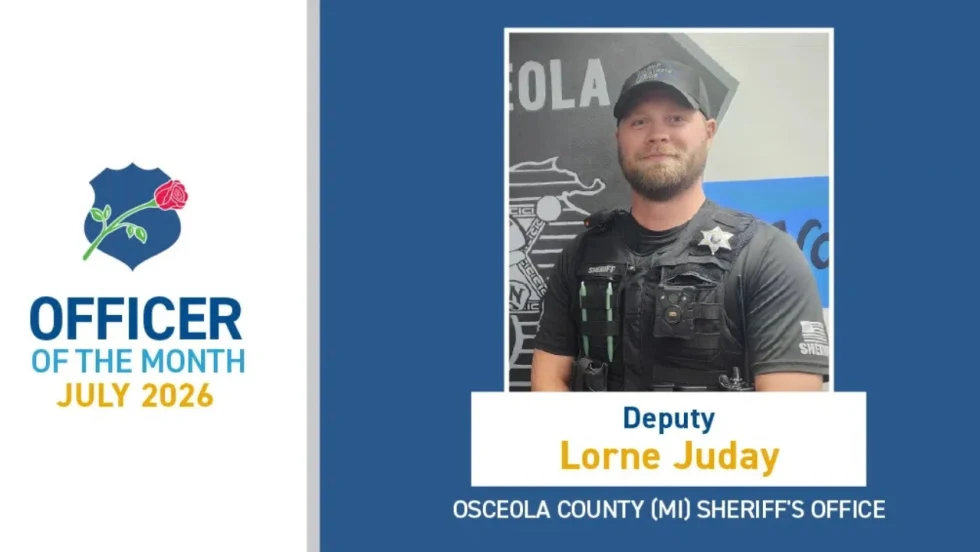
NLEOMF Announces July 2026 Officer of the Month
NLEOMF honored a Michigan deputy sheriff as the July 2026 Officer of the Month for rescuing a trapped driver from a burning vehicle following a Fourth of July crash.
Read More →
Streamlight to Showcase Newest Lighting Products at National Safety Council’s Safety Congress & Expo 2026
Streamlight will showcase its latest lights, including the Portable Scene Light III and the LiteBox 1Million, at the 2026 National Safety Council (NSC) Safety Congress & Expo.
Read More →
The 2027 World Police & Fire Games Set for Perth, Australia
The 2027 World Police & Fire Games (WPFG) will take place in Perth, Western Australia, from Friday, March 12 through Sunday, March 21, 2027.
Read More →
5.11 Partners with National Fallen Firefighters Foundation to Support #ForThe343
5.11 has joined the nationwide movement honoring the 343 New York City Fire Department firefighters lost on Sept. 11, 2001.
Read More →
Team Wendy Announces Title Sponsorship of the Jorge Pastore Foundation
Team Wendy’s 3-year partnership with the Jorge Pastore Foundation expands access to programs that strengthen those who serve.
Read More →
National Law Enforcement Memorial and Museum Hosting 9/11 25th-Year Commemoration Ceremony
The National Law Enforcement Memorial and Museum is hosting a 9/11 25th Year Commemoration Ceremony on Sept. 11 at 4 p.m.
Read More →
National Law Enforcement Officers Memorial Fund Announces June 2026 Officers of the Month
The National Law Enforcement Officers Memorial Fund (NLEOMF) named 15 officers of the Chico Police Department (California) as the Officers of the Month for June 2026 for their roles in responding to an active-shooter incident at a public library.
Read More →
Team Wendy App Creates New Digital Hub for Helmet Owners
The Team Wendy Community App provides one location for warranty registration, size-fit tools, product updates, and community connection. For helmet owners, the new app creates a simpler path to the information and tools that matter most.
Read More →