



Adventures in Law Enforcement
It's no secret that law enforcement is a multi-faceted profession. From small departments, where officers must wear many hats, to the specialists of giant metropolitan agencies, the job offers ample opportunity to sharpen wits- over and over- on a variety of levels.

It's no secret that law enforcement is a multi-faceted profession. From small departments, where officers must wear many hats, to the specialists of giant metropolitan agencies, the job offers ample opportunity to sharpen wits- over and over- on a variety of levels.
Presented here is a snapshot look at some aspects of police work and some agencies which may be seen as "nontraditional."
The story here is variety. What makes sense in Southern California may not work in Maryland. Each agency must tailor itself and what it asks of its officers to its size, resources, location and perhaps above all, to its community.
Port Police: Air, Land or Sea
In the Great Lakes states, such as Illinois or Wisconsin, officers patrolling harbor areas are often an extension of the presiding municipal police department. But in many other areas of the United States, harbor or port police are their own entities, apart from the local city department or sheriff's office. More often than not, officers performing law enforcement duties around ports, are sworn and have full police officer powers and responsibilities... and then some.
Port of Seattle
"We handle the same things municipal departments do, but also things they don't do," Lt. Ed Wortman of the Port of Seattle Police, adding that they, however, do often work with other agencies.
Wortman ticked off a couple of examples of work they have done, including a joint operation with a local agency in which a homicide suspect, disguised as a woman, was apprehended at the airport after a ticket agent matched him with a description that had been given to the airlines. It seems the guy's lipstick, nail polish and dress clashed badly. It was enough of a fashion violation to arouse suspicion.
Within the jurisdiction of the port police are Port of Seattle- owned- and- operated properties, including the Seattle- Tacoma International Airport, surrounding properties and major portions of Seattle's waterfront, dominated by the ferry- dotted waters of Puget Sound.
The Seattle department, boasting 98 sworn officers and 19 civilians, including Dispatch, maintains a Criminal Investigations Unit, Bicycle Patrol, Dive Unit, Marine Patrol, Tactical Services Unit, Hostage Negotiations Unit, Bomb Disposal Unit and Dignitary Protection.
Regarding the strengths of his agency, Wortman cited community rapport. "No agency has enough time, resources or personnel to do everything by itself. Our strength is our ability to work with people and interact with our community."
Port of Los Angeles
Officially founded in 1907, the Port of Los Angeles today serves perhaps one of the busiest ports in the nation, accommodating 29 different facilities that handle all types of cargo. Overseeing operations is Chief Noel K. Cunningham, of the Los Angeles Port Police. This agency, with more than 50 sworn officers, claims to have the only police force in the nation dedicated exclusively to port activities.
With more than 7,500 acres to cover, officers patrol the port's environs 24 hours a day and their duties are many and varied. Port officers patrol their jurisdiction by car, bicycle, boat, and helicopter and are responsible for ensuring the safety and security of passengers, cargo and vessel operations.
Integral to the port police is a 12-member dive team that often assists the U.S. Cost Guard in oil spill investigations, accidents and other incidents. Officers also participate in the multi-agency Cargo CATS (Cargo Criminal Apprehension Team). MAST (Marine Anit- Smuggling Team) is another cooperative effort to stem the flow of contraband into the area. In addition, a K-9 unit works to sniff out narcotics among the nearly 2,600 ships visiting the port.
Lt. Ron Boyd, a 20-year veteran of law enforcement, is in charge of Special Projects and Flight Operations for the port police. "Cargo theft is out number one concern as an organized crime problem," said Boyd.
"The primary mission," said Boyd, "is to make sure the port is secure." He explained that within the port area are large industrial components, a commercial component and a small residential component in the form of a liveaboard (people who live on their boats) community.
"Hazardous materials are a growing concern. So many things require special handling," said Boyd, who listed old, liquid petroleum gas, radio active materials, and explosives as top concerns.
Of his line of work, Boyd said, "The thing that's enjoyable is you never know what you're going to get in any one day. There's nothing like it. You could be hovering over a crime scene in a helicopter or recovering bodies out of the ocean."
Port of Charleston Ports Authority
The Port of Charleston Ports Authority Police are licensed state constables with the same authority as state troopers. "We have facilities in five different municipalities," said Byron Miller, public relations manager for the Port of Charleston. "We need to have statewide authority because of all the counties that are covered."
Miller explained that Charleston's approximately 55 port police officers have the same authority as state troopers. Therefore, their authority is not confined to port facilities. In fact, some officers are also deputy U.S. marshals. Said Miller, "We run into situations where we need to board vessels (as in the case of stowaways on board)." He said the extra designation makes it a little easier to carry out these types of responsibilities.
There are four terminals in Charleston and three more in other areas. Officers patrol a total of three different ports, spanning a service area of 1,000 acres of industrial property, 24 hours a day. They accomplish their mission by vehicle, bicycle or on foot and are assisted by computers, including some mobile setups, radar and communications devices.
"Safety and security are our top priorities," said Miller. "We're really careful about this, with $27 billion moving through the area annually."
Miller credits what he calls "exceptionally low pilferage raters" in the port authority jurisdiction to proactive and reactive policing.
The port police are also active in working with other police agencies in the area. "We maintain strong relationships," said Miller. "It's key to successful operations in the marine or waterfront environment."
Crime rates tend to be low. "We've been very fortunate," said Miller. "A lot of other port agencies have problems with vandalism."
He said the key to the agency's success is ongoing professional development. "We want people who are capable and true specialists- not just someone with a gun and a radio."
New York/ New Jersey Port Authority
Founded in 1928, the N.Y./ N. J. Port Authority Police is said to be the 23rd largest department in the country. With more than 1,300 sworn officers, the agency, overseen by Director Fred Morrone, covers a jurisdiction called the Port District, which lies in two states and within a 26-mile radius of the Statue of Liberty. Included in the beat of this large agency are New York's three international airports, four interstate bridges and two tunnels, the Port Authority Bus Terminal, World Trade Center, marine terminals and the PATH interstate rail transit system. Crime has taken a nosedive in many of these areas.
Officers are charged with carrying out regular police duties, both on foot and in Crown Vic cruisers. Other duties call for the use of helicopter or one of several small boats or fielding one of the nation's largest K-9 units. Port police assignments can range from patrolling, crime prevention, investigations, and drug interdiction, to traffic control and emergency first response. A unique aspect of this agency is that of the port police officers assigned to the airport beats, a number are also cross- trained as firemen and EMTs or paramedics.
In fact, the department was recently named Emergency Medical Services Agency of the Year and one of its officers, Lt. Kathy Mazza, was named the Basic Life Support Provider or New York City for 1997.
Quality of life issues, related to the homeless and missing youth, are given a priority in this agency in the form of outreach programs, often centered around bus terminals. Around the ports, themselves (Port Network and Port Elizabeth), officers focus on providing safety for port authority tenants and guarding against cargo theft.
One of the greatest concerns for the department is providing safety and security for those using facilities within the Port District. But Morrone added, "Terrorism, since the 1993 World Trade Center bombing, is always on my mind."
When asked why someone would transfer to his agency, Monroe said, "It's a good job!"
Airborne Law Enforcement: Guidance From Above
When it comes to performing their duties, the sky is limitless for officers who either double as pilots or serve as airborne officers with a civilian pilot. Some departments have their own airborne division, while others are the result of interagency efforts. Though the operation of such units differs from agency to agency, one thing seem certain: Airborne units help to enhance officer safety as well as public safety.
[PAGEBREAK]
The Maryland State Police
Established in 1960, the Maryland State Police Aviation Division has long had its eye on public safety. While originally, the division was designed to provide airborne law enforcement, its role was expanded in 1970. Today, under the supervision of Commander Major Donald G. Lewis, the division offers law enforcement, emergency medical (specializing in shock/ trauma cases) and search and rescue services around the clock.
To help fulfill its three- pronged mission, the MSP fields a fleet of 12 Aerospatile helicopters, the newest of which is a powerful twin-engine Dauphin N-3. The crew aboard each helicopter consists of a pilot and a state trooper who is also a nationally registered paramedic. Currently there are 45 trooper/ flight paramedics, 51 flight-suit uniformed and civilian pilots and 59 additional support staff. Current trends indicate that civilian pilots will soon replace the trooper pilots.
"Some troopers are pilots but we are civilianizing," said Public Information Officer Capt. Greg Shipley. Shipley added that his agency feels that civilianizing the pilot positions is more cost effective due to the training that goes into a Maryland state trooper. "We can better use sworn troopers out on patrol. But there is always a sworn trooper in the aircraft."
With eight hangers scatters throughout the state, MSP Aviation Division teams are never far from rendering assistance when needed. Said Assistant Commander Captain James Spicer, "The furthest out we are from any trauma center is 18 minutes. And our ships cruise at 220 mph."
Spicer told POLICE they do a lot of medevac operations as well as search and rescue, plus supporting other agencies. Regarding law enforcement operations, Spicer said that monitoring felons, fleeing a crime scene, is probably the most common. In such a case, the air units stay in contact with ground units and provide direction from their vantage point. In 1997, 137 criminals were apprehended with the help of the airborne units.
When asked about the role of airborne units in law enforcement, Spicer, who has 29 years of law enforcement to his credit, said, "I see it growing because drugs have made society fearful. Our role is increasing because we're having more chases due to drugs." He added that due to helicopter noise, they haven't been widely used in surveillance operations, but new camera technology, which will allow surveillance at a higher altitude, may change this.
Equipment carried on board MSP helicopters includes FLIR (forward looking infrared). Spicer expects to see an increase in new high-tech equipment.
When asked what the primary concerns are for his division, Spicer said, "Safety. Any mission we go on, safety is always foremost. Landing zones can be a concern with telephone wires, highways, ect. Unlike other types of helicopter service, our missions are launching from a known location and going into the unknown."
The Los Angeles Police Department
The LAPD Air Support Division, begun in 1956, is the second oldest, behind New York.
"We're all here because we love to fly," said Commander Lt. Keith Johnson, who has been in the LAPD Air Support Division for nearly 20 years.
All pilots in the division are sworn officers. They must have five years experience as officers, have three years field experience and already be a pilot before they undergo helicopter training and win their command pilot wings.
Air support units, consisting of an officer pilot and tactical flight officer, cruise the Los Angeles airspace mostly in an assortment of mostly Bell helicopters. There are currently 45 pilots in all, counting supervisors.
"We used to get a lot of our pilots from the Vietnam era, but those people are all retiring or have retired. Most of the pilots we get now are actually out of our tactical flight officer ranks," said Johnson.
For the air support division, the service area is divided into three geographical areas. Also within the Los Angeles area are several other non- LAPD jurisdictions. Regarding crossing some of these jurisdictions, Johnson said, "Frequently both agencies' air units end up responding to the same location and so that obviously poses the threat of a mid- air collision. So one of the things that we do is if we know we're working right on the edge of the county or vice versa, we generally try to get hold of their air unit to make sure they understand where we are."
Said Johnson, "We have pursuits that go all over the county- all over the state actually- from time to time and we would stay with our own pursuit generally."
For this major metropolitan air division, there are several law enforcement roles, but perhaps the main one is to pass along information. "We're a flying black-and-white police car is what we are. But we have 360 degrees and usually a few square miles of vantage point that we can see all at the same time. Obviously officers on the ground don't have that advantage.
"It's a major issue protecting the officers on the ground, in terms of officer safety- so they don't walk into a situation and get blindsided. It also is extremely effective from a tactical standpoint."
Los Angeles has been dubbed, by some media, the pursuit capital of the world. In the case of such chases, Johnson said, "Obviously the helicopter is a vital tool and we've taken on a more pivotal role in recent years, particularly because of the fact that people get hurt in pursuits.
"When the helicopter gets overhead, that really allows the guys on the ground to back off. They don't have to bumperlock people, they don't have to proceed at these breakneck speeds. Once we're overhead, we're not going to lose the suspect," Johnson said. "It's just a matter of time."
Equipment on board includes an infrared system/camera (most effective at night), a high-resolution Song video camera (more for daytime use), a monitor, and a computerized mapping system containing all the street maps of Southern California as well as airport and FAA kinds of maps. In addition, all helicopters are outfitted with the Lo-Jack stolen vehicle recovery system. Johnson said they have been able to recover numerous stolen vehicles with the system.
Another technological advantage cited by Johnson is the radio telephone, which allows confidentiality over the airways. It not only allows air units to call victims and reporting parties back from additional information, but allows them to talk with suspects on occasion. "We actually talk people outside," he said.
Johnson said that at times they have had problems with media helicopters getting in their airspace, but that this has become less the case in recent years, since some guidelines have been agreed upon.
The division has been involved in the arrest of approximately 10,000 felony suspects a year and typically recovers about 500 stolen cars a year. It flies around 18,000 hours every year, is involved in about 600 pursuits a year, and recovers more than a billion dollars in narcotics each year. "It's a big operation," said Johnson. "We feel very strongly that we more than pay for ourselves."
"The guys on the ground would not be comfortable without the helicopter. It really changes their tactics when they don't have the support of the helicopter. It's a huge safety issue."
Bernalillo County (N.M.) Metro Air Support Unit
With a population of 600,000 Bernalillo County is a 1,169 square-mile environment of everything from open mesa to dense national forests. Albuquerque, the main urban area, has a population of 425,000 tucked into 180 square miles of incorporated area.
The Bernalillo County Metropolitan Air Support Unit is a study in interagency teamwork. A joint effort between the Albuquerque Police Department and the Bernalillo County Sheriff's Department, air unit teams are always made up of one police officer and one sheriff's deputy. The unit is a cost- effective way for the community to share the service.
Officer Dave Bartram, the unit's one full-time pilot, has been flying since 1970, starting in Vietnam. After 21 years as a patrol officer, Bartram joined the unit at its inception two years ago, when they bought their first helicopter, a 1972 Bell Kiowa OH-58.
Bartram said that at first, citizens complained about the noise of the helicopter, "We've noticed an impact on crime. Citizens are accepting us and the noise. They're realizing that when we're overhead in their neighborhood, there's a law enforcement presence. Now they like what they hear."
Citing some of the advantages of an airborne unit, Bartram said, "You can get over a scene so much quicker. We have the light and the infrared imaging system with a 360-degree scope."
"In a pursuit, we can have the ground units disengage and we can keep an eye on the suspect, removing visual stimulation for the bad guy to run. We just monitor him and see what he does. We try to look ahead to where a suspect is going and have units lay a ground spike belt."
Like the LAPD's Lt. Johnson, Bartram said they have been able to cut down on pursuit- related accidents and said that sometimes a spotlight alone can stop a suspect.
Unit teams are on call 24 hours a day with 16 to 20 hours of actual flight time during a normal work schedule. Two observers - one police officer and one sheriff's deputy- rotate.
Deputy Erik L. Little, of the Bernalillo County Sheriff's Department, has been a law enforcement officer for 10 years and has flown as an observer for two years. Little has a fixed- wing license and is working towards earning his helicopter wings.
"City guys are cross- commissioned with the sheriff's department so that they can perform law enforcement functions in the county," he explained.
Bartram and Little said that a civilian contract manager or commander works with a board made up of members of both agencies.
As far as major concerns, outside of crashing and equipment malfunction, Little said, "We got shot at quite a lot but that's not really a concern of ours. It'd be pretty hard to hit an aircraft."
Assignments include some search and rescue and fire department support, but, said Little, "Patrol is our main function- any kind of call that's high risk- pursuits are the main one." He added that visual documentation by the helicopter unit helps to protect agencies from liability.
Little feels that the greatest impact of the air support unit lies in faster response time than ground units, plus the advantage of having a bird' eye view, to direct ground units. "We have the tools like the thermal imager and the spotlight. That's used mainly for the guys on the ground to be able to see what's going on.
"We're like a bird up there. We can see this mouse running around everywhere and we can tell the other birds on the ground how to get this mouse."
[PAGEBREAK]
Illinois State Troopers- Air One
When the Chicago Police Departments needs a helicopter unit, they call the Illinois State Police's Air One. The Illinois State Police Helicopter Unit, headed by Bureau Chief Master Sgt. Robert Haley, was created in 1995 with the mission of providing assistance to local law enforcement agencies. Trooper Michael Size, who serves as a flight officer, said that the types of service rendered most commonly include criminal seraches and pursuits, though surveillance, searches for missing person and missing children are not unheard of.
Size said that crews aboard the unit's two helicopters at any one time, include a flight officer and a pilot. Pilots currently are predominately civilians, with only two out of either being sworn officers. There are nine flight officers, with the two pilots occasionally doubling as flight officers.
Size, who has working with the unit since its inception four years ago, said that he is working towards becoming a pilot. In fact, he said Air One is in transition in that it is aiming to make pilots out of all of its flight officers, essentially de-civilianizing.
Size said that for years the Midwest never had any airborne units. Today, the Illinois State Police have one helicopter, a Bell Oh- 58 A+, in the Chicago area while one other helicopter, a Bell 206 JetRanger, lies in wait in Springfield. The response has been positive.
"We're based in Chicago, but cover a six- county area around Chicago," said Size, who added that most of their work is in outlying areas.
Of the benefits of their air unit, Size said, "We're there to give local departments an aerial platform. Most local departments can't afford their own helicopters so we provide assistance 24 hours a day."
As most other members of airborne units have reported, helicopter use during pursuits is given high marks. Said Size, "Often the vehicle will slow down as soon as they're not being chased."
As for equipment, similarly to other units, Air One helicopters are equipped with thermal imaging/ video systems which provide a 360-degree perspective, spotlights, tactical radios, and laptop computers with a street mapping system.
Size sees his unit as being a major asset to the community he serves. "If there's a situation that develops, like a missing child, a smaller department might be hampered and spend hours searching on the ground. We can cover a large area in a much shorter time. It's a real time saver."
School Police: Making the Grade in A Specialized Field
Increased school populations have led to a demand for increased security at schools. Sometimes a school district may maintain a security force and call local police for assistance on crimes and other law enforcement matters. But other districts go one step beyond, participating in school resource officer programs or creating sworn police agencies under respective state laws. School police, then, are not security guards but sworn law officers, assigned to walk the K- 12 beat. It's a job perhaps even more demanding than any street detail.
School Resource Officers
Thanks, in part, to the Department of Justice's Community Oriented Policing program, an increasing number of school resource officer programs have been taking off. It's not a new concept, though, and involves a municipal police department assigning an officer to a school campus.
In this instance, officers are often called School Resource Officers (SROs). Officer Sean Burke, of the Lawrence (Mass.) Police Department, and Officer David Kamleiter, of the Scottsdale (Ariz.) Police Department, are examples of this. Burke and Kamleiter are both affiliated with the National School Resource Officers Association, headed by Director Curtis Laverello. They work in areas that are on opposite ends of the country and that are polar opposites, economically speaking. Both, however, are convinced that an officer presence is of great value in schools, no matter what agency the officer works for.
The two officers did acknowledge an inherent problem for SROs: At any time they may be transferred or promoted out of a school assignment, disrupting any continuity that's been built. But they don't seem to see this as an insurmountable obstacle.
Said Burke, "I think the thing that helps you is that once you bond with the community or the school district, they may actually put pressure on the police department to keep you where you are. I know SROs who have turned down promotions so they could stay at the school."
Of working as an SRO, Kamleiter said, "It's the first time ever, in my career in law enforcement where you can actually see yourself making a difference in these young adolescent lives."
Los Angeles Unified School District
"You have to be extremely flexible to work in our department," said Officer Russ Orlando of the Los Angeles Unified School District Police. The department which started in 1948, currently fields approximately 300 sworn officers in 27 geographical areas, under the stewardship of Chief Wesley c. Mitchell. The department serves the second largest school system in the nation. LAUSD officers are responsible for protecting students, staff, citizens and property on and in the vicinity of 900 campuses through the district.
The LAUSD comprises several units which include campus officer, patrol officer, training officer, detective and traffic enforcement units, a full- time bicycle patrol unit, and an 18- member special response team.
Because of the academic nature of the assignment, educational standards are also high. As many as 60 percent of officers hold college degrees.
Throughout the urban sprawl of the Los Angeles metropolitan area, and including 13 contract cities, situations encountered by LAUSD police often involve fights, guns and other weapons and drugs, Orlando told Police. Also, as the areas they work in cross city lines, officers must know all the procedures of those different cities and must often work in concert with other agencies.
Orlando said that though the most common problem encountered by LAUSD officers is possession of tobacco or marijuana, truancy is probably the greatest problem. "A lot of daytime burglary is linked to truancy," he said, adding that bike patrols have made a difference in the area.
To help curtail this activity further, officers not only pick up the young miscreants, cite them and return them to school, but often become involved in after- school programs, such as a girl's basketball camp, overseen by Officer Anthony and run in conjunction with the Police Athletic League. In addition, the department sponsors a district wide scholarship program for graduating seniors.
Orlando told POLICE that he enjoys his career. "You see high school students come in as ninth graders and go out as 12th graders. You bond with the kids - whether they're good, bad, or gang members. We can be role models and can make a profound different in someone's life." He said that it is not uncommon to find one-time students who were so influenced by school police officers themselves.
Palm Beach County School District
Headed by Chief James Kelly, the Palm Beach County School District Police Department takes care of law enforcement duties in the largest county (with a population of approximately 1 million) east of the Mississippi.
"We started a while before they coined the term 'school resource officer,'" said Kelly of his department which was started with federal grants more than 20 years ago.
The department currently fields 98 sworn officers with anywhere from two to 20 years of experience in law enforcement. "The average officer has 15 years of experience," said Kelly. "I don't hire rookies. We get people who are mature and can handle people well, because kids know how to push buttons."
After being hired, officers receive specialized training in subjects like gang awareness, defensive tactics, and crisis intervention.
Some officers work with gun detection dogs and have helped to reduce the number of firearms and weapons cases. Officers also often conduct presentations in classrooms, especially with the younger kids. After- school programs are popular.
Kelly told POLICE preparedness is one of the department's greatest concerns. "Ninety-eight percent of the kids are great all the time, so there is a tendency to relax defenses. We need to maintain that level of alertness for the occasional time when something does happen."
Frequent problems with which officers deal are a large number of thefts and fights. Truancy, while also a concern, doesn't deem to be a critical as what the LAUSD describes.
To combat some of these problems, the PBC School District Police Department fields several programs. Kelly described crisis intervention and conflict resolution training for kids, a youth court and the Truancy Interdiction Program, which was recognized in 1996 as one of the best prevention programs by the International Association of Chiefs of Police.
Officers also work with teachers in some of these areas, providing them with skills and ultimately confidence to deal with student confrontations as they occur.
Said Kelly, "We have good community effort- interagency cooperation and community support. We also have good rapport with the administration. There have been a lot of philosophical differences but they've been resolved. We have a lot of common ground."
Albuquerque School District
The Albuquerque School Police has been in existence since the early '70s. With 120 sites to watch over, the 18 officers, five sergeants, one assistant chief, one chief, and seven dispatchers stay busy. Chief Gil Lovato, who signed on with the department nine years ago said of his officers, "We do more than just show up to monitor criminal activity. We're there to help the kids, talk to them about problems they have at home or about drugs. The officers are there all year long."
"The thing with school police departments, especially this one that's been here for 20 years," said Locato, "is that police officers who are assigned to the schools by a metropolitan police department- they come and go (are reassigned). In the case of a school police officer, they know most of these kids from kindergarten to high school."
Sgt. Julio DelaPena has walked his beat as a school police officer for 24 years. As an officer in this environment, he said his goal is to make kids feel safe. "We want kids to know they can come to a cop for help. We're trained for counseling and mediation, educating, teaching accountability. We're here for the kids to talk things out. We get to know these kids and their families."
In DelaPena's view, the most daunting problems encountered in the schools are truancy, dropout rate, alcohol and drugs, assault and battery.
Sgt. Joe Lopez, an officer with the department since 1989, cited the additional problem of domestic violence.
Said Lopez, "Our jurisdiction is on school grounds exclusively, though we will handle problems that have to do with school buses and things that affect the functioning of school grounds."
Special programs include a truancy court, designed to intervene in such problems, coverage of athletic events and a critical incident management program, in which officers work with staff and teachers to impart skills they can use in a crisis, until police arrive.
Said Lopez, "As an officer, I really like being part of a school community. It's like a little city in miniature. Being a high school detective, you get to know who you can go to for information, who the good guys are, who the bad guys are and that type of thing. To me it's a really satisfying experience."
More Training
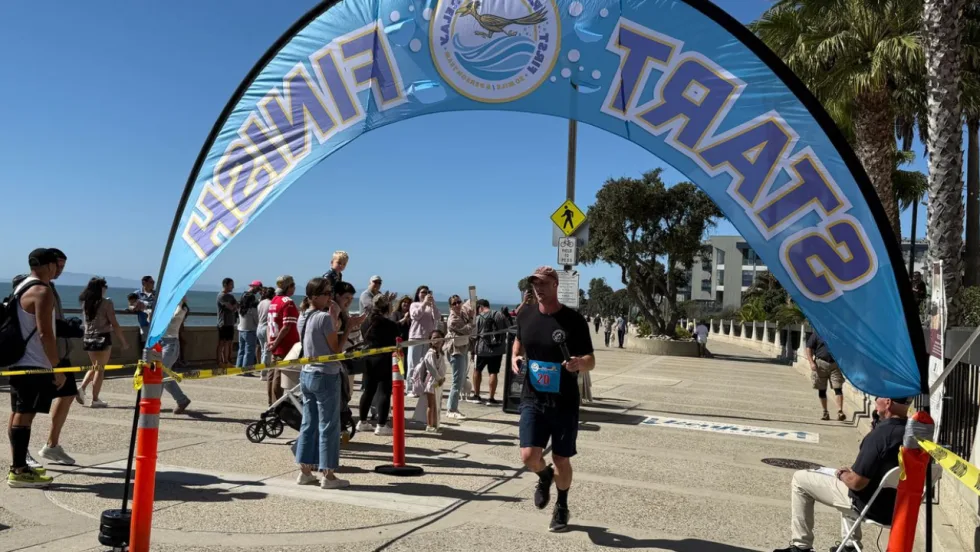
Registration Underway for Sixth Annual First Responders Relay
The California Police Athletic Federation’s annual First Responder Relay will welcome first responder teams from across the globe to compete along Ventura's scenic coastline on Oct. 11. Registration is underway.
Read More →
Vector Solutions Launches Comprehensive Online Dispatch Training Catalog for Emergency Communications Professionals
Vector Solutions’ new catalog of 35 expert-developed online courses can help emergency communication centers strengthen training, meet certification requirements, and simplify continuing education.
Read More →
Tools for Active Shooter Response Training
What technologies help prepare officers for active shooter response situations? This behind-the-scenes look at law enforcement training explores shot simulators, smart firearms, laser target systems, and the tools used to build safer, more effective training environments.
Read More →
Two-Officer Tactical Doorway Entry Techniques
Entering a room during active-threat situations requires communication, coordination, and disciplined tactical movement. In this video, trainers from the United States Deputy Sheriff’s Association demonstrate critical room entry concepts, including fatal funnel awareness, team coordination, and safe tactical movement.
Read More →
High Compressed Ready Explained | Muzzle Control For Room Entry
In this video, Mike Willis, law enforcement national training and program director for the United States Deputy Sheriffs’ Association, demonstrates the high compressed ready position and discusses muzzle control during room entry.
Read More →
Why Attend the DroneSense Innovation Summit by Versaterm?
Let’s hear from Ryan Bracken, head of product, about why your agency should send someone to the first annual DroneSense Innovation Summit by Versaterm in April.
Read More →
Caswell Live Fire Spins Off from InVeris
Caswell Live Fire has spun off from parent company InVeris, coinciding with the 100th anniversary of Caswell’s founding. Over the past 100 years, Caswell has developed pioneering solutions that support military, law enforcement, and commercial clients worldwide.
Read More →
When Do You Transport a Wounded Officer Instead of Waiting for EMS?
Thumbnail for video series POLICE Topics, Tactics & Tips with a yellow headline that reads When Do You Transport a Wounded Officer Instead of Waiting for EMS?
Read More →
How to Pick Your High-Risk Stop Location for Tactical Advantage
Hear veteran trainer Mike Willis, of the United States Deputy Sheriff’s Association, explain several considerations that can help you wisely pick your best spot to initiate high-risk or felony traffic stops.
Read More →
Coffee Break with Police Experts: Using Your Patrol Vehicle for Cover
In this video, hear from Dustin Mowery, a product specialist at Team Wendy, as he discusses how to best use a patrol vehicle for cover.
Read More →