



11 Tips for Preventing Officer Struck-By Deaths
In 2018, after 40 years of service, Col. Tracy G. Trott retired from the Tennessee Highway Patrol and tackled the challenge of trying to help the Colorado State Patrol uncover the reasons behind the agency’s struck-by deaths.


There are steps departments can take to reduce the chances of struck-by incidents involving officers operating along roadways.
POLICE
The number of officers killed when struck by a vehicle decreased by 35% from 2022 to 2023, from 15 deaths to 10, according to the National Law Enforcement Memorial Fund. However, those numbers do not include officers who were struck and injured but survived.
Whether directing traffic, investigating a crash, executing a traffic stop, or assisting a stranded motorist, roadways and the shoulders of roadways present many dangers to officers across the US.
According to the NLEOMF report, four of the 10 officers lost to struck-by line of duty deaths (LODDs) in 2023 were hit by vehicles while deploying a tire deflation device.
Researching Struck-By Incidents, Suggesting Solutions
In 2018, after 40 years of service, Col. Tracy G. Trott retired from the Tennessee Highway Patrol and tackled the challenge of trying to help the Colorado State Patrol uncover the reasons behind the agency’s struck-by deaths. His research helped shape an approach to better prevent such incidents going forward.
Trott provided an external review of CSP’s struck-by deaths, visited Colorado four times, conducted 55 interviews, produced a 24,000-word report, and shared recommendations.
POLICE asked Trott to share his suggestions for agencies on steps they need to take to prevent struck-by incidents. His suggestions are:
1. Departments should develop a robust in-house personal safety and awareness training program.
Most personnel identified a need for more personal safety and awareness training when addressing complacency, struck-by LODDs, and injuries in the department. This is essential in eliminating the cultural influences that many believed play a part in roadside tragedies.
I am not aware of any specific national program that primarily addresses roadside safety, which is our main concern. Additional situational safety awareness could always be added to the program in the future.
This training should be developed with the struck-by crashes in mind and those cases should be used as training opportunities. There has been a hesitation to use the LODD cases out of respect for families and court proceedings.
These painful examples could change behavior and possibly save lives. The mistakes should be discussed and emphasized. The aim is not to criticize but to prevent future incidents.
Safety awareness skills are self-diminishing and must be repeated often, whether every year or every two years at in-service training. The training should be attached to the department’s wellness program and viewed in that light.
2. There needs to be a dramatic increase in move-over enforcement connected with social media and press information consistently, especially in target areas of the struck-by incidents.
Statistics show a correlation between increased enforcement and a reduction of struck-by incidents and no LODDs.
When enforcement declines, the struck-by incidents dramatically increase and LODDs occur.
This does not have to be a full-time effort. The department should organize enforcement days (with other departments if possible) or a block of hours to concentrate on move-over violations regularly throughout the year.
The initiative could be labeled “Move Over Monday” or “First Responder Friday” enforcement on social media and press releases.
3. Departments should create a policy designating non-traffic or passenger-side approach as the official tactic for motorist interaction on limited access highways, allowing exceptions for terrain, barriers, etc., or tactical and safety reasons.
This policy encourages a non-traffic side approach without eliminating other tactics for appropriate reasons. During interviews, the non-traffic side approach was generally accepted as the primary method for safety reasons.
There could be situations such as investigating an impaired driver which may require closer contact. Physical barriers and terrain also dictate the traffic-side approach.
Adopting this policy will encourage more personnel to use the non-traffic side approach without eliminating other options if necessary. Veteran officers indicated resistance to changing to a new tactic at traffic stops.
The result of making non-traffic side approach the “official” position of the department will lead to more safe interactions for officers without eliminating alternative options.
4. The department should show any available video of struck-by incidents to every officer to emphasize safety practices and eliminate careless actions.
A reenactment video (from the CSP) that depicted the struck-by death of a trooper in 2019 demonstrates the lack of visibility and clarity in the dark using an ANSI vest and a flashlight. Seeing this would be a great learning tool for any department.
Officers feel invincible and that blue lights, patrol cars, ANSI vests, and flashlights make them safe.
This video represents a demonstration showing that is not the case.
In the dark, no driver could discern what was viewed in the dark with a flashlight and an ANSI vest as a first responder.
Demonstrating that realization could be valuable and save an officer’s life in the future.
5. The chief/colonel/sheriff should meet with all supervisors in two groups, upper command and field supervisors, to ensure that his messaging on traffic incident management (TIM) training, protocols, and road closure policies are adhered to by all as it flows to the field.
Small departments may have the chief meeting with the entire department. The chief should also establish a communication avenue from field officers to upper command to express safety concerns involved in their work.
This could be in the form of an officer/trooper council that meets with the chief several times per year.
6. All patrol cars should be retrofitted with the newest reflective arrow markings and other safety reflectors.
These markings could be a highly effective safety measure. The Arizona Highway Patrol and the Colorado State Patrol have invested in very effective safety reflectors.
As other safety equipment is developed and ordered, target counties (where struck-by incidents have occurred) should be a priority.
The Dodge Durango and Chevrolet Tahoe patrol vehicles (higher profile and more visible) offer more protection for roadside officers performing their duties. Of course, this must fit within a department’s budget.
7. TIM training should be a yearly training and subject matter for quarterly training days and/or in-service training.
This is not the type of skill that you are taught once and retain it. It diminishes over time with routine, complacency, and cultural influences. TIM training must be reinforced on at least a yearly basis to make it one of the department’s safety cornerstones.
The training does not have to repeat the initial course. A two-hour scenario or an after-action discussion on a critical event are examples of effective periodic training that keeps TIM in the forefront of the officers' thought process.
Dealing with these situations has become one of the most dangerous things officers do on a regular basis. There must be a time planned each year to make safety a priority.
8. An after-action debriefing should occur in a timely manner with all disciplines after every major crash/road closure incident.
This is where you hear the thoughts and understand the actions of the other disciplines. It can lead to an immediate learning opportunity, assist in future coordination with those departments, and further the TIM initiative.
This also allows the local supervision of any department to strengthen the TIM Team in that location.
9. TIM Training should be mandated for all towing services (every driver) on a department towing rotation.
The towing service plays a critical role in TIM. Many times it is the skill of the tow truck operator that determines the length of a road closure or an officer’s exposure to dangerous traffic.
This can be accomplished in a calendar year if you have TIM trainers in-house in all areas of the jurisdiction to do the classes.
It is also an opportunity for a department to take a lead role and invite other disciplines to the training (4-hour required class).
My experience with this in Tennessee was positive.
The towing industry embraced that they play a part in the process deemed critical by the state police organization. Those few who did not complete the training were taken off the rotation.
Once the training is in place, the dispatchers can be given a list of all drivers who have completed the training to check against the assigned tow operator. The training gave tow operators insight into what other responders were trying to accomplish in a coordinated effort to be safe and clear the scene quickly.
10. There should be more public awareness on safety.
This can take many forms. There should be an effort for more warning signage (fixed and electronic) especially in high-traffic areas.
One statement made during my interviews was “They (department leadership) spend a lot of time trying to fix us when we need to be fixing them (the motoring public).”
The public relations unit should be constantly looking for opportunities to reach the public with safety messaging relating those messages to the activities of a department like “move over,” DUI campaigns, construction zones, first responder safety, traffic incident management, specialized training/units, and fatality crash investigations.
These events can be publicized on Twitter, Facebook, Instagram, or through press releases.
In Tennessee, the THP created Twitter accounts for each public information trooper (a sergeant and a lieutenant for each of the eight districts) that covered the state. Department leadership and field commanders should always be available to the media for public awareness messaging and interviews concerning current events.
The public relations unit should be able to vet these interviews quickly. There needs to be a focused effort to engage people and groups in schools and industry to promote safety and public awareness for first responders.
11. Strengthen texting and driving statutes.
Distracted driving is one of the top issues in traffic safety with the advent of electronic devices and higher traffic volumes.
Final Thoughts
As stated before, there is no “silver bullet” that will solve all struck-by safety concerns. There will have to be a series of changes that can make the officer’s work environment safer.
A note of reflection on the Colorado State Patrol study - five LODDs occurred from 2015-2019.
I completed the study in 2020 and it was distributed to the entire Colorado State Patrol. They adopted many of the recommendations in the report.
To this date, not another struck-by LODD has occurred.
More Patrol

Team Wendy Introduces the EXFIL Endurance Ballistic Helmet, Engineered to Reduce the Burden of Extended Wear
Team Wendy has launched its EXFIL Endurance, a new lightweight ballistic helmet engineered to deliver protection, comfort, and fit during demanding, extended operations.
Read More →
The First Responders Children’s Foundation National First Responders Day Roll Call of Heroes Ceremony Returns to Times Square, NYC
First Responders Children’s Foundation (FRCF), in collaboration with T-Mobile, will host the Roll Call of Heroes ceremony in Times Square to commemorate National First Responders Day on Wednesday, Oct. 28. During the event, FRCF will present 18 Hero Awards.
Read More →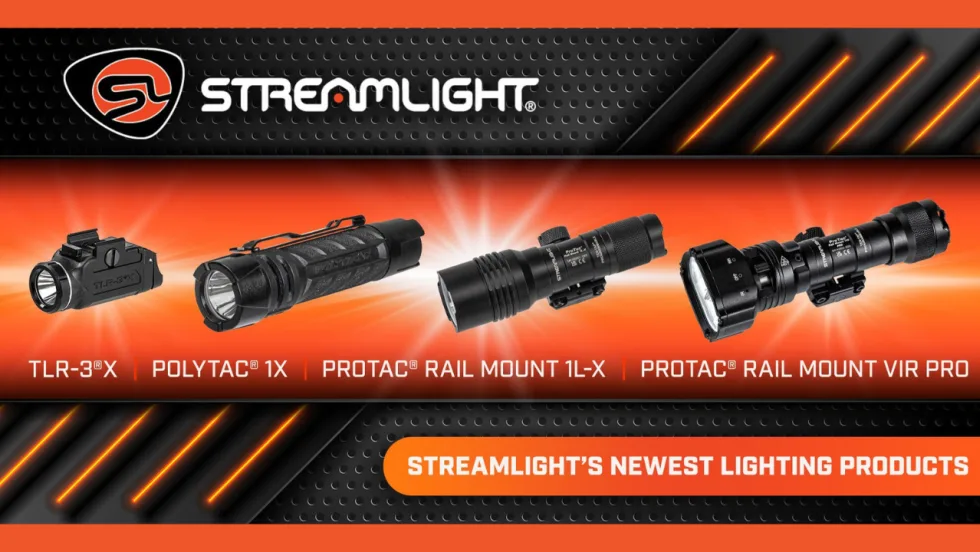
Streamlight to Showcase Newest Lighting Products for Law Enforcement Professionals at IACP 2026
Streamlight will showcase its newest lights for law enforcement at the International Association of Chiefs of Police Annual Conference & Expo. Featured lights will include the TLR-3 X, the PolyTac 1X, and more.
Read More →
Streamlight Portable Scene Light III Wins 2026 OH&S New Product of the Year Award
Streamlight’s Portable Scene Light III has won the 2026 Occupational Health & Safety (OH&S) New Product of the Year Award in the Lighting category.
Read More →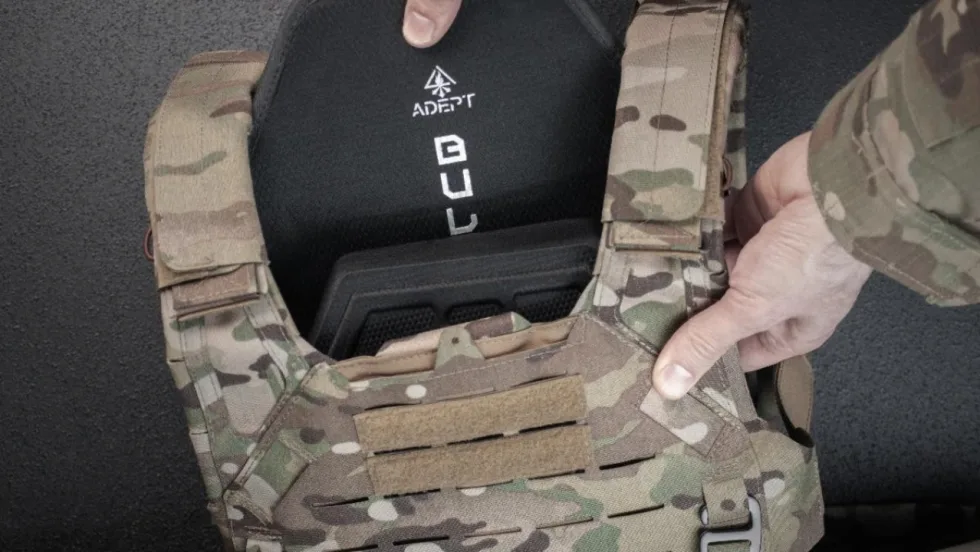
Adept Armor Introduces Two New Rifle Plates
Adept Armor has launched two new Level IV ballistic plates, the Emperor and the Archon Mark 2, which brings Adept Armor’s new Quatroid ceramic to the high-threat, performance-value center of the range at 5.2 pounds.
Read More →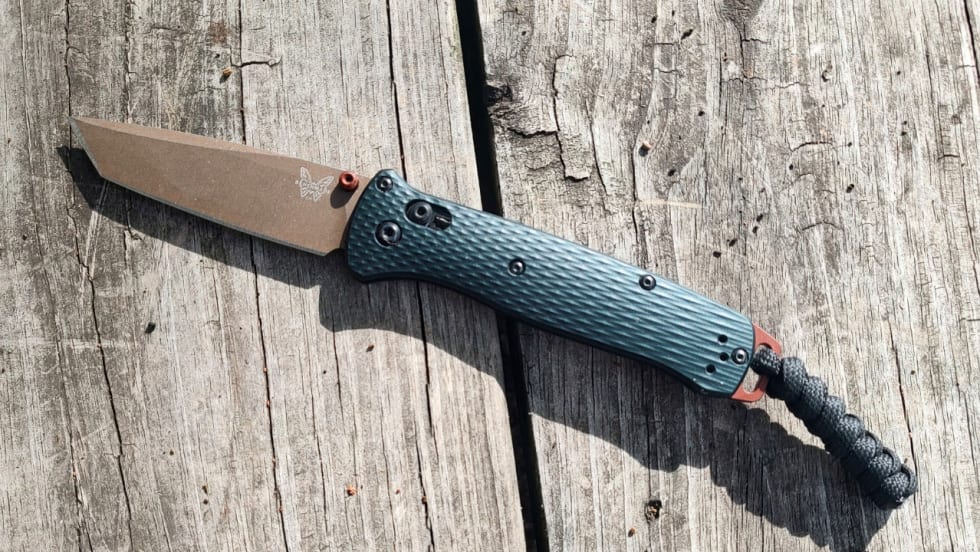
POLICE Product Test: Benchmade Bailout
The Benchmade Bailout is a slim, lightweight carry knife with a deep-ride pocket clip and comes in a variety of blade steels and scales. Here is a detailed review of the Taiga Green Bailout, released earlier this year.
Read More →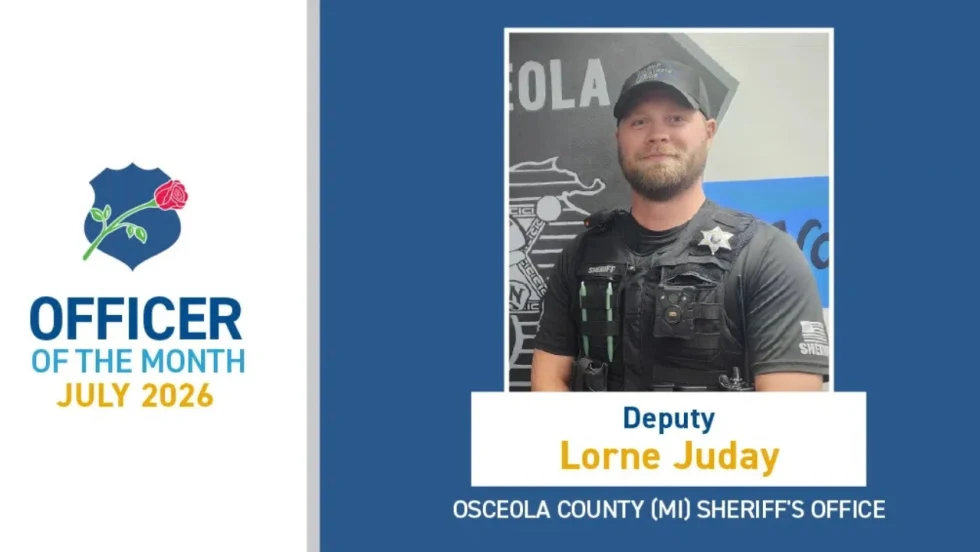
NLEOMF Announces July 2026 Officer of the Month
NLEOMF honored a Michigan deputy sheriff as the July 2026 Officer of the Month for rescuing a trapped driver from a burning vehicle following a Fourth of July crash.
Read More →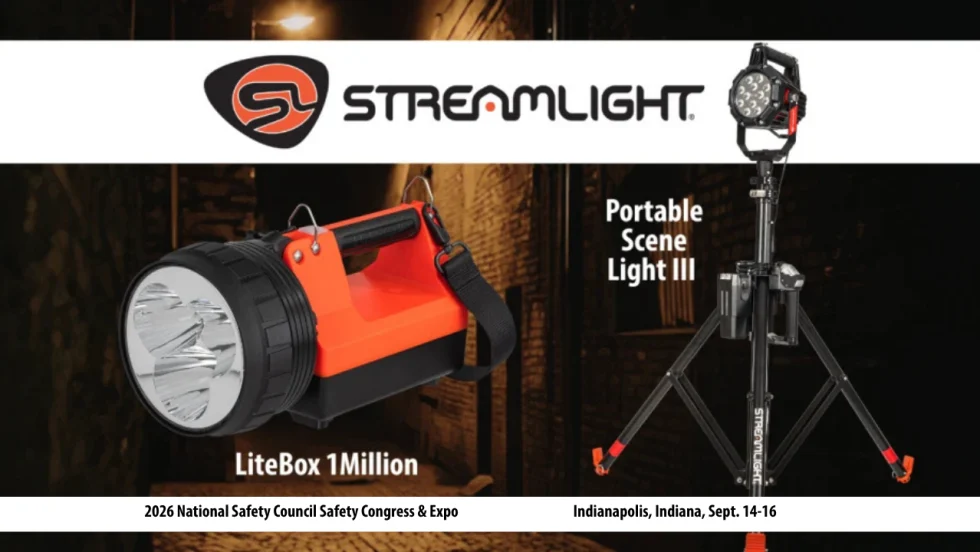
Streamlight to Showcase Newest Lighting Products at National Safety Council’s Safety Congress & Expo 2026
Streamlight will showcase its latest lights, including the Portable Scene Light III and the LiteBox 1Million, at the 2026 National Safety Council (NSC) Safety Congress & Expo.
Read More →
The 2027 World Police & Fire Games Set for Perth, Australia
The 2027 World Police & Fire Games (WPFG) will take place in Perth, Western Australia, from Friday, March 12 through Sunday, March 21, 2027.
Read More →
5.11 Partners with National Fallen Firefighters Foundation to Support #ForThe343
5.11 has joined the nationwide movement honoring the 343 New York City Fire Department firefighters lost on Sept. 11, 2001.
Read More →