



The Lawful Use of Deception
It might be nice if law enforcement officers never had to lie to a criminal suspect in order to solve a crime. In fact, some police advisors do suggest to officers that they should never mislead a suspect. Unfortunately, the reality is otherwise.

It might be nice if law enforcement officers never had to lie to a criminal suspect in order to solve a crime. In fact, some police advisors do suggest to officers that they should never mislead a suspect. Unfortunately, the reality is otherwise.
As the U.S. Supreme Court has repeatedly acknowledged, "Criminal activity is such that stealth and strategy are necessary weapons in the arsenal of the police officer." (Sorrells v. U.S.) "Nor will the mere fact of deceit defeat a prosecution, for there are circumstances when the use of deceit is the only practicable law enforcement technique available." (U.S. v. Russell)
What kinds of stratagems, ruses, trickery, and subterfuge might you use to develop admissible evidence of a suspect's guilt? The general rule is that deception can be used as long as it is not likely to induce an innocent person to commit a crime or to confess to a crime that he or she did not commit. Many familiar examples have been reviewed in decisions of the Supreme Court.
Undercover Investigations
U.S. v. Russell involved undercover infiltration of a drug manufacturing organization. The undercover officer gained the confidence of the suspects by offering to provide one of the ingredients for the manufacture of methamphetamine. The suspects were later arrested after making a quantity of the controlled substance. They argued that they had been entrapped by illegal police behavior, but the court rejected the defense:
"In drug-related offenses law enforcement personnel have turned to one of the only practicable means of detection: the infiltration of drug rings and a limited participation in their unlawful practices. Such infiltration is a recognized and permissible means of investigation."
The court ruled that since the suspects were "predisposed" to commit the crime and had not been pressured into doing so by coercive government influence, there was no entrapment.
Likewise, in Hampton v. U.S., the court approved the use of an informant to set up heroin sales between the suspect and undercover agents. The court repeated that such deception of a suspect does not constitute entrapment, unless government conduct "implants in the mind of an innocent person the disposition to commit the alleged offense and induce its commission." Because Hampton was a known heroin user and dealer with a predisposition to commit the crime, he was not entrapped by the police deception.
Official misconduct will often require undercover investigation. In Lopez v. U.S., for example, an IRS agent who was approached by a businessman who offered him bribes contacted federal investigators and became a wired informant for his subsequent meetings with the suspect. Accepting this tactic as necessary and proper for such crimes, the court said, "The risk of being overheard by an eavesdropper or deceived as to the identity of one with whom one deals is probably inherent in the conditions of human society. It is the kind of risk we assume whenever we speak."
A similar result was reached in Hoffa v. U.S., where a government informant infiltrated the inner circle of a labor racketeer and obtained evidence of jury tampering. The court rejected a claim that this use of an undercover operative violated the Fourth Amendment: "Neither this Court nor any member of it has ever expressed the view that the Fourth Amendment protects a wrongdoer's misplaced belief that a person to whom he voluntarily confides his wrongdoing will not reveal it."
Although the court found possible entrapment in U.S. v. Jacobson, based on the government's consistent efforts over two-and-a-half years to solicit a man with no proven criminal predisposition to order child pornography, the court nevertheless recognized that law enforcement could legitimately conduct less extensive undercover operations. Said the court, "There can be no dispute that the Government may use undercover agents to enforce the law. It is well settled that the fact that officers or employees of the government merely afford opportunities or facilities for the commission of the offense does not defeat the prosecution. Artifice and stratagem may be employed to catch those engaged in criminal enterprises."
Illinois v. Perkins involved the use of an undercover officer, posing as a fellow cellmate, to gain the confidence of a murder suspect and obtain incriminating statements. The Supreme Court rejected the claim that statements obtained by such trickery should be inadmissible under Miranda, saying that "Miranda forbids coercion, not mere strategic deception. Ploys to mislead a suspect or lull him into a false sense of security that do not rise to the level of compulsion or coercion to speak are not within Miranda's concerns."
Tricks and Lies
In the investigation of virtually any crime, it is constitutionally permissible for police to play on a suspect's consciousness of guilt by pretending to have conclusive evidence of guilt that police do not in fact have, to prompt incriminating responses from the suspect. As long as the deception is plausible in light of what is known or suspected about the crime, such deception is not likely to induce an innocent person to confess to a crime he or she did not commit.
In Oregon v. Mathiason, for example, officers falsely told a burglary suspect they had lifted his fingerprints at the crime scene. The suspect subsequently confessed, and the court held that this deception did not invalidate the confession, even though the state court had erroneously ruled this deception relevant for Miranda purposes: "Whatever relevance the officer's false statement about having discovered Mathiason's fingerprints at the scene may have to other issues in the case, it has nothing to do with whether defendant was in custody for purposes of the Miranda rule." The court held the suspect's statements admissible, despite having been prompted by a false statement about non-existent evidence.
Similarly, in Frazier v. Cupp, police told a murder suspect that his accomplice had been arrested and had confessed, implicating him in the crime. In fact, the accomplice was still at large, but the suspect, believing that the accomplice had let the cat out of the bag, admitted his role in the killing. The Supreme Court found this deception insufficient to affect the admissibility of the statement: "The fact that the police misrepresented the statements that the accomplice made is, while relevant, insufficient in our view to make this otherwise voluntary confession inadmissible."
Although police used no overt deception in Moran v. Burbine, the officers withheld from the suspect the fact that his family had retained an attorney who had called the station and "instructed" police not to talk to her client before she arrived. Ruling that this deception by omission did not invalidate the suspect's Miranda waiver, the court said that police were not constitutionally obligated to inform a suspect of everything he might care to know. Said the court, "We have never read the Constitution to require that the police supply a suspect with a flow of information to help him calibrate his self-interest in deciding whether to speak or stand by his rights."
In Court
There is no reason to be uneasy when testifying as to the legitimate use of tricks or deception. Most jurors readily understand that undercover work and deception are often necessary to catch crooks whose crimes are typically committed in secrecy.
Devallis Rutledge, a former police officer and veteran prosecutor, is Special Counsel to the Los Angeles County District Attorney.
More Patrol
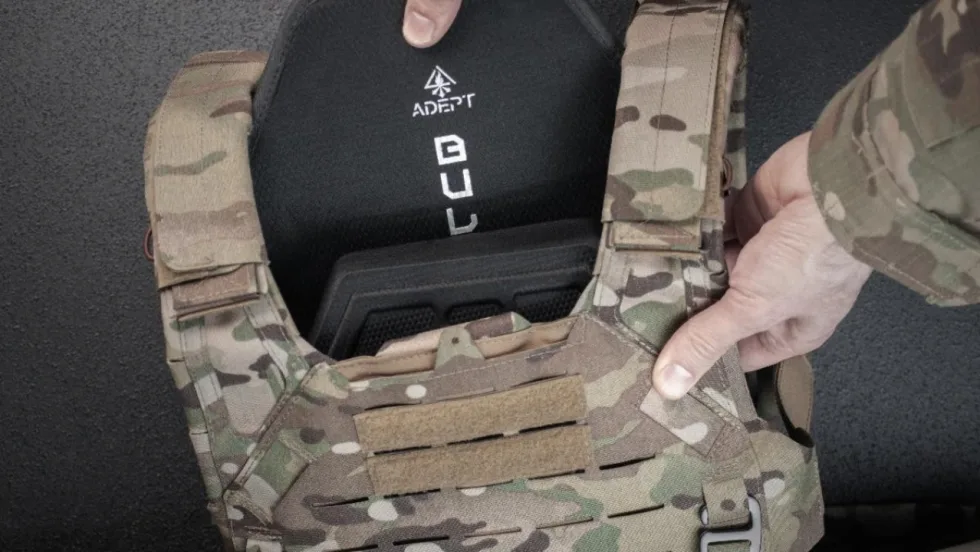
Adept Armor Introduces Two New Rifle Plates
Adept Armor has launched two new Level IV ballistic plates, the Emperor and the Archon Mark 2, which brings Adept Armor’s new Quatroid ceramic to the high-threat, performance-value center of the range at 5.2 pounds.
Read More →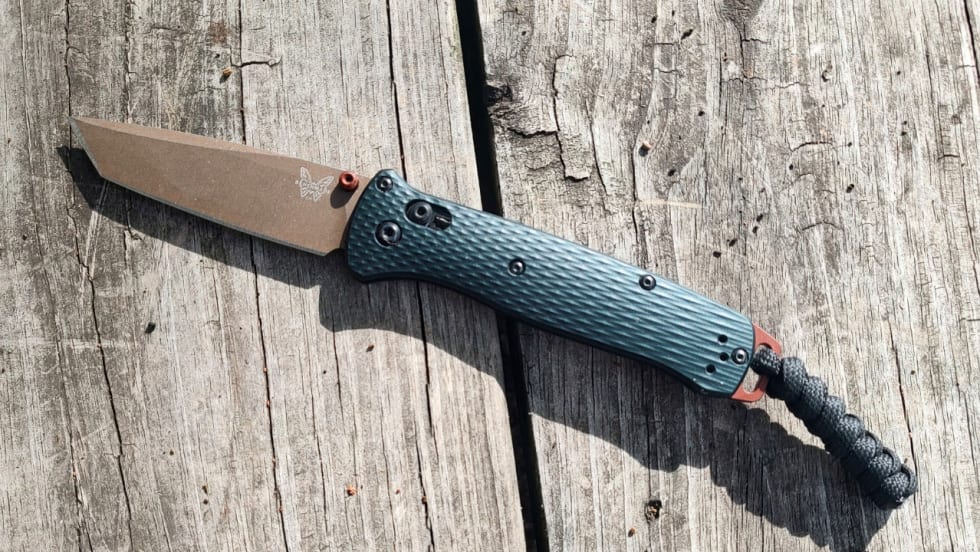
POLICE Product Test: Benchmade Bailout
The Benchmade Bailout is a slim, lightweight carry knife with a deep-ride pocket clip and comes in a variety of blade steels and scales. Here is a detailed review of the Taiga Green Bailout, released earlier this year.
Read More →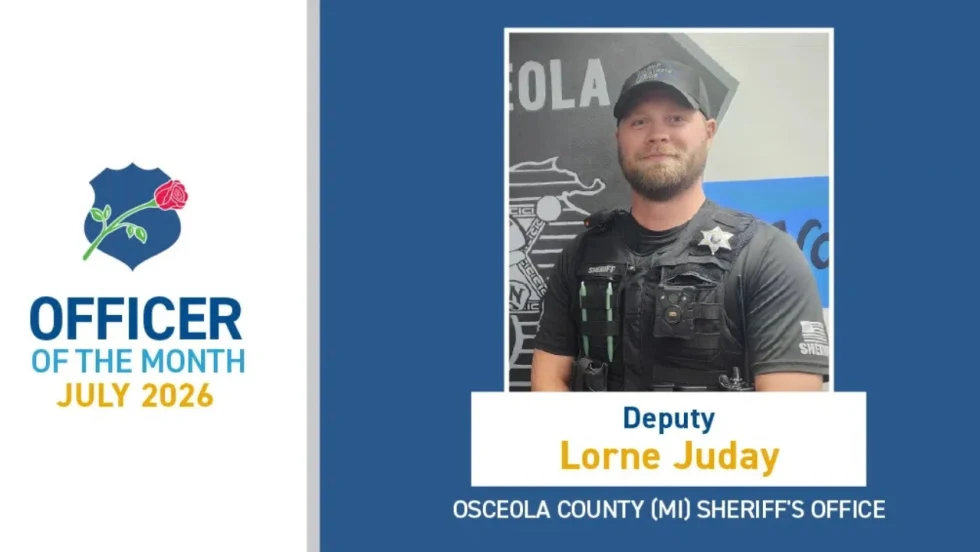
NLEOMF Announces July 2026 Officer of the Month
NLEOMF honored a Michigan deputy sheriff as the July 2026 Officer of the Month for rescuing a trapped driver from a burning vehicle following a Fourth of July crash.
Read More →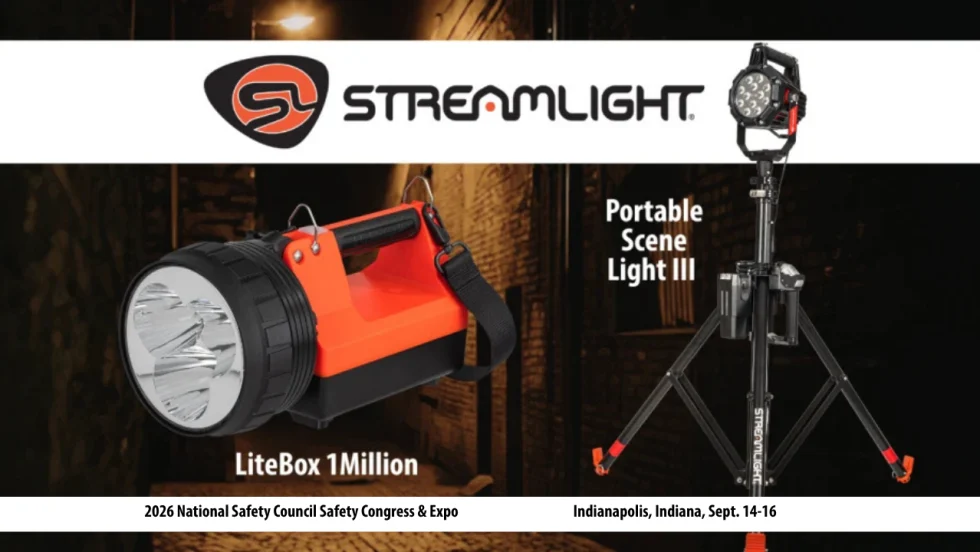
Streamlight to Showcase Newest Lighting Products at National Safety Council’s Safety Congress & Expo 2026
Streamlight will showcase its latest lights, including the Portable Scene Light III and the LiteBox 1Million, at the 2026 National Safety Council (NSC) Safety Congress & Expo.
Read More →
The 2027 World Police & Fire Games Set for Perth, Australia
The 2027 World Police & Fire Games (WPFG) will take place in Perth, Western Australia, from Friday, March 12 through Sunday, March 21, 2027.
Read More →
5.11 Partners with National Fallen Firefighters Foundation to Support #ForThe343
5.11 has joined the nationwide movement honoring the 343 New York City Fire Department firefighters lost on Sept. 11, 2001.
Read More →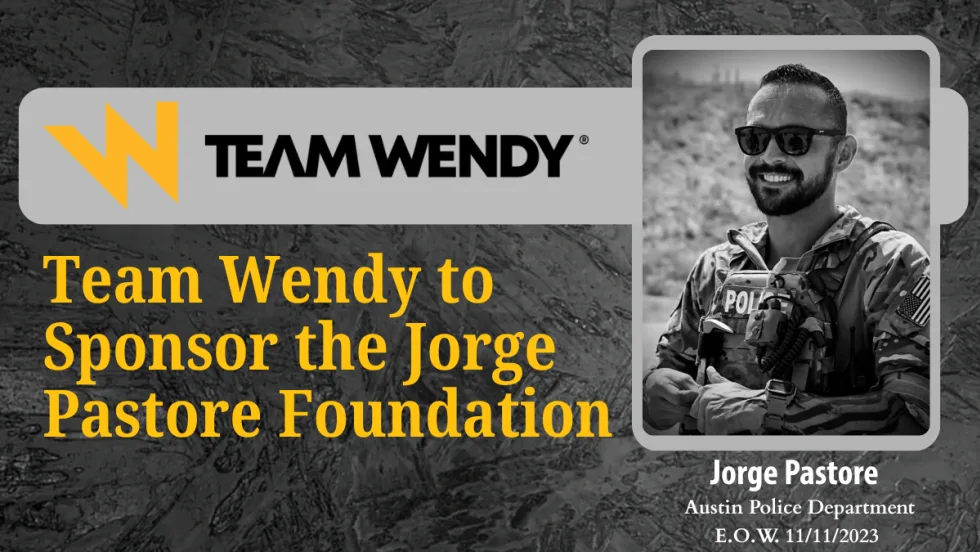
Team Wendy Announces Title Sponsorship of the Jorge Pastore Foundation
Team Wendy’s 3-year partnership with the Jorge Pastore Foundation expands access to programs that strengthen those who serve.
Read More →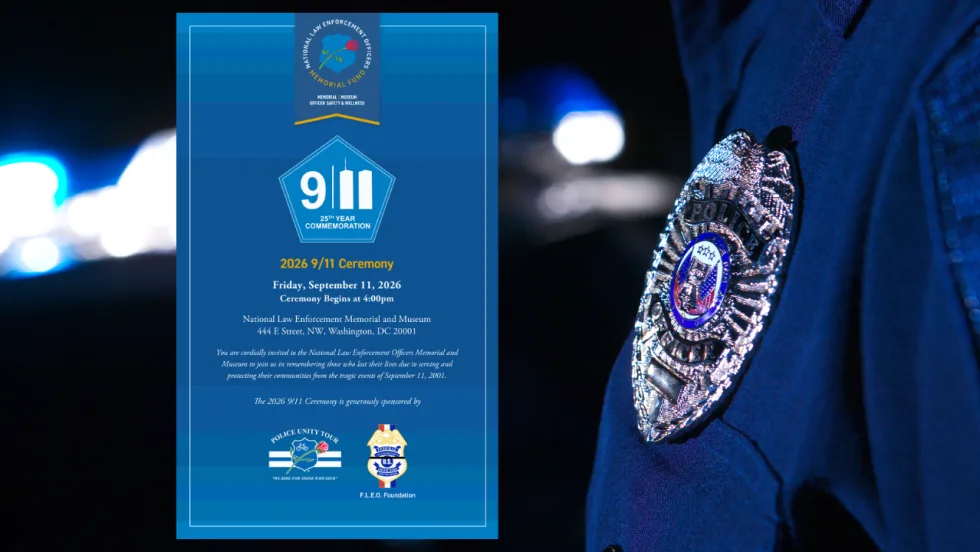
National Law Enforcement Memorial and Museum Hosting 9/11 25th-Year Commemoration Ceremony
The National Law Enforcement Memorial and Museum is hosting a 9/11 25th Year Commemoration Ceremony on Sept. 11 at 4 p.m.
Read More →
National Law Enforcement Officers Memorial Fund Announces June 2026 Officers of the Month
The National Law Enforcement Officers Memorial Fund (NLEOMF) named 15 officers of the Chico Police Department (California) as the Officers of the Month for June 2026 for their roles in responding to an active-shooter incident at a public library.
Read More →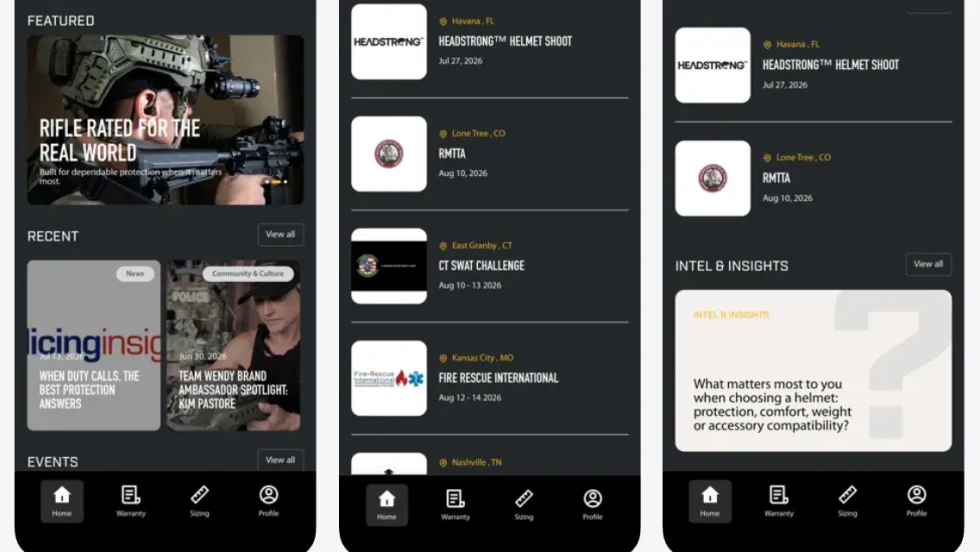
Team Wendy App Creates New Digital Hub for Helmet Owners
The Team Wendy Community App provides one location for warranty registration, size-fit tools, product updates, and community connection. For helmet owners, the new app creates a simpler path to the information and tools that matter most.
Read More →