



Duty Dangers: Vehicle Pursuits
Officers who underestimate a suspect's resolve to evade capture or overestimate their own limitations or those of the patrol car only enhance the dangers of vehicle pursuits. It's not just the lead unit in a pursuit that is imperiled. Upon hearing of a pursuit in progress, other officers may attempt to catch up and join the chase.


Photo: Mark W. Clark
Given the benefit of a controlled environment, a law enforcement officer is generally capable of operating a patrol vehicle with skill. Under the calm, measured rigors of a required Emergency Vehicle Operator Course (EVOC), officers conquer skid pans, overcome distractions, and easily surmount challenges.
But away from the training grounds, officers may find the mean streets of patrol far less accommodating. Nowhere is this more apparent than when officers find themselves engaged in a vehicle pursuit. Confronted with the prospect of being shot at, rammed, or colliding with some other vehicle or pedestrian, an officer's emotions may cloud his or her vision and judgment. Underestimating a suspect's resolve to evade capture or overestimating his own limitations or those of her patrol car only enhance the dangers inherent to his situation.
And it is not just the lead unit in a pursuit that is imperiled. Upon hearing of a pursuit in progress, other officers may attempt to catch up and join the chase.
In Campbell County, Va., deputy sheriff Jason Lee Saunders was racing to catch up to a pursuit in progress when his patrol car left the roadway at high speed and struck a tree. The three-year veteran was killed on impact.
And the Saunders case is not an extreme example. Pursuits factor prominently in a number of fatal law enforcement collisions.
Pursuit Policy
The dangers imposed by police vehicle chases extend beyond the pursued and the pursuer. Police pursuits have culminated in deadly collisions with otherwise uninvolved motorists and others on the nation's sideroads and sidelines. Increasingly, officers are apt to find themselves facing criminal charges and civil suits from such incidents.
Attempts to stem the tide of pursuit-related crashes have taken many forms. Training has played a substantial role, with everything from EVOC to simulators affording officers some vicarious sense of what a pursuit might be like and how emotions can lead an officer to make dangerous decisions during a pursuit. Technological improvements on the vehicles have also helped make police pursuits safer. Tire companies produce a variety of models designed to be terrain and weather specific, and one cannot overemphasize the importance of air bags and policies mandating seat belt usage.
Increasingly, police departments are adopting more stringent policies, making it more difficult for officers to initiate or sustain a pursuit. Some pursuit critics have gone so far as to advocate a national policy governing police pursuits.
Despite its dissenters, the police pursuit will continue to be a tool in officers' arsenals until a magic bullet comes along that is capable of instantaneously incapacitating any motor vehicle and obviating the need for a chase. Criminals usually don't want to get caught, so they run away. That leaves law enforcement with one of two choices: let them get away or pursue.
Letting criminals get away could break down the legal system and lead to anarchy. This was noted several years ago when former IACP President Chief David G. Walchak observed that "if...a law enforcement agency decides not to engage in high speed pursuits, its credibility...and its effectiveness may be diminished. Public knowledge that the agency has a policy prohibiting pursuit may encourage people to flee, decreasing the probability of apprehension."
The Tampa Police Department's moratorium on its officers pursuing anything other than violent felony offenders bears out Walchak's concerns. Within two years of adopting the policy, Tampa earned the distinction of ranking second in the nation in auto thefts, as nonviolent felons fled from its officers with impunity. Seeing the error of their ways, the police department's administrators reverted to a policy that allows officers to pursue most felony suspects. The result was an immediate decrease in the number of auto thefts in the Tampa city limits.
Fashioning a manageable pursuit policy has frustrated many law enforcement agencies that have tried to reconcile serving and protecting law-abiding citizens and arresting criminals. Unfortunately, this push-pull dynamic often finds the agency trying to simultaneously protect the public from both its predators and itself. It isn't surprising that a recent nationwide poll of law enforcement agencies found that 90% of pursuit policies were becoming more restrictive.
Revising the criteria for pursuits is one thing. Actively discouraging them is another. The NYPD's pursuit policy is representative of what is fast becoming the profession's standard: "Department policy requires that a vehicle pursuit be terminated whenever the risks to uniformed members of the service and the public outweigh the danger to the community if the suspect is not immediately apprehended."[PAGEBREAK]
Such explicit parameters would seemingly suffice, but the inventiveness of some patrol officers has found additional inhibiters being adopted. Chicago warns against an officer's revisionist take on car chases: "Officers will not use the activity of 'following' as a subterfuge for a vehicular pursuit."
Egos and Pursuit Rage
Policy-driven approaches focus on the most manageable factor of a police pursuit: The employee. Since little of a preemptive nature can be done to deter a person hell-bent on running from the police, it makes sense to exert a degree of control on the officer who is in the position to give chase.
Policies are only part of the solution; actively cultivating disciplined mindsets is critical to the success of such policies. The decision to pursue may have theoretically been taken out of officers' hands thanks to pursuit policy, but it is the patrol officer who ultimately decides whether to chase, as well as the manner in which to pursue and for how long.
One would think the street cop wouldn't need to be sold on the idea of personal restraint when it comes to pursuits. Officers have watched the training tapes, listened to the cautionary parables, been witness to the aftermath of traffic collisions and the carnage left in their wake, and know just how dangerous life can be where emergency lights and sirens are obligated.
Still, there appears at times to be a disconnect. The same cop who laments the lack of public deference accorded his or her use of lights and sirens will continue to drive as though that deference is presumed, as if the lights and siren will make all other motorists get out of the way.
Officer ego also plays a role. Determined to prove their mettle, rookie cops are particularly resentful of being shown up by some lowlife felon.
Nick V. Schiavelli, an EVOC trainer at the Indiana Law Enforcement Academy, finds officer ego to be a huge obstacle in reconciling the need for officers to capture fleeing suspects and keeping a community safe from its own police force.
"Part of the problem is the officer's mindset," notes Schiavelli. "Younger cops, in particular, just don't want to see the suspect get away. But [they need to know] the suspect will drive at 100% capacity. We teach our officers to drive at 75% of theirs. Unfortunately, too often that mindset goes out the window, and they will overdrive the limits of themselves, the roads, and their cars."
Schiavelli is working hard to change the pursuit mindset of younger officers. "We do a training block on pursuit rage and why officers do what they do when they're in pursuits. We study the effects of the adrenaline rush and diminishing motor skills. We look at how tunnel vision sets in because you're so focused in on what you're doing chasing the bad guy. The dangers are well-communicated. The problem is, you can preach this in the academy or the training grounds, but you can't be out there in the car with them and make them do it."
Command and Control
Pursuits also put patrol supervisors in a difficult position. Despite their not being in the car-indeed, they are often miles away when a chase commences-watch commanders are expected to determine the need for a pursuit and at what point that need becomes exceeded by the need to cancel it. Part and parcel of the watch commander's decision-making process is what the pursuing officer is communicating through the radio, not only via words, but by emotional response to the situation as conveyed by voice inflection.
But there are often factors well beyond the watch commander's ability to evaluate, among them road and weather conditions. This is where the eyes on the ground become imperative in regulating a well-disciplined pursuit. This is where a supervisor has to have the courage to cancel pursuits where necessary.
As a patrol supervisor with the Los Angeles Police Department, Sgt. Andre Belotto has had to deal with the fallout that comes with canceling a pursuit. He uses such episodes as training lessons.
"In one incident, I explained to the pursuing officers that the reason for the pursuit being terminated had less to do with their actions and more to do with their peers," explains Belotto. "I advised them that the other officers were driving as if they were in a Chinese fire drill. So I had to remove the catalyst. That meant calling the pursuit off. No pursuit, no unsafe driving.
"My pep talk to the officers had several purposes: First, was to praise the primary unit officers for their actions. Second, was to ask all of the other officers to have some consideration for officers who become involved in a pursuit as primary and/or secondary units. The actions of the supporting officers and their driving will dictate whether the primary officers will get to see their efforts end in the arrest of the suspect.
"No arrest is so important that I will allow bad driving to end in officers or members of the public getting hurt. Not on my watch," Belotto says.
Ending the Chase
One way to minimize the dangers associated with chases is to make them shorter. And there are several tactics and devices that have been developed to end chases.
The Tactical Vehicle Intervention (TVI) also known as the Precision Intervention Technique (P.I.T.) when performed correctly is a technique that can stop a vehicle in its tracks. To properly conduct the P.I.T., the pursuer drives alongside the suspect car with its front tire aligned with the rear quarter panel of the suspect's vehicle, gently makes contact with the vehicle, then steers sharply into the vehicle. The P.I.T. causes the rear tires of the suspect vehicle to lose traction and the driver to lose control of the car. Oftentimes, the engine of the vehicle will stop, allowing officers to effect an arrest more easily. It is recommended that at least two additional pursuit vehicles follow at a safe distance behind the P.I.T. maneuver to react to changes in the situation and to follow through with the arrest.
Capt. Scot Smithee of the Gilroy (Calif.) Police Department is an advocate of the P.I.T., and notes that his agency's aggressive policy on P.I.T. deployments has been instrumental in successfully terminating many a pursuit.[PAGEBREAK]
"We have some suspects that are used to other agencies backing off," Smithee laughs. "'What are you guys doing chasing me?' is a familiar cry. They're accustomed to officers from other agencies giving up the chase as soon as it starts. Here, we don't give up the chase; we end it as soon as possible."
Schiavelli is equally supportive of the P.I.T. maneuver, even as he acknowledges that it comes with certain challenges in his own state of Indiana.
"Two years ago, the state police actually got a statute on the books that said every city, county, or state police officer is allowed to execute a P.I.T. with the provision that the officer be trained in it," Schiavelli explains. "Indiana has about 565 different police agencies of various sizes and currently we have maybe about 14 agencies in the whole state that have that in their policies and have been very successful with it. Indianapolis Metro uses it a lot with great success. I'm a great believer in it. If you can shut this pursuit down in two blocks using the P.I.T., then shut it down."
Another pursuit intervention technique involves the deployment of vehicle disablers. Often referred to as "spike strips" or "stop sticks," these devices shred or puncture tires on the pursued automobile, allowing the vehicle to come to a controlled stop.
Intervention Hazards
Neither the P.I.T. nor vehicle disabler option is 100% effective and each poses a degree of jeopardy to the officers employing them.
The P.I.T. should be used only when the pursuit itself poses greater danger. For maximum effectiveness and safety, the P.I.T. should be applied under 35 mph and on roadways where injury to bystanders or other vehicles is minimal. It should not be used on large trucks, motorcycles, or vehicles with high centers of gravity due to the possibility of rollovers.
But whatever the dangers associated with the P.I.T., no pursuit intervention technique has proven itself more dangerous for officers in a relatively short period of time than the deployment of spike strips. The unpredictable direction of a pursuit and the flow of traffic around it require an officer to manually deploy the spike strip from the roadside, preferably while taking cover behind a freeway pillar or other concrete barrier. Even so, officers are left vulnerable to being struck by the suspect vehicle or other vehicles in traffic. One study estimates that at least 20 officers have died while deploying spike strips in the United States, three in just the past few months.
Schiavelli says that it appears that a lack of training may be factoring into these tragedies.
"One of my trainers just came back from an interagency training event where he saw guys setting up next to their cars to deploy stop sticks," he says. "We don't train that. If the pursued car collides with your unit, either vehicle can then come over the top of you."
Training Solutions
Pursuit training outside of the simulator is not easy to come by. Few agencies have EVOC training facilities large enough to enable full-scale reproduction of pursuit conditions.
Indiana-based trainer Schiavelli's solution to this problem was to make use of the Indianapolis Speedway. On the same track that hosts the Indy 500, Schiavelli's students can practice high-speed pursuits. But Schiavelli realizes that not every agency has a race track for training.
Still Schiavelli warns against law enforcement not making the most of whatever training it can afford its officers. He recommends that agencies pursue creative solutions to the problem.
Southern California-based Dr. Ron Martinelli, a use-of-force and training expert, echoes Schiavelli's concerns yet notes that law enforcement agencies all too often go to the other extreme.
"With the challenges we have in law enforcement today with funding, one of the first things that goes out the door is training," Martinelli says. "It should be exactly the opposite: When you don't have very much money to spend, you need to turn that money into training rather than technological gizmos because the training is going to reinforce the best practices with the officers. Officers will act in the manner in which they are trained to act. If they haven't been trained, they are going to go into hypervigilance. They are going to be confused, they are going to panic, freeze, or use force excessively, which means they've had an emotional response."
Training can prepare officers for the physical aspects of a chase, but it can't simulate the emotional and mental response to a chase. Officers get a rush of adrenaline during a high-speed pursuit; its effects can lead them to make dangerous decisions.
Sensory illusions are also difficult to duplicate in a training scenario. Air Force Captain Joe Kittinger noted that he did not experience the sense of speed in the darkness beyond the clouds when he set the still-standing record for fastest flight by a human. "Where you determine speed is visual-if you see something go flashing by," Kittinger said. "But nothing flashes by 20 miles up. There are no signposts there."
It's possible officers engaged in pursuits at night experience this phenomenon. Certainly, there appears to be an inordinate number of nighttime crashes. Should patrol cars have alarms to advise drivers when their speeds exceed a certain limit?
Another set of eyes in the form of a passenger officer might also help an officer in a pursuit realize that he or she is driving dangerously. Unfortunately, few agencies now field two-officer patrol units.
Perhaps the solution lies in biotechnology. In the near future patrol cars may be equipped with instruments to monitor an officer's respiratory and heart rates to help a watch commander determine whether that pursuing officer is in control.
Until then, officers need to use more common sense and more restraint when faced with a pursuit situation. Their lives and the lives of innocent civilians may very well depend on it.
More Vehicle Ops
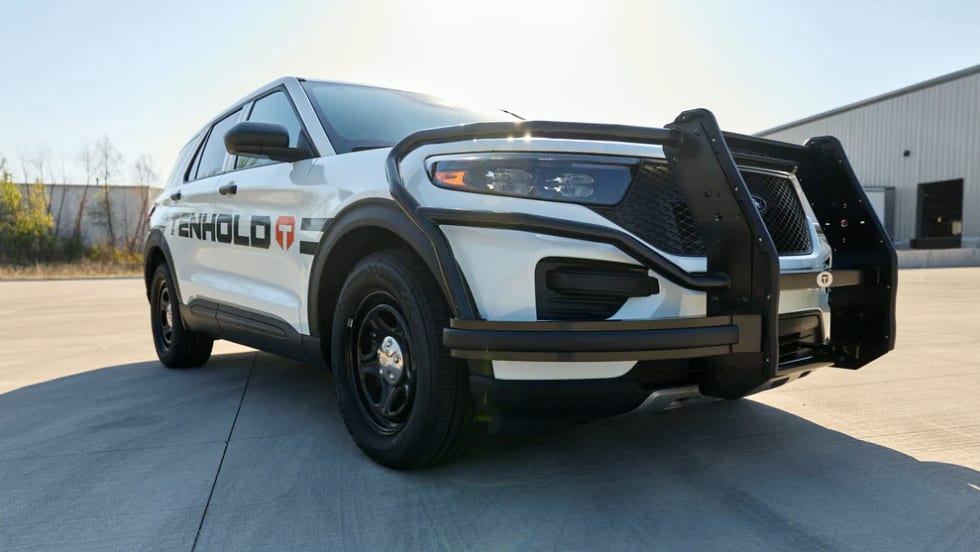
Tenhold Introduces Suppressor Gun Rack System
Tenhold, formerly Jotto Desk, provides next-generation vehicle systems for law enforcement and public safety and recently debuted its Suppressor Lock Head for its Weapon Mounting system.
Read More →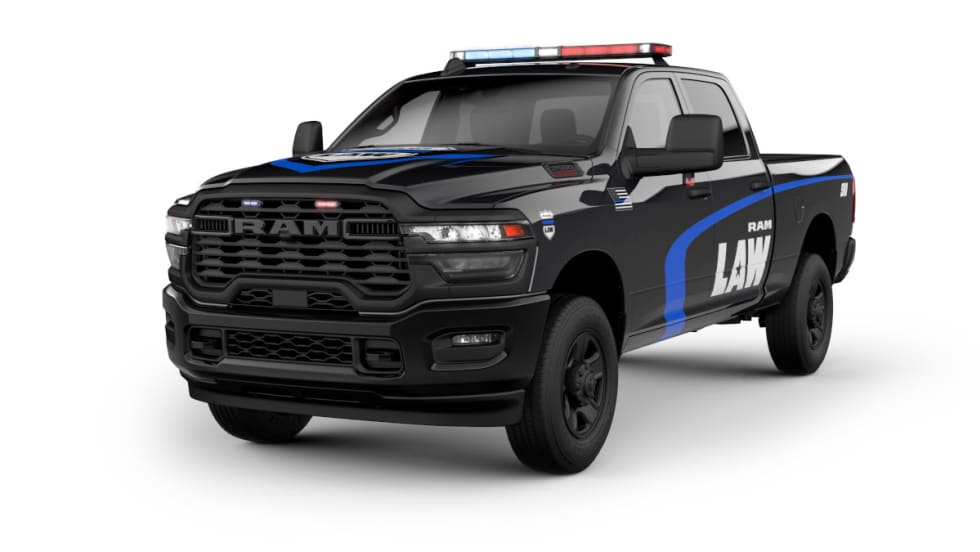
Ram Debuts Pursuit-Capable 2500 Emergency Response Vehicle
The 2027 Ram 2500 Emergency Response Vehicle is the first and only ¾-ton truck to complete the Michigan State Police vehicle trials, and Ram said it delivered outstanding performance in testing scenarios designed to replicate extreme real-world duty.
Read More →
How Data-Driven Fleet Management Is Changing Public Safety Operations
Police agencies are leveraging fleet data to reduce collisions, improve officer safety, control maintenance costs, and strengthen public accountability. This ebook explores how modern telematics and fleet management technology are helping departments operate more efficiently while maximizing taxpayer resources.
Read More →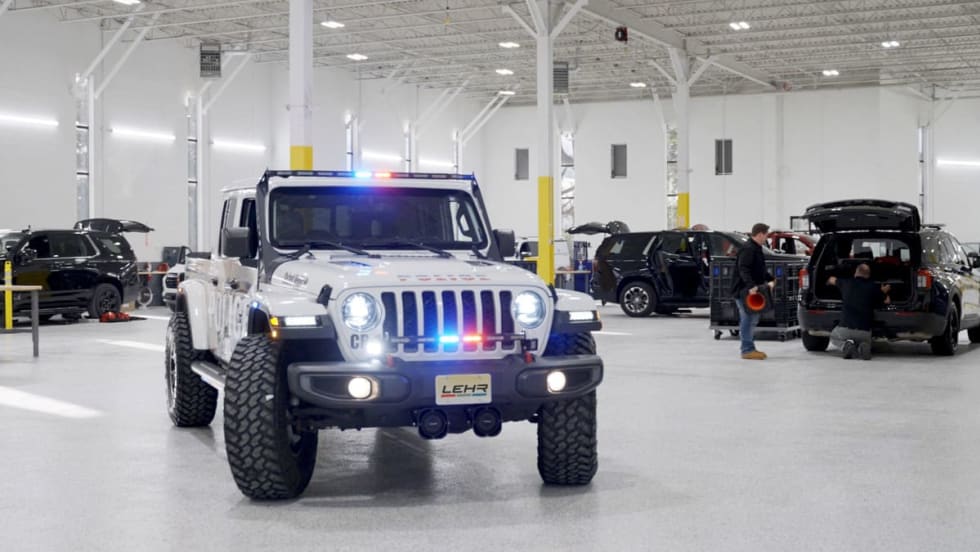
Emergency Vehicle Upfitter LEHR Opens New Facility in New Jersey
LEHR’s new centralized upfitting facility in New Jersey consolidates operations to deliver faster turnaround times and enhanced fleet capacity for law enforcement agencies across the Northeast.
Read More →
North Carolina Sheriff’s Office Improves Fueling Reliability & Operational Control
The Madison County Sheriff’s Office overcame fuel management and accounting challenges by turning to RoadFlex to improve fueling reliability, visibility, and administrative control.
Read More →
Emergency Vehicle Upfitter LEHR Expands National Footprint with New 40,000-Square-Foot Facility in Houston
LEHR has opened a 40,000-square-foot Defender Supply upfitting facility in Houston, Texas. It is expected to upfit thousands of public safety vehicles each year.
Read More →
How to Pick Your High-Risk Stop Location for Tactical Advantage
Hear veteran trainer Mike Willis, of the United States Deputy Sheriff’s Association, explain several considerations that can help you wisely pick your best spot to initiate high-risk or felony traffic stops.
Read More →
Coffee Break with Police Experts: Using Your Patrol Vehicle for Cover
In this video, hear from Dustin Mowery, a product specialist at Team Wendy, as he discusses how to best use a patrol vehicle for cover.
Read More →
Ford Celebrates 75 Years of Making Patrol Vehicles
From 1950 to 2025, Ford has produced many of America’s most iconic law enforcement cars, SUVs, and trucks. POLICE Magazine takes you through the history of Ford’s police vehicles.
Read More →
Using Patrol Vehicles for Cover
While a patrol vehicle offers some cover protection when taking fire, remain mobile and don’t stick to one piece of cover indefinitely. Dustin Mowery, of Team Wendy, shares what he teaches about using vehicles as cover.
Read More →