


2018 Police Motorcycle Testing in Michigan
Harley-Davidson adds performance-oriented stage kits to its pair of bikes, while Yamaha offers a police version of its FJR1300 sport touring model.

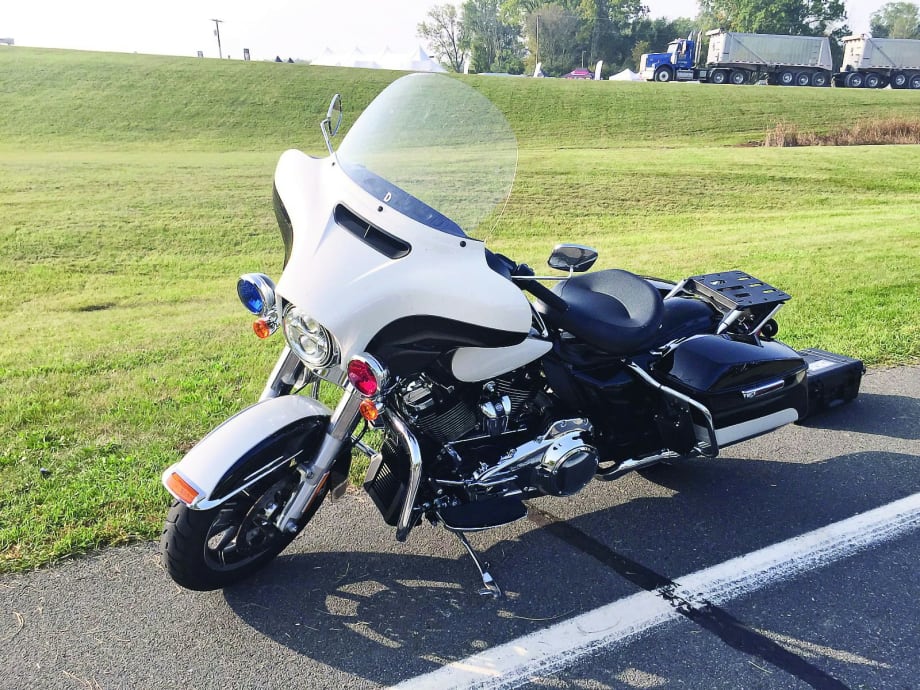
Photo: POLICE Magazine
Harley-Davidson, BMW, Yamaha, and Zero will offer five base motorcycles for the 2018 model year. In addition, Harley Davidson will offer four "stage kits" to its two bikes that allow agencies to increase performance attributes, and Yamaha will offer a bike that's been used by police in Europe and Australia.
Michigan State Police troopers tested the motorcycles for acceleration, top speed, braking, dynamics, and ergonomics. Let's take a closer look at what's new for 2018.
Harley-Davidson Boosts Performance with Stage Kits
A year ago, Harley-Davidson began testing higher-performance versions of its FLHP Road King and FLHTP Electra Glide. H-D tested bikes with "stage kits"—equipment from the Screamin' Eagle division that can be added at a dealer to enhance performance. A year ago, H-D tested a Stage 3 motorcycle. This year, the company tested Stage 1, Stage 2, and Stage 4. H-D has begun offering the four variants.
A Stage 1 upgrade increases air flow with a high-flow intake and exhaust components with ECM tuning. Other stage kits build on Stage 1. Stage 2 adds a camshaft change for torque or horsepower, and provides a 24% horsepower improvement.
A Stage 3 upgrade would increase the engine displacement and compression. Its camshaft helps improve horsepower by 39%. A Stage 4 upgrade adds higher flowing upper end components to the increased displacement, compression, and properly matched camshaft. This upgrade adds 52% more horsepower.
In testing, the four H-D bikes reached top speeds of 110 mph for the FLHTP Stage 4, 109 mph for the FLHTP Stage 1, 109 mph for the FLHP, and 108 mph for the FLHP Stage 2. The zero-to-60 mph times came in at 4.3 seconds, 5.1 seconds, 5.4 seconds, and 4.8 seconds respectively. The zero-to-100 mph times came in at 11.7 seconds, 16.4 seconds, 20.3 seconds, and 14.5 seconds respectively.
In brake testing, where the motorcycles must come to a full stop from 60 mph, three H-D bikes were closely grouped—the FLHTP Stage 1 at 135.3 inches (11.2 feet), the FLHP Stage 2 at 135.33 inches, and the FLHP at 135.52 inches. The FLHTP stopped at 139.18 inches (11.5 feet).
Yamaha Enters Police Market
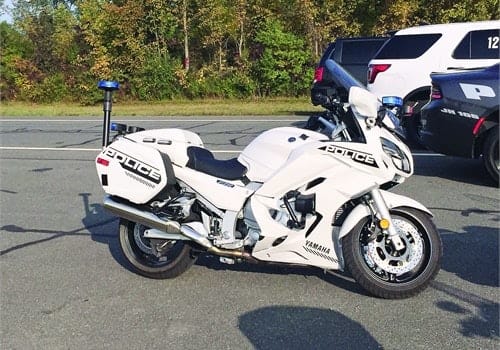
Yamaha is introducing its FJR1300 sport touring motorcycle this year. The motorcycle arrives with a factory, rather than dealer-added, police package, says Chris Peterman, Yamaha's motorcycle wholesale operations manager.
The FJR1300 is a police version of a retail bike, and crosses over most of the features, except the electronically adjustable suspension. Police lighting can be configured through the dealer and added at the factory.
The bike is powered by a 1298cc liquid cooled DOHC inline-four cylinder with 16 valves. It uses a six-speed transmission with a multiplate assist-and-slipper wet clutch.
In Michigan testing, the FJR1300 reached a top speed of 143 mph, which was the top mark. The bike reached zero to 60 mph in 3.9 seconds and zero to 100 mph in 9.2 seconds. Both of those were also top marks. The bike needed 142.9 inches (11.9 feet) to stop from 60 mph, which was seventh.
BMW Adds Traction Control for Cornering
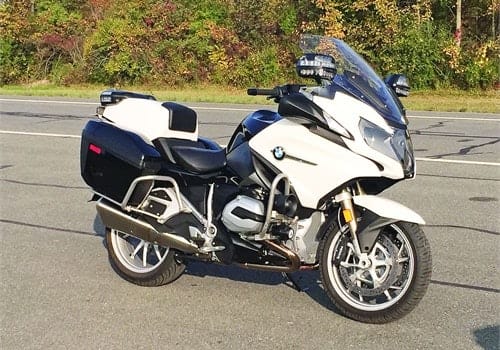
BMW's R 1200 RT-P returns for 2018 with several updates, including ABS Pro, which offers better traction control around a corner. The motorcycle can also now run on 87 octane fuel due to updated engine programming.
The R 1200 RT-P reached a top speed of 135 mph, which was second of the seven tested. It's zero to 60 was 4.1 seconds, and its zero to 100 mph was 9.8 seconds. The increments were also second best. The motorcycle topped brake testing with 130.04 inches (10.8 feet).
More Vehicle Ops
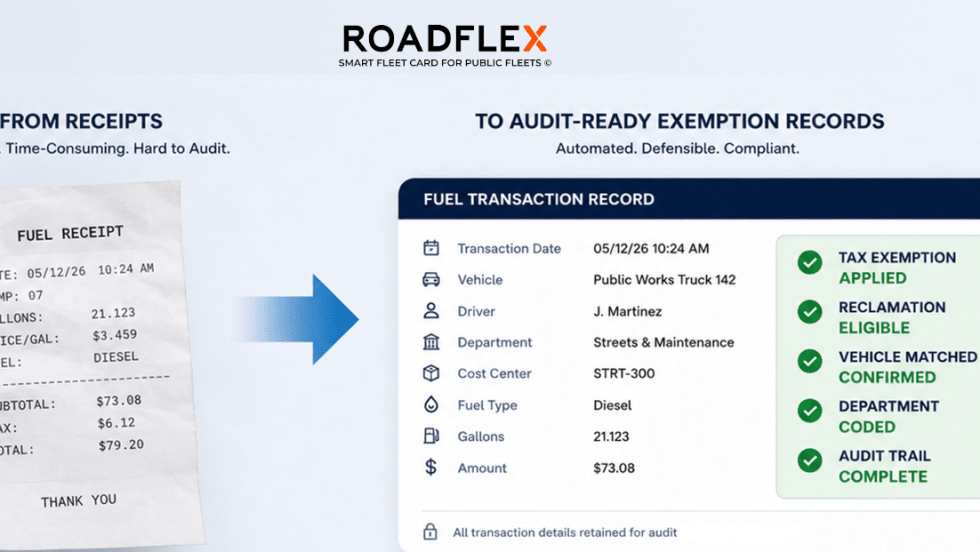
RoadFlex Brings Fuel Tax Compliance & Audit-Ready Reporting to Government Fleets
RoadFlex now offers its capabilities to help public-sector fleets streamline fuel tax exemptions, reclamation, reconciliation, and audit-ready reporting.
Read More →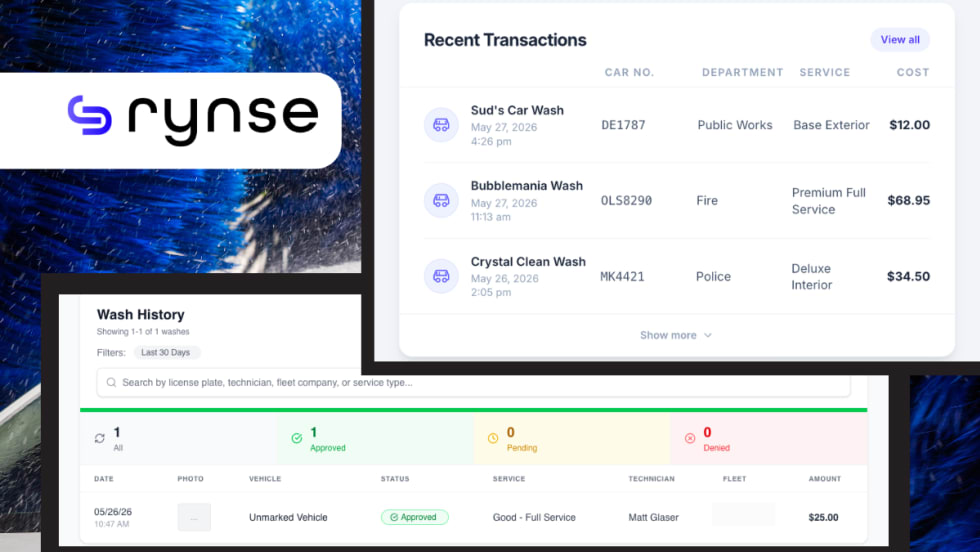
Rynse Awarded Cooperative Purchasing Contract, Expanding Nationwide Fleet Wash Access for Law Enforcement
Rynse has secured a 2026-2027 NCSA contract, giving law enforcement agencies nationwide fast-track access to its fleet wash network and management platform, which streamlines procurement, reduces administrative burdens, and helps fleets stay road-ready with greater oversight.
Read More →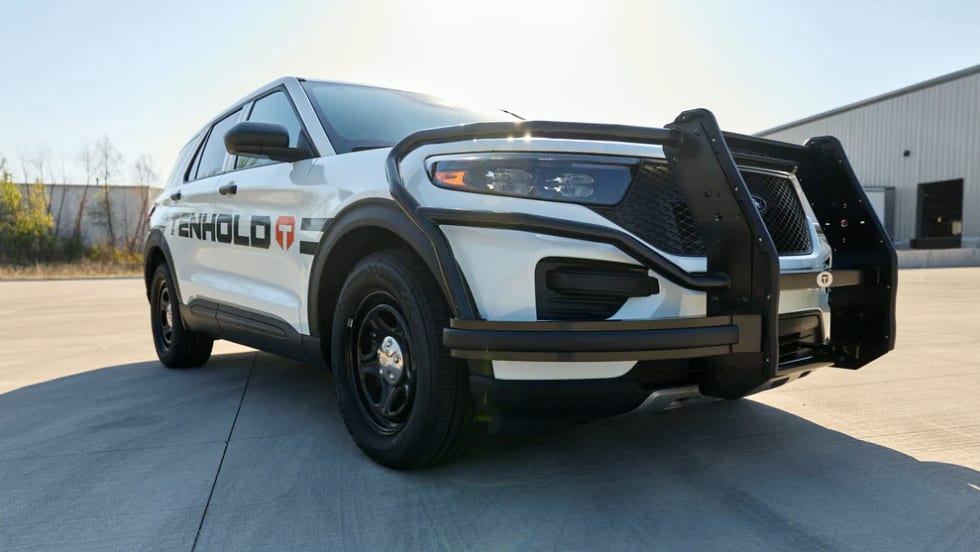
Tenhold Introduces Suppressor Gun Rack System
Tenhold, formerly Jotto Desk, provides next-generation vehicle systems for law enforcement and public safety and recently debuted its Suppressor Lock Head for its Weapon Mounting system.
Read More →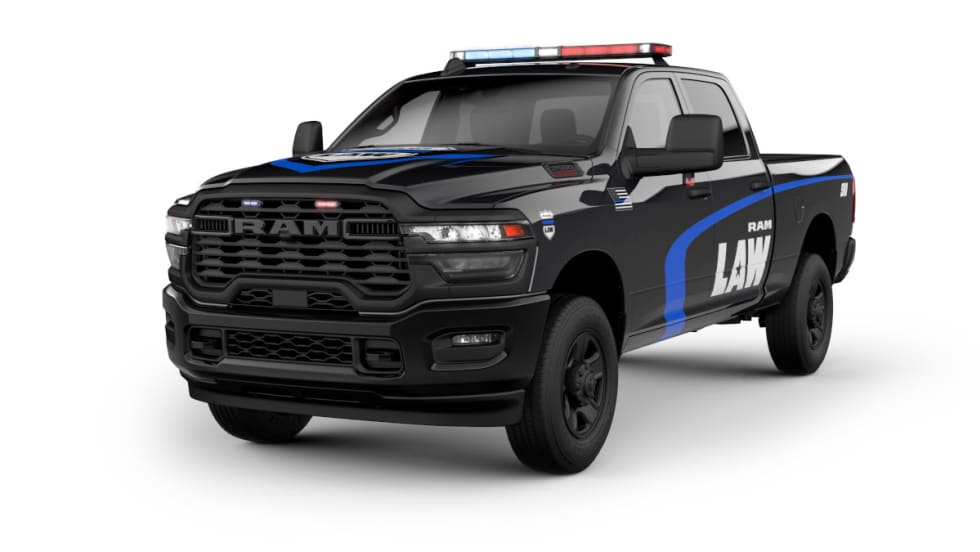
Ram Debuts Pursuit-Capable 2500 Emergency Response Vehicle
The 2027 Ram 2500 Emergency Response Vehicle is the first and only ¾-ton truck to complete the Michigan State Police vehicle trials, and Ram said it delivered outstanding performance in testing scenarios designed to replicate extreme real-world duty.
Read More →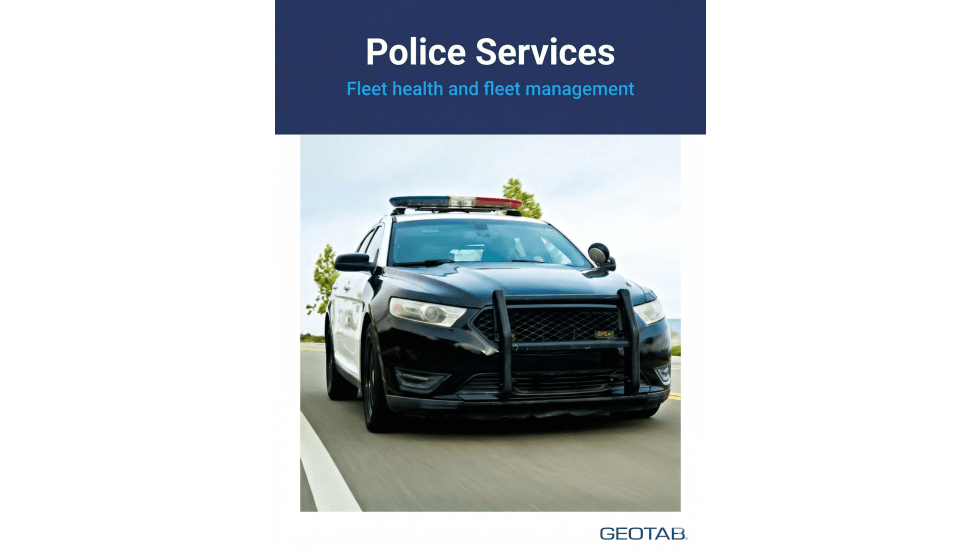
How Data-Driven Fleet Management Is Changing Public Safety Operations
Police agencies are leveraging fleet data to reduce collisions, improve officer safety, control maintenance costs, and strengthen public accountability. This ebook explores how modern telematics and fleet management technology are helping departments operate more efficiently while maximizing taxpayer resources.
Read More →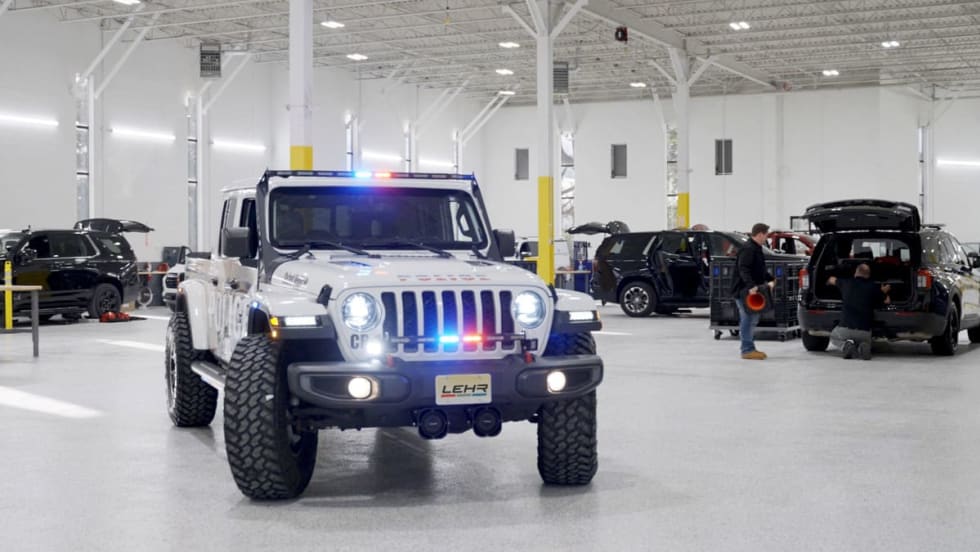
Emergency Vehicle Upfitter LEHR Opens New Facility in New Jersey
LEHR’s new centralized upfitting facility in New Jersey consolidates operations to deliver faster turnaround times and enhanced fleet capacity for law enforcement agencies across the Northeast.
Read More →
North Carolina Sheriff’s Office Improves Fueling Reliability & Operational Control
The Madison County Sheriff’s Office overcame fuel management and accounting challenges by turning to RoadFlex to improve fueling reliability, visibility, and administrative control.
Read More →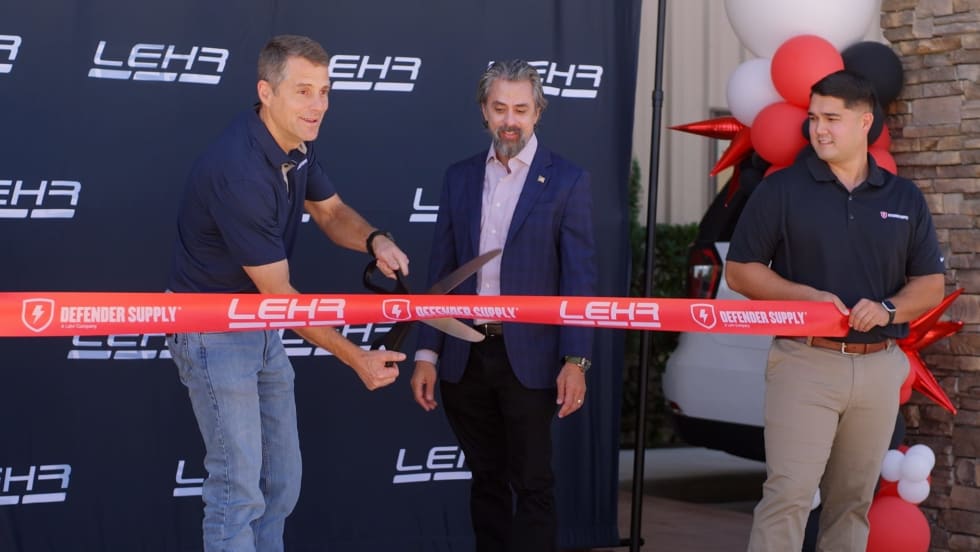
Emergency Vehicle Upfitter LEHR Expands National Footprint with New 40,000-Square-Foot Facility in Houston
LEHR has opened a 40,000-square-foot Defender Supply upfitting facility in Houston, Texas. It is expected to upfit thousands of public safety vehicles each year.
Read More →
How to Pick Your High-Risk Stop Location for Tactical Advantage
Hear veteran trainer Mike Willis, of the United States Deputy Sheriff’s Association, explain several considerations that can help you wisely pick your best spot to initiate high-risk or felony traffic stops.
Read More →
Coffee Break with Police Experts: Using Your Patrol Vehicle for Cover
In this video, hear from Dustin Mowery, a product specialist at Team Wendy, as he discusses how to best use a patrol vehicle for cover.
Read More →