



Ground Fighting: How to Win
Officer John Smith has just spotted a suspicious-looking individual and conducted a field interview. What he doesn't know is that the subject is wanted for felony assault. The field interview quickly becomes a fight and Officer Smith is knocked down. Now his life depends on his ability to fight on the ground.

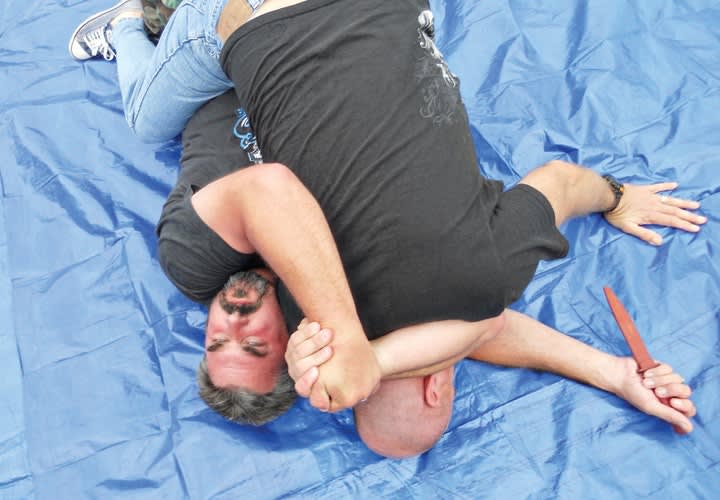
Officer John Smith has just spotted a suspicious-looking individual and conducted a field interview. What he doesn't know is that the subject is wanted for felony assault. The field interview quickly becomes a fight and Officer Smith is knocked down. Now his life depends on his ability to fight on the ground. And he probably doesn't know what to do.
Few American law enforcement officers are properly trained in survival ground fighting. In fact the first question that many new officers ask me when I speak to them about survival ground fighting is: What is survival ground fighting?
Let's return to the plight of our fictional Officer John Smith and see how he can turn the tables on his attacker.
Officer Smith has been taken off guard and grounded. The subject is in a top mount position on the officer and in a position to repeatedly strike the officer about the head.
That's the scenario I decided to work out with some new officers that I was training. I—older man not in the best shape ever and in need of repairs to shoulders and knees—positioned myself on the ground and challenged a fit new officer fresh from the academy to assume a mount position. Upon doing so I advised the newby to assume the mindset of a bad guy hell-bent on not going to jail. I then asked him what he thought he should do. His reply was common and consistent; he had the advantage, he would begin striking my face in order to render me incapable of effecting an arrest.
We started the exercise. He punched toward my face, and I deflected the blow. He followed up with another attempted strike to my face. I deflected his second strike, then used his momentum to divert his right arm to the far right hand side of my face. Then with one fast lunge, I had the newby in a full shoulder pin and tapping out in less than three seconds.
The look of astonishment on the young officer's face was indescribable. He asked, "What just happened?"
Then the questions started to flow. What did Officer Smith do wrong? Why don't they teach this at the academy? What liabilities are associated with this technique? How long do I apply the technique? What do I do next?
Stay Standing
Officer Smith likely made a few fundamental errors during his initial contact with his attacker.
One error he probably made was assuming a relaxed stance for a field interview as opposed to a solid aggressive defensive stance. To assume a solid, aggressive stance during a field interview, set your feet shoulder width apart, slightly bent at the knees, body weight shifted slightly forward, hands forward and prepared for defensive counterstrikes.
The second mistake that Officer Smith probably made is that he allowed his attacker to encroach upon his personal space. Officer Smith should have given himself approximately three feet of separation.
Finally, he failed to react by repositioning.[PAGEBREAK]
So why don't they teach this at the academy? Generally speaking most academy programs only provide students with the bare basics of a multitude of topics, be it criminal law or firearms training. Such training is not sufficient for many real-world practical applications in the field.
Is It Legal?
In this situation, the officer on the ground about to have his head pounded in, should be clearly able to properly articulate the need for deadly force.
Let's break it down. As an officer you are an authority of law and as such have the authority to command someone to obey your verbal directives, as long as you are giving a lawful command. It's not open for discussion on the street. If a subject disagrees, he or she should come to court and allow the person who gets paid big bucks to wear a black robe and make decisions render a judgment.
Second, you have enough goodies on your "Batman" belt that any attacker can potentially take them from you and seriously injure or kill you. That means you are justified in using any level of force necessary up to deadly force to end such an attack. Just be ready in court to truthfully articulate your reasonable belief that you were in serious danger.
Let's return to our Officer Smith scenario for a moment. He's down, and his attacker is on top of him, punching him in the face. If Officer Smith is hit enough in the head, he can easily be rendered incapable of functioning in any capacity, thereby giving the bad guy free access to all of the weapons on his belt. That's not good for Officer Smith or for the public that he serves.
Justified
What are the liabilities associated with using deadly force to end a ground attack? Well, it's like anything else you may learn during your career as a law enforcement officer. If you maliciously misuse your tools and techniques, then of course you will be opening yourself and your agency up to serious financial problems. And there is a possibility that you may be criminally prosecuted. However, if you are justified in the use of deadly force, based upon rulings set forth in Graham v. Connor and other judicial decisions, the tool or method that causes death or serious injury is irrelevant.
Some agencies have policies against using certain tools or techniques in all but the most dire circumstances. That's policy. But understand if you find yourself in the Officer Smith situation, then you are in dire circumstances and policy is the least of your concerns.
For example, if I carry a knife on my person and can get to it and can gut a bad guy who is on top of me and is likely to seriously injure or kill me, then my action is justified even if my agency says I should not use a knife as a weapon. If I use some type of choke hold and the bad guy dies because in my attempt to save myself from serious harm or death I misapply the maneuver and crush his trachea, I'm still covered. Wow! I just broke a golden rule in law enforcement administration standards, I used the words "choke" and "hold" in the same sentence. Remember, no holds are barred in a life-and-death confrontation.
How long should you apply the technique? When the bad guy submits to arrest and stops his assault or he is rendered unconscious, you stop. Once your attacker is no longer a threat, secure him, call for assistance, and check him for specific injuries. For example, when applying the shoulder pin, lateral vascular neck restraint (LVNR), or any other triangle choke-type maneuver, you run the risk of damage to the throat area that restricts the airway. Make sure the subject is inhaling air and exhaling air. If not, follow protocol for respiratory distress and administer CPR as necessary until EMS and backup arrives.
Be Prepared
So what is survival ground fighting in the law enforcement world? It's simply real-world techniques for fighting your way out of a very bad situation while grounded in a position of extreme disadvantage.
The only way to win this war is to be prepared to fight it. Find a qualified instructor, learn some techniques, get the mats out, and practice until you are proficient in the techniques. Work on escape and disengagement techniques as well.
Remember, ground fighting in the real world isn't a competition where the winner gets a belt or trophy. Winning is survival. Your ability to perform these techniques can have a direct bearing on whether you go home at night or the rest of us get out our class A uniforms yet again.
Don't wait for this training to be brought to you, go get it for yourself. Your very life may depend on it.
Mark Rich is a 24-year veteran officer now serving with the Midway (Ga.) Police Department. He is a POST-certified senior instructor trainer with specialized instructor certifications in defensive tactics, Firearms, and SWAT.
More Training
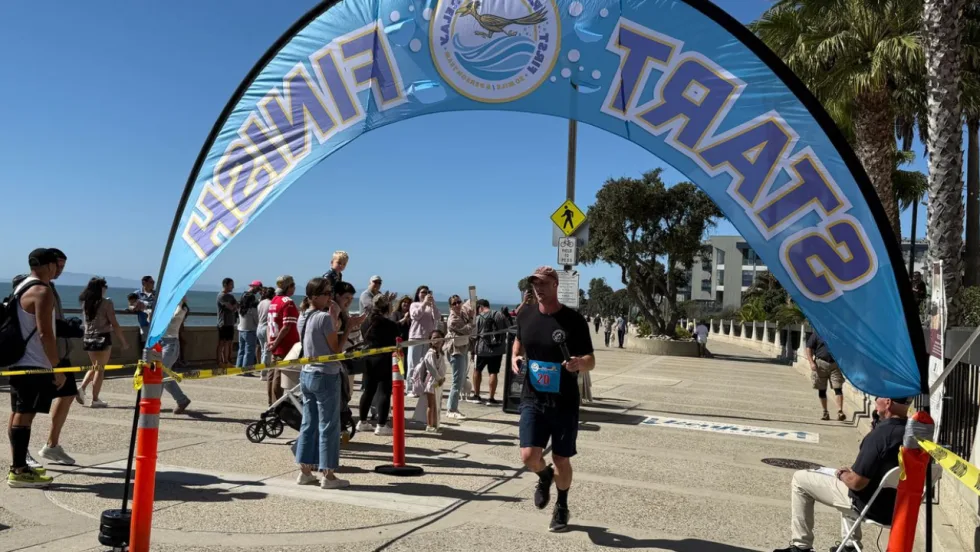
Registration Underway for Sixth Annual First Responders Relay
The California Police Athletic Federation’s annual First Responder Relay will welcome first responder teams from across the globe to compete along Ventura's scenic coastline on Oct. 11. Registration is underway.
Read More →
Vector Solutions Launches Comprehensive Online Dispatch Training Catalog for Emergency Communications Professionals
Vector Solutions’ new catalog of 35 expert-developed online courses can help emergency communication centers strengthen training, meet certification requirements, and simplify continuing education.
Read More →
Tools for Active Shooter Response Training
What technologies help prepare officers for active shooter response situations? This behind-the-scenes look at law enforcement training explores shot simulators, smart firearms, laser target systems, and the tools used to build safer, more effective training environments.
Read More →
Two-Officer Tactical Doorway Entry Techniques
Entering a room during active-threat situations requires communication, coordination, and disciplined tactical movement. In this video, trainers from the United States Deputy Sheriff’s Association demonstrate critical room entry concepts, including fatal funnel awareness, team coordination, and safe tactical movement.
Read More →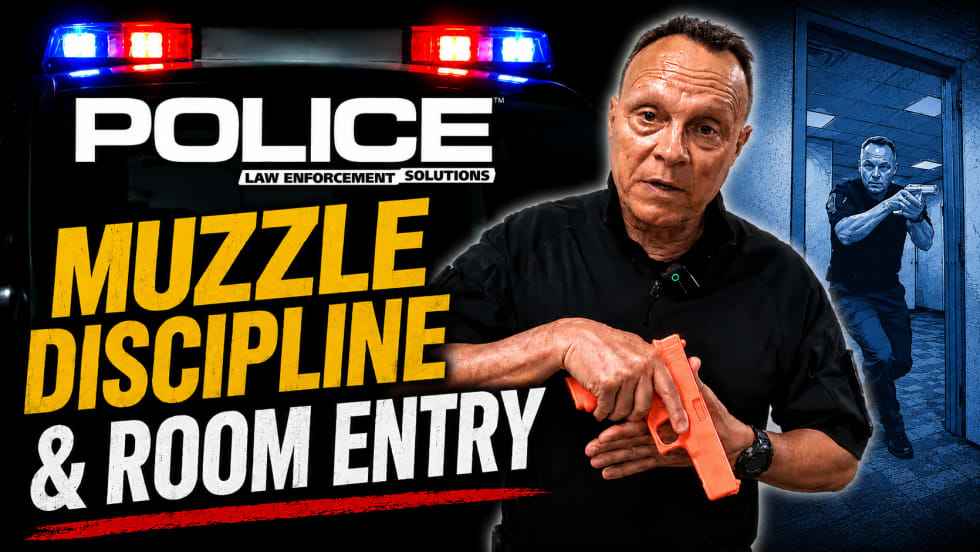
High Compressed Ready Explained | Muzzle Control For Room Entry
In this video, Mike Willis, law enforcement national training and program director for the United States Deputy Sheriffs’ Association, demonstrates the high compressed ready position and discusses muzzle control during room entry.
Read More →
Why Attend the DroneSense Innovation Summit by Versaterm?
Let’s hear from Ryan Bracken, head of product, about why your agency should send someone to the first annual DroneSense Innovation Summit by Versaterm in April.
Read More →
Caswell Live Fire Spins Off from InVeris
Caswell Live Fire has spun off from parent company InVeris, coinciding with the 100th anniversary of Caswell’s founding. Over the past 100 years, Caswell has developed pioneering solutions that support military, law enforcement, and commercial clients worldwide.
Read More →
When Do You Transport a Wounded Officer Instead of Waiting for EMS?
Thumbnail for video series POLICE Topics, Tactics & Tips with a yellow headline that reads When Do You Transport a Wounded Officer Instead of Waiting for EMS?
Read More →
How to Pick Your High-Risk Stop Location for Tactical Advantage
Hear veteran trainer Mike Willis, of the United States Deputy Sheriff’s Association, explain several considerations that can help you wisely pick your best spot to initiate high-risk or felony traffic stops.
Read More →
Coffee Break with Police Experts: Using Your Patrol Vehicle for Cover
In this video, hear from Dustin Mowery, a product specialist at Team Wendy, as he discusses how to best use a patrol vehicle for cover.
Read More →