



Why the OODA Loop is Still Relevant
Any time you react you are processing information and making decisions using the OODA loop. The OODA loop consists of four parts: Observe, Orient, Decide, and Act.

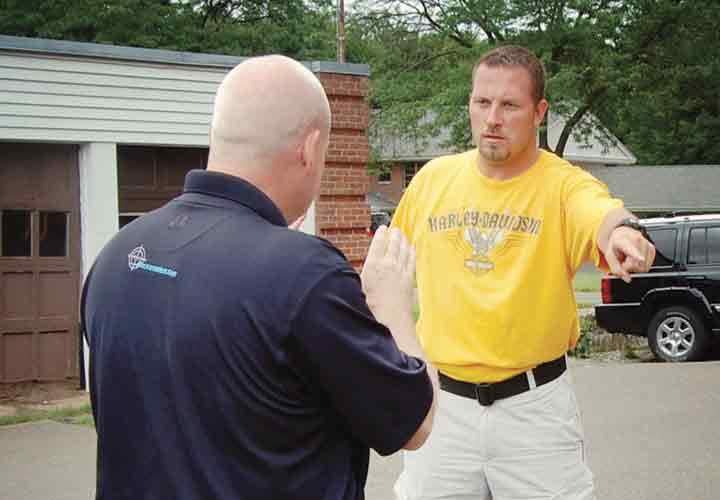
Photo courtesy of Amaury Murgado.
The OODA loop was created by Air Force colonel John Boyd in the late 1950s. He was a Korean War fighter pilot and a student of combative engagements. Col. Boyd's understanding of the time-sensitive nature of decision-making based on his experience led him to develop the OODA loop. Once understood, it laid out a winning tactic that helped explain successful fighter pilots and their seemingly enhanced abilities. But it's not just for fighter pilots.
Every law enforcement officer needs to understand the OODA loop because it explains how people act and react in a demanding, evolving, and highly charged situation. This decision-making model can be used to deconstruct verbal and physical confrontations. It also provides a structure for understanding how the mind processes information and takes action in other situations.
Where it Came From
Boyd studied the aerial combat outcomes during the Korean War and found that even though U.S. pilots flew inferior jets they still beat their adversaries 10-1. Through further research, he was able to decode the process and learn some critical characteristics about decision-making and reaction time. Boyd concluded that there were only two ways to beat someone in aerial combat: speed up your decision-making (and thus reaction time) or slow down theirs. This same principle applies to law enforcement.
How it Works
Any time you react you are processing information and making decisions using the OODA loop. The OODA loop consists of four parts: Observe, Orient, Decide, and Act, hence the acronym. In any confrontational situation, you as an officer observe the situation, orient yourself to it by establishing relative positioning, decide what has to be done, and then do it. Any time the situation changes, you have to adapt, and the process starts over again.
The decision-making we do in law enforcement is actually a battle for time. The person with the fastest reaction time usually wins. Keep in mind, the bad guy is going through the same process and therefore fighting for the same chunk of time.
Verbal Confrontations
There isn't a day that goes by where officers don't have to deal with upset people who lash out at the very ones trying to help them. Getting them on track and on a manageable level is paramount to your handing of their problem.
By the time you get out of your car, a subject has already made most of his decisions. Talking to you is usually the last part of his OODA loop. This is why it is so difficult to talk to a person when he is fired up. Simply ordering him to calm down does absolutely no good. He won't respond the way you want because he is locked in his own loop. You have to break the subject's concentration by changing his focus. This starts him on a new loop or, at the very least, breaks the one he is on even if only for a brief moment.
I was on a call years ago dealing with an out-of-control "he said, she said" domestic disturbance. While dealing with my half, I quickly changed the conversation and asked a question about the interior decoration of the living room, focusing on a beautiful painting. It totally caught the person off guard. It was like seeing someone slamming on the brakes. The woman literally said, "What, huh, what did you just say?" My off-the-wall question was just enough to break her OODA loop and start me down the path to calming her down.
In such situations, "yes or no" questions won't work. You have to ask a question that the person has to think about before answering. My first attempt usually consists of asking a question totally unrelated to the situation. If that doesn't work, my next question is about something I think means a lot to the subject, like asking about his or her children. You're not looking to become best friends; you just need to interrupt the person's OODA loop long enough to get a word in edgewise. Though not 100% successful, it works more times than not.
Physical Confrontations
Your job is ultimately about obtaining control of the situation even if it requires going hands on. The OODA loop works the same way here. Once a person decides he is going to hit you, he gets locked into his own loop and commits to the action. Any change on your part will make him have to start the decision-making process over again. For example, if a person is stepping into you before throwing a punch, you cannot let him set down that lead foot before striking. If he gets to plant his foot you're going to get hit. You need to make a move that forces the subject to reposition and start his OODA loop over again.
Since action beats reaction every time, the guy who keeps forcing the other to change his plans usually keeps the upper hand. This is also where speed comes in. The guy who moves the fastest usually wins the fight.
Another example of where this tactic applies is an active shooter scenario. If you are standing across from the shooter and you each draw and then shoot, both of you will probably get hit. But if you move off his centerline, you will cause him to miss (or at least hit you in a less critical spot) because you have made him change his plans, requiring a new round of decision-making. The shooter is now going to have to lift and shift in order to shoot you. That's why the military lives by the mantra move, shoot, and communicate.
Improving Your OODA Loop
The only way to improve your OODA loop is through training. It's not something you think about; it's something you do. Ever wonder why you do the same small number of defensive tactics moves over and over again the entire length of your career? They work in part because of the OODA loop. Because how you train is how you fight, you have a handful of techniques you default to under stress. You have worked on them so much you don't think about it, you just do it. This shortens your OODA loop and increases your reaction time. It's thinking less and acting more that gives you an advantage.
That's why those who don't train don't react well. By the time they finish processing their OODA loop, it's already too late. Or worse, they make the one and only decision they know and stick to it even if it's not working. Officers who skip training help increase the bad guy's ability to steal their response time. The saying "He who hesitates is lost" certainly rings true.
Malfunction drills are a great example. When you practice them regularly your movements are as smooth as silk; when you don't practice, you look like you've never done them before. But have you ever watched someone on the range dealing with a malfunction that isn't a typical stoppage? You usually see the guy keep doing the same thing over and over again until he just stares at his gun wondering what to do.
This happens when you don't have a way to break your own loop. This is why it's getting more and more common to see people training at police ranges looking left and then right after they shoot. This action is part security check and part breaking their loop.
The only way to improve reaction time is to train, train, and then train some more. If skill sets don't become second nature they act as boat anchors. The more time it takes for you to get into action, the more time you give to the bad guy.
Beat the Battle for Time
The OODA loop is a form of dynamic decision-making that is as easy to understand as it is to apply. It will help you beat the battle for time. If you still don't see the usefulness of the OODA loop, perform this simple drill taught to me by a fellow combatives instructor.
Have a coworker place a small towel on her right shoulder. Tell her you are going to snatch the towel and she has to stop you. Most of the time, she will. After a few tries, tell her to recite her social security number or something else that makes her think. Then have her try to stop you again. You'll grab hold of the towel each and every time. You win not only because action is faster than reaction, but more importantly, because you are able to divide the person's attention and therefore successfully change her OODA loop.
Amaury Murgado is a special operations lieutenant with the Osceola County (Fla.) Sheriff's Office. He is a retired master sergeant from the Army Reserve, has over 25 years of law enforcement experience, and has been a lifelong student of martial arts.
More Training
Registration Underway for Sixth Annual First Responders Relay
The California Police Athletic Federation’s annual First Responder Relay will welcome first responder teams from across the globe to compete along Ventura's scenic coastline on Oct. 11. Registration is underway.
Read More →
Vector Solutions Launches Comprehensive Online Dispatch Training Catalog for Emergency Communications Professionals
Vector Solutions’ new catalog of 35 expert-developed online courses can help emergency communication centers strengthen training, meet certification requirements, and simplify continuing education.
Read More →
Tools for Active Shooter Response Training
What technologies help prepare officers for active shooter response situations? This behind-the-scenes look at law enforcement training explores shot simulators, smart firearms, laser target systems, and the tools used to build safer, more effective training environments.
Read More →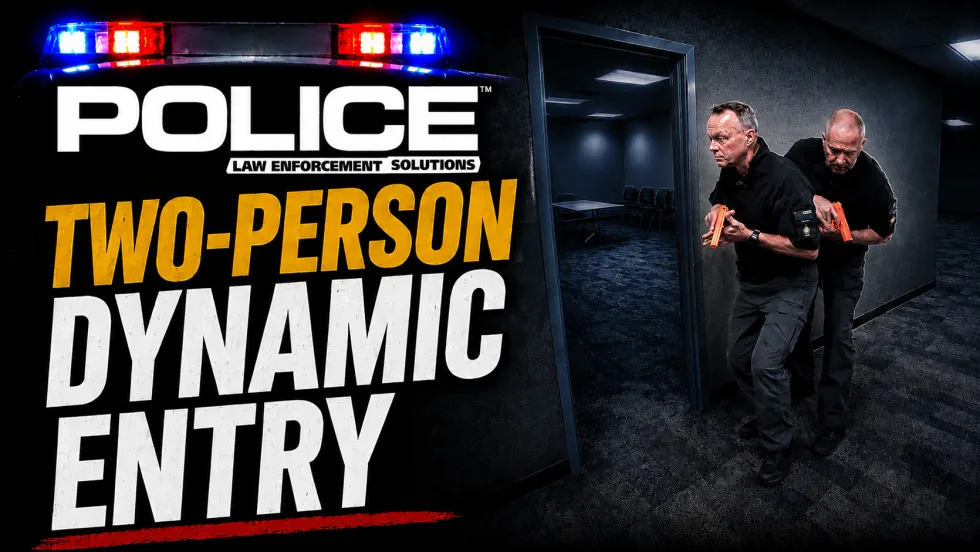
Two-Officer Tactical Doorway Entry Techniques
Entering a room during active-threat situations requires communication, coordination, and disciplined tactical movement. In this video, trainers from the United States Deputy Sheriff’s Association demonstrate critical room entry concepts, including fatal funnel awareness, team coordination, and safe tactical movement.
Read More →
High Compressed Ready Explained | Muzzle Control For Room Entry
In this video, Mike Willis, law enforcement national training and program director for the United States Deputy Sheriffs’ Association, demonstrates the high compressed ready position and discusses muzzle control during room entry.
Read More →
Why Attend the DroneSense Innovation Summit by Versaterm?
Let’s hear from Ryan Bracken, head of product, about why your agency should send someone to the first annual DroneSense Innovation Summit by Versaterm in April.
Read More →
Caswell Live Fire Spins Off from InVeris
Caswell Live Fire has spun off from parent company InVeris, coinciding with the 100th anniversary of Caswell’s founding. Over the past 100 years, Caswell has developed pioneering solutions that support military, law enforcement, and commercial clients worldwide.
Read More →
When Do You Transport a Wounded Officer Instead of Waiting for EMS?
Thumbnail for video series POLICE Topics, Tactics & Tips with a yellow headline that reads When Do You Transport a Wounded Officer Instead of Waiting for EMS?
Read More →
How to Pick Your High-Risk Stop Location for Tactical Advantage
Hear veteran trainer Mike Willis, of the United States Deputy Sheriff’s Association, explain several considerations that can help you wisely pick your best spot to initiate high-risk or felony traffic stops.
Read More →
Coffee Break with Police Experts: Using Your Patrol Vehicle for Cover
In this video, hear from Dustin Mowery, a product specialist at Team Wendy, as he discusses how to best use a patrol vehicle for cover.
Read More →