



You Are Not Their Friend
The role of a law enforcement supervisor is to lead, motivate, and help accomplish the agency's mission. Nowhere in that role does it state you have to be everyone's friend.

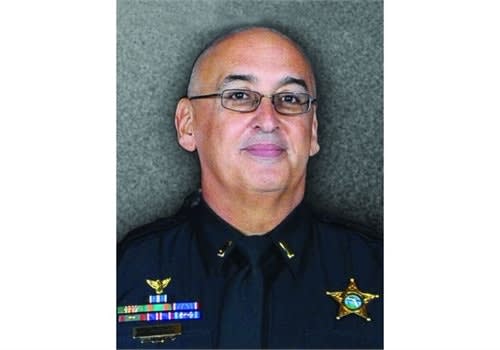
Photo: Amaury Murgado
The role of a law enforcement supervisor is to lead, motivate, and help accomplish the agency's mission. Nowhere in that role does it state you have to be everyone's friend. Being overly friendly is a common pitfall among new supervisors. It's also a problem with experienced supervisors. No one is immune from this mistake because of human nature.
It's hard to find someone who loves conflict. But supervisors who attempt to avoid conflict by trying to be everyone's friend soon realize the folly of their efforts. Whatever your leadership role, trying to be everyone's friend will only serve to undermine your efforts. It only works when there is smooth sailing. At any sign of bad weather, you will be the one going down with the ship while everyone else seeks dry land.
The problem starts with how agencies train new supervisors. Most of the time, an officer goes from asking questions one day, to being the sergeant who has to answer questions the next. Officers rarely receive much preparation for the transition. When new supervisors assume their command relationships, they are often left to their own devices. If the only supervisory role you have ever experienced is as the coach of a little league team, you are in for a rude awakening.
For example, the very guys you were telling jokes to yesterday in the locker room might be the ones you have to admonish today for their jokes being inappropriate. That role reversal tends to go over like a lead balloon.
The reality is you can't be everyone's friend. The best you can do is be friendly and treat everyone with respect. You have to understand that no one gets a pass when they violate policy and procedure. Your retirement is not worth their
inconvenience.
We would like to think that everyone in law enforcement can draw a line in the sand when it comes to on-duty and off-duty relationships. However, understanding and working though on-duty and off-duty relationships is easier said than done. It's been my experience that it is an exception to the rule when you can admonish a subordinate at work and yet have a beer over a game of darts later on.
Part of the problem stems from our own use of the English language. We use the word friend far too often and far too loosely. Today's meaning of "friend" (at least at work) really means "acquaintance." We use the words interchangeably. Yes, our duty binds us together at work, but that doesn't automatically make us friends. Ask yourself these questions: How many of the people you work with would you invite over to your house for dinner? How many would you like to spend the weekend with camping, fishing, or doing another favorite activity of yours? How many people are you really close with? If you are honest with yourself, it's not going to be that many.
Have you ever known a circumstance in which someone thought a guy was great until he got promoted? You know the only real difference in the guy is the new role he has to play and so does the guy who doesn't like the change, but he takes offense to it anyway. The argument becomes that what was once not important, now is. The disgruntled subordinate gets angry because he has been called on the carpet. He complains to anyone who will listen and says that's not the way to treat a friend. He will go on and explain that the co-worker turned supervisor thinks he is better than everyone else just because he has some rank.
Of course what Mr. Bitter forgets to tell you is that it's his own fault for creating the conditions that led to the reprimand in the first place, effectively putting his friend and new supervisor in a tough spot. True hypocrisy at its best. As a supervisor, you need to accept the fact that with some co-workers, you're only considered a friend as long as they get what they want.
A true friend understands the supervisory role and respects it. She will treat the supervisor the way she would want to be treated if the roles were reversed. My friends have never put me in an uncomfortable position at work in my 19 years as a supervisor. If you want to be successful as a supervisor, learn the difference between friendship and being friendly. It will save you a few headaches.
Amaury Murgado is a special operations lieutenant with the Osceola County (Fla.) Sheriff's Office. He is a retired master sergeant from the Army Reserve, has over 28 years of law enforcement experience, and is an adjunct professor for Valencia College in Orlando.
More Training
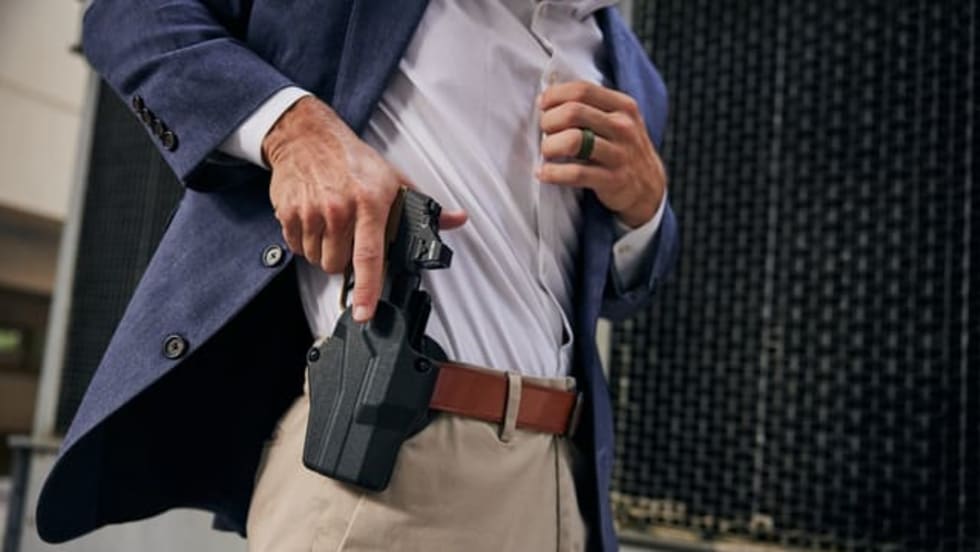
Safariland Solis Rethinks Concealable Duty
What if Level I retention didn’t require a full duty rig? Safariland’s Solis delivers trusted ALS security in a streamlined OWB platform built for administrative and plainclothes professionals who need protection without the bulk.
Read More →
Two-Officer Tactical Doorway Entry Techniques
Entering a room during active-threat situations requires communication, coordination, and disciplined tactical movement. In this video, trainers from the United States Deputy Sheriff’s Association demonstrate critical room entry concepts, including fatal funnel awareness, team coordination, and safe tactical movement.
Read More →
High Compressed Ready Explained | Muzzle Control For Room Entry
In this video, Mike Willis, law enforcement national training and program director for the United States Deputy Sheriffs’ Association, demonstrates the high compressed ready position and discusses muzzle control during room entry.
Read More →
Built for Patrol: How One Police Chief Fixed Communication, Boosted Visibility, and Changed the Culture
Patrol work hasn’t changed—but the expectations on officers have. See how one police chief helped officers get the right information at the right time, improve patrol visibility, and strengthen trust without adding complexity or surveillance. This real-world story shows how patrol-driven technology can make the job safer, smarter, and more effective—starting on day one.
Read More →
Why Attend the DroneSense Innovation Summit by Versaterm?
Let’s hear from Ryan Bracken, head of product, about why your agency should send someone to the first annual DroneSense Innovation Summit by Versaterm in April.
Read More →
Caswell Live Fire Spins Off from InVeris
Caswell Live Fire has spun off from parent company InVeris, coinciding with the 100th anniversary of Caswell’s founding. Over the past 100 years, Caswell has developed pioneering solutions that support military, law enforcement, and commercial clients worldwide.
Read More →
When Do You Transport a Wounded Officer Instead of Waiting for EMS?
Thumbnail for video series POLICE Topics, Tactics & Tips with a yellow headline that reads When Do You Transport a Wounded Officer Instead of Waiting for EMS?
Read More →
How to Pick Your High-Risk Stop Location for Tactical Advantage
Hear veteran trainer Mike Willis, of the United States Deputy Sheriff’s Association, explain several considerations that can help you wisely pick your best spot to initiate high-risk or felony traffic stops.
Read More →
Coffee Break with Police Experts: Using Your Patrol Vehicle for Cover
In this video, hear from Dustin Mowery, a product specialist at Team Wendy, as he discusses how to best use a patrol vehicle for cover.
Read More →
Preventing Blue-on-Blue Shootings
In this video, Mike Willis, law enforcement national training and program director, United States Deputy Sheriff’s Association, discusses how to prevent blue-on-blue shootings.
Read More →