



How About a Little Respect?
To the young cops from the retired cops, we have more sage advice to impart than you realize.

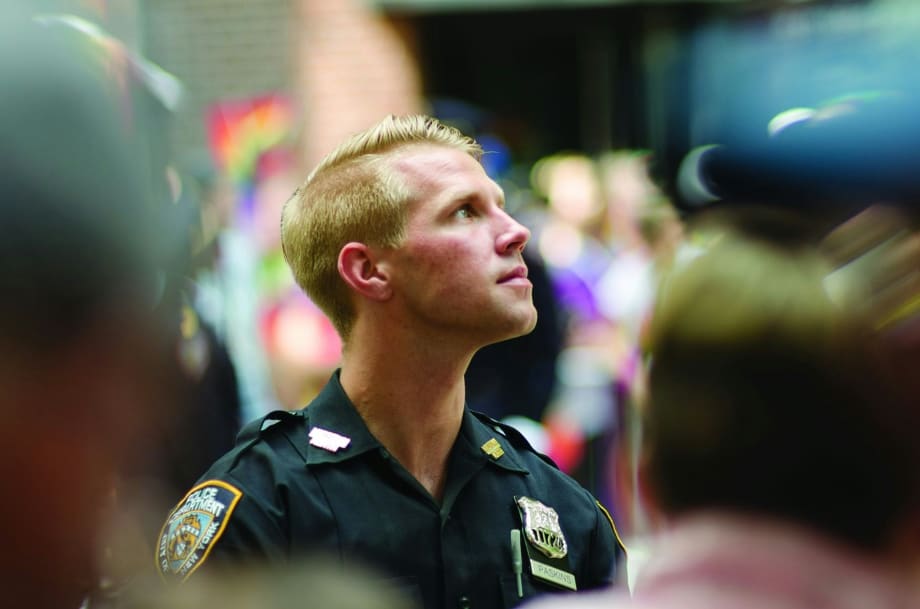
You likely look up to seasoned veterans who have shown you the ropes. At least give retired officers the benefit of the doubt. Photo: Getty Images
Once is an accident, twice is a coincidence, three is a pattern, and a thousand times is a problem. There is a scene that gets played out in police stations, which seems like no big deal on its face, but points to a larger issue: the lack of respect some younger officers have when older, retired officers cross their paths. Yes, I'm talking straight to you, Young Copper.
Sometimes we can read your body language—the eye-rolling or the bored sigh—as you think, "What's this old guy doing here? He doesn't work here anymore. I'm not going to stand around here while he trades sea stories with his old partners." Or, "What's she doing here and how come she's sitting behind the front counter at the station, BS-ing with the other about-to-retire cops?" Or, "They let retired cops sit in the back with their old detective pals and talk about current cases? What's up with that?"
This level of disdain is disturbing. And it happens in the field too, when former or retired officers come across old friends and colleagues, either at a scene, or a traffic stop, or a restaurant. Handshakes or hugs are exchanged and we can see the looks on your faces when you're introduced: "Huh. So what? What can I possibly learn from this old-timer?"
Out of Sight, Out of Mind
Nowhere does the phrase "out of sight, out of mind" hurt worse than at a police station reception counter, when a rookie officer, a non-sworn community service officer, or a new secretary tells a visiting retired officer, who has shown his or her retired ID and badge, "Well, you'll still have to sign our visitor's log and put on this visitor's badge. Have a seat over there. I'll call Officer/Sergeant/Detective Whozit to have him or her escort you through the building." I get the need for an access control policy, but can we do it without diminishing the retired officer's status to the same level as the guy who fills the soda machine?
Older, retired officers have told me how they have approached younger cops in the field during a radio call, discreetly identified themselves, and passed on a piece of information they observed before the officers arrived. This is often met with some form of "Don't try to tell me how to do my job." The disrespected former officer feels embarrassed and angry, knowing it was not his or her function to disrupt the contact or tell the uniformed cop how to handle it, but just to provide some information or an officer safety warning.
Takes One to Know One
Do you want to know why I know all this, besides hearing my retired pals tell me these stories or have it happen to me? Because I did it when I was around retired cops too! I'm ashamed to admit that I exhibited the same behavior when I saw retired officers at my station or in the detective squad room or out in the field.
When I was young and naive about the job I foolishly believed only working uniformed officers, supervisors, or detectives had anything to tell me or teach me. I rationalized like a lot of current young officers do: "Times are tougher now. The streets are different today. More people are armed and with bigger guns. People respected cops back in your day and that [somehow] made the job easier." I learned that response from watching my FTOs, partners, and colleagues, and how they interacted, or avoided, or bad-mouthed the old salts we came across. It was wrong back then and it's wrong today.
Tradition
The U.S. Marine Corps has a time-honored and useful tradition, which takes place during the cake-cutting ceremony at its annual birthday ball in November. It's a simple yet powerful sign of respect. There are a few versions of this, but here it is from the USMC website itself:
"Traditionally—regardless of location—Marines pause to observe our birthday by sharing a cake. The first piece of cake is presented to the Guest of Honor. The second piece is presented to the oldest Marine in the command, signifying the honor and respect accorded to experience and seniority. We say, 'The oldest Marine this evening is (rank and name), who was born on ______.' Symbolically, the eldest Marine present passes a piece of cake to the youngest Marine present, just as for years our experienced Marines have nurtured and led young Marines that will fill our ranks and renew our Corps."
In the version I have witnessed, the oldest living Marine in the room—who may have served or retired decades ago—presents the cake to the youngest Marine. These types of symbolic gestures exist for a reason: they mean something, or they should, to every person in the room.
I don't need you to cut me a piece of cake, Young Copper, but can my retired brothers and sisters and I get some respect when we encounter you? We learned from those who came before us and some of us taught your FTOs how to do this job. We may have worked before you got to wear all that cool gear on your belt, which means we had to use our minds and words and bodies instead of TASERs. A little acknowledgement for having done dangerous things around dangerous people is all we ask.
Steve Albrecht worked for the San Diego Police Department for 15 years. He is the author of five police books, including Contact & Cover; Tactical Perfection for Street Cops; and Patrol Cop. He can be reached at DrSteve@DrSteveAlbrecht.com or on Twitter
@DrSteveAlbrecht.
More Training
Registration Underway for Sixth Annual First Responders Relay
The California Police Athletic Federation’s annual First Responder Relay will welcome first responder teams from across the globe to compete along Ventura's scenic coastline on Oct. 11. Registration is underway.
Read More →
Vector Solutions Launches Comprehensive Online Dispatch Training Catalog for Emergency Communications Professionals
Vector Solutions’ new catalog of 35 expert-developed online courses can help emergency communication centers strengthen training, meet certification requirements, and simplify continuing education.
Read More →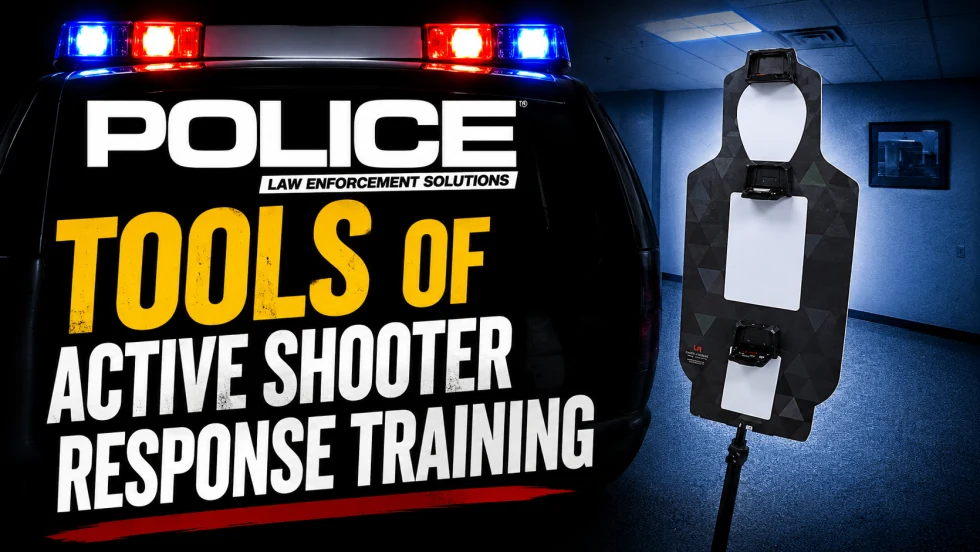
Tools for Active Shooter Response Training
What technologies help prepare officers for active shooter response situations? This behind-the-scenes look at law enforcement training explores shot simulators, smart firearms, laser target systems, and the tools used to build safer, more effective training environments.
Read More →
Two-Officer Tactical Doorway Entry Techniques
Entering a room during active-threat situations requires communication, coordination, and disciplined tactical movement. In this video, trainers from the United States Deputy Sheriff’s Association demonstrate critical room entry concepts, including fatal funnel awareness, team coordination, and safe tactical movement.
Read More →
High Compressed Ready Explained | Muzzle Control For Room Entry
In this video, Mike Willis, law enforcement national training and program director for the United States Deputy Sheriffs’ Association, demonstrates the high compressed ready position and discusses muzzle control during room entry.
Read More →
Why Attend the DroneSense Innovation Summit by Versaterm?
Let’s hear from Ryan Bracken, head of product, about why your agency should send someone to the first annual DroneSense Innovation Summit by Versaterm in April.
Read More →
Caswell Live Fire Spins Off from InVeris
Caswell Live Fire has spun off from parent company InVeris, coinciding with the 100th anniversary of Caswell’s founding. Over the past 100 years, Caswell has developed pioneering solutions that support military, law enforcement, and commercial clients worldwide.
Read More →
When Do You Transport a Wounded Officer Instead of Waiting for EMS?
Thumbnail for video series POLICE Topics, Tactics & Tips with a yellow headline that reads When Do You Transport a Wounded Officer Instead of Waiting for EMS?
Read More →
How to Pick Your High-Risk Stop Location for Tactical Advantage
Hear veteran trainer Mike Willis, of the United States Deputy Sheriff’s Association, explain several considerations that can help you wisely pick your best spot to initiate high-risk or felony traffic stops.
Read More →
Coffee Break with Police Experts: Using Your Patrol Vehicle for Cover
In this video, hear from Dustin Mowery, a product specialist at Team Wendy, as he discusses how to best use a patrol vehicle for cover.
Read More →