



Wrongful Death Suit Against TASER Dismissed
TASER International announced that because the coroner admits his comments regarding a man's cause of death were reckless, a stipulation for dismissal with prejudice was filed by the parties in the James Borden wrongful death lawsuit in the United States District Court for the Southern District of Indiana. This is the fifth wrongful death or injury lawsuit that has been dismissed against TASER International in the past 18 months.

TASER International announced that because the coroner admits his comments regarding a man's cause of death were reckless, a stipulation for dismissal with prejudice was filed by the parties in the James Borden wrongful death lawsuit in the United States District Court for the Southern District of Indiana. This is the fifth wrongful death or injury lawsuit that has been dismissed against TASER International in the past 18 months, with one additional dismissal pending.
On November 6, 2003, Mr. James Borden died while in police custody in Indiana. On November 7, 2003, Dr. Roland M. Kohr, M.D. performed an autopsy on Borden. Dr. Kohr only spent about 90 minutes in performing the autopsy. For his efforts Dr. Kohr was paid a flat-fee of $600. In his December 10, 2003, autopsy report, Kohr listed Borden's cause of death as "[C]onsistent with cardiac dysrhythmia secondary to hypertrophic cardiomyopathy, pharmacologic intoxication, and electrical shock."
Kohr's inclusion of electrical shock by a TASER device as a contributory cause of Borden's death resulted in significant public criticism of TASER devices in media reports as well as the filing of this litigation against TASER International, Inc.
On July 26, 2004, on the CBS Evening News with Dan Rather, Kohr, stated that the TASER device definitely triggered Borden's heart attack. However, in his deposition on March 3, 2005, Kohr admits that his statement on CBS News was reckless.
Now, almost two years after Borden's death, after much litigation and negative publicity, the civil case of Borden v. TASER International, Inc. has now been dismissed with prejudice, meaning it cannot be re-filed.
Following are some of Dr. Kohr's admissions in his depositions:
1. He did not investigate nor did he take Borden's significant pre-existing negative medical conditions into consideration in his findings.
2. He did not know all of the events surrounding Borden's death, e.g. Kohr wrote in his report that a TASER device had been used on Borden six times when in fact it had been used only three times. Kohr thought that Borden collapsed immediately after the TASER device was used. He did not know that Borden, with his hands handcuffed behind his back, had been physically thrown to the ground. Nor did Kohr know that four officers had put their weight on Borden's back. Kohr now admits that this weight could have impaired Borden's pulmonary function and could have caused Borden to die of asphyxiation. Kohr also admits that taking Borden to the concrete floor, while handcuffed, face first, caused pain, was a stressor, and could have contributed to his death.
3. Kohr admits that he had virtually no knowledge of TASER devices. He had never held or fired a TASER device. Nor did he know the wattage, current output, joules, or frequency of the device.
4. Kohr now admits that the TASER device did not directly impact Mr. Borden's heart. In explaining his autopsy report, he said that the device caused pain, the pain caused stress, and the stress negatively impacted Borden's heart. Yet, since Borden had taken large amounts of a sedative, there is no evidence that he felt any pain, a fact now admitted by Kohr.
5. Some of the other factors that Kohr now admits contributed to Borden's death, yet were only tangentially included as causation of death in his autopsy report, include: obesity, lethal overdose of ephedrine, and overdose of promethazine. Other possible contributors to Borden's death now admitted by Kohr include: the stress of Borden losing his father days before, the stress of being arrested, and the stress of being taken to the ground face first unable to catch his fall with his hands cuffed behind his back.
Kohr now admits that TASER devices are generally safe and definitely have law enforcement utility.
In the Borden litigation, 14 experts in the fields of cardiac electro physiology, cardiovascular pathology, forensic psychiatry, pulmonary medicine, forensic pathology, toxicology, forensic engineering, statistics, experimental psychology, and electrical engineering thoroughly reviewed the evidence and provided detailed reports refuting the plaintiffs' claims. These medical and engineering experts all concluded that the TASER device was not a contributory factor in Borden's death.
More Training
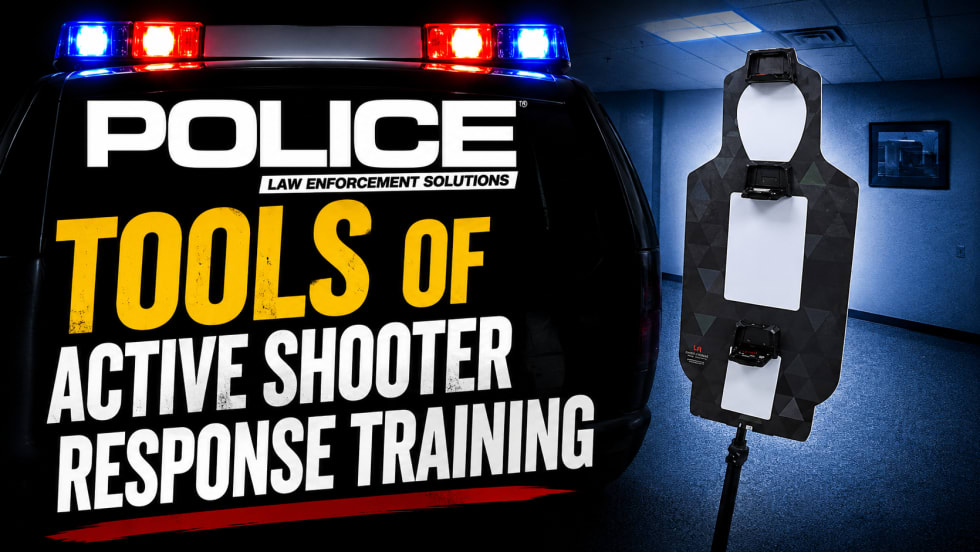
Tools for Active Shooter Response Training
What technologies help prepare officers for active shooter response situations? This behind-the-scenes look at law enforcement training explores shot simulators, smart firearms, laser target systems, and the tools used to build safer, more effective training environments.
Read More →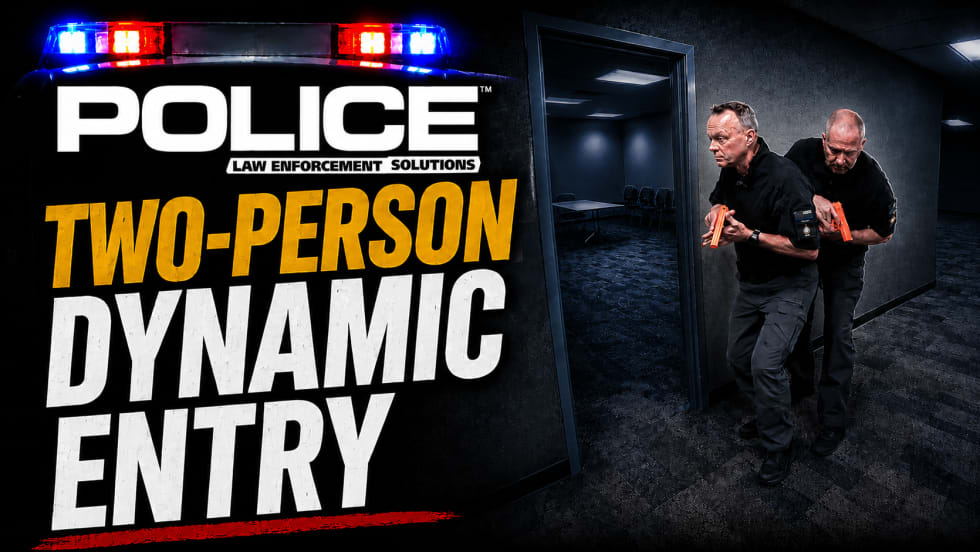
Two-Officer Tactical Doorway Entry Techniques
Entering a room during active-threat situations requires communication, coordination, and disciplined tactical movement. In this video, trainers from the United States Deputy Sheriff’s Association demonstrate critical room entry concepts, including fatal funnel awareness, team coordination, and safe tactical movement.
Read More →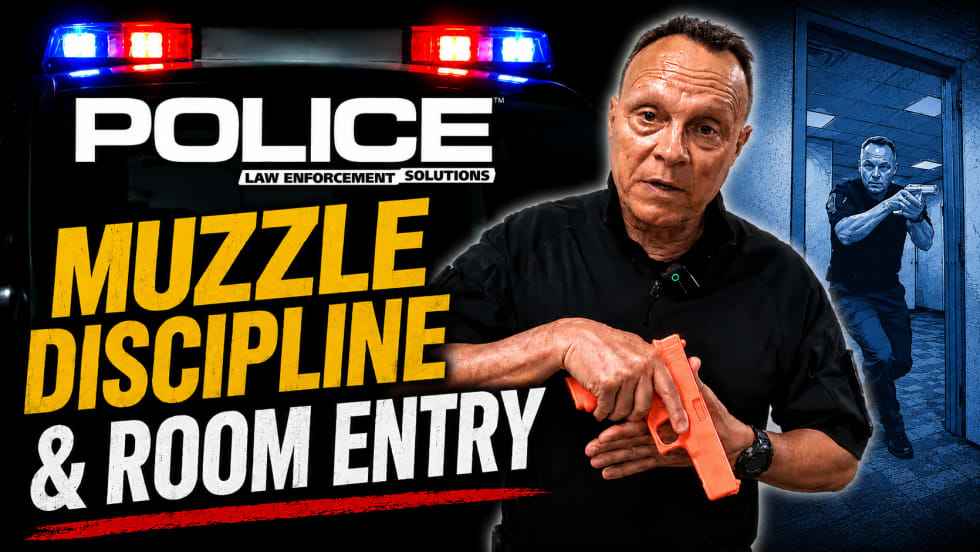
High Compressed Ready Explained | Muzzle Control For Room Entry
In this video, Mike Willis, law enforcement national training and program director for the United States Deputy Sheriffs’ Association, demonstrates the high compressed ready position and discusses muzzle control during room entry.
Read More →
Why Attend the DroneSense Innovation Summit by Versaterm?
Let’s hear from Ryan Bracken, head of product, about why your agency should send someone to the first annual DroneSense Innovation Summit by Versaterm in April.
Read More →
Caswell Live Fire Spins Off from InVeris
Caswell Live Fire has spun off from parent company InVeris, coinciding with the 100th anniversary of Caswell’s founding. Over the past 100 years, Caswell has developed pioneering solutions that support military, law enforcement, and commercial clients worldwide.
Read More →
When Do You Transport a Wounded Officer Instead of Waiting for EMS?
Thumbnail for video series POLICE Topics, Tactics & Tips with a yellow headline that reads When Do You Transport a Wounded Officer Instead of Waiting for EMS?
Read More →
How to Pick Your High-Risk Stop Location for Tactical Advantage
Hear veteran trainer Mike Willis, of the United States Deputy Sheriff’s Association, explain several considerations that can help you wisely pick your best spot to initiate high-risk or felony traffic stops.
Read More →
Coffee Break with Police Experts: Using Your Patrol Vehicle for Cover
In this video, hear from Dustin Mowery, a product specialist at Team Wendy, as he discusses how to best use a patrol vehicle for cover.
Read More →
Preventing Blue-on-Blue Shootings
In this video, Mike Willis, law enforcement national training and program director, United States Deputy Sheriff’s Association, discusses how to prevent blue-on-blue shootings.
Read More →
What Officers Should Have in Their IFAK
Sydney Vail, M.D., explains what officers should carry in their IFAKs, the importance of carrying two tourniquets, and the necessity of locating medical gear in a location that can be easily accessed with either hand.
Read More →