
Police Magazine

 MENU
MENU SEARCHMENUSEARCH
Loading data...

Simply by participating in Cadet, Explorer, and Internship programs, young "recruits" almost always become advocates and ambassadors for police within their families and peer groups—that outcome alone is worthwhile return on investment, regardless of whether or not any individual goes on to become a sworn officer.
Read More →

Training in "Diversity, Inclusion, and Equity" goes well beyond the well-intentioned effort to hire, train, and retain in the ranks individuals from a variety of ethnic and racial backgrounds. It addresses somewhat more abstract concepts such as cultural competency, microaggressions, implicit bias, confirmation bias, and others.
Read More →It's fair to say that education in America will never be what it was before the year that COVID hit. As everyone begins to adjust to whatever "new normal" will develop in coming years, it will require effort from students, parents, teachers, administrators, and most notable the SROs whose job it is to keep all of the above safe.
Read More →Police trainers frequently use quotes and historical references to hammer home their instruction for a variety of reasons. Here are five quotes utilized by five notable law enforcement trainers.
Read More →For years now, bad guys have been painting guns in neon colors to look like toys, while so-called "toys" have become so realistic that they're virtually indistinguishable from the real thing—especially in rapidly unfolding, high-stress situations.
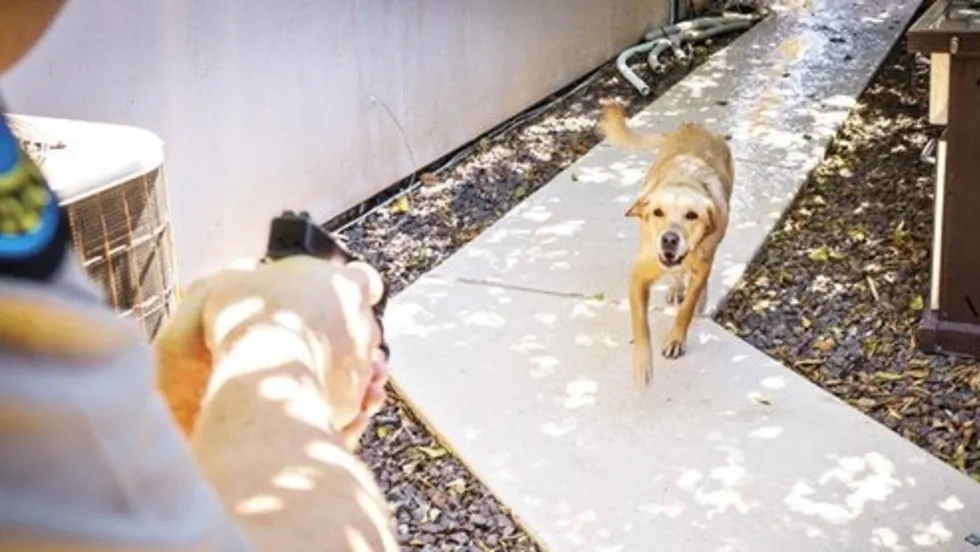
Read More →Every year, there are countless incidents in which officers conducting regular patrol functions encounter dogs. Some events end with the dog being fatally shot. Many other episodes are innocuous. Here are some tactical tips for discussion at roll call before your next shift.
Read More →Longtime police trainer Dick Fairburn speaks with POLICE contributing editor Doug Wyllie about the need for programs to train sergeants in leadership.
Read More →When the brain is engaged in "executive state," a student in a classroom can absorb, analyze, interpret, and remember complex concepts for use at a later time. When a person is in "survival state," they can't do any of those things.
Read More →Law enforcement leaders—and trainers—across the country should look at the tragedy in Florida this week as an impetus to ask and answer the question, "What if this happened here?"
Read More →Several emergency vehicles, including at least two fire trucks, swarmed a large field near SCI - Phoenix in Skippack Township just after 11 a.m. Thursday.
Read More →