



Missouri Police Departments Required to Achieve Accreditation in New Law
A piece of the municipal court reform measure signed into law Thursday by Missouri Gov. Jay Nixon establishes an accreditation process for police departments in St. Louis County.

A piece of the municipal court reform measure signed into law Thursday by Missouri Gov. Jay Nixon isn’t a reform on courts, but on the local police departments that keep them hopping, reports St. Louis Post-Dispatch.
It establishes an accreditation process for police departments in St. Louis County, which have, until now, enjoyed the discretion to follow generally accepted standards, or their own standards, or no standards at all.
The county’s 58 police departments now have six years to achieve accreditation from either the established Commission on Accreditation for Law Enforcement Agencies, based in Gainesville, Va., or a much smaller credentialing program based in Jefferson City. Just 14 departments in the county are currently accredited by one of those groups.
The process involves periodic reviews by auditors to ensure a police department has policies that set basic standards for every aspect of police work — and documents its successes and failures in following those policies. For example, the review will check if a department has a policy on when officers can use force. Having a policy isn’t enough; auditors require the department to prove a policy is followed and that people are held accountable when it isn’t.
A municipality’s failure to earn accreditation for its police force, or to hire another accredited police department, could result in a municipality being forced into disincorporation, under the law.
More Procedures & Policies
No Waiting: Detective Busts Missing Persons Myth
Detective David Lee Stephens wants the public and every law enforcement agency to know there is no truth nor logic to the widely held belief that one must wait 24 or 48 hours to report a missing person.
Read More →
Trump Issues Executive Order He Says Will Help Police Fight Crime
“My Administration is steadfastly committed to empowering State and local law enforcement to firmly police dangerous criminal behavior and protect innocent citizens,” Trump said.
Read More →NYPD Restricts Vehicle Pursuits to Suspects Wanted for Serious Crimes
The revamped policy, which takes effect Feb. 1, bars police from pursuing suspects for traffic infractions, violations or non-violent misdemeanors, police Commissioner Jessica Tisch said.
Read More →NYPD Going “Old School” with Uniform, Facial Hair Policy
“It’s absolutely ludicrous that you have an officer with pink hair and nails longer than their fingers,” one Manhattan officer said. “We’re a police department not a hip hop department. Let’s go back to being police officers.”
Read More →AZ POST Considers Revision to Marijuana Rules for Recruits
“My recommendation for your consideration is we go for a six-month window,” said Matt Giordano, executive director. “We would go to six months of the last use.
Read More →
Time to Change Our Pursuit Policies
Complicated guidelines that require officers to make decisions during the heat of the moment are not working.
Read More →Baltimore Police Complying with Key Consent Decree Requirements, DOJ Says
If the court grants the motion, BPD must maintain compliance with the provisions for one year before the court can terminate these sections of the consent decree.
Read More →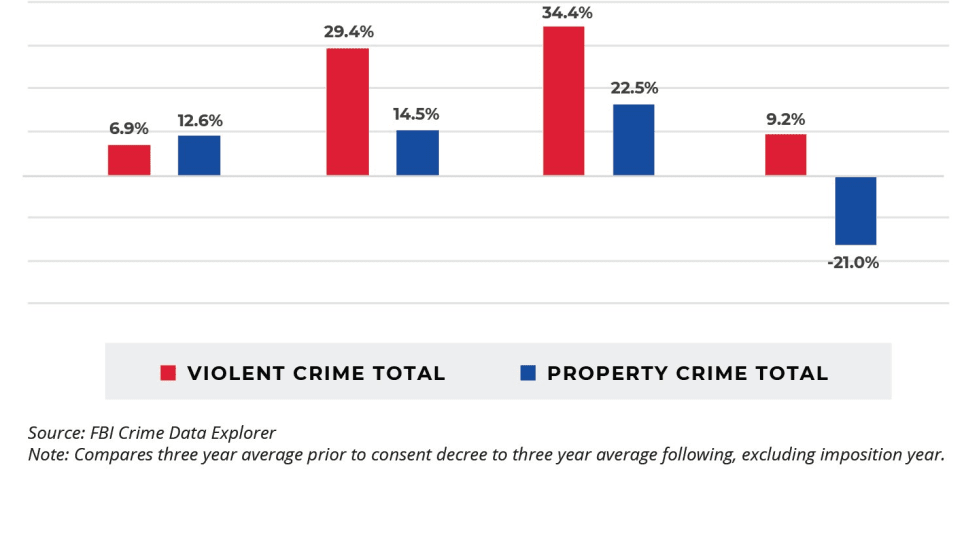
Study Finds Consent Decrees Onerous, Ineffective, and Often Harmful
The report concludes: “When a consent decree is truly warranted, it must focus on the most urgent concerns. The violations should be clearly identified and fully supported by rigorous evidence."
Read More →DOJ and Consent Decree Monitor Praise Albuquerque PD for Reforms
Monitors tracking civilian oversight, one of the largest remaining roadblocks in reaching full compliance, called it “a mess” that was being cleaned up, and advocates applauded the work done by the department to come so far, so fast.
Read More →
Portland Loosens Restrictions on Vehicle Pursuits
“We have seen a significant propensity for criminal suspects to elude traffic stops, often driving extremely dangerously despite no officers chasing them,” the Bureau said in a statement.
Read More →