



An Officer's Most Potent Weapon
Do you believe the maxim that the pen is mightier than the sword? I do. Even though most departments use a work station and software to prepare reports, writing ability is honored among those in the criminal justice profession.

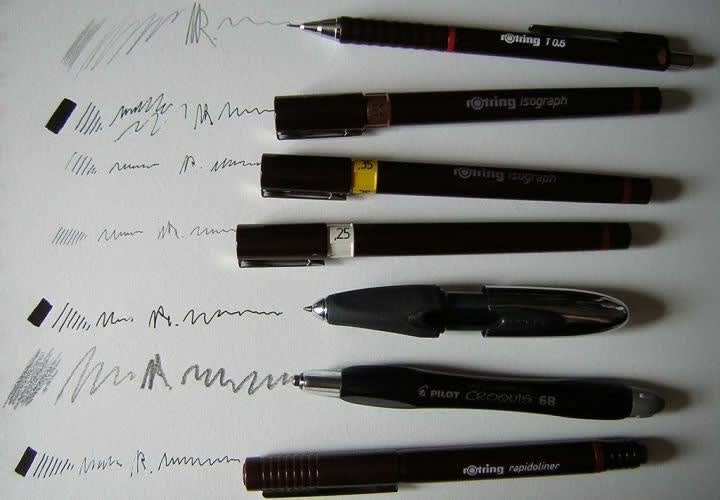
Image via Flickr (pigpogm).
The police implement and potent weapon that can change an officer's life doesn't come in your choice of calibers. It's usually offered in just one color — black. And every one of us has it, but do we really know how to use it? It's the pen.
Do you believe the maxim that the pen is mightier than the sword? I do. Even though most departments use a work station and software to prepare reports, writing ability is honored among those in the criminal justice profession. I'm reminded of a lesson an old sergeant taught me years ago about making your mark. I was a young, eager recruit wanting to make my mark on the department. One of my reports was held up, and I was asked if this was the mark I wanted to make for myself?
Admittedly, it was not my most stellar effort, and here was the learning point. You're graded by others on how effective you are by your work product. There are many end users of your police report. A supervisor reviews it. Detectives use it to build their case. The CompStat office gleans its statistical data from it. Probation/parole can use it for their administrative cases. Insurance companies review it for their customers. The district attorney needs to build the prosecution case from it. The defense attorney uses it to free his or her clients.
Each report has a multiplicity of customers. Build your reputation as an effective officer, not on how shiny your brass and boots are, but how well worded your reports are. I was present in the courtroom for one hapless officer who looked sharp and testified well.
The defense then brought its version of show and tell. The officer on the stand had a poorly penned report; I still can't believe a sergeant approved it. The defense attorney had the report blown up to a poster size for the jury. As it stood propped up on an easel, the case unraveled. It should have been written in crayon. This officer didn't lose the case, but lost his credibility in the courts that day.
Making your mark now is easier than when I came along. In the late '70s and '80s, we had to write our reports in ink. Now, you have spell-checking, grammar check, formatting, and all of the tech tools that your software affords you. My old pen didn't have spell check; only I wish it had it then and now.
You have the ability to cut and paste from code books. One could get hand cramps and writer's fatigue then; now you can keep typing on. This makes it all the more easy to make your mark today. To me, there is little excuse not to produce fine reports. I strongly suggest signing up for a course on advanced report writing or investigative report writing at the local academy.
As the old crusty sergeant told me — once you make your mark, you can take it easy. How does this happen? He groused and told me, once the defense knows your mark and how complete your report is, they don't want you in court. They will be pleading out or cutting deals; you can enjoy your day off.
There is something to be said for crusty old sergeants.
Related:
More Blog Posts
Preventing Heat Injury in Police K-9s
In the relentless heat of summer and even early fall in some parts of the country, officers face the important task of protecting their K-9 partners while working in sweltering temperatures. Recognizing changes in a dog’s behavior is the key.
Read More →
Why Your Agency Needs to Attend the ILEETA Conference
ILEETA is a complete resource for trainers to address trainers' needs. Its mission is to enhance the skills and safety of criminal justice practitioners while fostering stronger and safer communities.
Read More →
IACP 2023: New Training Products
Technologies for improving law enforcement training and training management were some of the highlights at this year's show.
Read More →
Initial Results Released from MSP 2024 Police Vehicle Testing
The 2024 pursuit-rated vehicles--all pickup trucks or SUVs, including two battery electric models the Chevrolet Blazer EV AWD and Ford Mustang Mach-E--were put through their paces.
Read More →
Officer Safety Considerations Related to Alternative-Fuel Vehicles
As more alternative-fuel and hybrid vehicles hit the road, police and other first responders need to understand that they are no more dangerous than conventional vehicles. However, there are certain safety considerations every cop should know.
Read More →
Garmont Working to Grow LE Market Presence
Garmont Tactical has found wide acceptance by military boot buyers, but now the company is trying to better respond to the needs of police officers. Many cops now are not fans of 8-inch boots, so Garmont is adapting.
Read More →
Publisher’s Note: Our Commitment to You
Through our magazine and website and our Police Technology eXchange event, we promise to provide you with information and access to resources to help you do your job safer and better.
Read More →
10 Tips for Responding to Mental Health Crisis Calls
The Harris County Sheriff's Office is a model for other agencies that want to learn about crisis intervention and mental health crisis response. Sgt. Jose Gomez shares the story of their programs and provides 10 tips for mental health crisis call response
Read More →
5 Things to Know When Buying Concealed-Carry or Off-Duty Holsters
Mike Barham, of Galco Holsters, shares five important considerations to keep in mind when you buy off-duty concealed or plain-clothes carry holsters.
Read More →
10 Tips for Reviewing Use-of-Force Reports
While the burden of accurately reporting use-of-force situations is on an individual deputy or officer, the person reviewing those reports shares in the responsibility of making sure the reporting is done properly, with clear details included.
Read More →