



Unusual Calls: Beyond the Norm
There are those occasions when the fates bestow upon even an experienced officer something that he or she has not been previously exposed to and he or she has no idea of how to handle.

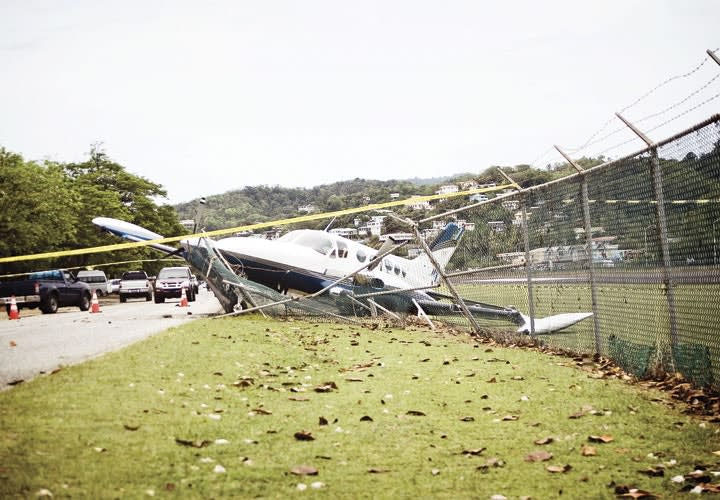
Photo: iStockPhoto.com
With enough time on the job, most cops become proficient in handling a multitude of situations. Be it a call about a missing child, embezzlement, or domestic battery, veteran officers are capable of developing a course of action, coordinating resources, and fulfilling law enforcement's responsibilities. They can even deal with the big stuff. When presented with a barricade situation or large-scale disturbance, these officers know what in-house resources to call upon, as well as when to fall back in a supporting capacity.
But there are those occasions when the fates bestow upon even an experienced officer something that he or she has not been previously exposed to and he or she has no idea of how to handle. Ours is a profession where just about anything can happen—and does. As such, it isn't unusual for bizarre situations that fall outside the conventional parameters of an agency's policies and procedures manual to occur.
Of course, situations that are considered unusual in one jurisdiction may not be so strange in another. Police departments located near airports have higher incidences of aviation mishaps than others. Rural areas encounter wildlife calls on a more routine basis than urban police departments.
Whatever the nature of the unusual call, such cases often become baptisms by fire for even veteran officers.
Chain Reactions
Recognizing the collateral concerns inherent to an uncommon situation is paramount for the success of your supervision of it. While the nature of the call may not obligate the activation of your emergency operations center, it may still entail the need for support above and beyond the norm. Furthermore, the immediacy of one problem can be a precursor for another.
Animal hoarding, for example, is a predicament that obliges the local municipality to not only deal with large numbers of animals but also to deal with the human psychology that fosters the problem. Simple violations of local ordinances may result in fines and require relocation of animals to wildlife shelters. Instances involving neglect and abuse may involve a multitude of bureaucratic entities. More extreme cases can even entail the demolition of property due to health and safety concerns.
Perhaps the greatest concern regarding unusual calls is the potential threat they pose to officers and other public safety personnel handling them. For instance, "chain-reaction" deaths account for 36% of U.S. fatalities that occur in confined spaces. In these situations, the incapacitation of one person can start a domino progression of would-be rescuers falling victim to the same predicament.
The Fatal Accident Circumstances and Epidemiology Project reported one such incident at a Kentucky sewage pumping station with a malfunctioning ventilation system. When two workers opened an inspection plate to a check valve, the plate blew off and allowed raw sewage to flood the chamber. By the time police officers responded to the location, both workers had been overcome by the toxic fumes and drowned in the raw sewage. Minutes later, a police officer and the station field manager entered the pumping station to search for the missing crewmen and likewise succumbed to the toxic fumes.
A volunteer firefighter with a self-contained breathing apparatus and lifeline entered the station, slipped on the ladder, and became wedged in the narrow shaft. Unable to breathe, he removed his face mask and lost consciousness. Further rescue attempts were placed on hold until properly trained rescue personnel arrived.
When to Call the Cavalry
Most departments have well-defined protocols for common situations. However, when officers are faced with brand new scenarios they are required to create game plans on the fly.
When initial reports of a mountain lion roaming downtown Santa Monica, Calif., came in, officers in the upscale beach town were dubious. They'd dealt with beached whales and injured sea lions on their shores—but a live mountain lion on their busy city streets?
"I had put out information about how to deal with coyotes, which run rampant in our town, so we had some basic knowledge about what we wanted to do," says Sgt. Richard Lewis. "When we have a marine mammal wash ashore, we know exactly who to call. We adapted that plan to our downtown area to take precautions to ensure everybody's safety, including the animal's."
Officers called in the California Department of Fish and Game, Santa Monica Animal Control, the Santa Monica Fire Department, and a mountain lion biologist from the National Park Service to contain and attempt to sedate the cat. After being shot with a tranquilizer dart, the 95-pound cougar kept officials at bay for several hours, demonstrating its ability to leap high and run fast in its repeated attempts to escape. Ultimately, the decision was made to use deadly force.
That flexibility and ability to extrapolate potential protocols based upon less obvious parallels already in place can be a huge asset in handling unusual incidents. So, too, is the willingness of law enforcement agencies to rely upon one another—a growing reality in this post-9/11 era—a lesson learned long ago by some departments.
When a small plane crashed in Reno, Nev., three decades ago, the police department had no procedure for handling the disaster. Fortunately, the sheriff at that time was experienced in emergency management and had contingency measures ready to go. In the aftermath of the incident, the neighboring agencies agreed to divide the work.
"Within about two minutes, we decided that the Washoe County Sheriff's Office would handle the crash site itself, Reno Police Department would take security duties at the perimeter, and the Nevada Highway Patrol would route traffic around the site," recalls Tim Dees, a retired sergeant from the sheriff's office. "So much was settled so simply. It's amazing what you can accomplish when you don't care who gets the credit. The three of us were far more interested in getting the job done than in inter-department squabbles. Each agency went with their strength, and it worked."
Sometimes, the location of the incident and extended emergency response times require a little more ingenuity, or civilian assistance.
Maryland State Police Sgt. Marc Black says that when a farmer and his two teenage sons failed to return home following a visit to a local manure pit, the department called in vacuum trucks from local farms to remove the manure from a 2-million-gallon pit measuring 150 feet by 300 feet and 20 feet deep. "The news wasn't good, but at least the tragedy wasn't complicated further," Black notes. "Thanks to the deployment of a vacuum obtained from another manure farm to locate the men's bodies, after a nine-and-a-half-hour search their bodies were recovered."
Avoiding Complication
What might impress some as small solace should never be considered a small victory, for complication avoidance can boil down to everything from recognizing when you're figuratively over your head to realizing when a rescue mission has become a body recovery.
Sea Isle City, N.J., police officer Michael Cullinane died when he attempted to rescue an unconscious worker from a construction pit and was overcome by lethal gases.
Lessons learned from this tragedy provide a checklist for others contemplating attempted rescues in not only confined spaces, but in other situations, as well:
Communication. No mention was made in 911 calls or at the scene of a potential gas release.
Pre-existing paradigm. Officer Cullinane had played an integral role in the rescue of another construction worker who'd fallen only the day before at the same site; EMS workers thought they were dealing with the same kind of problem.
Employment of suspect support mechanisms. The victim descended into a hole using an unstable, aluminum ladder and eventually fell deeper into the hole.
The potential for complicating agents. Overcome by hydrogen sulfide, the officer eventually drowned in water filling the hole. A second officer came close to being similarly affected.
Other situations illustrate other considerations, such as:
Use the right person for the job and draw upon your best available sources. The 1995 theft of a tank in San Diego by an unemployed U.S. Army veteran was well outside the confines of day-to-day business, as was the rampage that followed, which saw multiple vehicles and structures destroyed. It was up to another military veteran, San Diego police officer Paul Paxton, to open the hatch of the tank when it became high-centered and stranded on a median. When the suspect, Shawn Nelson, failed to surrender and began lurching the tank back and forth in an attempt to free it from the median, Paxton's partner, Richard Piner, leaned in and shot Nelson, who later died in the hospital. The quick coordination of available resources and expertise ended a terrible situation in a relatively quick time of 23 minutes.
Tragedy and Trauma
If it is difficult to deal with the immediacy of the unusual event, it shouldn't be surprising to find that cops occasionally have difficulty dealing with their aftermath.
Bruce Malkin, a criminal investigator with the DuPage County (Ill.) State's Attorney's Office, recalls an incident that occurred when he was working with the West Chicago Police Department.
Malkin was a young detective when he responded to a call at a meat processing company. An employee was chipping away at ice that had built up on a large meat grinder that was used to flash freeze hamburger meat. As the employee shifted his position to reach the meat augers, he lost his footing. When a co-worker noticed he was no longer standing on the platform, she quickly deduced that he had fallen in and the machine was immediately shut down.
"My role in this investigation was simply to determine whether or not he was pushed or if it was accidental," said Malkin. "After the employee fell in, his body was shredded by the augers which caused him to become intertwined. I assisted the coroner for almost three hours while she got inside the vat and removed his body piece by piece. She was so paranoid about getting into the vat that she had the on scene firefighters remove all the fuses so that the machine could not be accidentally turned on.
"I have seen and investigated a number of unusual deaths but this was one of the most horrific experiences I had in my 31 years with the police department," recalls Malkin. "Nothing can compare to this case."
While Malkin was ultimately able to deal with what he'd seen that day, other officers and public safety workers have not been so fortunate. In the aftermath of the bombing of the Alfred P. Murrah Federal Building in 1995, Sgt. Terrance Yeakey of the Oklahoma City Police Department committed suicide.
Black stresses the importance of officers taking care of their own emotional health as he reflects on the aftermath of the manure pit accident. "You've got to do the job, but then there’s the aftermath. It's important to have some sort of positive outlet or resource where you can go if you need to discuss how you’re feeling. Family is very important; having a spouse you can go home and talk to. Critical incident debriefings and employee assistance programs are helpful if they are confidential."
Related:
More Patrol

Adept Armor Introduces Two New Rifle Plates
Adept Armor has launched two new Level IV ballistic plates, the Emperor and the Archon Mark 2, which brings Adept Armor’s new Quatroid ceramic to the high-threat, performance-value center of the range at 5.2 pounds.
Read More →
POLICE Product Test: Benchmade Bailout
The Benchmade Bailout is a slim, lightweight carry knife with a deep-ride pocket clip and comes in a variety of blade steels and scales. Here is a detailed review of the Taiga Green Bailout, released earlier this year.
Read More →
NLEOMF Announces July 2026 Officer of the Month
NLEOMF honored a Michigan deputy sheriff as the July 2026 Officer of the Month for rescuing a trapped driver from a burning vehicle following a Fourth of July crash.
Read More →
Streamlight to Showcase Newest Lighting Products at National Safety Council’s Safety Congress & Expo 2026
Streamlight will showcase its latest lights, including the Portable Scene Light III and the LiteBox 1Million, at the 2026 National Safety Council (NSC) Safety Congress & Expo.
Read More →
The 2027 World Police & Fire Games Set for Perth, Australia
The 2027 World Police & Fire Games (WPFG) will take place in Perth, Western Australia, from Friday, March 12 through Sunday, March 21, 2027.
Read More →
5.11 Partners with National Fallen Firefighters Foundation to Support #ForThe343
5.11 has joined the nationwide movement honoring the 343 New York City Fire Department firefighters lost on Sept. 11, 2001.
Read More →
Team Wendy Announces Title Sponsorship of the Jorge Pastore Foundation
Team Wendy’s 3-year partnership with the Jorge Pastore Foundation expands access to programs that strengthen those who serve.
Read More →
National Law Enforcement Memorial and Museum Hosting 9/11 25th-Year Commemoration Ceremony
The National Law Enforcement Memorial and Museum is hosting a 9/11 25th Year Commemoration Ceremony on Sept. 11 at 4 p.m.
Read More →
National Law Enforcement Officers Memorial Fund Announces June 2026 Officers of the Month
The National Law Enforcement Officers Memorial Fund (NLEOMF) named 15 officers of the Chico Police Department (California) as the Officers of the Month for June 2026 for their roles in responding to an active-shooter incident at a public library.
Read More →
Team Wendy App Creates New Digital Hub for Helmet Owners
The Team Wendy Community App provides one location for warranty registration, size-fit tools, product updates, and community connection. For helmet owners, the new app creates a simpler path to the information and tools that matter most.
Read More →