



The Young and the Arrestless
Notwithstanding the explosion of youth criminality, the court has largely continued to treat juvenile offenders in a more lenient and paternalistic fashion than adults.


According to the FBI Uniform Crime Reports, one out of eight violent crimes in 2007 was committed by a juvenile under 18. Juveniles committed nearly one-fifth of all property crimes. These statistics mean that minors were responsible last year for some 173,225 robberies, rapes, aggravated assaults, and murders, and for about 1.8 million burglaries, major thefts, auto thefts, and arsons nationwide. In some jurisdictions, youth gangs terrorize communities and turn schools into combat zones.
This situation is a far cry from the days when mischievous youngsters were sent to the principal's office, or taken behind the woodshed by an embarrassed father with a razor strop. To deal with the often hardened and vicious teenaged and preteen offenders who prey on modern society, states and the federal government have developed a hybrid criminal justice system that retains some of the features of the benevolent juvenile delinquency system while increasingly finding it necessary to process more serious cases in the adult system. The U.S. Supreme Court has issued guidelines in a number of cases to define those principles of criminal procedure that are, or are not, applicable to juvenile cases.
In re Gault
More than 40 years ago, the Supreme Court spoke of the perceived need to accord juvenile offenders the same kind of "due process" protections afforded adult defendants. In what may now be considered a dangerously naive view, the court talked about the necessity of extending to juvenile courts many of the same procedural protections required in adult proceedings, as though formalized court hearings could somehow turn minors from a life of crime to a law-abiding existence.
Said the court, "Recent studies suggest that the appearance as well as the actuality of fairness, impartiality, and orderliness-in short, the essentials of due process-may be a more impressive and more therapeutic attitude so far as the juvenile is concerned." (In re Gault) So saying, the court held that juveniles facing court proceedings for criminal offenses have the rights to a notice of the charges, to counsel, to confrontation and cross-examination of witnesses, and to the privilege against compelled self-incrimination.
The Gault decision substantially converted juvenile proceedings from informal inquiries into full-blown criminal trials. The sharp increases in the numbers and viciousness of juvenile crimes in the years since hardly support the assumptions of the Gault court that minors would respond to the elements of procedural due process with a "more therapeutic attitude."
Notwithstanding the explosion of youth criminality, the court has largely continued to treat juvenile offenders in a more lenient and paternalistic fashion. However, certain elements of the due process accorded to adult criminals have not been extended to juvenile cases.
For example, minors have no right to a jury trial (McKiever v. Pennsylvania); and the rule of Riverside v. McLaughlin, mandating a judicial probable-cause determination for warrantless adult arrests within 48 hours, does not apply to minors (Schall v. Martin). In three areas in particular, the court has issued special rulings for dealing with juvenile perpetrators.
School Searches and Drug Testing
Special considerations apply to searches conducted by teachers and other public school officials (the Fourth Amendment does not apply to private conduct, such as searches undertaken by staff at private schools). In New Jersey v. T.L.O., the Supreme Court left open the question of whether the exclusionary rule should even apply to public school searches. But for purposes of deciding the constitutionality of a search of a student and her purse, the court said that neither a warrant nor probable cause was required.
Instead, "the search of a student by a [public] school official will be justified at its inception where there are reasonable grounds for suspecting that the search will turn up evidence that the student has violated or is violating either the law or the rules of the school." (New Jersey v. T.L.O.)
In Vernonia School District 47J v. Acton, the court upheld the practice of requiring public school students to submit to random urinalysis as a condition of participating in school athletic programs. The compelling interest in guarding against student drug use was held to justify the minimal intrusion of collecting urine samples.
The same reasoning was later applied in Board of Education of Independent School District No. 92 of Pottawatomie County v. Earls. In that case, high school students challenged a public school policy mandating drug testing for all competitive extracurricular activities, including band, cheerleading, and service clubs.
Again, the Supreme Court upheld the policy as reasonable under the Fourth Amendment: "Preventing drug use by schoolchildren is an important governmental concern. The need to prevent and deter the substantial harm of childhood drug use provides the necessary immediacy for a school testing policy. It was entirely reasonable for the school to enact this particular drug testing policy." (Board of Education v. Earls)
Miranda
Whether the Miranda exclusionary rule applies to juvenile court hearings remains an open question. In the 1979 decision in Fare v. Michael C., the Supreme Court said in a footnote, "This Court has not yet held that Miranda applies with full force to exclude evidence obtained in violation of its proscriptions from consideration in juvenile proceedings. We do not decide that issue today." Thirty years later, the court still has not expressly held that juvenile interrogations are subject to Miranda. Instead, the court has twice decided cases on the assumption that Miranda does apply, finding no police error either time.
In Fare, the court reversed the California Supreme Court's ruling that a minor's request to talk to his probation officer was an invocation of Miranda rights. The High Court emphasized that only a clear statement requesting an attorney, or an unambiguous assertion of the right to silence, could constitute an invocation. There is no separate invocation standard for juveniles.
And in Yarborough v. Alvarado, the Supreme Court reversed the Ninth Circuit Court of Appeals on the issue of whether the test of "custody" varies with the age of the suspect. The Ninth Circuit had ruled that a 17-year-old murder suspect was "in custody" and should have received Miranda warnings before his stationhouse confession, even though he came to the station voluntarily and departed with his mother after being questioned.
Again assuming without deciding that Miranda applied to juvenile cases, the Supreme Court said that a suspect's age is not a factor in determining Miranda custody. The same test applies for all-namely, whether the suspect has been formally arrested or subjected to the "functional equivalent" of arrest. There is no separate custody standard for juveniles.
Death Penalty
In the 1988 opinion in Thompson v. Oklahoma, the court held that the Eighth Amendment prohibition against cruel and unusual punishment bars the execution of murderers who were younger than 16 when they killed. Once America had accepted that concept, the court subsequently held (in 2005) that murderers could not be executed for killings they committed before reaching age 18. (Roper v. Simmons) Unconstrained by the deterrent of a possible death penalty, juveniles murdered 984 victims in 2007.
State statutes often create additional obstacles to apprehending, prosecuting, and punishing juvenile offenders. As always, be sure to check local statutes for your jurisdiction.
Devallis Rutledge is a former police officer and veteran prosecutor who currently serves as Special Counsel to the Los Angeles County District Attorney. He is the author of 11 books, including "Courtroom Survival, The Officer's Guide to Better Testimony."
More Patrol

Adept Armor Introduces Two New Rifle Plates
Adept Armor has launched two new Level IV ballistic plates, the Emperor and the Archon Mark 2, which brings Adept Armor’s new Quatroid ceramic to the high-threat, performance-value center of the range at 5.2 pounds.
Read More →
POLICE Product Test: Benchmade Bailout
The Benchmade Bailout is a slim, lightweight carry knife with a deep-ride pocket clip and comes in a variety of blade steels and scales. Here is a detailed review of the Taiga Green Bailout, released earlier this year.
Read More →
NLEOMF Announces July 2026 Officer of the Month
NLEOMF honored a Michigan deputy sheriff as the July 2026 Officer of the Month for rescuing a trapped driver from a burning vehicle following a Fourth of July crash.
Read More →
Streamlight to Showcase Newest Lighting Products at National Safety Council’s Safety Congress & Expo 2026
Streamlight will showcase its latest lights, including the Portable Scene Light III and the LiteBox 1Million, at the 2026 National Safety Council (NSC) Safety Congress & Expo.
Read More →
The 2027 World Police & Fire Games Set for Perth, Australia
The 2027 World Police & Fire Games (WPFG) will take place in Perth, Western Australia, from Friday, March 12 through Sunday, March 21, 2027.
Read More →
5.11 Partners with National Fallen Firefighters Foundation to Support #ForThe343
5.11 has joined the nationwide movement honoring the 343 New York City Fire Department firefighters lost on Sept. 11, 2001.
Read More →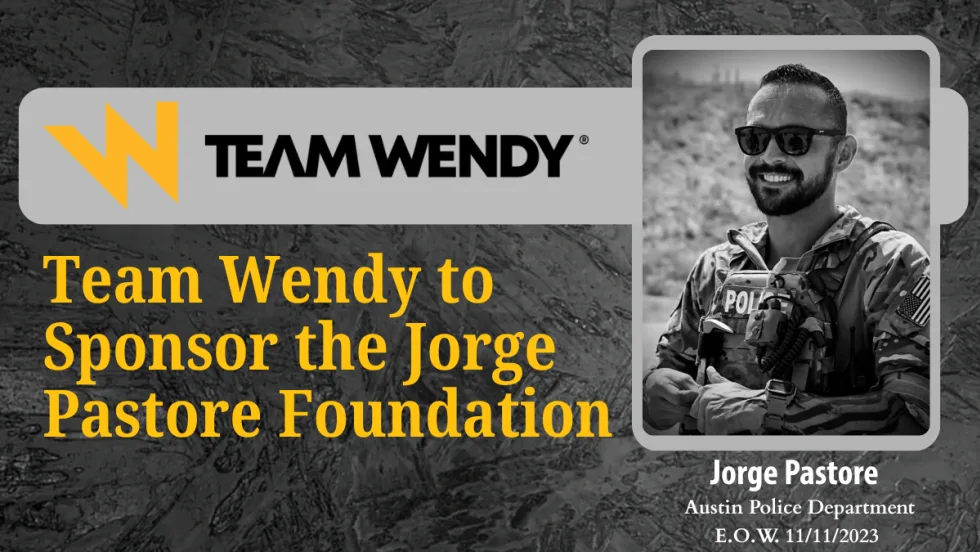
Team Wendy Announces Title Sponsorship of the Jorge Pastore Foundation
Team Wendy’s 3-year partnership with the Jorge Pastore Foundation expands access to programs that strengthen those who serve.
Read More →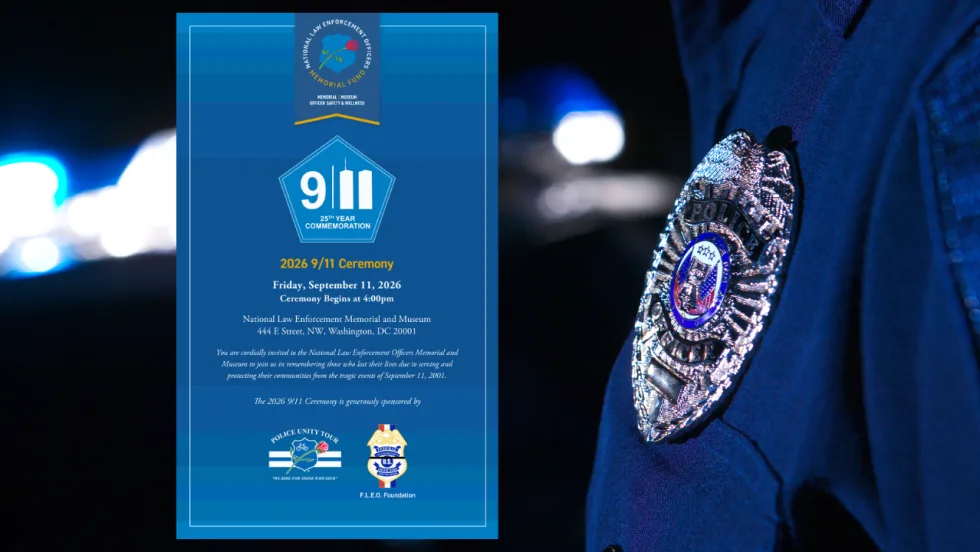
National Law Enforcement Memorial and Museum Hosting 9/11 25th-Year Commemoration Ceremony
The National Law Enforcement Memorial and Museum is hosting a 9/11 25th Year Commemoration Ceremony on Sept. 11 at 4 p.m.
Read More →
National Law Enforcement Officers Memorial Fund Announces June 2026 Officers of the Month
The National Law Enforcement Officers Memorial Fund (NLEOMF) named 15 officers of the Chico Police Department (California) as the Officers of the Month for June 2026 for their roles in responding to an active-shooter incident at a public library.
Read More →
Team Wendy App Creates New Digital Hub for Helmet Owners
The Team Wendy Community App provides one location for warranty registration, size-fit tools, product updates, and community connection. For helmet owners, the new app creates a simpler path to the information and tools that matter most.
Read More →