



The Hazards of Homemade Explosives
Whether a department's jurisdiction lies nestled among the cornfields of rural Nebraska or in the center of a major city, homemade explosives pose a very real and growing threat. But through business community involvement and greater training and awareness, some of these threats can be stopped dead in their tracks.

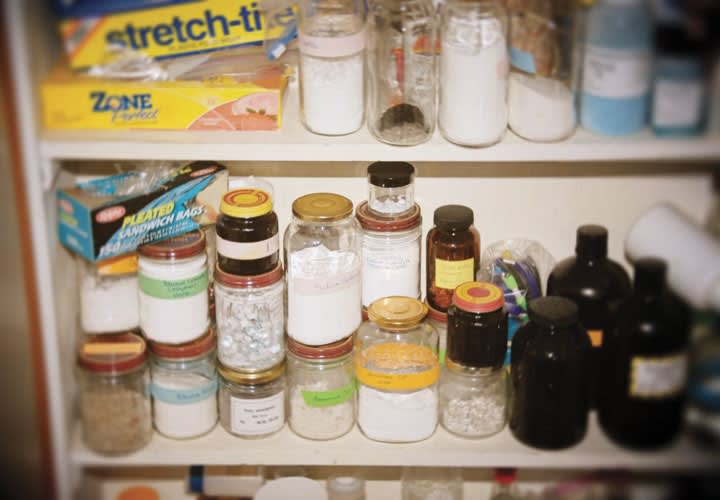
Photo courtesy of the Bureau of Alcohol, Tobacco, Firearms, and Explosives.
While terrorist incidents using improvised explosives such as the Oklahoma City bombing or the attempted attack on American Airlines Flight 63 have made national headlines, the greater risk to most communities exists among those who are not terrorists at all but are simply experimenting with explosives.
"When we think about improvised explosives, the first thing that comes to mind is terrorists, the guy who lit himself on fire on an airplane Christmas Day or the shoe bomber on American Airlines Flight 63," says Donald Sachtleben, director of training at the Center for Improvised Explosives Research and Training (IMPEX). "While that big world threat is certainly real, the big problem we see is with home experimenters."
Statistics seem to bear this out. Between 1998 and 2008, there were approximately 4,273 incidents involving the possession, manufacture, and use of homemade explosives for experimentation and criminal purposes, according to the Bureau of Alcohol, Tobacco, Firearms, and Explosives (ATF). Of this number, the ATF reports five were terrorist bombings and the rest involved experimentation and were motivated by curiosity.
"It would be too simplistic to say it's just kids because it's not just juveniles, it’s adolescents and perennial adolescents, it's that 35-year-old guy who still thinks it's cool to build a bomb and blow things up," Sachtleben says. "That's the person your average small- to mid-size police department is going to encounter."
What's more, these types of incidents play out frequently across the country. Last month a 19-year-old Greeley, Colo., man exploded an acid bomb, made by mixing drain cleaner with aluminum foil inside a plastic bottle. When police contacted the teen, he told them he had learned how to make the bomb on YouTube, that he wasn't aware it was illegal, and that he had set them off before.
"The reality is the U.S. has just as many issues dealing with homemade explosives as Afghanistan or Iraq," says John Jermain, acting chief of the ATF's Arson and Explosives Section. "Those countries also have tons of explosives and ordnance left over from previous wars. Suspects can utilize bombs encased with TNT. You can't purchase high explosives in the U.S. unless you have the proper licenses. This means more people are manufacturing explosives from homemade materials."
In the 1960s, books like the "Anarchist Cookbook" detailed recipes for explosive formulas, and that was a problem. Now the Internet has put improvised explosives recipes and how-to videos just a few clicks away from everyone, and that's an even bigger problem. A simple search on the Internet pulls a wealth of explosives formulas using readily available materials. "It is a big concern here," Jermain says. "We have more bomb incidents among teens because of exposure to the Internet and YouTube."
Whether a department's jurisdiction lies nestled among the cornfields of rural Nebraska or in the center of a major city, homemade explosives pose a very real and growing threat. But through business community involvement and greater training and awareness, some of these threats can be stopped dead in their tracks. And, even if they go undetected until an incident occurs, departments will know what to do.
Packing a Punch
The risk for harm from homemade explosives can be great. "Homemade explosives are as powerful as any commercial or military explosive," Jermain emphasizes.
To illustrate this fact, Sachtleben pairs demonstrations of commercial and military explosives with homemade materials in improvised explosives courses for bomb technicians at the Center for Improvised Explosives Research and Training at the Oklahoma State University Center for Health Sciences. The demos compare and contrast the materials' destructive powers and distinctive characteristics.
"We show commercially manufactured military-type explosives and follow with improvised explosives," Sachtleben says. "In many instances you can't tell the two apart. It is possible to cook up something in your kitchen that is just as powerful as that block of C4 used by the military or that stick of dynamite used in a rock quarry."
The risk multiplies when one considers that individuals with little understanding of explosives are whipping up these volatile concoctions. "Improvised explosives have no quality control. There is no repeatability. The way they are made—every time they are made—is a little bit different," says Sachtleben, a retired FBI agent who led a team investigating the Oklahoma City bombing and was on the entry team at Unabomber Ted Kaczynski's Montana cabin.
Homemade Mayhem
The 2010 "Bomb Factory" house in Escondido, Calif., is a sobering reminder of the safety hazard homemade explosives pose. It was discovered by a gardener stepping on a small amount of explosive material in the backyard causing it to detonate. The gardener lived but suffered severe injuries to his left eye, torso, and arm.
Compounding the relative ease of manufacture is the fact that experimenters produce homemade explosives from common household chemicals that when mixed become explosive, according to Jermain. "These mixtures contain an oxidizer and a fuel that are either mechanically mixed together or molecularly bonded during a chemical reaction," he says.
Homemade explosives are generally grouped into three categories based on the main oxidizer present: chlorates/perchlorates, nitrates, and peroxides.
Of these three categories, peroxide explosives are the most sensitive. Although hydrogen peroxide in concentrated forms can be mixed with various organic fuels to form explosive mixtures, it is more commonly used in chemical reactions to make triacetone triperoxide (TATP) and hexamethylene triperoxide diamine (HMTD). When hydrogen peroxide is mixed with either acetone or hexamine (fuel tablets), it forms a dangerous primary explosive, which is highly sensitive to heat, shock, and friction.
Jermain points out these precursors, such as hydrogen peroxide or acetone, can be purchased from numerous sources without suspicion. The materials can be found in rather innocuous places such as the local pool cleaning and maintenance store, the beauty supply shop, or the hardware store.
To emphasize this point, Sachtleben uses readily available ingredients when cooking up explosive education for bomb technicians. "We could buy chemicals in laboratory-type containers and use them in our class but we don't," he says. "We go to pool supply, beauty supply, hobby, and hardware stores and buy the actual products people might use so students can see them in their native condition. That's very important because they know how the experimenters are going to have them. They’re not going to buy them from the chemical supply warehouse; they’re going to buy them from local suppliers."
Detection Begins at Home
Because these materials are readily available within the community, Scott Zimmerman, owner of K17 Security, a Washington, D.C.-based firm providing security, personal protection services, and training to law enforcement, encourages police to work with local businesses to create a business watch that operates similar to a neighborhood watch. "This will allow businesses that sell items commonly used in improvised explosives to stay in contact with one another via a Yahoo talk group, e-mail list, blog, Facebook page, or any other means they find suitable," he says. "It is important for businesses to work together because these individuals do not want to arouse suspicion so it is common to buy smaller quantities from several different stores."
Sachtleben also encourages adding educators such as chemistry teachers to the mix. "Schools are often a source for chemicals," he says. "Kids may steal classroom chemicals and repurpose them for their own needs."
Building awareness among parents is also important. "Parents know what belongs in their home," Sachtleben says. "If something doesn't smell right or kids are playing around with things they shouldn't, they need to understand and take action so their kids don’t hurt themselves or anyone else."
Local police departments can set up training days to advise the business community and other key community individuals of the items explosives experimenters may purchase in bulk and share other signs to look for such as chemical burns on the hands and wrists. "We want to educate store owners," Sachtleben says. "If you own a pool supply store, for example, you sell chemicals that can be used to make explosives. You want store owners to know this so they can be more attentive to who is buying these things and pick up the phone and call police when it seems suspicious."
But while knowledge is power, Sachtleben warns that police walk a fine line between building awareness and creating problems. "In community education, we want to emphasize that these are very hazardous materials and they don't react well with each other," he says.
Be Prepared
Signs of a bomb-manufacturing site can often be readily seen. In regard to chemicals, officers might see nitric acid, sulfuric acid, muriatic acid, hydrochloric acid, hydrogen peroxide, potassium chlorate, potassium perchlorate, acetone, hexamine, citric acid, ammonium nitrate, urea, nitromethane, magnesium, and aluminum. There may be grinders (coffee grinder, mortars and pestles, etc.), coffee filters, mixers, stirrers, ice baths, glassware, and hot plates used in the manufacturing process.
"Low explosives require some kind of confinement to blow up, so on-scene you might see pipes. You might see hydrogen peroxide bottles or pool sanitation chemicals lying around. There might be liquid boiling on the stove," Jermain says.
Back Off
When these signs are noted, responding officers should keep their distance and wait for bomb technicians to arrive. "Separate yourself from the material. Don't pick it up or handle it," says Sachtleben. “A lot of these materials are static sensitive so if you’re wearing a nylon windbreaker, you could generate static electricity and set it off. I cannot emphasize enough the importance for first responders to leave it alone, isolate it, evacuate the area, and get a safe distance away."
The Department of Homeland Security (DHS) Office for Bombing Prevention has long distributed copies of the Bomb Threat Stand-off Card to first responders. This laminated card enables officers to quickly evaluate how to keep civilians and responders safe during the initial incident investigation and response, says Christine Lee, DHS program manager.
Today they've taken that technology to the smartphone and for a relatively low cost police departments can purchase the First Responder Support Tool (FIRST) Bomb Response for iPhones, iPads, Android phones, and Windows PCs. The application is combined with the commercially available HAZMAT Evac to help first responders address improvised explosives situations and HAZMAT spills. FIRST Bomb Response provides standoff distances, allows points of interest queries to pinpoint areas of concern, and more to help first responders safely evacuate and secure an area.
Numerous portable instruments can also help first responders determine response. The ATF utilizes ThermoScientific's Raman First Defender and FTIR TruDefender to identify explosives in the field. Field Forensics also offers portable instruments that can help make an explosives ID. "These tools are simple to use by the average police officer," Jermain says, noting departments can often write a grant to purchase them.
And if local law enforcement doesn’t have these tools in their kit, odds are the fire department does. "Once you add them or find them in your community, officers want to use all these tools and know how they work and know their limitations," says Sachtleben. "You don't want the first time you use them to be on a real call."
Improvised Explosives Training
ATF: Departments can request formal explosives training at the ATF Website. The training is taught by ATF special agents, bomb technicians, and explosive chemists and is available to police officers, even if they are not bomb technicians.
Oklahoma State University: The Center for Improvised Explosives Research and Training at the Oklahoma State University Center for Health Sciences offers training on improvised explosives for bomb technicians. This training provides an overview of the materials used to manufacture homemade explosives and demonstrates the threat posed by improvised explosives through classroom lectures, laboratory experiments, and demonstrations on an explosives range.
Ronnie Garrett owns and operates Garrett & Co. Studios, a Fort Atkinson, Wis., company providing editorial, photography, and graphic design services.
Related:
More Patrol

Adept Armor Introduces Two New Rifle Plates
Adept Armor has launched two new Level IV ballistic plates, the Emperor and the Archon Mark 2, which brings Adept Armor’s new Quatroid ceramic to the high-threat, performance-value center of the range at 5.2 pounds.
Read More →
POLICE Product Test: Benchmade Bailout
The Benchmade Bailout is a slim, lightweight carry knife with a deep-ride pocket clip and comes in a variety of blade steels and scales. Here is a detailed review of the Taiga Green Bailout, released earlier this year.
Read More →
NLEOMF Announces July 2026 Officer of the Month
NLEOMF honored a Michigan deputy sheriff as the July 2026 Officer of the Month for rescuing a trapped driver from a burning vehicle following a Fourth of July crash.
Read More →
Streamlight to Showcase Newest Lighting Products at National Safety Council’s Safety Congress & Expo 2026
Streamlight will showcase its latest lights, including the Portable Scene Light III and the LiteBox 1Million, at the 2026 National Safety Council (NSC) Safety Congress & Expo.
Read More →
The 2027 World Police & Fire Games Set for Perth, Australia
The 2027 World Police & Fire Games (WPFG) will take place in Perth, Western Australia, from Friday, March 12 through Sunday, March 21, 2027.
Read More →
5.11 Partners with National Fallen Firefighters Foundation to Support #ForThe343
5.11 has joined the nationwide movement honoring the 343 New York City Fire Department firefighters lost on Sept. 11, 2001.
Read More →
Team Wendy Announces Title Sponsorship of the Jorge Pastore Foundation
Team Wendy’s 3-year partnership with the Jorge Pastore Foundation expands access to programs that strengthen those who serve.
Read More →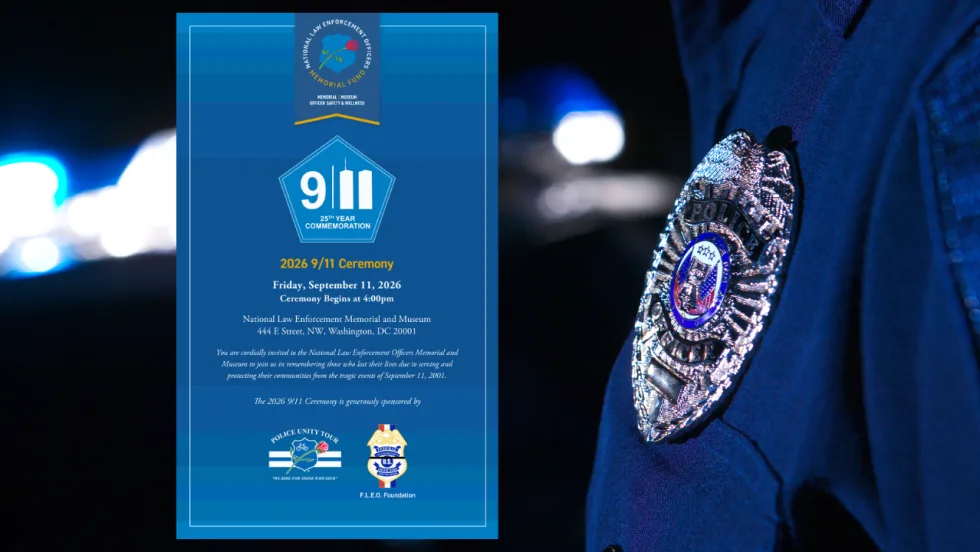
National Law Enforcement Memorial and Museum Hosting 9/11 25th-Year Commemoration Ceremony
The National Law Enforcement Memorial and Museum is hosting a 9/11 25th Year Commemoration Ceremony on Sept. 11 at 4 p.m.
Read More →
National Law Enforcement Officers Memorial Fund Announces June 2026 Officers of the Month
The National Law Enforcement Officers Memorial Fund (NLEOMF) named 15 officers of the Chico Police Department (California) as the Officers of the Month for June 2026 for their roles in responding to an active-shooter incident at a public library.
Read More →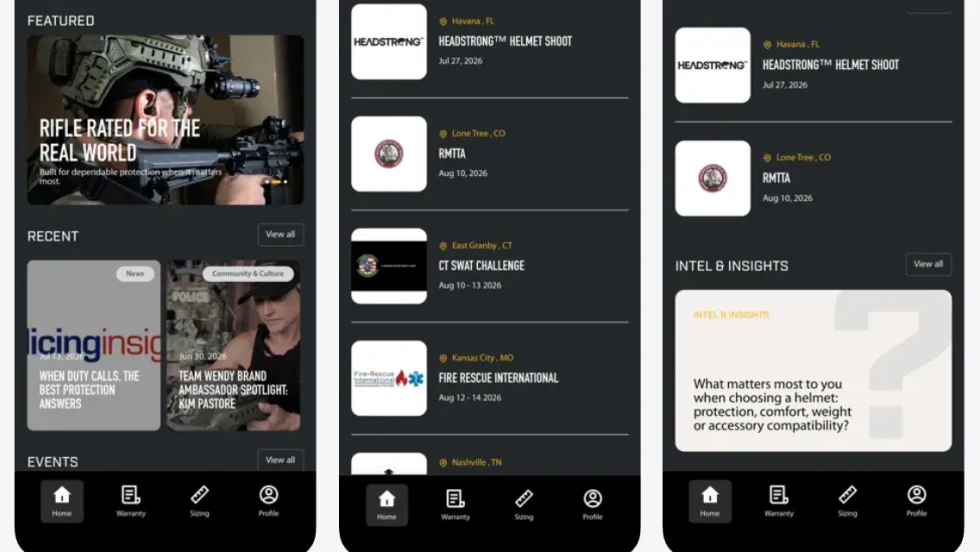
Team Wendy App Creates New Digital Hub for Helmet Owners
The Team Wendy Community App provides one location for warranty registration, size-fit tools, product updates, and community connection. For helmet owners, the new app creates a simpler path to the information and tools that matter most.
Read More →