



Shots Fired: Cleveland, Ohio 04/10/1985
A mere eight seconds had passed between the time the uniformed unit pulled up and Paskvan's request for paramedics, time enough for the man to have sustained fatal injuries and Paskvan's life and career path to change substantially.

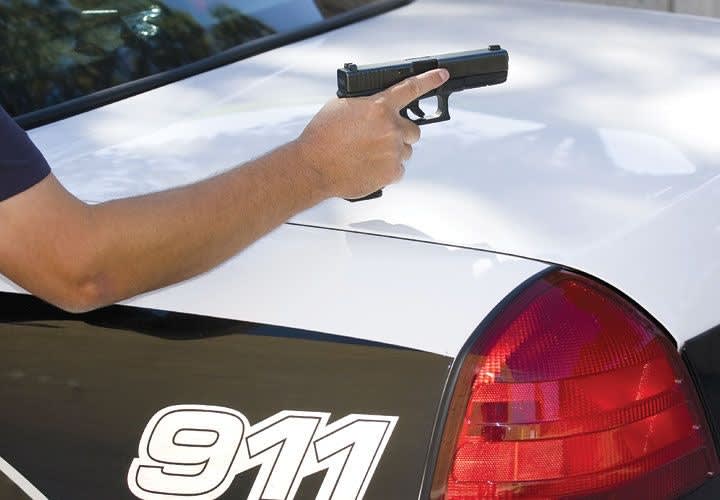
The Supreme Court had it right: It's damn easy to dissect a split-second decision made by an officer with the advantage of 20/20 hindsight.
Yet how difficult it is while operating under that split-second constraint.
When you're one of two cops working an undercover stakeout, you're automatically more attuned to your environs. Not only are you surveying for your target's activities, but the actions of those about you.
Such was the case on April 10, 1985, when Officer Joe Paskvan and his partner sat in an unmarked Olds Cutlass outside a Cleveland, Ohio, bar waiting for a suspect to exit. Not that he harbored any illusion that the locals would take them for anything other than what they were: Cops. After all, how many gangsters tool around with three antennas sticking out of the trunks of their hoopties anyway?
That made it all the more surprising when Paskvan's partner elbowed him and pointed out a young male carrying what looked like a sawed-off shotgun. They radioed for uniformed officers to respond to the scene, then watched as the man got into a car, drove a short distance, made a U-turn, then pulled up behind their unmarked car.
8 Seconds
At that moment, the uniformed officers pulled around the corner and stopped abreast of the suspect car, placing them directly in the kill zone. Paskvan yelled, "That's him! That's the guy!" as he and his partner jumped out of their unmarked car in a bid to clarify for the officers just where they'd put themselves.
But before either could do anything to improve their positions, the suspect raised his weapon at one of the uniformed officers. The man's quick, determined pace told Paskvan that he didn't have much time to thwart the threat that was developing in front of him.
Was it tunnel vision, the complete focus on his intended victims that prevented the suspect from seeing Paskvan and his partner? Paskvan didn't know. He just accepted the fact that for once he had the drop on someone who thought he had the drop on someone else.
Firing from his Smith & Wesson four-inch Model 19 .357 Magnum, Paskvan pumped three quick rounds into the man's side. The suspect's gun fell to the ground.
Paskvan approached and kicked the gun away from the suspect's reach. As he did, a single BB fell from it.
I didn't kick it that hard, Paskvan thought, still believing that the weapon was a sawed-off shotgun and that he'd somehow kicked a shell open.
"Oh, God, don't shoot me!" the man yelled. "It's only a pellet gun!"
A mere eight seconds had passed between the time the uniformed unit pulled up and Paskvan's request for paramedics, time enough for the man to have sustained fatal injuries and Paskvan's life and career path to change substantially.
$21.8 Million
And so started an odyssey for Paskvan that would find him taking a circuitous trek through the judicial system - one that would not end for years to come.
Paskvan thought the deceased, Marcos Luciano, was Italian - as did Paskvan's paisano partner. But it turned out that Luciano was Puerto Rican and that one ethnic tweak put a spin on the shooting. Paskvan, a white officer, had shot a Puerto Rican man.[PAGEBREAK]
The shooting of Luciano was Paskvan's ninth shooting in the line of duty. The department found each shooting to be justified and no criminal charges were ever filed against him. By the luck of the draw, all of the suspects had been minority members. Paskvan hadn't picked them that way. It was just the way the racial lottery played out.
But others saw it differently. None more so than Luciano's family, who sued Paskvan for $21.8 million, claiming that Paskvan had violated Luciano's civil rights by shooting and killing him.
For Whom the Bell Tolls
To bolster their case, the plaintiffs relied on testimony of a few locals in the area, including one who claimed that she had been walking around the corner just before the shooting and arrived in time to see Paskvan cold-bloodedly shoot Luciano as he raised his hands in surrender. She made a point of mentioning that she remembered the time of the incident as she'd just heard the church bells toll before rounding the corner of the intersection.
This side detail was enough to impeach the witness's credibility: The church bells had gone off at noon and 6 p.m. for years. The shooting took place shortly after 7:30.
The coroner's office took it a step further, noting that the trajectory of the bullets fired into the decedent's body revealed an inconsistency with the man being in a position of volitional surrender. Moreover, the decedent's arms and upper torso's posture at the time of being shot were consistent with his pointing the weapon at the uniformed officers.
Paskvan won the lawsuit. But it was merely another battle in a long war that would next time find Paskvan the plaintiff and his department the defendant.
Languishing in the Gym
Immediately following the Luciano shooting, Paskvan was assigned to the department gymnasium for 90 days to "relieve stress." Ninety days passed and Paskvan remained in the gym, sitting, reading, and waiting. He attributes the numerous delays in his return to work to demonstrations by minority groups that specifically targeted him, biased media that pushed their own racial agendas, and the public officials who ignored the facts of the case and lobbied against him.
In April 1986, Howard Rudolph became chief of police for the department. Rudolph had previously investigated two of Paskvan's shootings and found that while Paskvan had not violated any department regulations, he had in Rudolph's opinion used poor judgment in both incidents. As a result, Rudolph ordered Paskvan to remain on the gym assignment and also declined his request to seek secondary employment outside of the department. Thus began a months-long cycle of arbitrations to regain his status.[PAGEBREAK]
At first, the department claimed that Paskvan's permanent assignment to the gym was required to maintain longer operating hours. When it was pointed out that the same could be accomplished by assigning any individual to the detail, the department allowed Paskvan to return to his original duty on the Auto Theft Detail, 19 long months after the Luciano shooting.
Paskvan might have regained his position, but Rudolph issued an order that Paskvan was not to conduct any business outside of the headquarters building.
Rudolph also continued to decline each of Paskvan's requests to seek outside employment. More arbitration ensued until November 1988 when Paskvan finally prevailed. The arbitrator found that the department's fear of another shooting and adverse reactions from citizen groups was "arbitrary, discriminatory, and unreasonable."
This series of battles marked a major victory for Paskvan, but his largest campaign was yet to be waged.
Denied Promotion
Paskvan had the tenure, the experience, the smarts - both streetwise and academically - to do well on his promotional exam. He'd created the requisite work foundation with which he'd feel comfortable mentoring and evaluating others while working in a supervisory capacity.
In 1987, Paskvan took the promotional exam for promotion to sergeant and placed third out of more than 100 officers. Mitchell Brown, director of Public Safety, held all the cards when it came to promoting police officers on the department. Brown followed the "Rule of 3" when issuing promotions, meaning that any of the top three candidates could be chosen to fill a vacant position.
Paskvan was passed over. Repeatedly.
The top 18 candidates were promoted to sergeant in September 1988, except for Paskvan. Over time, 49 officers would be promoted from the candidate list-those that had ranked from 1 to 50-except for Paskvan.
Paskvan realized that if he was going to advance, he would have to sue his employer.
In the 1989 trial, Brown testified that controversy over the previous shootings was an important factor in denying promotion to Paskvan. Chief Rudolph recommended against Paskvan's promotion due to similar apprehensions over public outcries from community organizations. He cited Paskvan's "poor judgment" in the two shootings he had investigated.
The first trial resulted in a hung jury. The judge tried to negotiate a settlement between the parties, but the department wouldn't accept it. By March 1994, the series of lawsuits over Paskvan's denied promotion resulted in a jury verdict in his favor. The city immediately appealed the decision.
The appellate court upheld the original ruling, stating that "Rudolph and Brown, individually and as the city's policymakers in their official capacities, acted with discriminatory purpose in choosing not to promote Paskvan... because he is white, Paskvan was offered as the sacrificial lamb to appease the protesting minority organizations."
Eight years after his peers on the candidate list were promoted, Paskvan finally earned his promotion to sergeant and was awarded reparations with interest for the years of lost wages. He repaid the police union for the support they provided to him throughout the arbitrations and trials.
Today, Paskvan assists others who occasionally find themselves fighting the brave fight against the very system they are sworn to protect. Retired from the Cleveland PD, Paskvan is a member of the POLICE-TREXPO Advisory Board.
More Patrol

Adept Armor Introduces Two New Rifle Plates
Adept Armor has launched two new Level IV ballistic plates, the Emperor and the Archon Mark 2, which brings Adept Armor’s new Quatroid ceramic to the high-threat, performance-value center of the range at 5.2 pounds.
Read More →
POLICE Product Test: Benchmade Bailout
The Benchmade Bailout is a slim, lightweight carry knife with a deep-ride pocket clip and comes in a variety of blade steels and scales. Here is a detailed review of the Taiga Green Bailout, released earlier this year.
Read More →
NLEOMF Announces July 2026 Officer of the Month
NLEOMF honored a Michigan deputy sheriff as the July 2026 Officer of the Month for rescuing a trapped driver from a burning vehicle following a Fourth of July crash.
Read More →
Streamlight to Showcase Newest Lighting Products at National Safety Council’s Safety Congress & Expo 2026
Streamlight will showcase its latest lights, including the Portable Scene Light III and the LiteBox 1Million, at the 2026 National Safety Council (NSC) Safety Congress & Expo.
Read More →
The 2027 World Police & Fire Games Set for Perth, Australia
The 2027 World Police & Fire Games (WPFG) will take place in Perth, Western Australia, from Friday, March 12 through Sunday, March 21, 2027.
Read More →
5.11 Partners with National Fallen Firefighters Foundation to Support #ForThe343
5.11 has joined the nationwide movement honoring the 343 New York City Fire Department firefighters lost on Sept. 11, 2001.
Read More →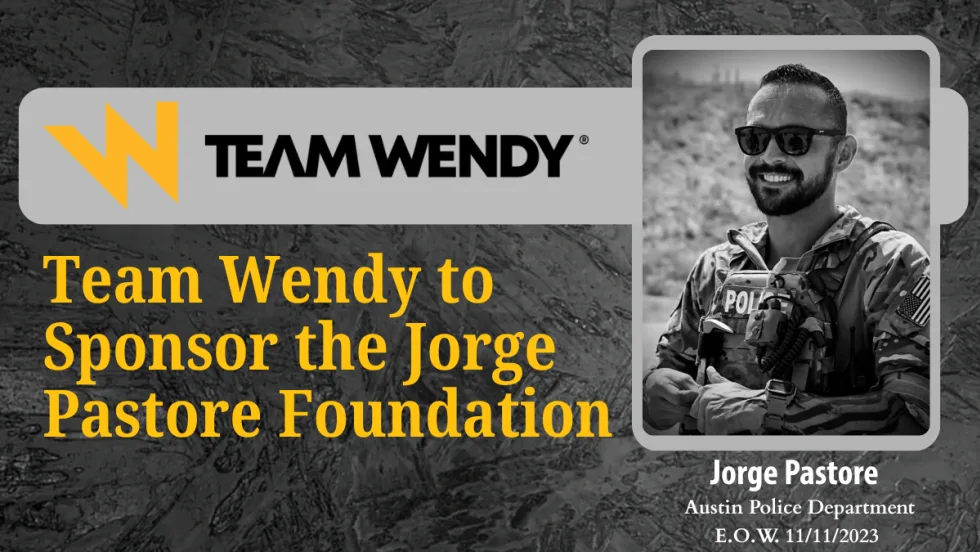
Team Wendy Announces Title Sponsorship of the Jorge Pastore Foundation
Team Wendy’s 3-year partnership with the Jorge Pastore Foundation expands access to programs that strengthen those who serve.
Read More →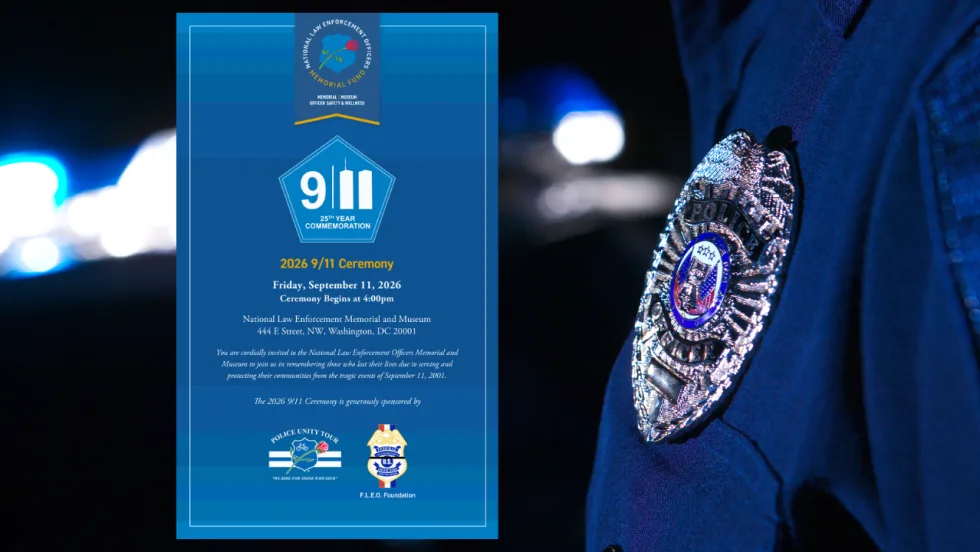
National Law Enforcement Memorial and Museum Hosting 9/11 25th-Year Commemoration Ceremony
The National Law Enforcement Memorial and Museum is hosting a 9/11 25th Year Commemoration Ceremony on Sept. 11 at 4 p.m.
Read More →
National Law Enforcement Officers Memorial Fund Announces June 2026 Officers of the Month
The National Law Enforcement Officers Memorial Fund (NLEOMF) named 15 officers of the Chico Police Department (California) as the Officers of the Month for June 2026 for their roles in responding to an active-shooter incident at a public library.
Read More →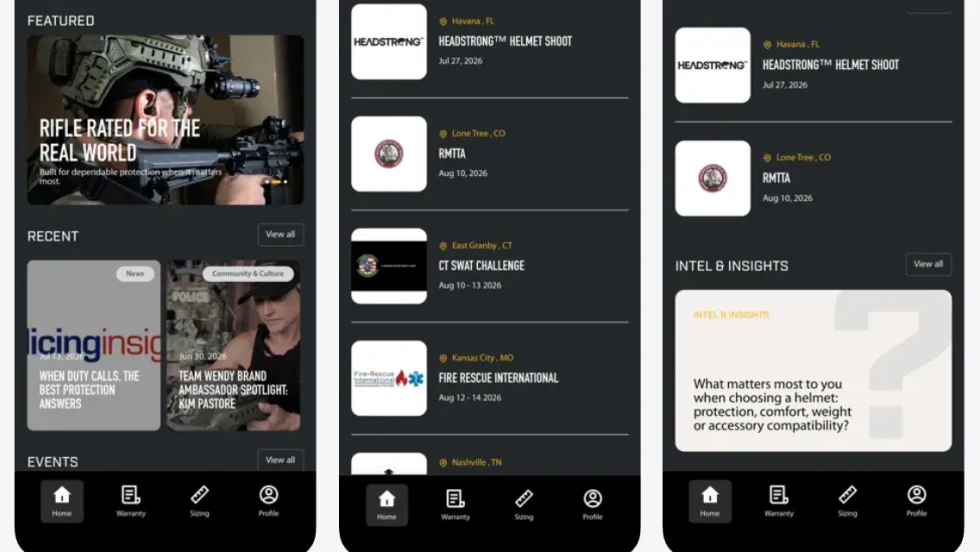
Team Wendy App Creates New Digital Hub for Helmet Owners
The Team Wendy Community App provides one location for warranty registration, size-fit tools, product updates, and community connection. For helmet owners, the new app creates a simpler path to the information and tools that matter most.
Read More →