



Shock Absorbers
If you are shot while wearing body armor, you will still feel the energy of the bullet's impact. But if the armor works, the force will be spread out over your entire torso rather than in just a specific area.

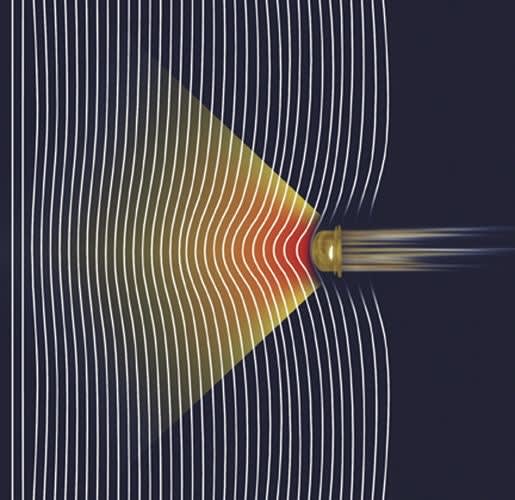
Body armor uses layers of super strong fibers to slow bullets.
For every action, there is an equal and opposite reaction. That's basic Newtonian physics. In a way, it's also applicable to the relationship between weapons and armor. Every time a new weapon is designed somebody comes up with a way to defeat it.
When primitive man came out of his cave to hunt for food, he fashioned new weapons to aid in the ability to feed himself and his tribe. Sharpened sticks and bows to launch them, rocks and slings to throw them were the answers. But as man is wont to do, he soon turned the state-of-the-art rocks and sticks on other humans. That led to a reaction, as the people who were attacked started to make weapons of their own and began designing methods to defeat the new weapons. Body armor was born.
In the march of human progress from rocks, to spears, to knives, to arrows, and eventually the gun, new advancements in weapons have always been accompanied by advancements in armor. Animal skins gave way to wood shields, wood shields to chain mail and iron breastplates, and metal armor gave way to ceramics and cloth.
Cloth? It sure doesn't seem like cloth would be an effective means to protect one's self against bullets, does it? But today that is exactly what cops worldwide are using.
Baseballs and Bullets
The principle behind bullet-resistant cloth body armor is just basic physics.
Soft body armor is essentially a very strong net. Think of a baseball batting cage. The back of the cage is a net formed by many long lengths of tether. The cords of the tether are interlaced with each other and fastened to the cage's frame.
When the batter hits the baseball into the cage, the ball has a given amount of energy, in the form of inertia. When the ball hits the net, it pushes back on the tether lines at that given point. The tethers extend from one side of the frame to the other, dispersing the energy from the point of impact over a much wider area. This energy is dispersed further as the tethers are interlaced or, in this case, woven. When the ball pushes on a horizontal length of the woven tether, that tether pulls on every interlaced vertical tether. These tethers, in turn, pull on all the connected horizontal tethers. The entire net works to absorb the ball's inertial energy.
Bullet-resistant material has a similar structure to that of a batting cage net. Long strands of interlaced fiber form a dense net. Of course, bullets travel at much greater speed than a batted baseball. Therefore, the bullet-resistant "net" needs to be made from material with much greater strength.
Another thing occurs when you hit a baseball into the cage's net. The net is pushed back by the energy of the ball. Eventually, the net gives so much that all of the ball's energy is spent. That would work with bullets as well. But the people wearing the armor wouldn't like it.
Bullet-resistant material cannot have that much give because, at the point of impact, a vest would push into the wearer's body, causing severe internal injuries.
Body armor vests must spread the blunt trauma out over the entire area of the material. This way, the force isn't felt as intensely in any one spot. In order to accomplish this, the material must have a very tight weave. Individual fibers are twisted to increase their density and their thickness. The material is also coated with resin and sandwiched between layers of plastic film for more rigidity.
Consequently, if you are shot while wearing body armor, you will still feel the energy of the bullet's impact. But if the armor works, the force will be spread out over your entire torso rather than in just a specific area. The blunt force is certainly strong enough to cause severe bruises and can knock you down, but if the armor stops the bullet, you shouldn't be seriously injured.
Weighty Stuff
The reason body armor is so heavy is that it has to be composed of many layers of bullet-resistant cloth. An individual layer of material can't do the job because it can't give enough to absorb all of the energy of the bullet. To compensate, vestmakers use multiple layers of material with each layer slowing the bullet down a little bit more than the one before.
The woven fibers also cause the bullet to deform and spread out at the tip after impact. To demonstrate this effect, take a piece of clay, roll it into the shape of a football, and throw it at the wall. If you can keep it in a good spiral and have it hit the wall point first, the tip will mushroom in much the same way as a bullet does when it hits the vest.
Bullets, especially handgun rounds, are designed to expand at impact to inflict greater wounds. But when the bullet strikes body armor, this mushrooming effect works in favor of the target and not the shooter because it further reduces the energy of the bullet and increases the efficiency of the armor.
Measuring Stopping Power
Contrary to popular belief, Soft body armor is not bulletproof. It is bullet resistant. Some bullets will pass right through the material. It all depends on the construction and layering of the fabrics used in the process.
Body armor is rated by the National Institute of Justice. The most current testing and certification standard is NIJ Standard 0101.04, Revision A, dated June 2001 (http://www.nlectc.org/pdffiles/0101.04RevA.pdf). The standard specifies the performance requirements that equipment should meet to satisfy the needs of law enforcement agencies for high-quality service. NIJ standards are subjected to continuing research, development, testing, change, and review. As such, the standard is re-evaluated annually for success in achieving its technical goals. These reviews are based on data collected through the Compliance Testing Program and its certified test laboratories, as well as from valid comments from the user and manufacturing communities.
Body armor is tested by firing progressively more powerful rounds into it until it reaches a failure rate of 50 percent at a certain caliber. This failure rate is expressed in terms of caliber and V-50. In other words, 9mm V-50 means that 50 percent of the 9mm rounds fired at that velocity went through the vest. Usually, these velocities are higher than those achieved by typical handgun rounds.
Fantastic Fibers
Here's a brief look at some of the materials used to produce contemporary soft body armor.
Kevlar-The most famous material used in body armor is DuPont's Kevlar (poly-para-phenylene terephthalamide) fiber. Originally designed to replace the steel in radial tires, Kevlar is lightweight, but it's about five times stronger than an equal amount of steel.
When interwoven into a dense fabric net, Kevlar can absorb an incredible amount of energy. Kevlar armor works sort of like a catcher's mitt. When a bullet hits fabric made of Kevlar, the fabric actually absorbs the energy of the bullet along the molecules of each fiber. The engaged fibers absorb and disperse the energy impact to other fibers in the fabric weave. This transfer occurs at crossover points where the fibers are interwoven. Additional energy is absorbed by the other layers in the body armor, reducing the amount of transferred energy that could inflict blunt trauma on the wearer.
Spectra-In the mid 1980s, AlliedSignal Inc., now Honeywell, introduced Spectra fiber as one of the first commercially available extended chain, high-modulus polyethylene fibers. To non-chemists, that means really, really dense plastic.
Pound-for-pound Spectra is 10 times stronger than steel yet light enough to float. Its uses include vehicular and personal armor, cut protection in gloves, ropes and cordage (marine lines), utility and rescue lines, commercial fishing nets, fishing line, specialized sewing thread, dental floss, tethers used in space by NASA, and high-tech sailcloth composites for America's Cup sailboats.
Spectra fibers stop bullets in a different way than Kevlar fibers do. They still need the net arrangement, but they actually grow stronger with more energy applied. Additionally, the fibers stretch and deform less than aramid fibers. This helps reduce blunt force trauma.
Twaron-Manufactured in the Netherlands by Teijin Twaron, Twaron is a CT Microfilament fiber. A Twaron CT Microfilament fiber is made up of 1,000 individual fine filaments, which means that the microfilament fiber has as many as 50 percent more of these individual filaments than traditional para-aramid fibers.
Zylon-A relatively new fiber made by Japan's Toyobo Co. Ltd., Zylon is a high-performance fiber that consists of rigid rod chain PBO (poly para-phenylene-2, 6-bezobioxazole) molecules. The company says that Zylon exhibits the highest tensile strength, high molecule concentration, impact energy absorption, thermal stability, and flexibility of any high-performance fiber. What that means to you as a cop is that it will stop bullets when woven in specific ways into fabric.
How do you choose one of these space-age materials over the other for your vest? Actually, you don't have to. The best soft body armor is constructed from a combination of two or three of these fibers. Concealable body armor manufacturers build their vests by layering different fabrics in combination to enhance stab or spike resistance, stopping power, and blunt trauma resistance and to reduce bulk.
Care and Handling
Body armor can wear out, but it won't die a premature death if you take good care of it. The National Law Enforcement and Corrections Technology Center has conducted many studies on body armor in the field and concluded that age alone does not cause body armor's ballistic resistance to deteriorate. However, poor care and maintenance will.
Armor that is 10 years old and has never been issued may be perfectly acceptable for use, provided that the rated level of protection is still appropriate for the typical threats faced. Conversely, two- or three-year-old armor that has been worn regularly and improperly cared for may not be serviceable at all.[PAGEBREAK]
Here are some care tips for your soft body armor:
Never put your ballistic panels in a washing machine, or have them dry cleaned.
Never use bleach to clean even the outside portion of your ballistic panels.
Never leave ballistic panels exposed to sunlight or ultraviolet light or in a superheated car trunk for months on end.
Wipe the panels clean with a damp cloth and air dry.
Store the vest without creasing.
Don't fold it.
Don't put heavy objects on it.
From time to time, remove your ballistic panels from their carrier. Inspect the nylon covering for any breaks or tears. If the nylon cover is broken or torn, it is a potential entry point for damage to the ballistic panel.
Take care of your vest, and it will take care of you.
Four Degrees of Comfort
Any cop who has ever put on body armor knows that the major drawback to the stuff is that it's really hot and uncomfortable on any warm day. One way to fight this problem is with inserts that cool down the body under the vest.
Don Hacklander is the president of San Diego Police Equipment Co. and an expert on the different types of body armor available throughout the world. I met with him to do part of the research for this article. As I attempted to sit down in one of the overstuffed chairs of the company's conference room, I noticed that there was some ultra-thin foam in the shape of a front vest panel on the seat of the chair. "Go ahead, sit on it," Hacklander said. "We'll talk about it later."
It was a typical Southern California day and the temperature was in the mid-80s. We talked for more than an hour. As we were winding down the training session in body armor 101, Hacklander said, "OK, now change seats with me." Hacklander is an ex-cop that I worked with many times in the early 1980s. I immediately started looking for the whoopee cushion. It wasn't there; this time.
The new seat was really hot in comparison to the one my ample butt just left. Hacklander told me I had been sitting on Armor Ice, a body armor cooling insert distributed by PACA.
Armor Ice is, according to Hacklander, a revolutionary thermal management technology that keeps you comfortable while wearing body armor. Unlike membrane wicking fabrics that transfer limited amounts of moisture, it turns your armor into an active cooling system.
It is laboratory-tested to keep you four to five degrees cooler for extended periods of time. That might not sound like a lot to most people. But most people don't have to wear body armor, let alone wear it in August when it's over 90 degrees in the shade.
American Body Armor
Xtreme ZX
NIJ Standard 01.01.04
Ballistic Fiber Zylon
Level II
Weight 8.03 oz./sq. ft.
9mm V-50 1,576 fps
Level IIIA
Weight 10.9 oz/sq. ft.
9mm V-50 1,710 fps
www.americanbodyarmor.com
Force One
Responder
NIJ Standard 01.01.04
Ballistic Fiber Kevlar, Spectra
Level IIA
Weight 10.37 oz./sq. ft.
9mm V-50 1,496 fps
Level II
Weight 13.88 oz./sq. ft.
9mm V-50 1,764 fps
www.forceonearmor.com
PACA (Protective Apparel Corporation of America)
Pegasus Lightning
NIJ Standard 01.01.04
Ballistic Fiber Zylon, Kevlar, Spectra Goldflex
Level IIA
Weight 10.4 oz./sq. ft.
9mm V-50 1,559 fps
Level II
Weight 12.8 oz./sq. ft.
9mm V-50 1,622 fps
Level IIIA
Weight 14.56 oz./sq. ft.
9mm V-50 1,640 fps
www.paca-vest
Protech Armored Products
Stealth Elite
NIJ Standard 01.01.04
Ballistic Fiber Zylon
Level IIA
Weight 9.1 oz./sq. ft.
9mm V-50 1,628 fps
Level II
Weight 10.16 oz./sq. ft.
9mm V-50 1,659 fps
Level IIIA
Weight 11.88 oz./sq. ft.
9mm V-50 1,749 fps
www.armorholdings.com
Safariland
Zero G Platinum
NIJ Standard 01.01.04
Ballistic Fiber Zylon, Spectra Goldflex
Level IIA
Weight 8.64 oz./sq. ft.
9mm V-50 1,473 fps
Level II
Weight 10.88 oz./sq. ft.
9mm V-50 1,654 fps
Level IIIA
Weight 13.44 oz./sq. ft.
9mm V-50 1,775 fps
www.armorholdings.com
Second Chance
Ultima 9th Generation Series
NIJ Standard 01.01.04
Ballistic Fiber Zylon
Level IIA
Weight 7.04 oz./sq. ft.
9mm V-50 1,600 fps
Level II
Weight 8.48 oz./sq. ft.
9mm V-50 1,717 fps
Level IIIA
Weight 10.72 oz./sq. ft.
9mm V-50 1,808 fps
www.secondchance.com
US Armor
Terminal Velocity Series
NIJ Standard 01.01.04
Ballistic Fiber Kevlar, Spectra Goldflex, Spectra Shield Plus
Level IIA
Weight 10.52 oz./sq. ft.
9mm V-50 1,532 fps
Level II
Weight 11.75 oz./sq. ft.
9mm V-50 1,582 fps
Level IIIA
Weight 15.98 oz./sq. ft.
9mm V-50 1,744 fps
www.usarmor.com
Dave Douglas has worn a vest many a time in his career as a police officer and knows how important they can be in saving lives.
More Patrol
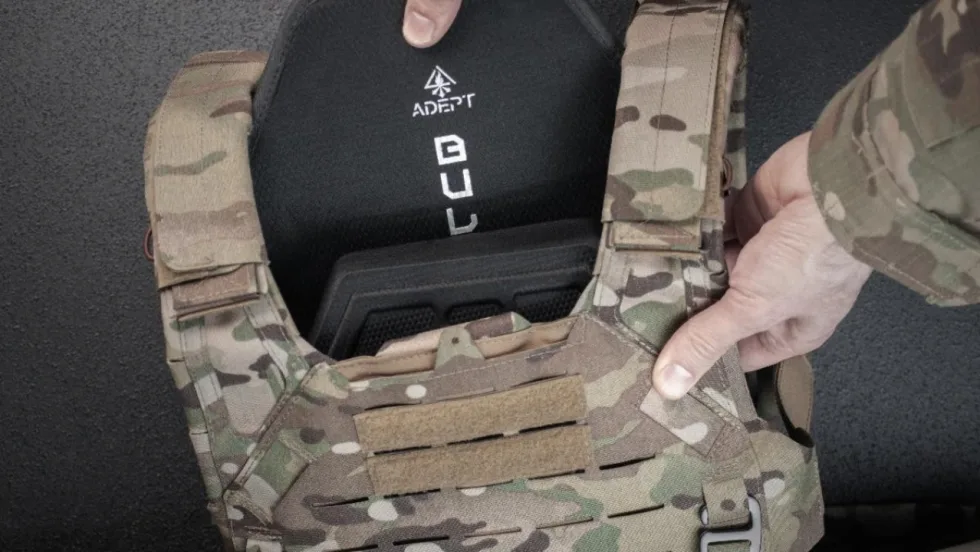
Adept Armor Introduces Two New Rifle Plates
Adept Armor has launched two new Level IV ballistic plates, the Emperor and the Archon Mark 2, which brings Adept Armor’s new Quatroid ceramic to the high-threat, performance-value center of the range at 5.2 pounds.
Read More →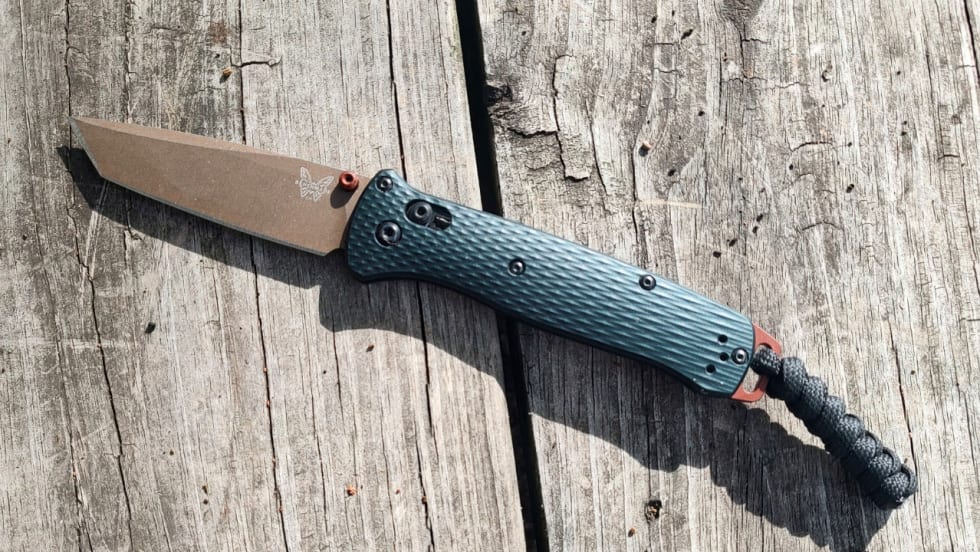
POLICE Product Test: Benchmade Bailout
The Benchmade Bailout is a slim, lightweight carry knife with a deep-ride pocket clip and comes in a variety of blade steels and scales. Here is a detailed review of the Taiga Green Bailout, released earlier this year.
Read More →
NLEOMF Announces July 2026 Officer of the Month
NLEOMF honored a Michigan deputy sheriff as the July 2026 Officer of the Month for rescuing a trapped driver from a burning vehicle following a Fourth of July crash.
Read More →
Streamlight to Showcase Newest Lighting Products at National Safety Council’s Safety Congress & Expo 2026
Streamlight will showcase its latest lights, including the Portable Scene Light III and the LiteBox 1Million, at the 2026 National Safety Council (NSC) Safety Congress & Expo.
Read More →
The 2027 World Police & Fire Games Set for Perth, Australia
The 2027 World Police & Fire Games (WPFG) will take place in Perth, Western Australia, from Friday, March 12 through Sunday, March 21, 2027.
Read More →
5.11 Partners with National Fallen Firefighters Foundation to Support #ForThe343
5.11 has joined the nationwide movement honoring the 343 New York City Fire Department firefighters lost on Sept. 11, 2001.
Read More →
Team Wendy Announces Title Sponsorship of the Jorge Pastore Foundation
Team Wendy’s 3-year partnership with the Jorge Pastore Foundation expands access to programs that strengthen those who serve.
Read More →
National Law Enforcement Memorial and Museum Hosting 9/11 25th-Year Commemoration Ceremony
The National Law Enforcement Memorial and Museum is hosting a 9/11 25th Year Commemoration Ceremony on Sept. 11 at 4 p.m.
Read More →
National Law Enforcement Officers Memorial Fund Announces June 2026 Officers of the Month
The National Law Enforcement Officers Memorial Fund (NLEOMF) named 15 officers of the Chico Police Department (California) as the Officers of the Month for June 2026 for their roles in responding to an active-shooter incident at a public library.
Read More →
Team Wendy App Creates New Digital Hub for Helmet Owners
The Team Wendy Community App provides one location for warranty registration, size-fit tools, product updates, and community connection. For helmet owners, the new app creates a simpler path to the information and tools that matter most.
Read More →