



Policing a Pandemic
Many municipalities have planned and exercised disaster response plans for a large flu outbreak. However, the biggest challenge will be preventing panic among an anxious public and soliciting its cooperation to preserve the common good.

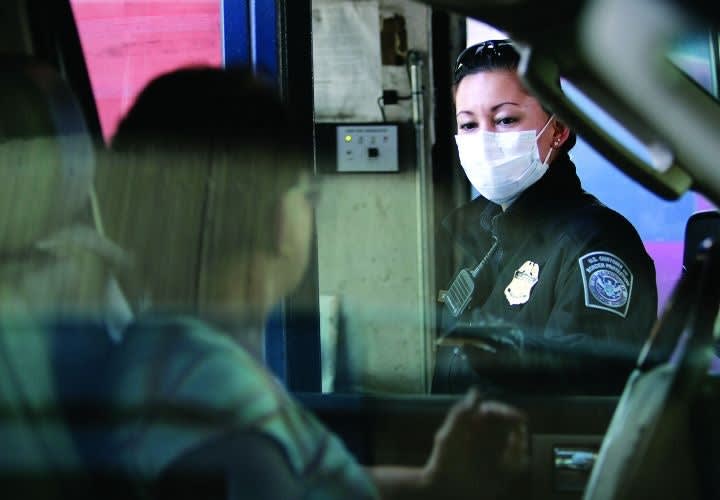
While many people worldwide are now breathing a sigh of relief that the outbreak of H1N1 influenza A Swine Flu may not be as devastating as health professionals projected, we aren't totally out of danger yet. An enhanced Swine Flu outbreak could return with the annual flu season later this year.
This potential health disaster means that law enforcement agencies must think about what they may be asked to do if the United States succumbs to a major flu pandemic.
Like bomb threats, potential health crises must be taken seriously by all professionals until evidence proves otherwise.
Terror from the Past
There have been 10 flu pandemics in the last 100 years. And each one has demonstrated that the flu virus is a very efficient and ruthless killer of humans.
At the conclusion of World War I, the "Spanish Flu" decimated world populations and took more lives than the war itself. Almost 30 percent of Americans were infected and 675,000 died from this particular strain of H1N1 influenza A. Worldwide, it is estimated that 20 million to 40 million souls perished in the pandemic.
Health professionals worldwide were terrified when the Avian Flu virus struck Asia several years ago. And it was memories of the Spanish Flu pandemic that spurred their fear. Many researchers reported that the N5N1 Avian Flu strain shared many similarities with the Spanish Flu that ravaged the survivors of World War I, especially young soldiers returning from the battlefield.
Health care and public safety have come a long way since the Spanish Flu epidemic of 1918, but what hasn't changed is how America will likely respond to such an outbreak. That means that public order personnel on every level are very likely to face a multitude of threats emanating from a health debacle—threats not only from disease but also those created by a panicked public and a criminal element determined to exploit the situation.
The multitude of demands that may be faced by American law enforcement during a flu pandemic will change the way that police departments do business. For example, normal law enforcement patrol duties may have to be suspended, presenting predators that somehow avoid becoming sick themselves with unprecedented opportunities for crime.
Many municipalities have planned and exercised disaster response plans. However, the biggest challenge will be preventing panic among an anxious public and soliciting its cooperation to preserve the common good.
In other words, will 21st century Americans accept the same draconian but necessary measures and restrictions on their liberties as the people of 1918? Probably not. The post World War I population was used to sacrifice and doing without. They were disciplined and understood that quarantines, facility closures, restricted travel, food shortages, and reductions in services were necessary.
Back in 1918, trains would not board passengers and towns denied visitors admittance without proper documentation. Funerals were limited to 15 minutes, gauze masks were universally worn in public, and stores could not hold sales. Heavy fines and punishment were levied against those citizens that violated these decrees. Yet despite such harsh measures, Americans generally accepted government authority. This collective spirit allowed public health officials to intervene and implement their plans and few citizens criticized the effort. People even volunteered to fill the vacuums created by succumbing doctors, nurses, and police officers.
But the people of 1918 were very different than the people of today. One, they were genuinely frightened of disease, knew its scourge, and had likely witnessed other quarantines. Two, they lived a much harder life with few luxuries. Three, they were less conscious of their civil rights and there were fewer lawyers ready to champion a grievance that they might have against their government. Today's American is a very different person living in a very different world, and he or she is likely to rebel if the government curtails any freedom regardless of the reason.
So the question that should most concern law enforcement when considering the consequences of a pandemic is: What will be the public's reaction to the outbreak of such a lethal virus?
Will they react in a calm and orderly manner? Will another New Orleans-type disaster materialize where people expect a benevolent government to step in and sustain them or will people make the necessary effort to be self-reliant for a period of time? Will the criminal element prey on those that eschew firearms ownership or are simply too weak to defend themselves? Will violent crime as well as disease claim its victims?
Quarantine Zone
The highly respected British police believe that in the event of a major flu pandemic physicians, clinics, surgical centers, and pharmacies will have to receive police protection.
Officers will also have to patrol "quarantine zones" to prevent the spread of the disease from urban hot spots. Other units will be on standby to prevent public disorder if large special events and transportation are shut down on short notice. Extra police will be needed to handle crowds on the streets seeking other means to get to work and appointments. Some routine police work will have to be curtailed to concentrate on maintaining law and order.
The British plan is a very good blueprint for an American law enforcement response.
In a United States hit by a flu pandemic, schools will certainly be closed, idling many youths possibly for several months. Large public gatherings and sporting events, movies, concerts, and even church services could be banned or restricted. Workplace closings or schedule changes could be enforced to reduce the presence of workers to minimal operational levels. We have witnessed the implementation of some of these measures on a limited basis during the recent Swine Flu scare. For example, some schools were closed in Texas.
Drug Rationing
Another unpleasant reality is that rationing of flu drugs will be necessary. First in line to receive anti-viral drugs like Tamiflu and Relenza will be the expected 7.5 million hospitalized flu patients. Health care workers, ambulance teams, flu-stricken pregnant women, high-risk patients, and those with compromised immune systems take second place. In a distant third slot will be our frontline police, firefighters, and employees of the firms that make the drugs and vaccines.
The elderly and small children would not be a priority in a drug rationing plan. And I can confidently predict that many parents will not accept this last-in-line provision when it comes to their sick children and some will resort to any and all means to secure treatment for their babies. You can imagine what that will mean to you as peace officers.
Get Ready
If your department has not begun preparations for a pandemic, I urge you to get them moving pronto. No matter how small or rural your agency is, it will play a major role and it may be prudent to expand your auxiliary force to handle routine policing duties.
In addition, officers should prepare their own families to survive the threats and privations that are sure to accompany such an outbreak without the officer being present at home.
I hope this is all just speculation on my part, but flu pandemics are very real. And one will hit us again. Hopefully, it will be mild. But as law enforcement officers, you have to be ready for a 1918-size flu disaster.
Bob Pilgrim is the pen name of a veteran federal officer and law enforcement trainer. This is his first article for POLICE Magazine.
More Patrol

Adept Armor Introduces Two New Rifle Plates
Adept Armor has launched two new Level IV ballistic plates, the Emperor and the Archon Mark 2, which brings Adept Armor’s new Quatroid ceramic to the high-threat, performance-value center of the range at 5.2 pounds.
Read More →
POLICE Product Test: Benchmade Bailout
The Benchmade Bailout is a slim, lightweight carry knife with a deep-ride pocket clip and comes in a variety of blade steels and scales. Here is a detailed review of the Taiga Green Bailout, released earlier this year.
Read More →
NLEOMF Announces July 2026 Officer of the Month
NLEOMF honored a Michigan deputy sheriff as the July 2026 Officer of the Month for rescuing a trapped driver from a burning vehicle following a Fourth of July crash.
Read More →
Streamlight to Showcase Newest Lighting Products at National Safety Council’s Safety Congress & Expo 2026
Streamlight will showcase its latest lights, including the Portable Scene Light III and the LiteBox 1Million, at the 2026 National Safety Council (NSC) Safety Congress & Expo.
Read More →
The 2027 World Police & Fire Games Set for Perth, Australia
The 2027 World Police & Fire Games (WPFG) will take place in Perth, Western Australia, from Friday, March 12 through Sunday, March 21, 2027.
Read More →
5.11 Partners with National Fallen Firefighters Foundation to Support #ForThe343
5.11 has joined the nationwide movement honoring the 343 New York City Fire Department firefighters lost on Sept. 11, 2001.
Read More →
Team Wendy Announces Title Sponsorship of the Jorge Pastore Foundation
Team Wendy’s 3-year partnership with the Jorge Pastore Foundation expands access to programs that strengthen those who serve.
Read More →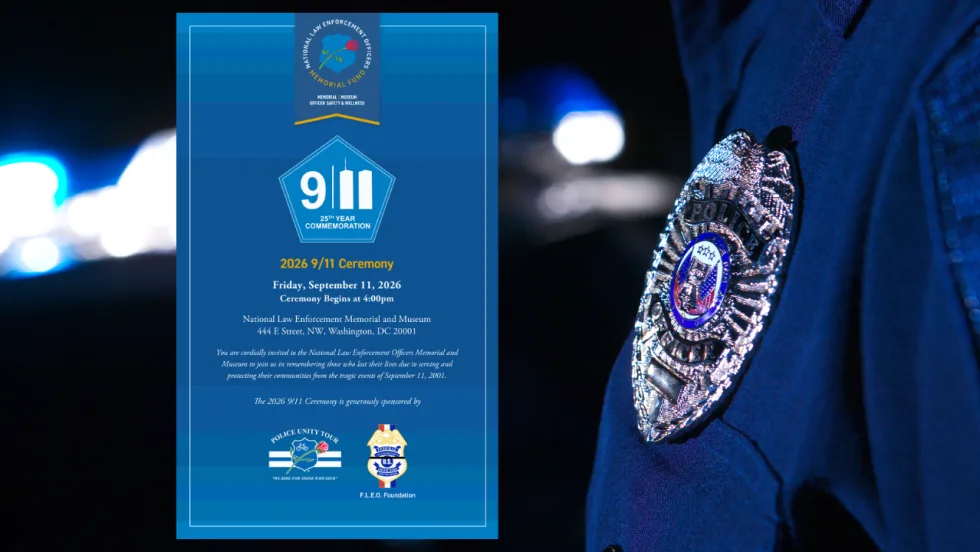
National Law Enforcement Memorial and Museum Hosting 9/11 25th-Year Commemoration Ceremony
The National Law Enforcement Memorial and Museum is hosting a 9/11 25th Year Commemoration Ceremony on Sept. 11 at 4 p.m.
Read More →
National Law Enforcement Officers Memorial Fund Announces June 2026 Officers of the Month
The National Law Enforcement Officers Memorial Fund (NLEOMF) named 15 officers of the Chico Police Department (California) as the Officers of the Month for June 2026 for their roles in responding to an active-shooter incident at a public library.
Read More →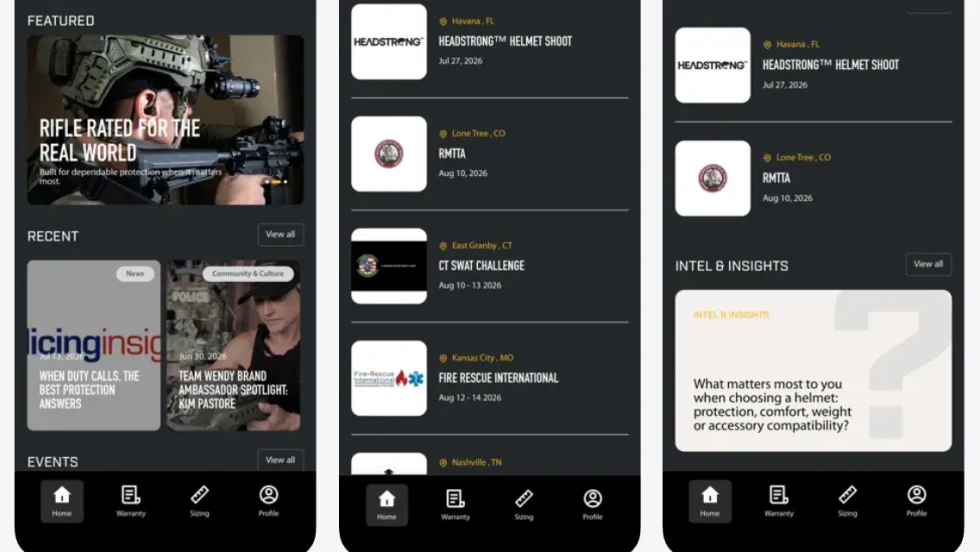
Team Wendy App Creates New Digital Hub for Helmet Owners
The Team Wendy Community App provides one location for warranty registration, size-fit tools, product updates, and community connection. For helmet owners, the new app creates a simpler path to the information and tools that matter most.
Read More →