



Police Vehicles
For specialized units from SWAT to airborne patrol, today's police officers need more than just four wheels and a roof.

Thirty or 40 years ago, a police vehicle most often meant a Ford, Chevy or Dodge passenger car, sometimes outfitted with a bigger motor, heavy duty suspension and some basic radio equipment. Hang a red light on it somewhere and presto—a police car. As a matter of fact, most police cars were nothing more than "taxi" packages (minus the bigger engine) painted black and white. Hardly glamorous, but they still held a certain mystique.
Today's officers are usually faced with a much wider range of duty expectations from their communities. For specialized units from SWAT to airborne patrol, today's police officers need more than just four wheels and a roof. Sometimes, they need lots more! As technology raced forward so did law enforcement's opinion of what an ideal "cop car" might be.
Today's police "car" might be a personal watercraft (PWC), motorcycle, ultralight aircraft, helicopter, work boat, transport bus, bicycle, all terrain vehicle (ATV) or even an old fashioned police "cruiser." The variety of vehicles available to meet the exacting needs of a special unit or even just the local beat cop means that purchasing agents have their collective hands full of decisions to make.
POLICE offers the following to help make some sense out of the confusion. Our up-date of what's new in some interesting categories is hardly a complete line-up. It's more of an idea grab bag for police and administrators alike. Faced with a dilemma in vehicle needs? Check out the following pages to get some ideas on how to find those oftentimes elusive answers. See something you like? Seek out the manufacturer, dealer or report to glean the whole story.
Speaking of reports. Once a year there is a veritable frenzy of vehicle testing around the country. The quest for the facts about the newest, the latest, the fastest and biggest in the police vehicle arena are hashed out. Once the dust settles, the numbers are carefully tabulated, photos taken and reports written, a little magic occurs. What's left are a set of powerful tools to help agencies make some serious decisions about how best to wisely spend their agency's money when it comes to new vehicles.
The Michigan State Police and the Los Angeles County Sheriff's Department have arguably the two most famous of these testing programs. Both agencies produce comprehensive reports detailing every facet of vehicle performance and specifications imaginable. They are both happy to share the results but ask that any agency who uses their data make their own judgements regarding how it may affect their respective purchasing decisions.
Going hand in hand with the Michigan State Police testing is software developed by the Office of Law Enforcement Standards (OLES). The program, called Auto Bid, created for the National Institute of Justice, assists fleet managers in their selection of vehicles best suited to their needs. The data from the Michigan State Police test is used as the basis for the software. The program ranks vehicles in two ways: by their test scores alone, and by their bid price adjusted for their test scores. The program can be downloaded from the NLECTC Web site.
Another powerful tool for agencies that must supply a police presence on waterways is the personal watercraft loan program available from several manufacturers. Yamaha, Kawasaki, Bombardier and Polaris, all members of the Personal Watercraft Industry Association (PWIA), have loaned over 8,000 PWCs to law enforcement agencies and for boating education since 1989. The PWIA loan programs enable agencies to easily afford the versatility and reliability of these powerful tools for waterborne officers.
As technology continues the helter-skelter rush forward there is no doubt that in a few years POLICE will be reviewing the latest in anti-gravity hover vehicles for patrol officers. Frankly, we can hardly wait!
More Vehicle Ops
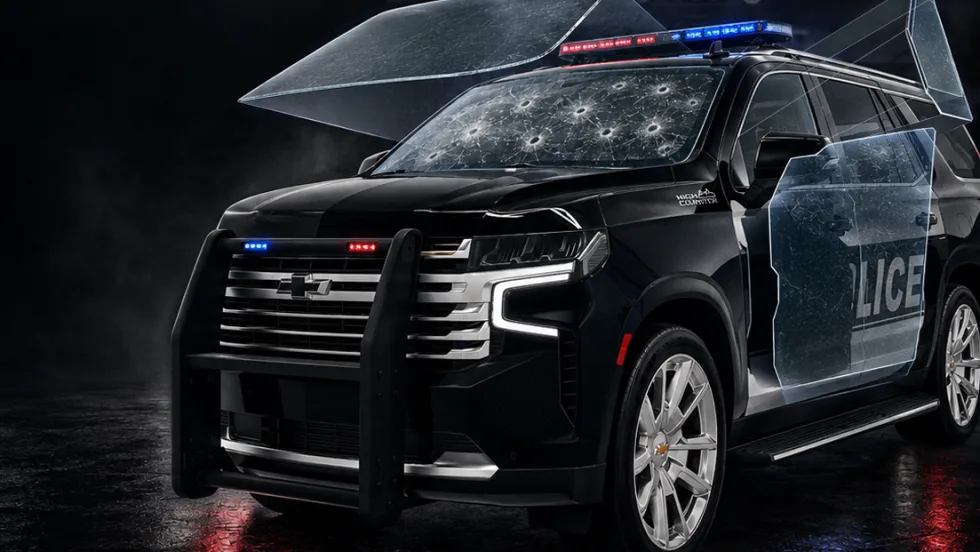
It’s an Ambush: How Ballistic Glass Redefines Patrol Vehicle Safety
Dana Safety Supply is setting a new standard for officer safety with windshields capable of withstanding multiple rounds and saving lives — and one Texas deputy is living proof.
Read More →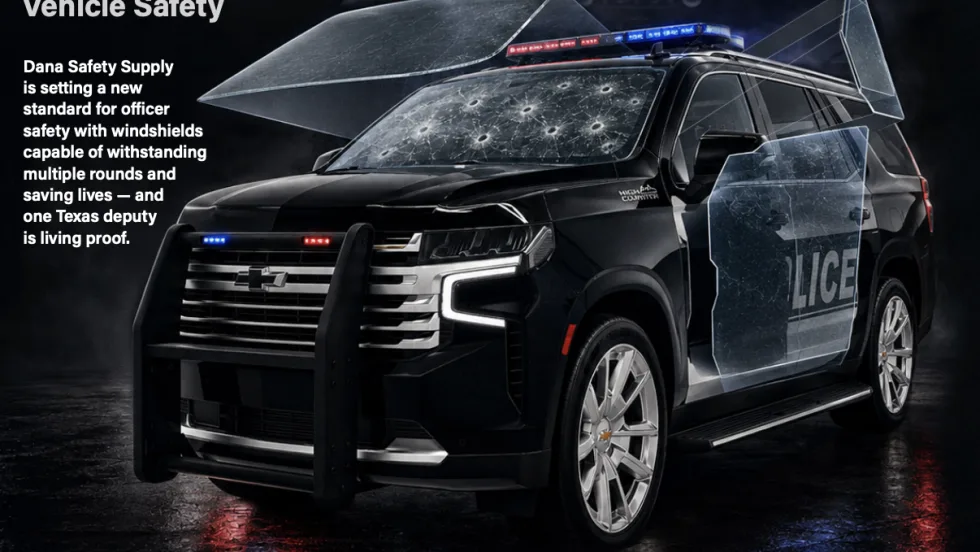
Dana Safety Supply’s BallisTech Vehicle Armoring Solutions
Dana Safety Supply is setting a new standard for officer safety with windshields capable of withstanding multiple rounds and saving lives.
Read More →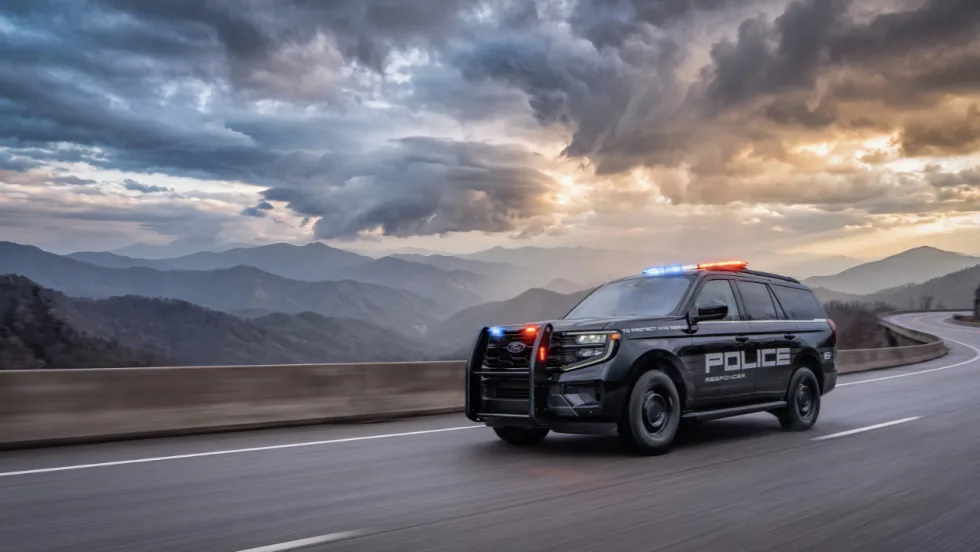
Ford Showcases 2028 Ford Expedition Police Responder
Ford showcased its 2028 Ford Expedition Police Responder, a full-size, pursuit-rated utility vehicle, at Police Fleet Expo this week. It comes standard with 4x4 and a 3.5-liter EcoBoost V6 producing 400 horsepower and 480 lb.-ft. of torque.
Read More →
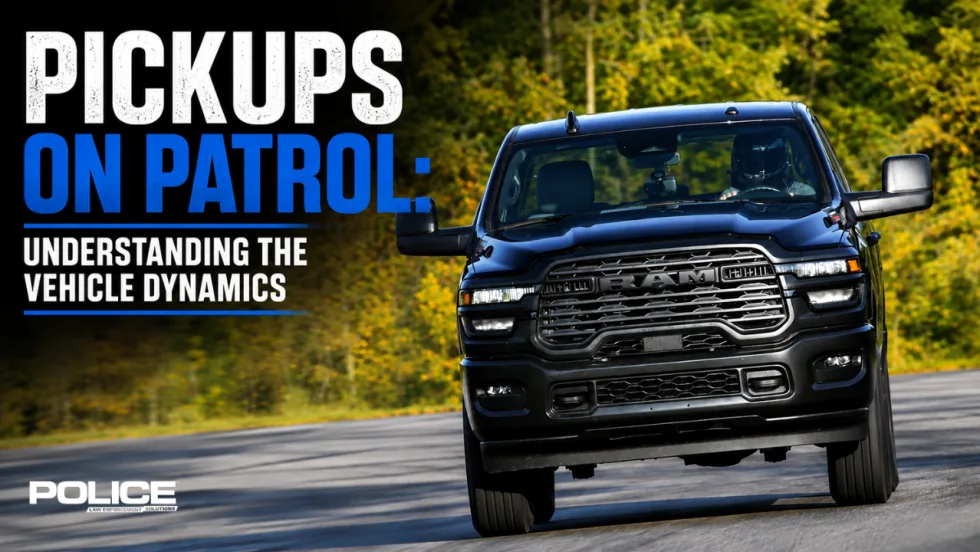
Pickups on Patrol: Understanding the Vehicle Dynamics
Pickup trucks are not new to patrol duties, but with the debut of the 2027 Ram 2500 Emergency Response Vehicle, they are getting larger and heavier. POLICE reached out to the Michigan State Police Precision Driving Unit to learn more about pickup truck handling, vehicle dynamics, and what officers need to know.
Read More →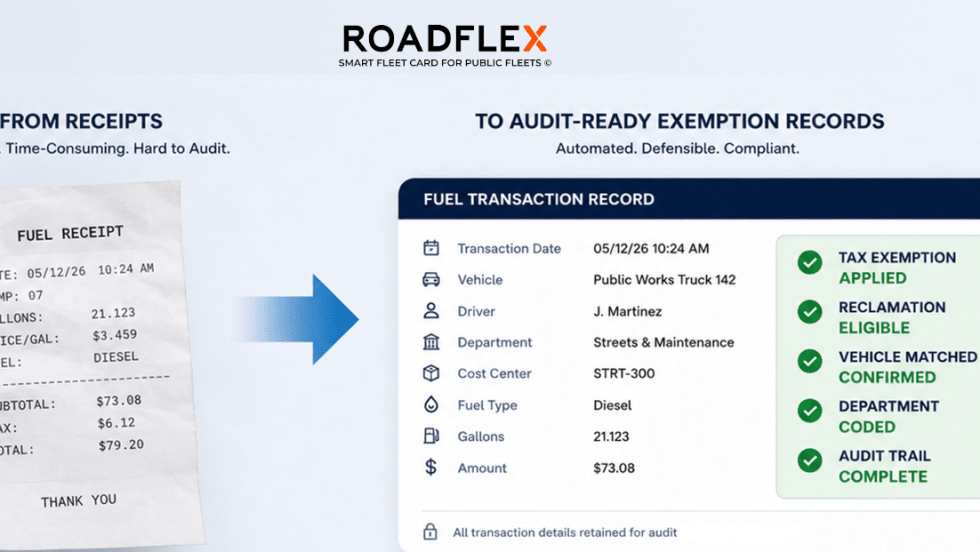
RoadFlex Brings Fuel Tax Compliance & Audit-Ready Reporting to Government Fleets
RoadFlex now offers its capabilities to help public-sector fleets streamline fuel tax exemptions, reclamation, reconciliation, and audit-ready reporting.
Read More →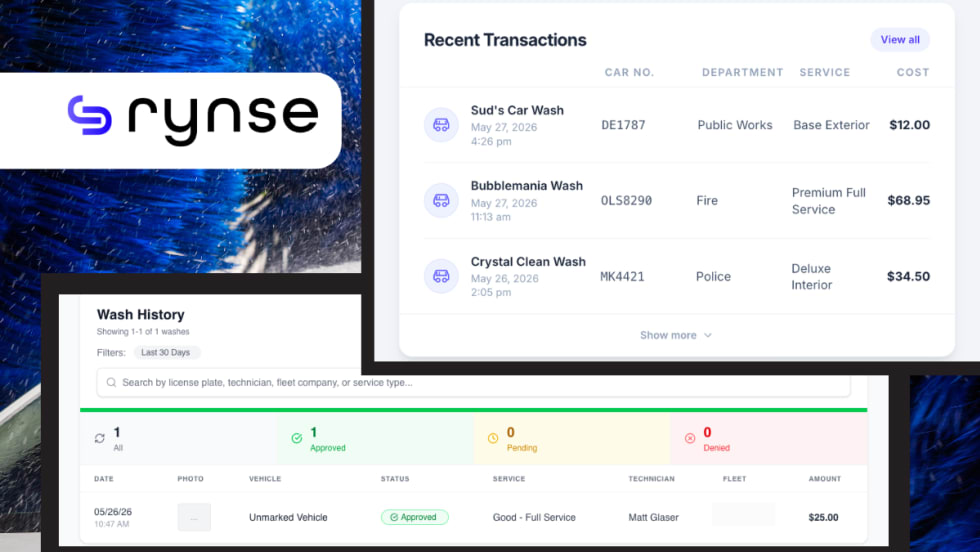
Rynse Awarded Cooperative Purchasing Contract, Expanding Nationwide Fleet Wash Access for Law Enforcement
Rynse has secured a 2026-2027 NCSA contract, giving law enforcement agencies nationwide fast-track access to its fleet wash network and management platform, which streamlines procurement, reduces administrative burdens, and helps fleets stay road-ready with greater oversight.
Read More →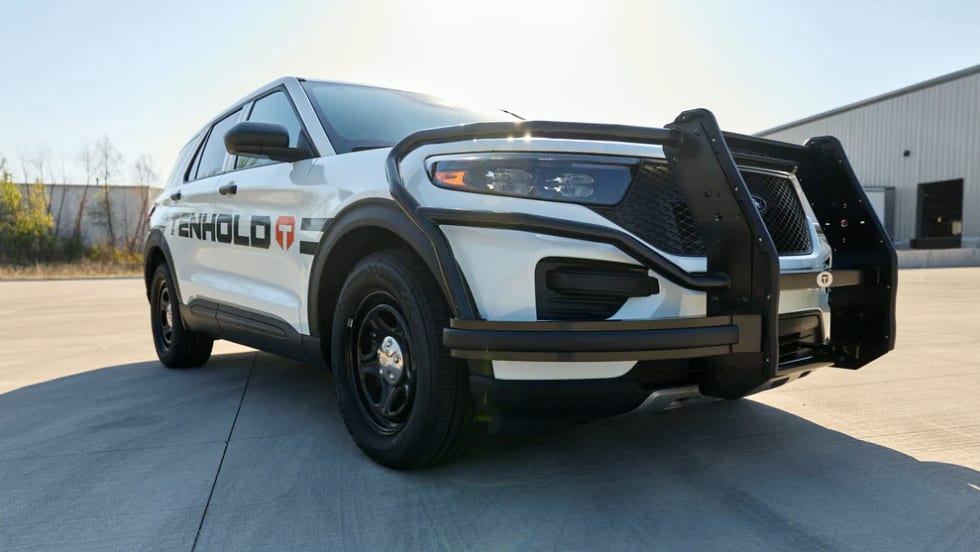
Tenhold Introduces Suppressor Gun Rack System
Tenhold, formerly Jotto Desk, provides next-generation vehicle systems for law enforcement and public safety and recently debuted its Suppressor Lock Head for its Weapon Mounting system.
Read More →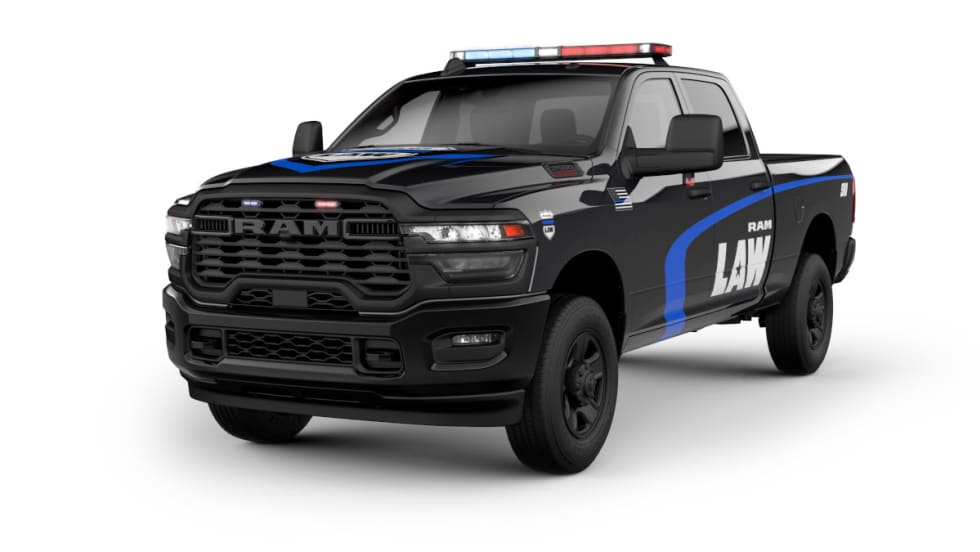
Ram Debuts Pursuit-Capable 2500 Emergency Response Vehicle
The 2027 Ram 2500 Emergency Response Vehicle is the first and only ¾-ton truck to complete the Michigan State Police vehicle trials, and Ram said it delivered outstanding performance in testing scenarios designed to replicate extreme real-world duty.
Read More →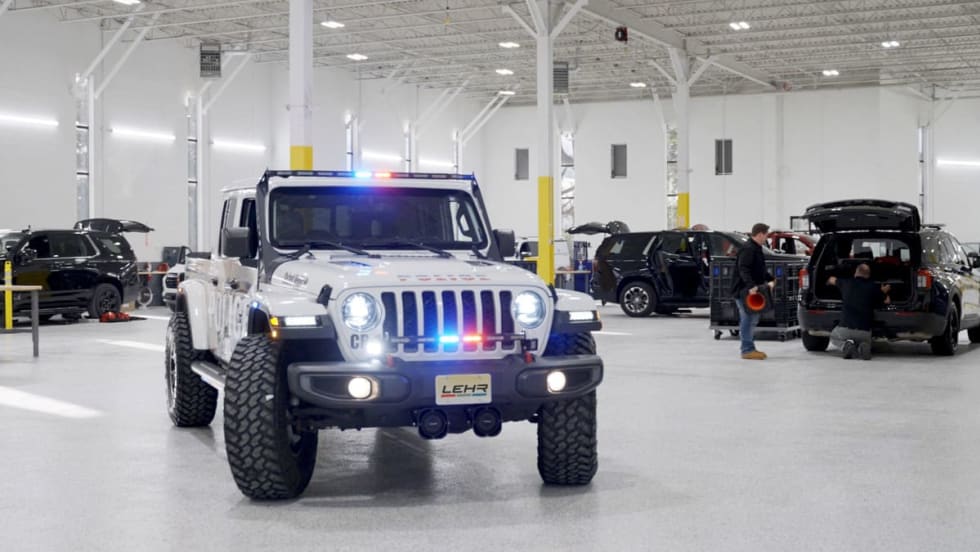
Emergency Vehicle Upfitter LEHR Opens New Facility in New Jersey
LEHR’s new centralized upfitting facility in New Jersey consolidates operations to deliver faster turnaround times and enhanced fleet capacity for law enforcement agencies across the Northeast.
Read More →
North Carolina Sheriff’s Office Improves Fueling Reliability & Operational Control
The Madison County Sheriff’s Office overcame fuel management and accounting challenges by turning to RoadFlex to improve fueling reliability, visibility, and administrative control.
Read More →