



Police Recruits
Should applicants for jobs as police be held to a higher standard of moral character than is expected in other fields of employment? These recruits, after all, are just the mirror image of the society they will police. Is this prerequisite fair, or even realistic?

Should applicants for jobs as police be held to a higher standard of moral character than is expected in other fields of employment? These recruits, after all, are just the mirror image of the society they will police. Is this prerequisite fair, or even realistic?
A debate was raging earlier this year in Denver, concerning the background of a recruit, 40-year-old Ellis Johnson, and his admitting to have taken drugs including PCP, LSD and crack - at least 150 times. His background was leaked to the media, and these admissions have raised questions about the police hiring process. Critics say he does not have the moral stature necessary for a peace officer, while supporters say he has turned his life around and deserves a second chance.
In Denver, the Civil Service Commission screens applicants, and the manager of safety gives final approval. The commission approved Johnson in a 3-2 vote. The police union and Police Chief Tom Sanchez are among the critics. "We have a lot of individuals (on the police force) who have experimented with drugs in the past." Sanchez said at a recent news conference. "We're no different from the general population. But there's a major difference between someone who has used drugs early in their life, in school, compared to someone whose use was unbridled."
Johnson's recruitment also highlights an employment crunch for police departments nationwide. High-tech jobs paying $50,000 a year are luring away applicants from police departments. "Police departments are having more and more trouble getting as many qualified applicants as they need:' said Jim Pasco, executive director of the National Fraternal Order of Police in Nashville. Tenn.
Amid the controversy, Mayor Wellington Webb appointed a panel to review the civil service commission's hiring process. Records show that two-thirds of the police academy's Current crop of 35 recruits, admit to some past drug use. Paul Torres, executive director of the civil service commission, said of recruits, "Most of them lie through their teeth. Johnson is being punished for being honest."
Should Johnson have been held to a higher standard in order to get on the police force, or should his honesty be lauded, and he be given a chance to rectify his past sins? The amount of drugs he ingested is cause for alarm, but he stated he had not taken any drugs after 1987.
According to Neil Hibler's book, Policing Psychology Into the 21st Century, law enforcement officers are entrusted with powers to lawfully confront, question and search citizens, and where justified, use deadly force. No other profession in our society has authority as intense or intrusive.
John Kenney writes in his book, Police Administration, that the highest quality of personnel is desired, therefore, it is incumbent upon the police administrator to exert control over the personnel agency. The department must be intimately involved in the screening process, which should include a psychological exam.
The National Commission on Marijuana and Drug Abuse has concluded from its study that alcohol dependence is the most serious drug problem in the country. By its very nature, police work is conducive to problem drinking. It attracts and tends to hold young men and women in the age bracket in which alcoholism most frequently occurs. According to Nathan Iannone's book, Supervision of Police Personnel, 'If selection procedures are defective or if supervisory controls break down, the characteristics of the job sometimes contribute to the development of excessive drinking."
Given the drawbacks of the police profession and its stress factors, it is no wonder that the Denver P.O. has experienced controversy over Johnson's predilection for addictive behavior. His honesty is a plus, but his track record leaves a lot to be desired.
The Denver P.D. seems to be leaving itself open for future litigation on the grounds of "Vicarious Liability" of employees. Not only may employers be held responsible for the actions of their employees, but must be able to demonstrate that they used "reasonable precautions" in the hiring process.
William Bratton, New York City police commissioner, wrote in his book, Turnaround, that he always liked to be in control, which is why drugs never appealed to him.
Whether we agree or not, the powers that run police departments today are still looking for candidates who are above reproach. Teddy Roosevelt said, "The best executive is the one who has sense enough to pick good men to do what he wants done, and self restraint enough to keep from meddling with them while they do it."
T.M. Finneran, is a retired New York City Police Department sergeant. The 23year law enforcement veteran currently resides on Long Island, N.Y.
More Training

Registration Underway for Sixth Annual First Responders Relay
The California Police Athletic Federation’s annual First Responder Relay will welcome first responder teams from across the globe to compete along Ventura's scenic coastline on Oct. 11. Registration is underway.
Read More →
Vector Solutions Launches Comprehensive Online Dispatch Training Catalog for Emergency Communications Professionals
Vector Solutions’ new catalog of 35 expert-developed online courses can help emergency communication centers strengthen training, meet certification requirements, and simplify continuing education.
Read More →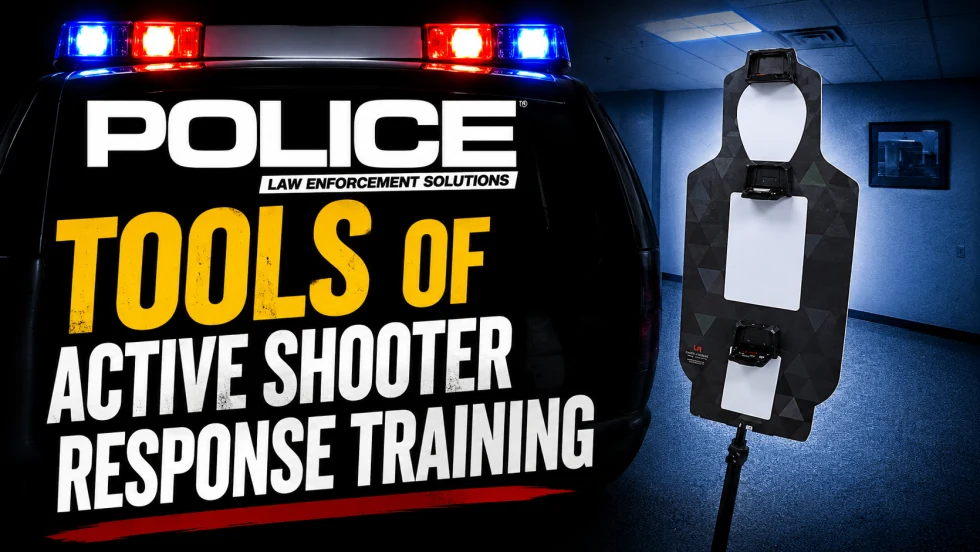
Tools for Active Shooter Response Training
What technologies help prepare officers for active shooter response situations? This behind-the-scenes look at law enforcement training explores shot simulators, smart firearms, laser target systems, and the tools used to build safer, more effective training environments.
Read More →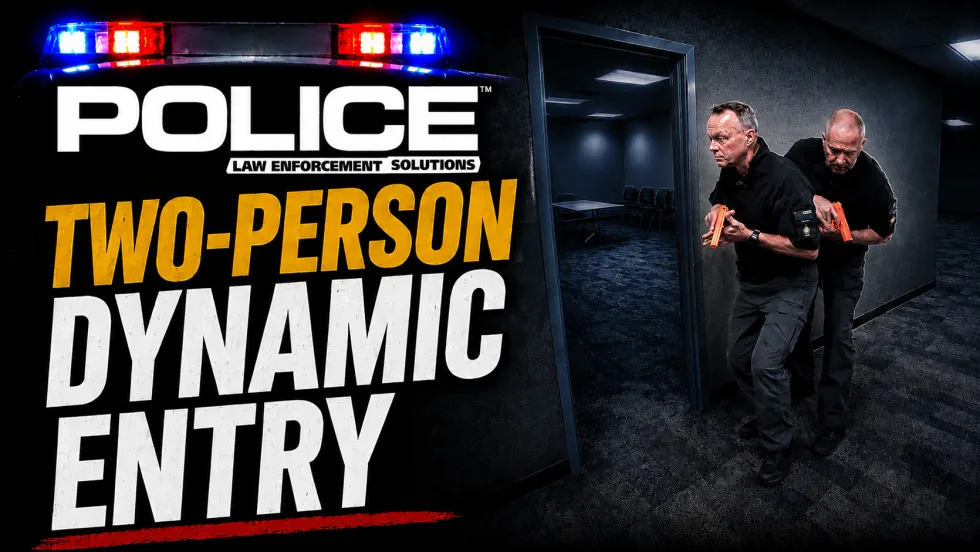
Two-Officer Tactical Doorway Entry Techniques
Entering a room during active-threat situations requires communication, coordination, and disciplined tactical movement. In this video, trainers from the United States Deputy Sheriff’s Association demonstrate critical room entry concepts, including fatal funnel awareness, team coordination, and safe tactical movement.
Read More →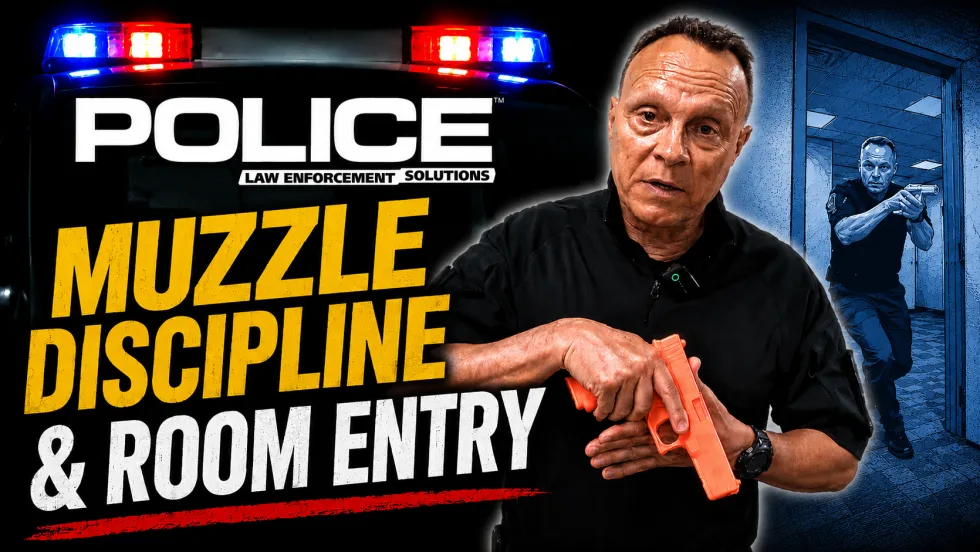
High Compressed Ready Explained | Muzzle Control For Room Entry
In this video, Mike Willis, law enforcement national training and program director for the United States Deputy Sheriffs’ Association, demonstrates the high compressed ready position and discusses muzzle control during room entry.
Read More →
Why Attend the DroneSense Innovation Summit by Versaterm?
Let’s hear from Ryan Bracken, head of product, about why your agency should send someone to the first annual DroneSense Innovation Summit by Versaterm in April.
Read More →
Caswell Live Fire Spins Off from InVeris
Caswell Live Fire has spun off from parent company InVeris, coinciding with the 100th anniversary of Caswell’s founding. Over the past 100 years, Caswell has developed pioneering solutions that support military, law enforcement, and commercial clients worldwide.
Read More →
When Do You Transport a Wounded Officer Instead of Waiting for EMS?
Thumbnail for video series POLICE Topics, Tactics & Tips with a yellow headline that reads When Do You Transport a Wounded Officer Instead of Waiting for EMS?
Read More →
How to Pick Your High-Risk Stop Location for Tactical Advantage
Hear veteran trainer Mike Willis, of the United States Deputy Sheriff’s Association, explain several considerations that can help you wisely pick your best spot to initiate high-risk or felony traffic stops.
Read More →
Coffee Break with Police Experts: Using Your Patrol Vehicle for Cover
In this video, hear from Dustin Mowery, a product specialist at Team Wendy, as he discusses how to best use a patrol vehicle for cover.
Read More →