



Poisoning the Well
Quick. Short of a nuclear detonation, think of the worst possible terrorist attack that you can imagine.

Quick. Short of a nuclear detonation, think of the worst possible terrorist attack that you can imagine.
If you’re like many people, you probably just envisioned what would happen if some group of violent fanatics managed to poison the water supply of a major American city. How many millions would that kill? How much panic would it spread?
Fortunately, on this issue, I can offer you something that is rare and wonderful in this age of post-9/11 international terrorism. Good news.
It is common thinking that terrorists have targeted and surveilled our potable water plants, and this is most probably true. However, in all of the reports of power transmission line, communications tower, and fuel pipeline attacks, as well as other acts of terrorism on centralized resources, none have been made public about successful acts against water treatment facilities.
This is because I think the bad guys have realized that poisoning a modern city’s water supply is nearly impossible. How I arrived at this conclusion, which flies dead in the face of common thinking, is a little complicated. Indulge me if you will, for a moment, as I explain my thinking on this issue.
Two Ways to Attack
There are two unclassified, public knowledge ways to sabotage a water treatment plant: physically damaging the plant and introducing an agent into the water stream.
The first option is very, very possible. Given the antiquated state of most of America’s centralized, government-owned utilities, it wouldn’t take much effort to bring a facility already teetering on the brink to a standstill.
However, this would simply result in a large-scale investigation while affected citizens transitioned to bottled water or other sources of clean water. Businesses would take the largest hit but, even in that case, the damage would be financial and there would be few, if any, casualties.
Since international terrorists tend to execute plans that will kill as many people as possible, they will likely attempt to contaminate a water supply, not damage its infrastructure.
But is it really possible to poison a well as large as a city water system?
Poisons 101
Killing people silently, via poisons, is the subject of a great deal of fiction writing. But let’s look at the way poisons work in the real world.
Although practically any substance introduced into the body can kill a human in the right quantities—including oxygen and even water in specific circumstances—we reserve the label “poison” for those substances that prove quickly fatal in small amounts.
Foreign substances introduced into the body are usually spoken of in terms of a dose. This is an important term when talking about poisons. So let’s take a look at it.
Here’s a good definition of “dose.” A dose is the amount of exposure to a substance, usually relative to the amount of carrier present. For instance, a common measure of dose is parts per million. One ppm is equal to one teaspoon of product in 1,000 gallons of water.
Not all doses of poisons result in death. There is a threshold below which a person can be exposed and still survive. When a dose sufficient to kill at least half of those exposed without immediate treatment is delivered to a person (or persons), that dose is called a LD50, meaning it’s a lethal dose in 50 percent of the population.
Some poisons require a pretty substantial dose to kill a person. And therein lies the rub. Pouring a poison into the cup of a victim is easy to do. There’s only a small amount of liquid in the cup to dilute the poison.
Pouring enough poison into a water system is not an easy thing to do. Every minute of every day, water treatment plants process a huge amount of water, which means you’re going to need an awful lot of poison.
The Treatment Process
We’ll get back to dilution in a minute. For now, let’s look at how a water treatment system works from the source to your faucet.
Water treatment systems take in untreated water from a variety of sources, including lakes, rivers, and reservoirs. Through a process called flocculation, the dirt and smaller particles are removed in a mesh of fibers. The flocculated water is then pH balanced and filtered through sand media.
Next, chlorine is added to kill anything biological that remains. After this stage, most plants also add a small amount of fluoride and an agent to inhibit corrosion and then aerate the water in what’s called a clearwell before sending the treated and “polished” water out via a system of large pipes and pumps to strategically positioned holding tanks. From the holding tanks, more pumps deliver the water through a series of ever-smaller pipes to homes, businesses, and fire plugs.
The amount of polished water that can be produced by a city’s water treatment system is staggering. For example, a medium-sized city plant can polish 22 million gallons of water in a day.
This works out to roughly 15,277 gallons flowing out of the facility per minute. That’s enough water to completely fill one 16x32-foot oval swimming pool every minute.
Dilution is Our Friend
Why is the volume of water processed important? Remember the discussion on dose. For a dose to be effective, it has to be administered in an effective ratio.
To effectively poison a water supply, a sufficient amount of poison must be introduced at the correct point in the process. You could stand at a reservoir and dump a metric ton of a biological agent into the beginning of the process: however, it would all be inactivated because there are mechanisms in place to eradicate the normally present biological activity common to all water.
All other poisons that don’t chemically bind with the water would suffer the same fate, sinking instead to the bottom of a settling tank during treatment. The first stages of the treatment process are designed to remove the expected industrial and residential contamination that exists in most untreated water. That means they will remove biological and chemical poisons.
This might lead you to assume that the output of a plant is the best place to insert a disease agent or poison. Recall that treated water leaves the plant in swimming pools per minute under great pressure. It would necessitate someone with a great deal of experience in industrial plumbing, a major outlay of pumps and piping adaptors, and some time to do this. I would not want to try drilling into a pressurized 78-inch-diameter pipe with a cordless drill. Neither would most terrorists.
Safe Guards
It’s public knowledge that some water treatment facilities aren’t patrolled 24 hours a day. However, there are laws that require frequent testing and process inspection. This means someone from the water department has to make numerous trips to every facility. Add to this an increased patrol presence by local law enforcement and heightened neighborhood watch activities since 9/11 and the likelihood of this sort of sabotage going undetected for any appreciable time is low.
Well, then, why not dump a vial of poison into a holding tank? Once again, it sounds really good in a movie, but the science of it just doesn’t work out.
Consider a simplified example involving a typical 10,000 gallon holding tank. According to the Merck Index, it takes 300 milligrams of sodium cyanide to kill the average person. Barring other variables, it would take a minimum of 105 pounds of this poison to fill the tank in a proportion great enough to cause harm, much less death.
OK. So you can carry 100 pounds and so can a strong terrorist. Doesn’t that mean that we still have to worry about poison in a holding tank?
Probably not. See, most of the water in that holding tank is not going to be ingested by the city’s population. Think about how much water you drink from the faucet. Then, consider how much water goes in pools, washes your cruiser, feeds the lawn, runs baths, etc., and the picture becomes more clear.
Unless the Bad Guys can steal a tanker of poison and dump the entire load unnoticed into the tank, the odds of poisoning a small segment of a community, much less an entire system, is slim.
Now, I am by no means saying that it isn’t possible to poison very small, targeted areas. It would probably be pretty easy to poison a private water supply.
But there is ample evidence that the widescale poisoning of a town, much less a city, is beyond the abilities of 99.995 percent of the Bad Guys out there.
And yes, terrorists can sabotage a water treatment plant with explosives or some other destructive capability. But that’s likely to inconvenience many more people than it will harm.
Actually, the biggest public water concern for any anti-terrorist planner is not the clean water supply but the waste water treatment system. While a local clean water supply can be supplanted by bottled water, military water purification units, and other resources that are often used after natural disasters, a waste water treatment facility is not easily replaced.
The population of a city produces a massive amount of raw sewage that must be treated to prevent disease. The destruction or incapacitation of such a plant would not be an inconvenience; it would be a potential disaster, and local authorities would have to react to it quickly to prevent serious health consequences.
Shawn Hughes is a former patrol officer and bomb tech. He is a frequent contributor to Police who is working on a book.
More Patrol

Team Wendy Introduces the EXFIL Endurance Ballistic Helmet, Engineered to Reduce the Burden of Extended Wear
Team Wendy has launched its EXFIL Endurance, a new lightweight ballistic helmet engineered to deliver protection, comfort, and fit during demanding, extended operations.
Read More →
The First Responders Children’s Foundation National First Responders Day Roll Call of Heroes Ceremony Returns to Times Square, NYC
First Responders Children’s Foundation (FRCF), in collaboration with T-Mobile, will host the Roll Call of Heroes ceremony in Times Square to commemorate National First Responders Day on Wednesday, Oct. 28. During the event, FRCF will present 18 Hero Awards.
Read More →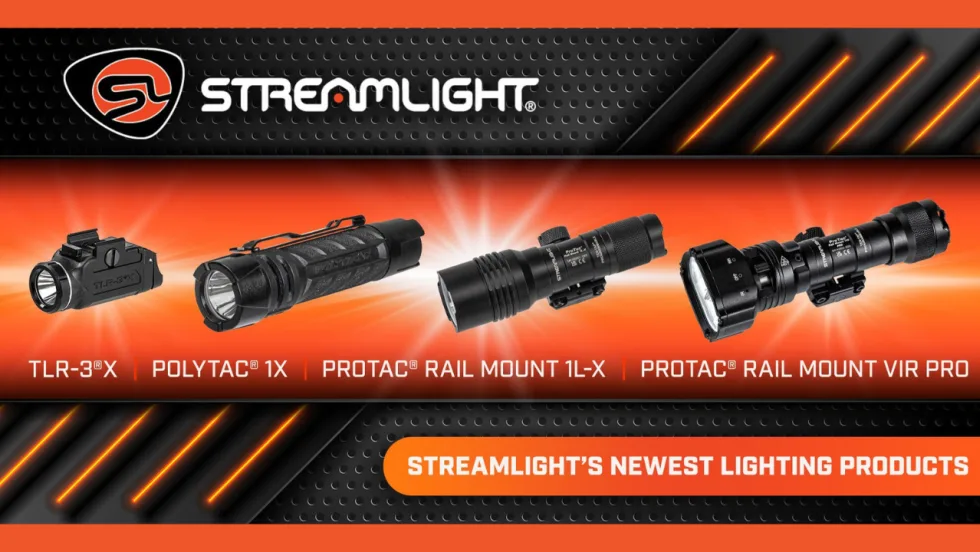
Streamlight to Showcase Newest Lighting Products for Law Enforcement Professionals at IACP 2026
Streamlight will showcase its newest lights for law enforcement at the International Association of Chiefs of Police Annual Conference & Expo. Featured lights will include the TLR-3 X, the PolyTac 1X, and more.
Read More →
Streamlight Portable Scene Light III Wins 2026 OH&S New Product of the Year Award
Streamlight’s Portable Scene Light III has won the 2026 Occupational Health & Safety (OH&S) New Product of the Year Award in the Lighting category.
Read More →
Adept Armor Introduces Two New Rifle Plates
Adept Armor has launched two new Level IV ballistic plates, the Emperor and the Archon Mark 2, which brings Adept Armor’s new Quatroid ceramic to the high-threat, performance-value center of the range at 5.2 pounds.
Read More →
POLICE Product Test: Benchmade Bailout
The Benchmade Bailout is a slim, lightweight carry knife with a deep-ride pocket clip and comes in a variety of blade steels and scales. Here is a detailed review of the Taiga Green Bailout, released earlier this year.
Read More →
NLEOMF Announces July 2026 Officer of the Month
NLEOMF honored a Michigan deputy sheriff as the July 2026 Officer of the Month for rescuing a trapped driver from a burning vehicle following a Fourth of July crash.
Read More →
Streamlight to Showcase Newest Lighting Products at National Safety Council’s Safety Congress & Expo 2026
Streamlight will showcase its latest lights, including the Portable Scene Light III and the LiteBox 1Million, at the 2026 National Safety Council (NSC) Safety Congress & Expo.
Read More →
The 2027 World Police & Fire Games Set for Perth, Australia
The 2027 World Police & Fire Games (WPFG) will take place in Perth, Western Australia, from Friday, March 12 through Sunday, March 21, 2027.
Read More →
5.11 Partners with National Fallen Firefighters Foundation to Support #ForThe343
5.11 has joined the nationwide movement honoring the 343 New York City Fire Department firefighters lost on Sept. 11, 2001.
Read More →