



Motors on a Mission
The motor unit within the Special Events branch of the Washington D.C. Metropolitan Police Department doesn't often spend its time handing out traffic citations. The officers are too busy with other duties specific to the nation's capital.

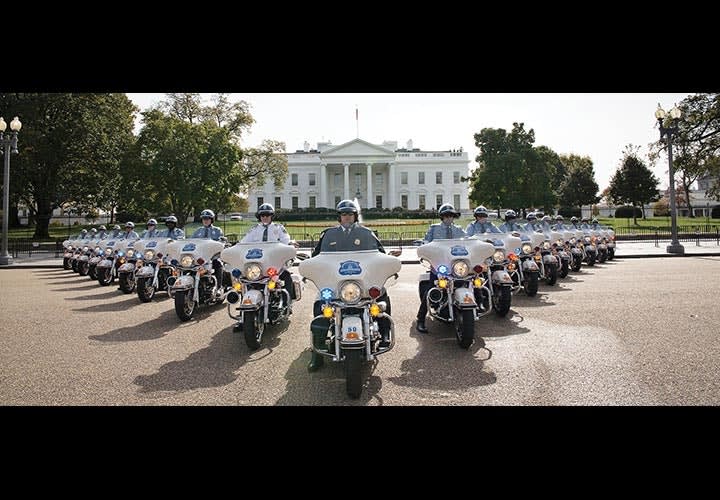
Special Events motor officers brave the elements to escort dignitaries as well as interact with citizens and international tourists. (Photo: Darren Edwards)
The motor unit within the Special Events branch of the Washington D.C. Metropolitan Police Department doesn't often spend its time handing out traffic citations. The officers are too busy with other duties specific to the nation's capital.
These include monitoring parades and marches by using motorcycles and cruisers to facilitate safe and efficient traffic movement, and providing escorts for high-profile operations expected to present the most safety and security concerns.
Not the least of these motor officers' duties is escorting and maintaining the safety and security of the vice president and president of the United States as they move through town.
And they do all of this and more year round, at all hours, in all types of weather.
VP and POTUS Movements
"Our department has been in existence since 1861. We have a very proud history as an agency as a whole, and part of that is protecting the president and the vice president on a daily basis," says Captain Bob Glover. He's the Special Events branch captain and still rides with his fellow motor officers. "That's something we don't take for granted. It's so unique being able to do this."
Because of security concerns Glover can't disclose all of the details of how his unit runs its operations, especially in relation to "presidential movements" and other dignitary details, but he can provide some glimpses into what they do.
The Special Events section, which is a part of the Special Operations Division, currently has one lieutenant, four sergeants, and a total of just over 30 motor officers. The motor lieutenant is the section commander, and rides "motor 1." There are two motor sergeants, and two sergeants that usually drive cars as part of escorts. Motor officers ride a mix of 2016 and 2013 Harley-Davidson FLH police motorcycles.
Escorting the president or vice president requires several motor officers as well as a lead car in front and a tail car in back. The Special Events motor unit, the United States Park Police motor unit, and the United States Secret Service uniform division motorcade unit each contribute three motor officers on "VP and POTUS runs."
With the current administration, Glover's unit escorts the president and his motorcade at least once per week on average, although they have handled up to three or four such movements per week before.
"The vice president moves several times a day, normally five to six days a week," Glover shares. "Today, by the time the day's over, we will have moved him 10 times." Three motor officers from Special Events will be assigned to the vice president's detail at a time, as well as senior officers driving a lead and a tail car.
"We tend to rotate through on the VP detail because it can be pretty demanding for the day," Glover says. Between "movements," they try not to give these officers other assignments because if Vice President Pence's schedule changes, officers on the detail must adjust accordingly.
This requires coordination among all involved agencies and flexibility. "For every dignitary detail, if there is anything specific to that dignitary, we adjust accordingly. We owe that to the person," says Glover. "And it's something we take very seriously. It doesn't matter who that dignitary is."
Escort Tactics
Glover says his unit's motto is, "When it has to be delivered, call the motors. We're going to get you there." And they don't ever want a motorcade to stop, for reasons of security as well as pride. "Whatever we have to do to keep that motorcade moving, that's what we'll do," he says. This applies to dignitary escorts that the Secret Service considers a "medium threat" risk, as well as other high-profile operations. There are specific tactics they use to avoid any problems.
The SOD motor unit uses what they call a bump system, which entails staying in front of the motorcade. They try to avoid what many agencies call a leapfrog situation, which describes when motor officers drive up past the vehicles in the "dignitary package." They instead stay out ahead of them. A safety briefing before any escort covers any particulars of the route and who will take which position in the escort, among other concerns.
The lead motor officer, or point, is usually a junior officer who stays ahead the rest of the motorcycles to split or push traffic out of the way before it can affect the motorcade's progress. The motor officer right in front of the motorcade but behind all the other motor officers has what is called the "rocking chair" position because it requires a lot of experience and usually goes to the senior person on the detail. The "chair" looks out ahead at all the conditions and judges just how to pace the motorcade or procession, keeping it back far enough to allow the motors up front to break open the traffic.
Getting Schooled
Becoming a part of any escort detail requires special training, in addition to of course successfully joining the unit. And that's no easy task.
To obtain a specialized assignment within Washington Metro PD, you must have three years on the police department before you go through the application process. To join the SOD motor unit you also have to pass the very demanding motorcycle class.
"Our motor class has a fail rate that can be as much as 80%. So if you start 10 riders, you might have two graduate," says Glover. He says it was probably the toughest training process he's ever been through, and he's been through SWAT school. "The first week, Advil and ice packs were my friend," he remembers. "It's designed to make you want to quit." But meeting these rigorous standards ensures that officers will be able to safely and confidently ride their motorcycles in any types of conditions, which is necessary for the safety of the officers riding as well as the public and the dignitaries they may be escorting.
The 80-hour solo class is divided into two sessions, 40 hours each. If you don't pass the test at the end of the first week, you don't continue on. The second week concludes with a cone test and a long ride on the last day.
If you pass the initial 80-hour class, you go on to take a 40-hour class to learn how to ride with a sidecar, which the unit uses in the colder months to provide stability in inclement weather, unlike most agencies in the region. This class also requires scoring highly in "cone work" among other skills and a long ride on the last day of class. Then if you want to join the SOD motor unit within Special Events, you may have to work as a "district motor" aiding your district commander with special traffic concerns while you wait for an opening.
Dedication Required
Not everyone can become an officer with the SOD motor unit, and it takes a special sort of person to desire the job. "Just to get in our unit, it's a very tight competition. It's something you have to want to do," says Glover. "When everyone else is in a warm patrol car, you're sitting there for it could be hours on end waiting for your dignitary to move, and you're getting wet."
It's a tough assignment that requires both physical and mental stamina. And because the motor officers in this unit are so visible, they need to always be especially mindful of how they come across, Glover says. "They’re dedicated professionals. They're oftentimes the face of the agency on these large details, especially with the president."
Officers working in this unit must be professional and always have a polished appearance, from their boots to their motorcycle's chrome. This is an overall matter of pride, but also one of practicality. "We are so close to the President of the United States on a weekly basis, and the vice president every day," says Glover. "Literally, you never know when the vice president is going to come up and shake your hand."
And that can be a tall order when you're working long hours exposed to the blazing sun or the pouring rain. "Yes, we have set shifts, but there are days more often than not that we get held over on assignments," Glover says. Officers in his unit work 8.5 hours at least, on a morning or afternoon shift. Officers can never be sure when their shifts will end, especially when working major events.
For President Donald Trump's inauguration, escorts were needed for the incoming as well as the outgoing president and vice president, which required four separate details, each of which was quite taxing. "If you were part of Vice President Pence's detail, you followed every move he made," says Glover. "If you started at 5:00 a.m., and he didn't go to bed until 1:00 a.m., that's your day."
President Obama and Vice President Biden made time to take photos with the motor units before they left office. Glover was honored to do so, and appreciated that they were thanking him for his dedication to his job. "Politics aside, it's the president of the United States, the office, it's what it represents," says Glover. "We don't take that for granted. It's an awesome feeling."
Once motor officers join the unit, they tend to stick around, for 10 to 12 years on average. And it's not uncommon for those who transfer out because of promotions to come back at higher ranks and stay until retirement. They must love what they do.
"Perhaps only the mounted officers get this same type of reaction with their horses, but everybody loves a police motorcycle," says Glover. "I've met so many wonderful people doing this job. It's very unique, and we're honored to do this in the nation's capital."
More Patrol

Adept Armor Introduces Two New Rifle Plates
Adept Armor has launched two new Level IV ballistic plates, the Emperor and the Archon Mark 2, which brings Adept Armor’s new Quatroid ceramic to the high-threat, performance-value center of the range at 5.2 pounds.
Read More →
POLICE Product Test: Benchmade Bailout
The Benchmade Bailout is a slim, lightweight carry knife with a deep-ride pocket clip and comes in a variety of blade steels and scales. Here is a detailed review of the Taiga Green Bailout, released earlier this year.
Read More →
NLEOMF Announces July 2026 Officer of the Month
NLEOMF honored a Michigan deputy sheriff as the July 2026 Officer of the Month for rescuing a trapped driver from a burning vehicle following a Fourth of July crash.
Read More →
Streamlight to Showcase Newest Lighting Products at National Safety Council’s Safety Congress & Expo 2026
Streamlight will showcase its latest lights, including the Portable Scene Light III and the LiteBox 1Million, at the 2026 National Safety Council (NSC) Safety Congress & Expo.
Read More →
The 2027 World Police & Fire Games Set for Perth, Australia
The 2027 World Police & Fire Games (WPFG) will take place in Perth, Western Australia, from Friday, March 12 through Sunday, March 21, 2027.
Read More →
5.11 Partners with National Fallen Firefighters Foundation to Support #ForThe343
5.11 has joined the nationwide movement honoring the 343 New York City Fire Department firefighters lost on Sept. 11, 2001.
Read More →
Team Wendy Announces Title Sponsorship of the Jorge Pastore Foundation
Team Wendy’s 3-year partnership with the Jorge Pastore Foundation expands access to programs that strengthen those who serve.
Read More →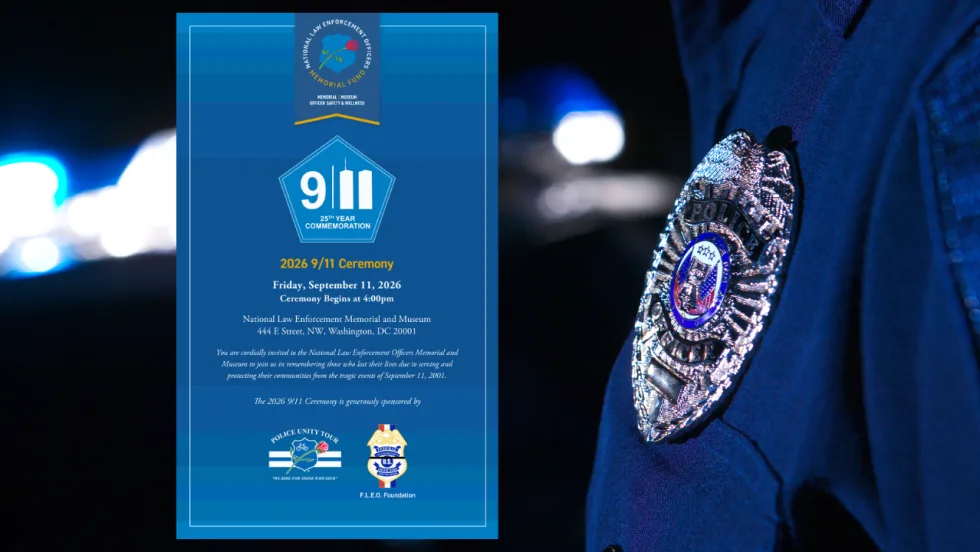
National Law Enforcement Memorial and Museum Hosting 9/11 25th-Year Commemoration Ceremony
The National Law Enforcement Memorial and Museum is hosting a 9/11 25th Year Commemoration Ceremony on Sept. 11 at 4 p.m.
Read More →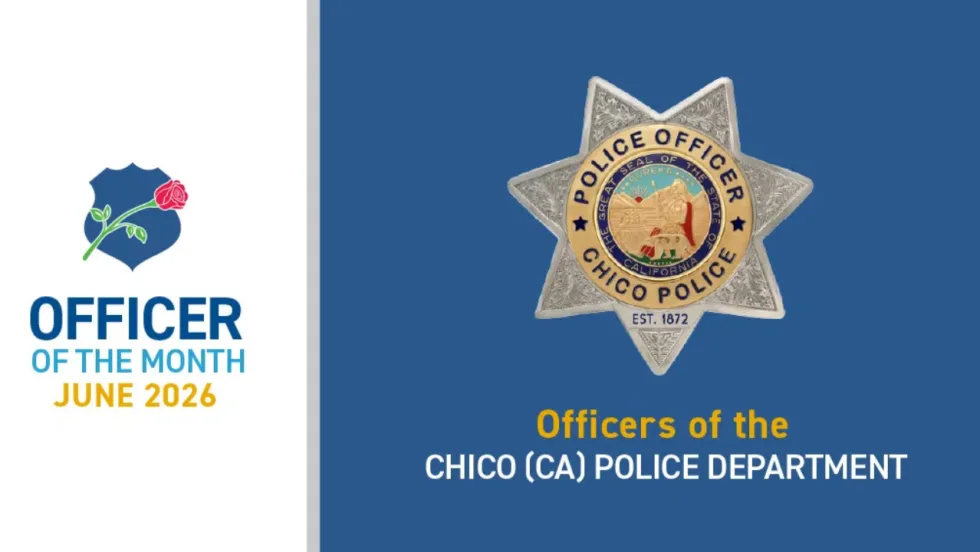
National Law Enforcement Officers Memorial Fund Announces June 2026 Officers of the Month
The National Law Enforcement Officers Memorial Fund (NLEOMF) named 15 officers of the Chico Police Department (California) as the Officers of the Month for June 2026 for their roles in responding to an active-shooter incident at a public library.
Read More →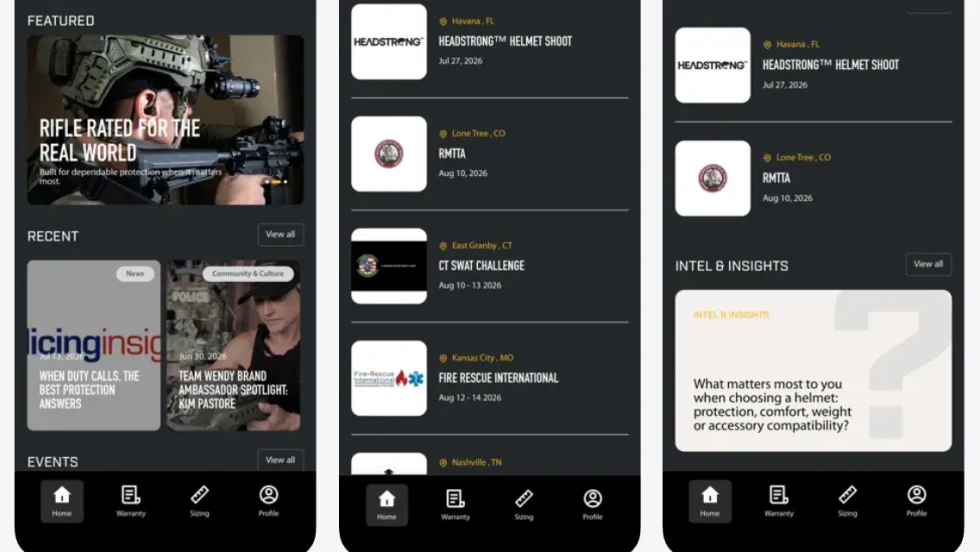
Team Wendy App Creates New Digital Hub for Helmet Owners
The Team Wendy Community App provides one location for warranty registration, size-fit tools, product updates, and community connection. For helmet owners, the new app creates a simpler path to the information and tools that matter most.
Read More →