



Mentally Ill and Dangerous
Mental illness is defined as a psychiatric disorder characterized by abnormal functioning of the centers of the brain responsible for thought, perception, mood and behavior. And according to mental health codes, it is the substantial disorder of thought or mood that significantly impairs judgement, behavior, the capacity to recognize reality or the ability to cope with the ordinary demands of life.

It's been a busy shift; the weather's hot and humid. Everyone is restless and looking for trouble. You arrive at your next call to find your mentally ill subject standing in his driveway with a loaded pistol to his head. Ernie is well-known. He burned out on drugs long ago, and now he's threatening suicide. Suddenly, he lowers the pistol and starts walking down the sidewalk toward a convenience store at the end of the block.
Mental illness is defined as a psychiatric disorder characterized by abnormal functioning of the centers of the brain responsible for thought, perception, mood and behavior. And according to mental health codes, it is the substantial disorder of thought or mood that significantly impairs judgement, behavior, the capacity to recognize reality or the ability to cope with the ordinary demands of life. The borderline between mental illness and what is considered normal is sometimes indistinct.
Identifying mental illness can be difficult for even the trained professional. Police officers may not be able to make a clinical judgement about a person's mental state. Knowing how to identify and recognize behavior that could become harmful or threatening, however, is important. You have to consider the individual's size and his mental condition, and you must deal with bystanders, all while determining the level of force you should use. You also must handle the abnormal person without endangering your own or the subject's safety.
Dealing with the mentally ill is a perplexing social and psychological situation. The usual pain compliance techniques may not be effective on a person who is high on drugs. He or she may not even recognize you as a police officer. Some officers have used too little force in these situations and were injured or killed. Others used too much force and lost their careers or went to jail. What is the correct amount of force? Traditional weapons such as the baton, flashlight and blackjack, which served the police so well in the past, have been perceived by the courts and public as excessive In many cases.
What type of tactics should you use? How do you deal with an unarmed but abnormal person, or an armed and emotionally disturbed person? Suicidal subjects may even set you up to do the job for them. Remember, you can only use the force necessary to maintain control and avoid injury to you and the subject.
Any incident involving an individual who is thought to be mentally ill has a high potential for violence. Without reliable communication skills we, as police officers, often aggravate situations we should have been able to de-escalate. You must make a judgment on the temperament and intent of the individual. Forming these opinions requires special skills to deal effectively, safely and legally with such a person. Abnormal persons aren't going to do exactly what you want them to do. Be flexible and keep things simple.
Signs of mental illness
There are certain general traits of mental illness that you should be aware of. Outward appearances may include the inability to take care of clothing, food, housing and safety-similar to an individual supporting a serious drug habit. Officers who believe they are dealing with a mentally ill subject should not rule out other causes, such as reaction to drugs or alcohol, or a temporary emotional disturbance.
Officers face immense problems dealing with mentally ill persons who have abused drugs or alcohol. The person may show needle marks or possess drug paraphernalia. Domestic violence and suicide attempts are more common among substance abusers and people diagnosed as mentally ill.
The mentally ill may show an unreasonable fear of persons, places or things. They may become introverted or violent without provocation. They may exhibit improper, aggressive conduct in common situations. They are easily frustrated and may show an unusual memory loss of well-known facts.
Delusions of grandeur, feelings of persecution, hearing imaginary voices, seeing visions or smelling strange odors are all things your mentally ill subject may be experiencing. The person may think he or she suffers from an extraordinary physical ailment that cannot possibly occur. The mentally ill sometime exhibit signs of panic-showing extreme fright or depression-for unapparent reasons. Be sure to evaluate a suspect's behavior in the total context of the situation. Begging to be left alone or offering frantic assurances that he or she is all right suggest the abnormal subject may be losing control. People on the scene may exacerbate the situation by agitating the individual. But other times, family members or friends can have a calming influence on the subject.[PAGEBREAK]
As an officer, you may be aware of the individuaI's history of violence in similar circumstances. If the person's history is unknown, talk to family members, friends or neighbors. They can tell you if the person has exhibited changes of behavior or experienced violent and abrupt mood swings.
When determining if the subject presents physical danger, consider statements or actions that would lead you to believe the subject is about to commit a violent act. Not all mentally ill people are dangerous. Be aware of the amount of control the person has over anger and fright. Just because he or she was nonviolent before you arrived on the scene does not mean you are not currently in danger.
In general, do not use emergency lights and sirens; they can provoke the individual and worsen the situation. Move slowly and wait for your backup to arrive. When possible, disperse crowds.
Assume a non-threatening demeanor, assess the situation and avoid physical contact. Talk to the subject and try to calm him or her down.
Communicating with the person may help him or her concentrate on the present. Stay away from topics that could cause excitement. Threatening an abnormal person only escalates stress and adds to the possibility of violence. Talking may not calm your subject down, but it may distract the subject long enough for you to put your take-down plan into effect.
Are you immune from civil or financial liability for your acts in dealing with the mentally ill? You should have a working knowledge of state and local laws. This is to protect you as well as the rights of your subject. Remember, you are there to help. Again, never attempt to handle the potentially violent, abnormal person alone. Always wait for backup.
Mentally ill persons tend to exhibit greater strength than normal individuals. Once the decision is made to take someone into custody, restrain him or her as quickly as possible to lessen chances of injury to officers and the subject. If the situation becomes violent, it is difficult for the subject to be a threat while face down and being restrained by you and other officers.
Less-than-lethal options
What should you do? Police are coming under ever-increasing scrutiny in use-of-force decisions. You must follow policy and deal with the situation with the tools that are available.
Let's examine the original problem. What if the abnormal person has a knife to his own throat or a gun to his head? What if he simply starts walking down the street with a loaded weapon? Does that call for the use of deadly force? Certainly not. But even a noncompliant or non-aggressive mentally ill person can create unique handling problems.
In the past, veteran officers used wet bed sheets to incapacitate a violent abnoffi1al person. They simply rushed the aggressive person, wrapped or covered him or her in wet sheets, and overwhelmed the subject with physical force. Others used force and baton strokes to put the subject down. Juries award massive amounts on a regular basis to compensate people for injuries sustained from traditional weapons and tactics, so be careful. Today, law enforcement officers must find ways to deal with the use of force from a non-conventional perspective.
Use of the police baton is often inappropriate. Power strokes from a PR-24 baton can equal as much as 900 foot-pounds but still not put down a mentally ill person. The person may not feel the blows, especially if under the influence of alcohol or drugs. This situation can cause officers to be more than zealous in applying power strokes. That, in turn, can lead to accusations of excessive force.[PAGEBREAK]
The testing and evaluation of less-than-lethal weapons intended to incapacitate a suspect with minimal potential for death or serious injury has been well-documented in recent years. Police officers often do not have the necessary force options at their disposal to handle the variety of situations they encounter. It is no good to just contain the subject. Departments must consider devices that will temporarily incapacitate without allowing the subject to respond violently when officers get in close.
Use of less-than-lethal force options include electronic devices, kinetic energy weapons, such as the popular beanbag round or the 37 mm launcher, baton rounds and pepper sprays. You must be properly trained in the use of any less-than-lethal tool. They all have the potential to cause death. The main objective of training is to avoid unnecessary violence and the possibility of civil litigation against you and your department.
The taser uses compressed air to launch tiny barbed probes attached to 15 feet of wire that are propelled at about 200 feet per second and release 50,000 volts. The pulsating electrical output causes temporary incapacitation of the muscles, resulting in a loss of balance. The probes can penetrate clothing, including a leather jacket.
Another less-than-Iethal option is the bean bag round, which can be delivered through a 12gauge shotgun and has a 40-gram lead shot payload. These bags exit the barrel at about 300 feet per second and deliver 120 foot-pounds of kinetic energy upon striking the target. The pain and shock of the round's impact hopefully will render the subject unable to continue the violent and aggressive action. The impact has been compared to a sucker punch from a professional boxer. To understand what 120 foot-pounds means, compare it with other known sources.
A thrown fastball delivers 97 foot-pounds of kinetic energy. A 38 special, 158-grain lead delivers 377 foot-pounds. And a PR-24 baton with power spins equals 900 foot-pounds.
A minimum 10-yard distance between the officer and subject is recommended when using the beanbag round. A reasonable standard for accuracy with the 12-gauge system is a 6-inch group at 12 yards. Do not aim at vital areas such as the throat. Although this type of projectile has been used successfully by many departments, it can be deadly at close range. Anyone struck with a beanbag round should be restrained and transported to a medical facility.
Launchers capable of delivering accurate blunt trauma-inducing baton hits or combination baton/chemical rounds are another good alternative to using lethal force. The baton round can now be used with outstanding accuracy. It is approximately 4 inches in length and 1 inch in diameter, and is delivered from a 37 mm rifled-barrel projectile launcher. This tool is field-proven and very accurate.
The use of wood or plastic baton ammo is nothing new. In the past, limiting factors have been length and accuracy. At close range and if striking the right part of the body, the force can kill.
Many departments recommend using OC spray on subjects who do not comply. Officers must be aware, however, of the limitations of OC products. The greatest need for pepper spray is when the subject is extremely violent. But unfortunately, the violent subject is the least likely to be slowed down by pepper spray. It does not always work, especially if your subject is high on drugs or mentally ill. People with high tolerance for pain or violent goals can work through the spray.
Following guidelines
A police officer must know what to expect when dealing with the mentally ill because of the potential for violence. You must realize you are not in control of any suspect's actions. This is more true when you take an abnormal person into custody, so be prepared to act accordingly. No known less-lethal option is infallible. Have a back-up plan to escalate the use of force when necessary. Expect unusual or bizarre behavior that can, in a heartbeat, change from yelling to extreme physical violence.
Many departments minimize the danger potential in all confrontations by adopting safety priorities. Establishing priorities restricts liability when you have attempted to do your duty to the best of your capabilities. It clearly tells whose safety you are responsible for and in what sequence you can and will act. Officers are responsible for the safety of these groups in the following descending order:
I) hostages
2) innocent bystanders
3) officers
4) the suspect(s) or subject(s)
Knowledge and understanding of these priorities help you make a decision on the level of force necessary and eliminates hesitation. A department can then stand behind the victim and you -not the criminal or subject.
Use of force is always determined by your agency's policy. Officers must be guided by state and local law regarding the incarceration of mentally ill subjects.
You, the officer on the street, must have a contingency plan on not only the use of force, but also on how to escalate the use of force. Remember, our primary goal is to deal with the mentally ill and all persons we contact in a constructive and humane manner.
Michael Rynn, a retired police officer, served with the City of Wyoming (Mich.) Police Department for 25 years and was the president of the West Michigan Tactical Officers Association.
More Patrol
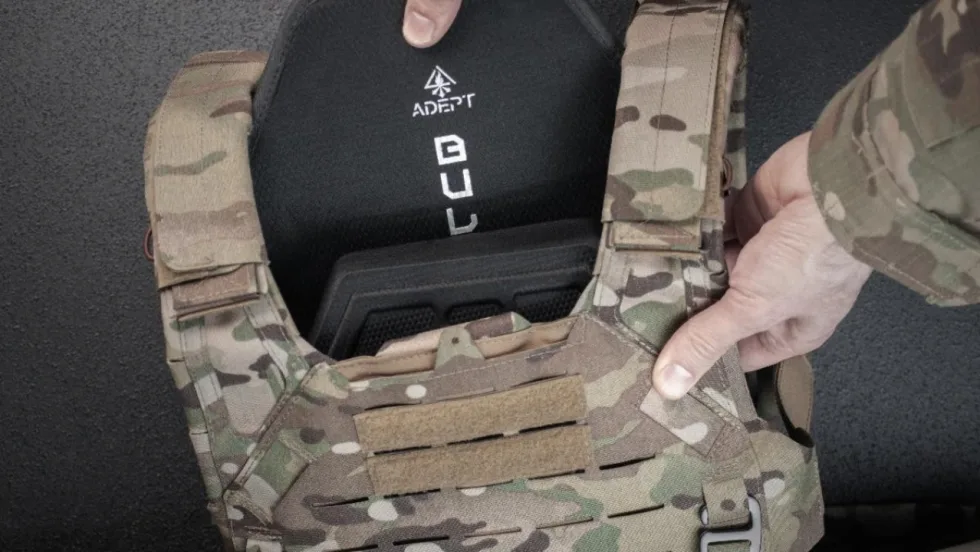
Adept Armor Introduces Two New Rifle Plates
Adept Armor has launched two new Level IV ballistic plates, the Emperor and the Archon Mark 2, which brings Adept Armor’s new Quatroid ceramic to the high-threat, performance-value center of the range at 5.2 pounds.
Read More →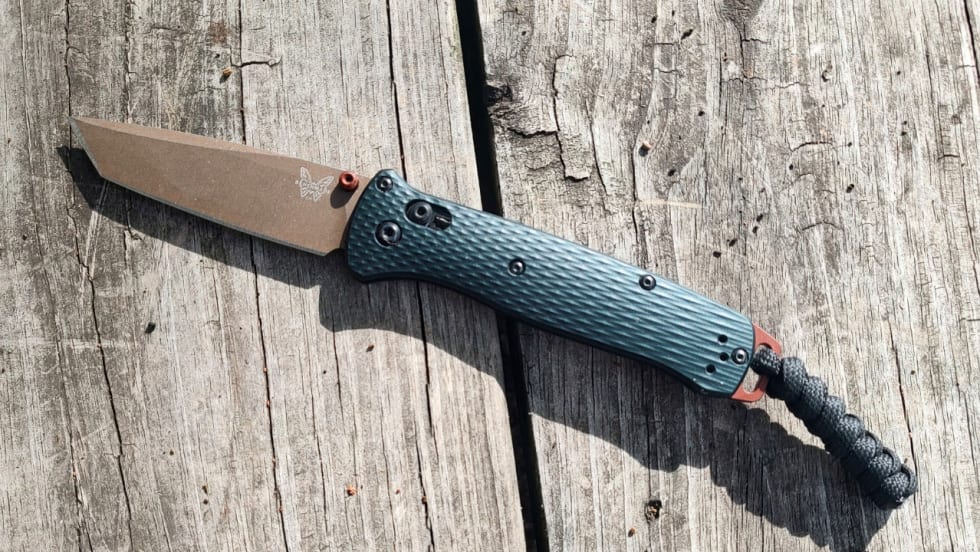
POLICE Product Test: Benchmade Bailout
The Benchmade Bailout is a slim, lightweight carry knife with a deep-ride pocket clip and comes in a variety of blade steels and scales. Here is a detailed review of the Taiga Green Bailout, released earlier this year.
Read More →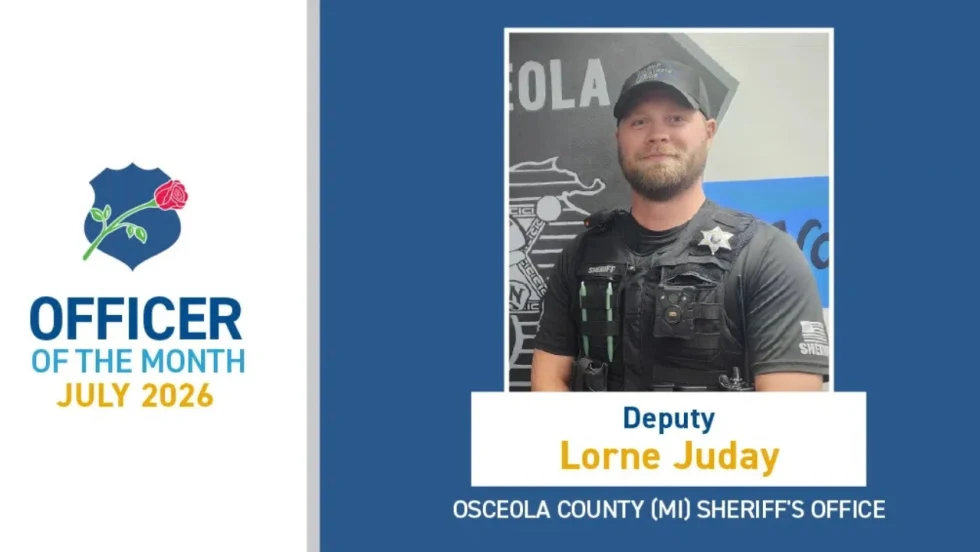
NLEOMF Announces July 2026 Officer of the Month
NLEOMF honored a Michigan deputy sheriff as the July 2026 Officer of the Month for rescuing a trapped driver from a burning vehicle following a Fourth of July crash.
Read More →
Streamlight to Showcase Newest Lighting Products at National Safety Council’s Safety Congress & Expo 2026
Streamlight will showcase its latest lights, including the Portable Scene Light III and the LiteBox 1Million, at the 2026 National Safety Council (NSC) Safety Congress & Expo.
Read More →
The 2027 World Police & Fire Games Set for Perth, Australia
The 2027 World Police & Fire Games (WPFG) will take place in Perth, Western Australia, from Friday, March 12 through Sunday, March 21, 2027.
Read More →
5.11 Partners with National Fallen Firefighters Foundation to Support #ForThe343
5.11 has joined the nationwide movement honoring the 343 New York City Fire Department firefighters lost on Sept. 11, 2001.
Read More →
Team Wendy Announces Title Sponsorship of the Jorge Pastore Foundation
Team Wendy’s 3-year partnership with the Jorge Pastore Foundation expands access to programs that strengthen those who serve.
Read More →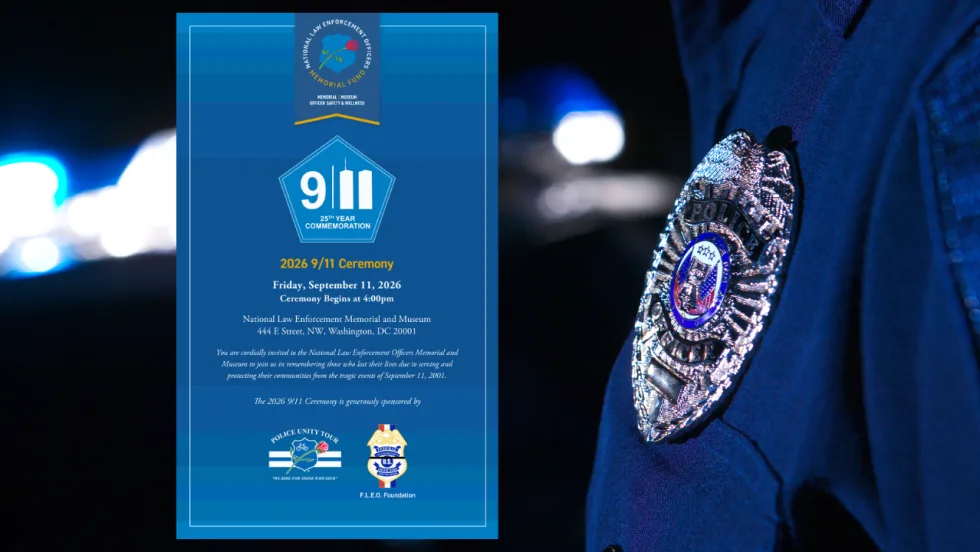
National Law Enforcement Memorial and Museum Hosting 9/11 25th-Year Commemoration Ceremony
The National Law Enforcement Memorial and Museum is hosting a 9/11 25th Year Commemoration Ceremony on Sept. 11 at 4 p.m.
Read More →
National Law Enforcement Officers Memorial Fund Announces June 2026 Officers of the Month
The National Law Enforcement Officers Memorial Fund (NLEOMF) named 15 officers of the Chico Police Department (California) as the Officers of the Month for June 2026 for their roles in responding to an active-shooter incident at a public library.
Read More →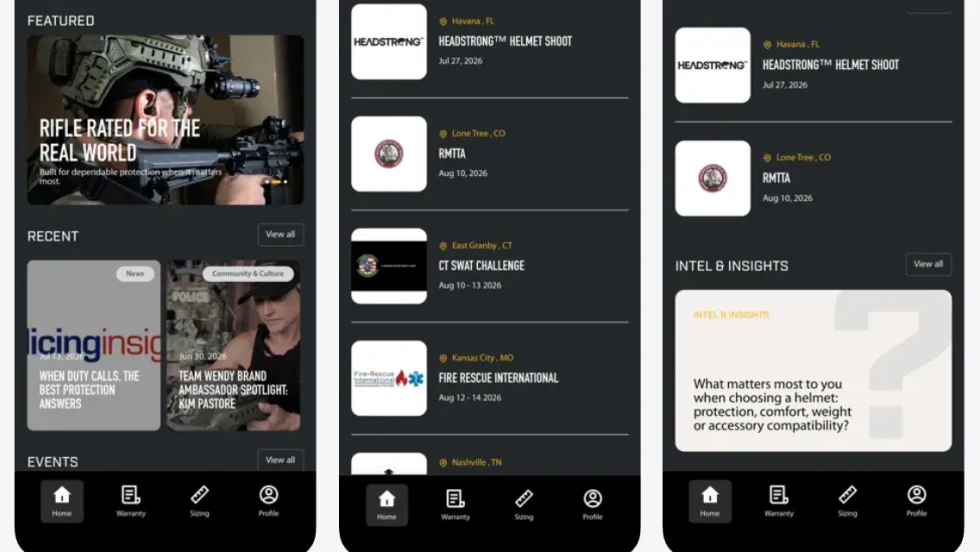
Team Wendy App Creates New Digital Hub for Helmet Owners
The Team Wendy Community App provides one location for warranty registration, size-fit tools, product updates, and community connection. For helmet owners, the new app creates a simpler path to the information and tools that matter most.
Read More →