



Less-Lethal Tools for Off-Duty Carry
Consider the following scenario: You are off duty in a neighborhood bar dealing with a belligerent drunk. You can’t leave. You’ve tried to calm the situation with words, and he’s still coming at you. You’ve called 911 and on-duty officers are on the way. But the guy attacks you.

Consider the following scenario: You are off duty in a neighborhood bar dealing with a belligerent drunk. You can't leave. You've tried to calm the situation with words, and he's still coming at you. You've called 911 and on-duty officers are on the way. But the guy attacks you.
If all you have is a firearm, you now have to decide whether to draw it or keep it holstered and use empty-hand defensive techniques to defend yourself, risking the chance that your attacker will be able to close with you and grab your firearm.
In a situation like this, wouldn't it be handy to have options other than an off-duty gun?
Now, let's address some concerns you may have about carrying less-lethal gear off duty.
"What if I'm in danger? Won't I have to use a less-lethal option before shooting someone, even if deadly force is justified?"
You'll have to check your agency rules and local laws on the use of deadly force; but generally, if you're authorized by your agency and by law to use deadly force in a situation, your access to less-lethal equipment doesn't mean that you must use it before using deadly force.
If someone is shooting at you, for example, it would be foolish to suggest that you would have to try using OC spray on your attacker before you could shoot at him. And you would certainly be able to get a qualified expert to testify to this obvious fact if you were prosecuted or sued.
"I don't want to carry a ton of junk off duty. What do you suggest?"
You can carry less-lethal gear that weighs only a few ounces, and it can easily be tucked into a pocket or belt holder.
Consider the following less-lethal options for off-duty carry.
• Oleoresin capsicum (OC) spray is legal for civilian carry in virtually every state. It comes in containers of all sizes, including ones with pocket clips, and you can carry it in a pocket, in a belt pouch, or even in a keychain holder.
If your agency issues OC spray, it may allow you to carry your issue OC spray off duty. Otherwise, carrying the same type and brand or at least the same strength as the one your agency issues should help prevent legal or agency problems should you draw or use the spray off duty. Know your agency's guidelines for using OC, and follow the manufacturer's recommendations for checking and replacing the unit.
When possible, it's best to use OC spray and then move, so that your attacker can't just run toward the place you were standing and tackle you. As you know from duty experience, OC is not magic. It won't automatically stop everyone. Have a backup plan. You may want to consider OC spray as a means for providing you with a chance to move away from your attacker and get backup from on-duty officers.
Note: If possible, avoid using OC Spray on pregnant women, people with asthma, young children, and elderly or very sick people, especially those with difficulty breathing.
• Flashlights are well worth having just for use as a light in an emergency. A flashlight is also vital if you're in a dark area with a possible deadly threat, since it helps you identify your target (and what's behind it and around it) before you shoot.
A very bright light may briefly blind or disorient an attacker in a dark environment. Small, rugged flashlights can also be very helpful defensive tools. If they're the right size-say about six inches long and a half inch in diameter-they can be held in your hand and used for Kubotan-style techniques like strikes with either end, wristlocks, and pressure-point techniques.
Note: For off-duty carry avoid flashlights with crenellated ends because they may cause lacerations and make the flashlight look more like a weapon.
Consider carrying two lights: a very small, extremely bright light and a slightly larger "backup" light such as a two AA cell mini that fits easily in a hip pocket.
Kubotans can also be very effective for off-duty carry.
California karate master Tak Kubota invented the "Kubotan," a small plastic rod with a key ring on the end. You can hold the Kubotan and strike with the keys on the key ring, or strike with either end of the Kubotan itself or use wristlocks and pressure point techniques. There are many similar products.
Training information on Kubotan instructors as well as classes, and training videos and books are available from the International Karate Association (www.ikakarate.com). The book "Official Kubotan Techniques" and various Kubotan videos are also available from a number of sources.
Note: it's best to do some safe, hands-on training with the Kubotan to get a sense of how to use it effectively. In an actual fight, it may be safer to stick primarily with striking techniques to non-lethal areas. Wristlocks are harder to execute and may be better as ending techniques or control techniques for less violent subjects.
Weight isn't a concern. What else should I consider carrying?
Expandable batons provide more reach than a Kubotan or pocket flashlight and can be extremely effective if properly used. If your agency doesn't issue them but will allow you to carry one, get a quality expandable baton from a major manufacturer and get training in how to use it safely.
Since expandable batons usually have metal striking surfaces, strikes to the head may cause cuts with a lot of bleeding and can cause serious injury or death. Blows to the head should usually be avoided unless deadly force would be justified.
Portable radios can be an excellent off-duty choice. If your agency doesn't issue an individual radio you can take home, think about buying your own (with your agency's approval). You can probably get a very small model for under $300.
No, I'm not suggesting that you use it to play cop on your off time and run to calls. But the ability to call for immediate backup or an ambulance over the air without having to go through an emergency operator could be the difference between life and death for you or a loved one.
Before getting a radio, you'll need to check with your agency and the agency whose radio system covers the area where you live to get authorization and to determine what radio would be compatible with the various systems. You'll also need to know how the frequencies for the radio should be set. If the radio systems use encryption or automatic identification of each radio on the system, you'll need to get your radio properly set up for those as well.
Be sure to test your radio to make sure it works. You don't want your calls for help blocked, nor do you want them mistaken for unauthorized messages from a stolen police radio.
Are you saying I shouldn't carry a firearm off duty?
No, I am not. Less-lethal defensive tools do not replace your firearm. I'm just saying: why limit your options?
Every situation does not require you to use less-lethal defensive tools before drawing or using your firearm. But if you ever do have to face that belligerent drunk in a bar, or a large, aggressive, but unarmed teenager, wouldn't a less-lethal option make sense?
Carrying Handcuffs Off Duty
Off duty, you may not plan to handcuff anyone unassisted, and it's usually wise to avoid doing so, but you may have to when backup is a long way off.
Also, as police trainer and use-of-force expert Massad Ayoob notes, if you need to use deadly force to defend yourself, carrying handcuffs helps keep prosecutors or plaintiffs' lawyers from saying things like: "No handcuffs? So you weren't planning to take any prisoners?"
In addition to regular steel handcuffs, there are lightweight aluminum handcuffs, Velcro-closure restraining straps, and other lightweight restraining devices you can carry. (Avoid thumb cuffs, though, since they can cause nerve damage.)
As detailed by Ayoob in "Fundamentals of Modern Police Impact Weapons," handcuffs can also be used as last-ditch defensive tools. The photos and captions that accompany this article will show you how.
Note: Since the cuffs are metal, avoid hitting areas like the head or throat unless deadly force is justified.
Adam Kasanof retired as a lieutenant from the New York City Police Department, and is also a lawyer. You can contact him at akasanof@aol.com. Note: Nothing in this article constitutes legal advice.
More Patrol

Adept Armor Introduces Two New Rifle Plates
Adept Armor has launched two new Level IV ballistic plates, the Emperor and the Archon Mark 2, which brings Adept Armor’s new Quatroid ceramic to the high-threat, performance-value center of the range at 5.2 pounds.
Read More →
POLICE Product Test: Benchmade Bailout
The Benchmade Bailout is a slim, lightweight carry knife with a deep-ride pocket clip and comes in a variety of blade steels and scales. Here is a detailed review of the Taiga Green Bailout, released earlier this year.
Read More →
NLEOMF Announces July 2026 Officer of the Month
NLEOMF honored a Michigan deputy sheriff as the July 2026 Officer of the Month for rescuing a trapped driver from a burning vehicle following a Fourth of July crash.
Read More →
Streamlight to Showcase Newest Lighting Products at National Safety Council’s Safety Congress & Expo 2026
Streamlight will showcase its latest lights, including the Portable Scene Light III and the LiteBox 1Million, at the 2026 National Safety Council (NSC) Safety Congress & Expo.
Read More →
The 2027 World Police & Fire Games Set for Perth, Australia
The 2027 World Police & Fire Games (WPFG) will take place in Perth, Western Australia, from Friday, March 12 through Sunday, March 21, 2027.
Read More →
5.11 Partners with National Fallen Firefighters Foundation to Support #ForThe343
5.11 has joined the nationwide movement honoring the 343 New York City Fire Department firefighters lost on Sept. 11, 2001.
Read More →
Team Wendy Announces Title Sponsorship of the Jorge Pastore Foundation
Team Wendy’s 3-year partnership with the Jorge Pastore Foundation expands access to programs that strengthen those who serve.
Read More →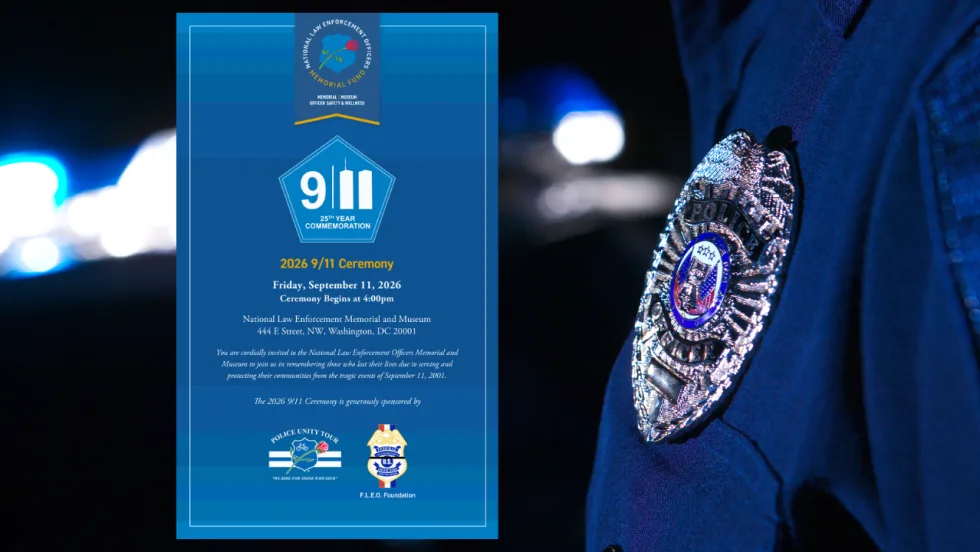
National Law Enforcement Memorial and Museum Hosting 9/11 25th-Year Commemoration Ceremony
The National Law Enforcement Memorial and Museum is hosting a 9/11 25th Year Commemoration Ceremony on Sept. 11 at 4 p.m.
Read More →
National Law Enforcement Officers Memorial Fund Announces June 2026 Officers of the Month
The National Law Enforcement Officers Memorial Fund (NLEOMF) named 15 officers of the Chico Police Department (California) as the Officers of the Month for June 2026 for their roles in responding to an active-shooter incident at a public library.
Read More →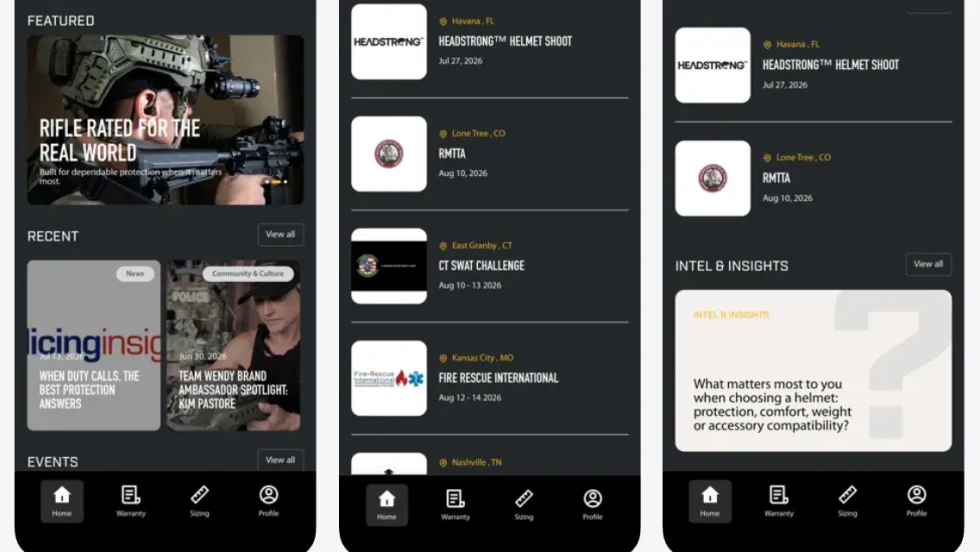
Team Wendy App Creates New Digital Hub for Helmet Owners
The Team Wendy Community App provides one location for warranty registration, size-fit tools, product updates, and community connection. For helmet owners, the new app creates a simpler path to the information and tools that matter most.
Read More →