



How to...Acquire AEDs
Automated External Defibrillators (AEDs) now come in portable versions that can be carried in patrol cars and used to shock a person's heart into beating again. Although ambulances are equipped with these devices, you, as a first responder, will probably get to a person suffering from Sudden Cardiac Arrest (SCA) before EMTs can respond. And certainly before the patient can get to a hospital with a crash cart.

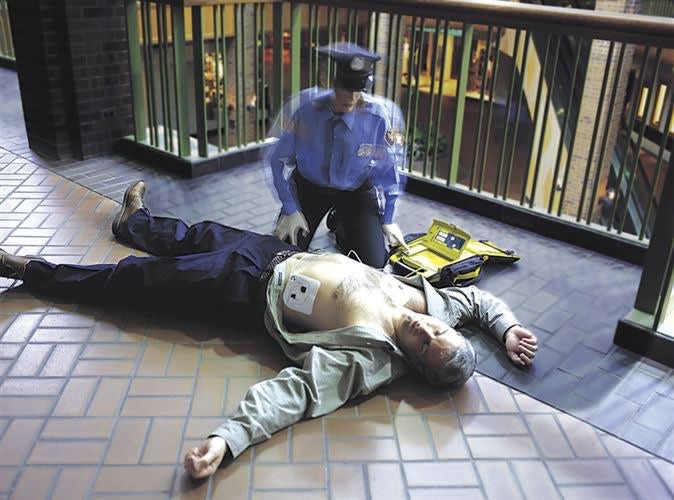
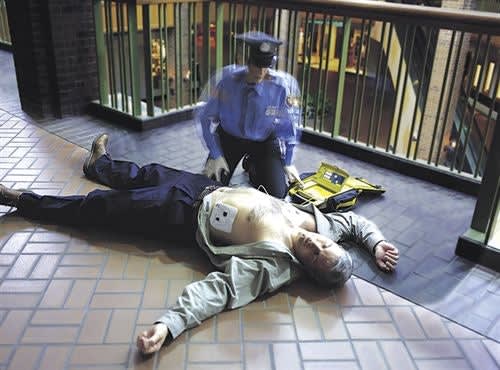
Automated External Defibrillators (AEDs) now come in portable versions that can be carried in patrol cars and used to shock a person's heart into beating again. Although ambulances are equipped with these devices, you, as a first responder, will probably get to a person suffering from Sudden Cardiac Arrest (SCA) before EMTs can respond. And certainly before the patient can get to a hospital with a crash cart.
It can take as little as five to six minutes following sudden cardiac arrest for a person to become brain-dead. And manual first-aid techniques like CPR can only do so much to keep oxygen going through a person's system. Without the heart pumping oxygen-filled blood through the veins, the brain can suffer irreparable damage.
Portable AEDs are small, rechargeable devices that come with disposable pads that you affix to a person's chest. The device uses voice prompts to walk you through the necessary steps. The machine even checks for a pulse and other vital signs to make sure the patient has actually suffered sudden cardiac arrest. Safety features prevent it from delivering a shock to a person who has a pulse.
Showing Critical Need
It often takes a serious event to convince a police department and the city it must get permission from to buy AEDs for use in patrol cars.
For Dep. Sheriff John Grennon of the Suffolk County (Ind.) Sheriff's Department, it was the death of an officer that finally got an AED program with Medtronic Physio-control in the works.
"We lost Officer Joseph Friedman. He was an eight-year veteran of the sheriff's department. We had been trying to get a defib program approved for quite a while, but we were either stopped by budgetary restrictions or the lack of commitment from the previous administration. When Joe died, we brought it up again, the sheriff whole-heartedly supported it, and the numbers were there to purchase the equipment for the training."
For the Burlington (Mass.) Police Department, a local football coach's collapse on the field during a game brought attention to the need for first responders to carry portable AEDs.
Burlington's Lt. Det. Al Sciuto believes in the power of AEDs to save lives-if they're near enough to be used in time.
"Police officers are usually the first ones on the scene of an SCA. A cruiser could be sitting outside your house in two to three minutes. But if you have to wait the 10 to 15 minutes for an ambulance or a fire truck to get there to use an AED, you're brain-dead or you're going to have some serious damage," Sciuto says.
"People don't think of that until something happens, and then they say, 'Yeah, we should have appropriated the money,'" he adds.
The Funding Battle
According to Sciuto, whose department uses ZOLL Medical AEDs, even when you have all the evidence, many cities will put up a fight when you try to convince them that you need AEDs for your department. But you might not need to get all of your funding from city hall.
Local businesses might be interested in helping their community by purchasing AEDs for your department.
The Tippecanoe County (Ind.) Sheriff's Department was in negotiations with a local restaurant chain several years ago when it found another source of funding for purchasing AEDs from Philips Medical.
"With the restaurant chain, we were going to try to fund maybe three to four AEDs per year," says Tippecanoe County (Ind.) Sheriff Smokey Anderson. "A private foundation ended up being able to fund all of them for us at once. There are funding sources out there, and you need to be creative and keep after it."
Anderson advises, "Most police administrators know who their business leaders are and who donates money for other good causes."
Suffolk County's Grennon agrees that local businesses are a great source of funding. "I chaired the public safety AED task force for Massachusetts for a number of years, and big companies are happy to buy these units for public safety," he says.
Grennon also suggests contacting local charities for donations.
"The community-senior citizens, politicians, youth groups, Kiwanis, Knights of Columbus-will donate," he says.
And the benefits aren't one-sided. Besides community members having AEDs readily available should an emergency occur, Grennon says, "it promotes goodwill in the community. People who have donated funding for AEDs like to come in and take pictures. They really do."
In addition to finding funding from outside the department, you should seek information and help from other agencies.
Local EMTs and fire departments might have already gone through the same process. Also, you can often get a group discount on AEDs if you're working with other public safety groups, or even other public places; i.e. city hall.
Talk to other police departments in your area. If they've already gone through the process, they'll have some pointers. And they probably have statistics to back up the importance of having AEDs available in police cars. You can use these to convince your city to back you. Another good source is the American Heart Association, which offers a font of information on its Website, www.amhrt.org
Training
Training is an essential part of an AED program. The amount of training will vary depending on the state you live in. Massachusetts is very strict about the number of training hours required for first responders to be certified in the use of AEDs, while Texas is less specific.
The Suffolk County Sheriff's Department in Boston goes through more training than is required by the state of Massachusetts. Grennon explains, "We require 24 hours of first responder training in addition to the eight-hour CPR class and an eight-hour cardiac defibrillator class."
Yet, in the past couple of years, the FDA's required AED training hours for first responders have dropped. When asked why Suffolk County is keeping the number of required training hours so high, Grennon explains, "while I agree with the heart association that cardiac defibrillators are simple life-saving devices that require little training, the machine can still be dangerous.
"An AED delivers an electric shock, and we're using the machine under some of the harshest of circumstances, whether it be inclement weather, or imminent danger from a suspect or fire."
Dr. Michael S. Erdos, State EMS Medical Director for Massachusetts and Medical Director for the North Suburban Emergency Medical Consortium, coordinates training for local police departments, as well as fire departments and Emergency Medical Services (EMS). He acted as the medical director for the Burlington Police Department. He says, "if you're CPR-certified already, training isn't a big deal."
But to get an AED program started for your department, you'll first need a medical director. If not to organize the training, you'll need one to give your department a prescription to purchase AEDs. It might sound funny, but the government is very serious about making sure first responders receive adequate training before using AEDs. If you don't know where to find someone to be a medical director, contact your local hospital and talk to other police departments, corrections facilities, firefighters, and paramedics in your area. AED manufacturers can also be very helpful.
Training generally consists of being familiarized with the AED unit and how it works, along with CPR. Then you must pass a practical exam in which you practice with a training unit on a mannequin.
The training unit looks exactly like the fully operational AED, but it will not give a real shock, and it simulates situations such as sudden cardiac arrest, in which the trainer will instruct the operator to push the button to shock the mannequin. Other programmed situations include cases in which no shock is needed.
The practical exam using a training unit and a written test must be passed before certification is given to operate an AED on duty.[PAGEBREAK]
Paying for Training
Of course, you need a way to pay for training. Costs can vary greatly, so do your homework.
Some clinics or hospitals might train your officers for free or at a discounted rate. Or a local business might be willing to sponsor your training as a charitable donation.
The Tippecanoe County Sheriff's Department was lucky in receiving its training completely free.
Tippecanoe Sheriff Anderson says, "We contacted a local healthcare clinic for training, and it was their idea to train everyone for free. We trained about 120 employees en masse; everyone in the building, including secretaries, mechanics, and cooks."
Ask around and seek help from those who have already been there. AED manufacturers might have training programs already in place in your area.
Fire departments and EMTs will probably be able to help with training. If they don't know who can help, they probably know who to talk to. Also, ask the companies you're "auditioning" for the role of your AED provider. They have often already established relationships with hospitals in your area. If not, they'll be willing to help you find someone.
Making the News
Once you have a program in place, let your community know about it. It might seem unnecessary, but good publicity for police departments is never a bad idea. And if you can show the community that AEDs are effective, you might be able to get funding to purchase more for your department or for public places in the community.
Burlington PD's Sciuto thinks, "the public should know that police are ready for any type of emergency situation. They all know we're there to give them a ticket when they're speeding, but what they don't think about is we're also there to assist them."
Suffolk County's publicity campaign is a good example of how to let your community know about your program. Grennon spread the word about the Sheriff's Department's AED program by doing interviews with the Associated Press as well as writing articles.
"We tried to let people know what we were doing and that we were responsibly spending their tax money," explains Grennon.
"The AED program has been a windfall of good publicity and good will for us. It's been four years, and there hasn't been a negative comment," he adds.
The Future of AEDs
Sciuto predicts AEDs will become extremely common in police cars, as well as public places, very soon. "You're going to start to see these like fire extinguishers in the next few years," he says.
In fact, many businesses, including airlines and casinos, are using AEDs right now. And many communities have started Public Access Defibrillation (PAD) programs to train everyday citizens how to use CPR and AEDs to save lives with AED units positioned in public places. "I think the more people who are trained, and the more people who are aware of what AEDs are, the better," Sciuto says.
But he points out that planning to get AEDs in the future will not save lives now. "You have to almost wait for something bad to happen to get things moving, although I hate to say it. People tend to be reactive. We, as a department, plan to be proactive. You have to say, 'This is our job, to save lives, to protect and serve. AEDs move us forward with the technology that's out there. Let's take advantage of it.'"
AEDs are more than just another device to add to the collection of electronics in your car. Says Tippecanoe County's Anderson, "When people's fathers, sisters, daughters come into your lobby to thank you for your help, you can't communicate that in words."
And considering the number of police officers who suffer SCA on- and off-duty, Grennon points out that, "the life you save may be your own."
Tips for Starting an AED Program
1. Ask around-Check with your local police, your local EMS, your local fire service, your local sheriff's department, or correctional facility. Group purchasing is key. It can substantially reduce the cost of the units. Also, other departments might have an opinion on the best units for your community. The best price might not always be the way to go.
2. Reevaluate training plans-Most law enforcement agencies in the country are required to do CPR training for their people once a year. The defibrillator has become popular with the standard of care and is now in all of the CPR classes. So you might only be increasing training time by two hours per year per person by adding specific AED training.
3. Strategic placement-When you strategically place your units, you don't need that many of them. They're not like fire extinguishers. Not every car or station needs one.
4. Find creative funding sources-The community is willing to donate. Contact local charities and businesses. They might cover part or all of your training and purchasing costs.
AEDs: Who Makes 'Em
Cardiac Science
Powerheart AED
www.cardiacscience.com
Medtronic Physio-Control
LifePak 500
www.medtronic.com
Philips Medical Systems
HeartStartFR2+
www.medical.philips.com
ZOLL Medical
ZOLL AED Plus
www.zoll.com
More Patrol

Adept Armor Introduces Two New Rifle Plates
Adept Armor has launched two new Level IV ballistic plates, the Emperor and the Archon Mark 2, which brings Adept Armor’s new Quatroid ceramic to the high-threat, performance-value center of the range at 5.2 pounds.
Read More →
POLICE Product Test: Benchmade Bailout
The Benchmade Bailout is a slim, lightweight carry knife with a deep-ride pocket clip and comes in a variety of blade steels and scales. Here is a detailed review of the Taiga Green Bailout, released earlier this year.
Read More →
NLEOMF Announces July 2026 Officer of the Month
NLEOMF honored a Michigan deputy sheriff as the July 2026 Officer of the Month for rescuing a trapped driver from a burning vehicle following a Fourth of July crash.
Read More →
Streamlight to Showcase Newest Lighting Products at National Safety Council’s Safety Congress & Expo 2026
Streamlight will showcase its latest lights, including the Portable Scene Light III and the LiteBox 1Million, at the 2026 National Safety Council (NSC) Safety Congress & Expo.
Read More →
The 2027 World Police & Fire Games Set for Perth, Australia
The 2027 World Police & Fire Games (WPFG) will take place in Perth, Western Australia, from Friday, March 12 through Sunday, March 21, 2027.
Read More →
5.11 Partners with National Fallen Firefighters Foundation to Support #ForThe343
5.11 has joined the nationwide movement honoring the 343 New York City Fire Department firefighters lost on Sept. 11, 2001.
Read More →
Team Wendy Announces Title Sponsorship of the Jorge Pastore Foundation
Team Wendy’s 3-year partnership with the Jorge Pastore Foundation expands access to programs that strengthen those who serve.
Read More →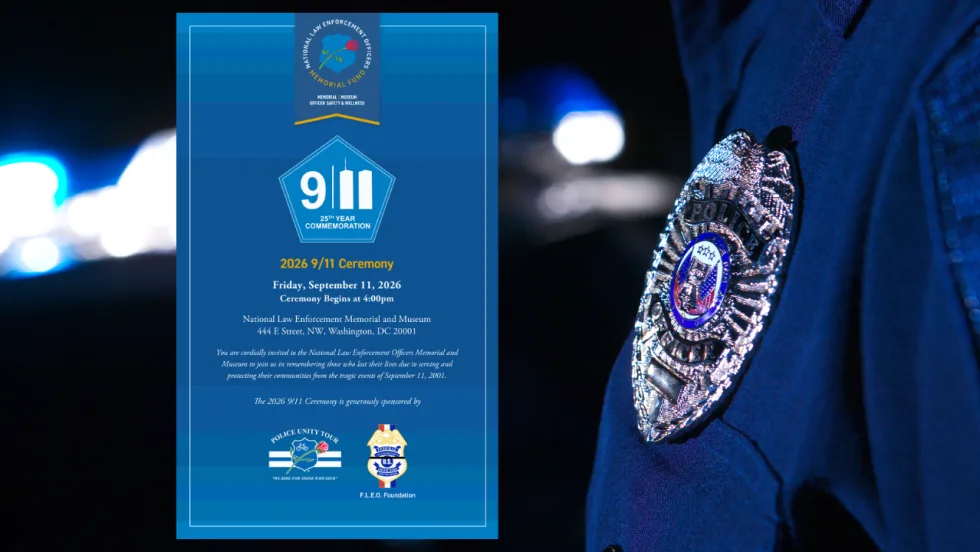
National Law Enforcement Memorial and Museum Hosting 9/11 25th-Year Commemoration Ceremony
The National Law Enforcement Memorial and Museum is hosting a 9/11 25th Year Commemoration Ceremony on Sept. 11 at 4 p.m.
Read More →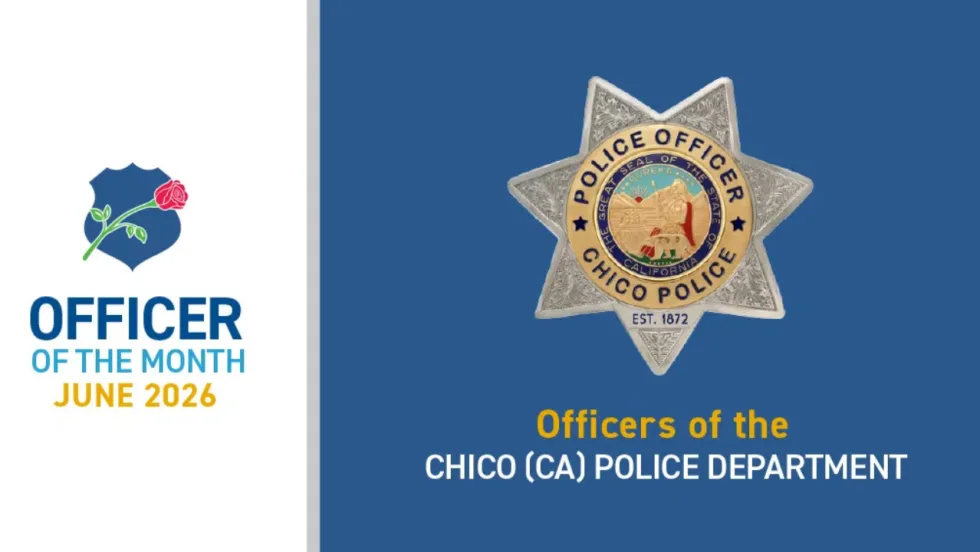
National Law Enforcement Officers Memorial Fund Announces June 2026 Officers of the Month
The National Law Enforcement Officers Memorial Fund (NLEOMF) named 15 officers of the Chico Police Department (California) as the Officers of the Month for June 2026 for their roles in responding to an active-shooter incident at a public library.
Read More →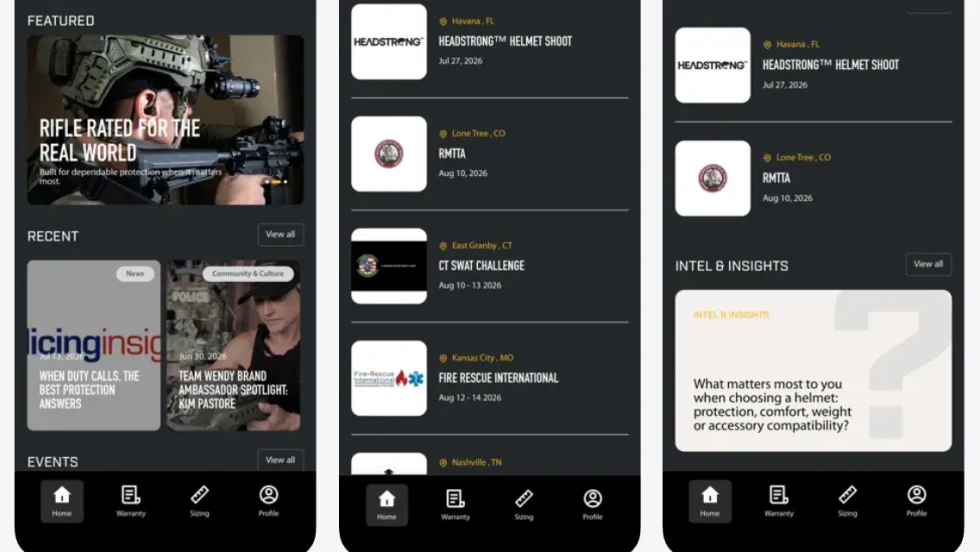
Team Wendy App Creates New Digital Hub for Helmet Owners
The Team Wendy Community App provides one location for warranty registration, size-fit tools, product updates, and community connection. For helmet owners, the new app creates a simpler path to the information and tools that matter most.
Read More →