



Editorial: Traffic Enforcement and Crime Fighting
In the name of social justice, a number of American cities are taking armed officers off of traffic duty. That’s a big mistake.

It’s not news to you that traffic enforcement is one of the most difficult and dangerous parts of police work. The person at the wheel during a traffic stop could be a family woman driving her kids home from school who misses a stoplight, or a middle-aged store owner who just bought a sports car and is punching it a little too hard down the road, or a stoned high school kid weaving, or…a two-time felon in possession of a gun.
Traffic stops are also politically dangerous. Not only is there a chance that you could pull over a local or national politician, celebrity, or sports celebrity and trigger what retired police chief and POLICE Advisory Board member Bill Harvey calls an acute political event (APE), but traffic stop statistics are going to be used to determine if you and the agency you work for are biased. If your agency is stopping more persons of color than white persons, those stats will be used against you without any consideration of context and circumstances. A primary doctrine of the anti-police movement is that traffic stops are white supremacist by their very nature.
So a number of jurisdictions are trying to end traffic stops as we know them. Some are assigning traffic duties to non-sworn and unarmed personnel, and some are limiting traffic stops to serious offenses such as driving while under the influence, reckless driving, and maybe serious speeding. This is primarily happening in cities with progressive governments where social justice theater is more important than public safety.
One of the first cities to change its policies for traffic enforcement was Berkeley, CA. Not exactly a big surprise, given the politics of the city and its history of left-wing activism. In July 2020, just two months after the George Floyd in-custody death and the riots it sparked, Berkeley created a Department of Transportation that is supposed to make and enforce traffic stops. It was part of the city council’s push to cut police spending. Other cities that have adjusted the ways their police enforce traffic violations include Minneapolis and, of course, Portland and Seattle.
Often a city decides to change its traffic enforcement program after a police encounter that went terribly wrong. Such is the case with Brooklyn Center, MN, the Minneapolis suburb where former officer Kimberly Potter shot and killed Daunte Wright. That incident began with a traffic stop for an expired tag and an air freshener hanging from Wright’s rearview mirror (a violation of Minnesota law). It snowballed when officers discovered that Wright had a failure to appear warrant on a weapons violation and tried to arrest him. Wright resisted and Potter shot him—I believe accidentally. Immediately afterward, the Brooklyn Center City Council passed a resolution to create a non-sworn unit to handle non-moving traffic violations.
Finally, there’s Philadelphia. The city is planning to hire unarmed traffic officers. Let’s be frank. It’s likely that Berkeley and Brooklyn Center can get away with unarmed traffic enforcement. But Philadelphia is one of the most dangerous cities in the nation. It hit 500 murders by the week after Thanksgiving this year…and that was a record. This plan was actually in motion before the Floyd incident, but the city says its implementation was delayed by the pandemic, and the unarmed traffic officers will not be on the street until spring 2022. I believe the leaders of Philadelphia are stalling because they know this plan is stupid.
Most officers who comment on PoliceMag.com regarding stories about unarmed, non-sworn traffic enforcement believe this experiment is going to end with murdered traffic officers. I think it’s going to result in total non-enforcement of traffic laws—other than maybe DUI and extreme speeding in these cities—and a future push to automate all traffic tickets.
There are multiple problems with automating all ticketing, but the one I want to address is that it deprives law enforcement of opportunities to locate criminals and prevent them from committing additional crimes. Historically, traffic stops resulted in the arrests of serial killer Ted Bundy and Oklahoma City bomber Timothy McVeigh. But those cases are ancient history. If you want to defend law enforcement traffic stops look at the work of Detroit officers at the end of last year.
According to the 2020 census, Detroit is only 10.7% white. That means almost every traffic stop in the city involves a person of color, mostly black motorists. But the city is not handcuffing its officers. In fact the Detroit Police Department is actively praising the good work its cops do at traffic stops on social media. During two recent traffic stops, Detroit officers rescued children from a kidnapping and rescued young women from sex trafficking.
It’s strange advice given the history of the motor city since the 1960s. But when it comes to traffic stops, American cities should look to Detroit as a role model and praise their cops for crime fighting.
More Patrol
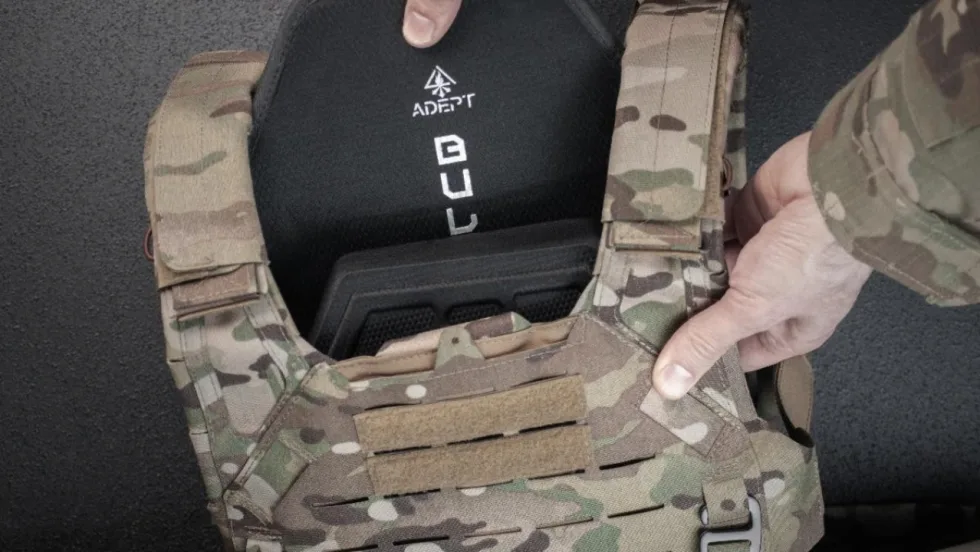
Adept Armor Introduces Two New Rifle Plates
Adept Armor has launched two new Level IV ballistic plates, the Emperor and the Archon Mark 2, which brings Adept Armor’s new Quatroid ceramic to the high-threat, performance-value center of the range at 5.2 pounds.
Read More →
POLICE Product Test: Benchmade Bailout
The Benchmade Bailout is a slim, lightweight carry knife with a deep-ride pocket clip and comes in a variety of blade steels and scales. Here is a detailed review of the Taiga Green Bailout, released earlier this year.
Read More →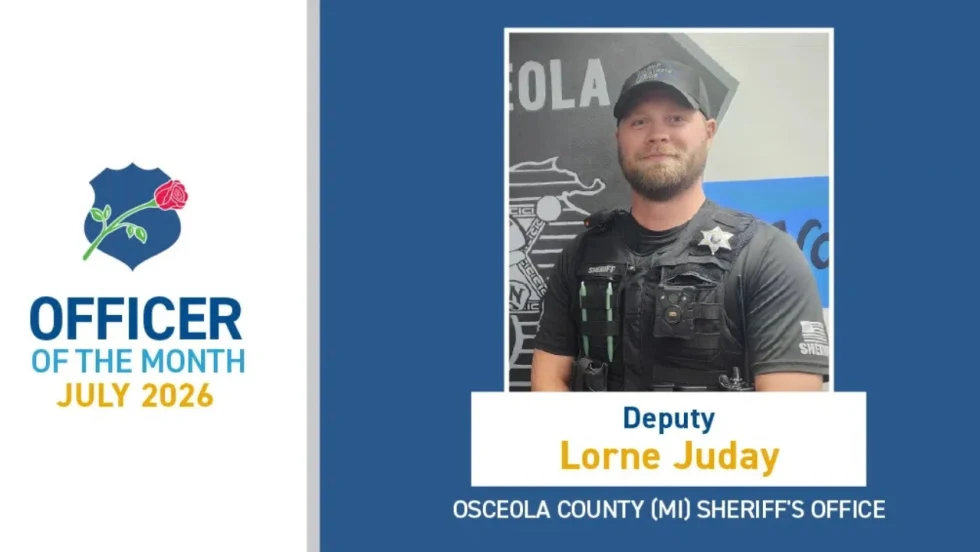
NLEOMF Announces July 2026 Officer of the Month
NLEOMF honored a Michigan deputy sheriff as the July 2026 Officer of the Month for rescuing a trapped driver from a burning vehicle following a Fourth of July crash.
Read More →
Streamlight to Showcase Newest Lighting Products at National Safety Council’s Safety Congress & Expo 2026
Streamlight will showcase its latest lights, including the Portable Scene Light III and the LiteBox 1Million, at the 2026 National Safety Council (NSC) Safety Congress & Expo.
Read More →
The 2027 World Police & Fire Games Set for Perth, Australia
The 2027 World Police & Fire Games (WPFG) will take place in Perth, Western Australia, from Friday, March 12 through Sunday, March 21, 2027.
Read More →
5.11 Partners with National Fallen Firefighters Foundation to Support #ForThe343
5.11 has joined the nationwide movement honoring the 343 New York City Fire Department firefighters lost on Sept. 11, 2001.
Read More →
Team Wendy Announces Title Sponsorship of the Jorge Pastore Foundation
Team Wendy’s 3-year partnership with the Jorge Pastore Foundation expands access to programs that strengthen those who serve.
Read More →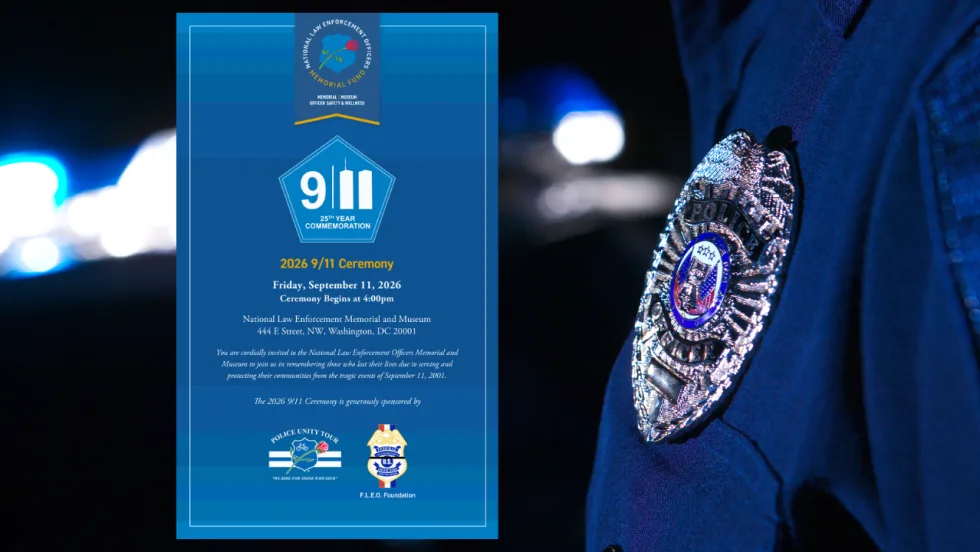
National Law Enforcement Memorial and Museum Hosting 9/11 25th-Year Commemoration Ceremony
The National Law Enforcement Memorial and Museum is hosting a 9/11 25th Year Commemoration Ceremony on Sept. 11 at 4 p.m.
Read More →
National Law Enforcement Officers Memorial Fund Announces June 2026 Officers of the Month
The National Law Enforcement Officers Memorial Fund (NLEOMF) named 15 officers of the Chico Police Department (California) as the Officers of the Month for June 2026 for their roles in responding to an active-shooter incident at a public library.
Read More →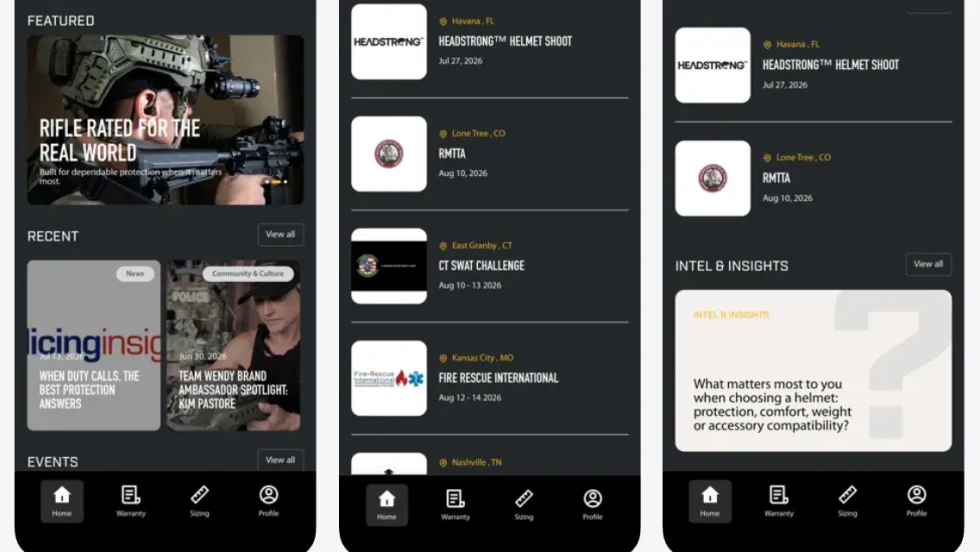
Team Wendy App Creates New Digital Hub for Helmet Owners
The Team Wendy Community App provides one location for warranty registration, size-fit tools, product updates, and community connection. For helmet owners, the new app creates a simpler path to the information and tools that matter most.
Read More →