



Draw The Line
The art of establishing perimeters can mean the difference between success and failure.

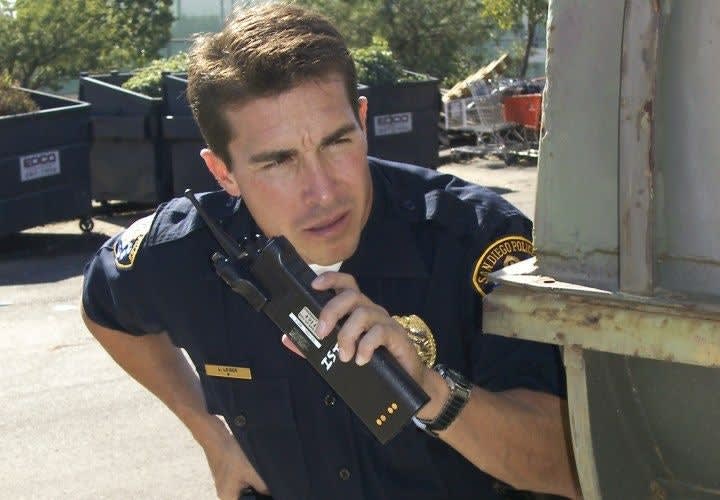
During any law enforcement incident where a suspect is either at large or at a standoff with law enforcement, setting up a perimeter is vital to a successful conclusion, and the sooner the perimeter is established the better the chance for success. Perimeters are not only necessary for the protection of citizens, but also for the apprehension of the suspects involved.
Although establishing perimeters is well known to tactical teams, the art of creating a successful perimeter is all but unknown to many patrol officers. Even if an officer understands the importance of perimeters, such knowledge can go out the window if the incident becomes critical or catastrophic in property damage or the loss of life.
In virtually every such case, the carnage then becomes compounded with all officers screaming over the air at the same time with no one being heard. Examples of incidents that tend to incite confusion include shootings (especially an officer down), explosions, pursuits, and a suspect fleeing the scene of a crime. Upon hearing some of these calls, where do most officers go? They go to the scene, only to realize that the suspects are far away.
What all law enforcement officers need to know is that when suspects begin to flee unchecked, they almost always continue until out of perceived danger or until exhausted. Unless you stop them, they’ll get away.
Unless needed at the scene, the smart officer—the cunning officer—will broadcast that he or she is taking a position at a particular location in order to observe the area. Other officers should take positions based on this information until the area is surrounded by a visual perimeter. The more personnel available, the better the perimeter, but limited personnel doesn’t mean a perimeter won’t work. If a suspect thinks he is surrounded and decides to hide, smart officers are at an advantage. If officers believe there is no chance to find the suspect, he will escape.
City vs. Country
If officers are to corral suspects, they must be disciplined in immediately setting up a perimeter, and the direction and shape the perimeter takes can depend on many factors.
Assuming we are dealing with a typical urban area with conventional blocks, two officers may be able to affect a perimeter using diagonal deployment with no information other than the direction in which the suspect was seen running.
If one of the officers sees a suspect flee across a street, this information is immediately broadcast to the second officer so he or she can move one block in that direction. The initial officer remains on location until the other officer is in position in case the suspect doubles back. The first officer can move to the next corner if the second officer observes the suspect come through to the next block. This practice continues until the suspect decides to hide or surrenders. This gives other units time to respond if available.
If an area is more rural with natural boundaries such as lakes, or has high points such as hills where an officer can drive, observing suspects’ movements can be much easier. The fact that the suspect can also see a police car more easily in this type of area should be of little concern, as the officer generally maintains the upper hand. Even if seeing an officer causes a suspect to change his course, it is usually only a matter of time.
[PAGEBREAK]
Lights On
It must be kept in mind that, because of increasing stress and fatigue, a suspect on the run is subject to deterioration in his or her ability to effectively process information. This is to the officers’ advantage, and this is where the art of herding suspects truly comes into play. However, it must be understood that, no matter how exhausted a suspect becomes, he or she always retains a suspicious mind. At night, if a suspect hears or sees a slow-moving vehicle with its lights out, he or she immediately assumes that it is a police car, so there’s seldom any advantage in “running silent/running deep.”
The best friend of most criminals is darkness and they instinctively know how to take every advantage of it. Criminals can instantly hide behind the smallest bush if they see you coming and will remain there until you go by unless you use light. Criminals hate light almost as much as they hate you. Not only can most criminals not work in light, they can’t hide from it either. It will make them move from the concealment of the darkness.
The cunning officer not only keeps his or her patrol car’s lights on bright, but also the overheads and alley lights, if so equipped. Even better is to turn the police radio onto its public address mode, especially if you’ve exited the car (be sure to take the keys and lock it). Now the suspect not only sees flashing strobe lights reflecting off of everything in view, but also hears echoing police communications, all of which produces compounded stress and confusion.
Cunning use of a cruiser’s siren and lights can intensify the suspect’s herd instinct, and although you can’t see his reactions, you can significantly confuse him and control his movements, or the lack thereof. Even two officers working alone can use their portable radios to broadcast information (and misinformation) over their PA systems to utterly defeat suspects psychologically.
Unless the suspect has taken flight in his own neighborhood, he or she usually has no place to go for shelter, and if running from the area appears fruitless, hiding will seem like the only solution. To prevent being seen, suspects will instinctively crawl under something, such as a porch, pile of lumber, or even a car. However, suspects with more experience will just as likely climb up onto a roof or a tree where they may go unobserved. This is because police officers have the same basic instinct to hide in low places, and thus to look there. Keep this in mind and look everywhere for fleeing suspects.
Man’s Best Friend
In a suspect’s panic, he will often come to the attention of someone’s dog as he passes by. Better yet, he might jump over a backyard fence into a dog’s territory. Even if the dog isn’t big enough to present a threat to him, it will almost always bark viciously, and this is an excellent indicator of the suspect’s location and/or direction of travel.
Speaking of dogs, if a good police K-9 is available the officer’s job is much easier. A dog has much keener instincts than a human officer, with especially helpful senses of hearing and smell. A thousand times better than a human’s, the dog’s nose complements its hunting ability immeasurably. I’ve never seen a suspect outwit, much less outrun, a good K-9. More often than not, if a dog gets too close, a suspect will become only too happy to surrender.
In addition to the suspect’s reactions to a perimeter search are those of the citizens you protect. If residents hear police lingo and awaken to flashing lights, they are automatically alarmed and become hundreds of eyes peering out of windows. If any suspicious activities are observed, 911 phone lines light up to further assist your apprehension efforts. Proper perimeter discipline is a win-win solution to many crimes.
However, even a good perimeter can’t guarantee an apprehension. Even if the suspect is not caught, you’ve surely ruined his night and word will spread that your town isn’t safe for criminals.
A veteran police officer of 28 years, Gary Paul Johnston retired in 1991. He has authored many firearms/law enforcement-related articles. A former SWAT commander, Johnston teaches SWAT and patrol tactics.
More Patrol

Adept Armor Introduces Two New Rifle Plates
Adept Armor has launched two new Level IV ballistic plates, the Emperor and the Archon Mark 2, which brings Adept Armor’s new Quatroid ceramic to the high-threat, performance-value center of the range at 5.2 pounds.
Read More →
POLICE Product Test: Benchmade Bailout
The Benchmade Bailout is a slim, lightweight carry knife with a deep-ride pocket clip and comes in a variety of blade steels and scales. Here is a detailed review of the Taiga Green Bailout, released earlier this year.
Read More →
NLEOMF Announces July 2026 Officer of the Month
NLEOMF honored a Michigan deputy sheriff as the July 2026 Officer of the Month for rescuing a trapped driver from a burning vehicle following a Fourth of July crash.
Read More →
Streamlight to Showcase Newest Lighting Products at National Safety Council’s Safety Congress & Expo 2026
Streamlight will showcase its latest lights, including the Portable Scene Light III and the LiteBox 1Million, at the 2026 National Safety Council (NSC) Safety Congress & Expo.
Read More →
The 2027 World Police & Fire Games Set for Perth, Australia
The 2027 World Police & Fire Games (WPFG) will take place in Perth, Western Australia, from Friday, March 12 through Sunday, March 21, 2027.
Read More →
5.11 Partners with National Fallen Firefighters Foundation to Support #ForThe343
5.11 has joined the nationwide movement honoring the 343 New York City Fire Department firefighters lost on Sept. 11, 2001.
Read More →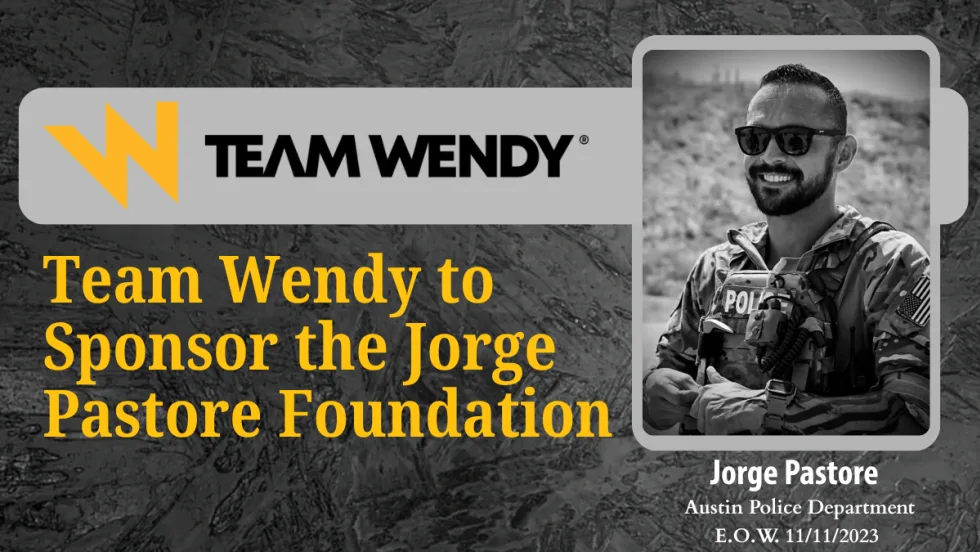
Team Wendy Announces Title Sponsorship of the Jorge Pastore Foundation
Team Wendy’s 3-year partnership with the Jorge Pastore Foundation expands access to programs that strengthen those who serve.
Read More →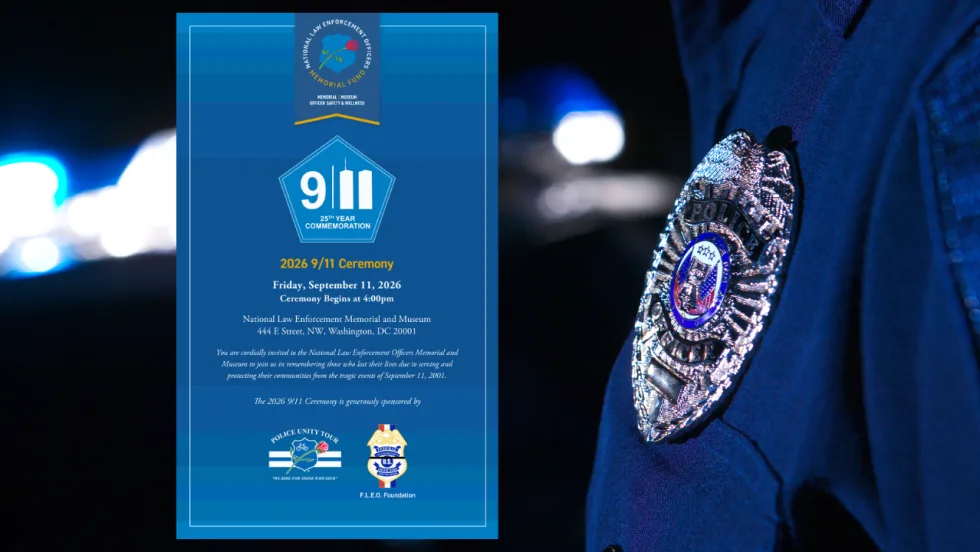
National Law Enforcement Memorial and Museum Hosting 9/11 25th-Year Commemoration Ceremony
The National Law Enforcement Memorial and Museum is hosting a 9/11 25th Year Commemoration Ceremony on Sept. 11 at 4 p.m.
Read More →
National Law Enforcement Officers Memorial Fund Announces June 2026 Officers of the Month
The National Law Enforcement Officers Memorial Fund (NLEOMF) named 15 officers of the Chico Police Department (California) as the Officers of the Month for June 2026 for their roles in responding to an active-shooter incident at a public library.
Read More →
Team Wendy App Creates New Digital Hub for Helmet Owners
The Team Wendy Community App provides one location for warranty registration, size-fit tools, product updates, and community connection. For helmet owners, the new app creates a simpler path to the information and tools that matter most.
Read More →