



Coping with the Cuts
Law enforcement budgets nationwide have been hit hard by the economic downturn. Agencies have cut back on officer hours, turned more jobs over to non-sworn personnel, and some have even laid off badged personnel. But the first thing that almost every cash-strapped agency does to balance its books is cut back on training.


Photo: Mark W. Clark
Even in the best of times finding public money for law enforcement in-service training can be difficult. But since the beginning of what some economists call "The Great Recession" several years ago, finding the funds for in-service training has been like trying to get blood from the proverbial stone.
Law enforcement budgets nationwide have been hit hard by the economic downturn. Agencies have cut back on officer hours, turned more jobs over to non-sworn personnel, and some have even laid off badged personnel. But the first thing that almost every cash-strapped agency does to balance its books is cut back on training.
Training is easy for bean counters to cut and it's a big, immediate payoff says Harvey Hedden, executive director of the International Law Enforcement Educators and Trainers Association (ILEETA). "When you cut training not only are you no longer having to pay for the training, you're also not having to pull the officers off of the street and replace them with other officers who may be working overtime," he explains.
Of course, there are often repercussions from such cuts.
Off the Line
Last year a number of news stories were published on the Tulsa Police Department, as it laid off officers and eliminated its in-service training budget. The two went hand in hand, according to Tulsa PD's Capt. Richard Lawson. "The layoffs made it difficult for us to schedule training in the manner in which we were accustomed," he says.
The Tulsa PD's accustomed manner for in-service training was to pull officers off the line and put them in the classroom for mandatory in-service training. But in 2010, the agency couldn't do that as it faced labor shortages resulting from layoffs.
And that presented Lawson and the rest of the Tulsa PD's training staff with a knotty problem. The state mandated certain training programs and they would have to be completed, but there was no way that officers would be pulled off the line for the necessary training time.
Lawson and his fellow Tulsa PD trainers decided to conduct the training using online programs provided by the state's certification association, the Council on Law Enforcement Education and Training (CLEET), and distance learning programs procured from a little-known federal training center called the NCBRT. (More on that in a moment.)
The combination of online training and distance learning saw Tulsa's training division through a dark time. Today, thanks to some federal grants, the department has recalled some of its dismissed officers, reinstituted in-service training cycles, and even reopened its academy to a recruit class.
Federal Aid
As the Tulsa PD discovered, there are a number of federal resources available for local and state law enforcement agencies that need to stretch their training dollars. One of the least known is actually one of the most effective: the NCBRT.
Headquartered on the campus of Louisiana State University and misnamed the National Center for Biomedical Research and Training, the NCBRT is not some biowarfare think tank, as its name would imply. Instead, it's a resource for law enforcement agencies that need specialized training.
The NCBRT offers a wide range of programs for distance learning and even hands-on police training in subjects as varied as WMD response to active shooter response. More than 200 instructors work for the program, and they are on the road constantly taking the training to local agencies.
"Our trainers are mobile," says NCBRT public affairs coordinator Julie Cavin. "We come to you and we train all over America. And there's no charge. If you want the training, all you have to do is provide the facility for the training and meet our minimum number of students."
You heard that right: The training is free. But Cavin says lately the NCBRT has actually had a problem giving it away for free. "Since the recession, it's been a little bit harder to get people to train because even though there's no charge, agencies have had to downsize their staffs so much that they can't afford to have people gone for a week."
Responding to that challenge, the NCBRT is now offering shorter versions of its courses, many at least partially online. It has also been training trainers so that they can take back the skills to their agencies.
Another way that federal training resources are being used to help local agencies is by letting local cops use the training facilities built for their federal counterparts. At the Federal Law Enforcement Training Center (FLETC) in Glynco, Ga., local officers can often be seen working on the ranges and in the other training venues.
Another federal facility that is often used by local agencies needing training resources is the U.S. Customs and Border Protection Advanced Training Center (ATC) in Harper's Ferry, Va. ATC Director James Cobb says that since last October the center has hosted more than 300 state and local officers for training.
"We have a hierarchy of training here," says Cobb. The first level is our primary mission of CBP training, then because we are on Department of the Interior Land we offer Park Service and fish and wildlife training, and finally we work with our state and local partners in law enforcement."[PAGEBREAK]
The ATC attracts agencies from Maryland, Virginia, and West Virginia. And the pull is easy to understand. The 224-acre property includes a scenario village for Simunition training, both pistol and rifle ranges, and even a lake. All of these facilities are offered to local and state agencies at no charge. All they have to do is contact the center and work out a time with the scheduler.
"We don't just sit here; we are part of the community," says Cobb. "This is a commitment that CBP has made to our neighbors and our fellow law enforcement officer. And we're very proud of it."
Commercial Venture
While the federal government is offering a wide variety of online, distance learning, and hands-on programs to meet local law enforcement needs at no cost, some for-profit companies are also getting in on the game.
On the morning of Sept. 11, 2001, venture capitalist Brian Naples woke in Manhattan expecting to spend the day in some extremely lucrative meetings. Instead he ended up trapped in traffic on the Triborough Bridge watching in horror as the World Trade Center buildings crumbled into a choking plume of dust and smoke. He vowed then to use his talents to help the country and help law enforcement.
After pursuing a number of different projects and deciding they weren't what he wanted to do, Naples settled on developing online training programs for officers. In 2009, he launched The Response Network (TRN) and a training portal for law enforcement called PoliceCommunity.net. The Website offers online law enforcement training for a subscription fee of $74.95 per student.
Some 50 to 60 agencies have signed up for the service, according to Naples. But he's been disappointed by individual officer response. "It's such a cheap price-$75 per year per officer and that covers all of the courses. That's about $3 a course. And we're adding more courses all the time. I'm surprised how little individual officers are willing to invest in their own careers."
Fortunately for Naples, cash-strapped agencies needing more efficient training methods have deemed his company's offerings as well worth the $75 per officer per year. "We use the best subject matter experts in their fields," says Naples. "All of our instructors have at least 20 years of experience in law enforcement plus a master's or doctorate degree."
One of TRN's largest agency subscribers is the Jacksonville Sheriff's Office. The consolidated Florida agency, which polices both Duval County and the city of Jacksonville, is extremely pleased with the quality of the TRN training, according to Rick Lewis, director of training. "Travel and training dollars have decreased, but I have been able to show a return on investment with the online training."
Lewis believes online programs such as those offered by TRN will be the preferred police training method in the near future. And not just because they are relatively inexpensive.
"We have a younger and younger workforce and this is the type of training that they like," Lewis explains. "It's very high quality training directed toward adult learning styles."
Lewis argues that for some topics online training programs can be the same for all departments. "If I am going to teach bloodborne pathogens how is that different here than in Washington state? One high-quality course on that can fit everywhere. Plus the more people who subscribe to it, the less it costs."
In addition to the full-length TRN programs that it has subscribed to, the Jacksonville Sheriff's Office is also hiring TRN to make some customized short training programs. Lewis says the idea is to create five-minute training videos that can be used every day to remind officers of critical matters such as use of force, arrest procedures, pursuit policy, and issues pertaining to the Americans with Disabilities Act. "If we are going to get sued, it's going to be over an incident that involves one or a combination of those four areas," he explains.
Pooling Resources
Another way that agencies are managing the cost of training during a time of shrinking budgets is to take advantage of state programs. Chief Rory B. Collins of the Salisbury (N.C.) Police Department says that much of his agency's in-service training is handled by the local community college.
North Carolina is one of many states that uses the community or technical college system for in-service training. ILEETA executive director Hedden says there can be great benefit to such a system because it allows agencies to take advantage of advanced and expensive equipment such as driving and use-of-force simulators.
Another way that agencies have found to stretch training dollars is to share resources and experience. Sgt. Dan Kiricoples of the Scottsdale (Ariz.) Police Department advises his fellow training officers to seek the help of their neighbors and pool some resources. "The communication between all of the agencies in this valley in the training departments is very good. We're constantly sharing training programs and instructors," he says.
Pay Now or Later
Agencies are quick to cut in-service training budgets during bad times, but doing so can lead to even greater financial hardship down the line.
"The problem is that you can save a little now, but you can pay a lot more later on," says ILEETA's Hedden. "Law enforcement is increasingly more complex all the time and increasingly more dangerous. So it would behoove us to train better to protect ourselves in armed confrontations. Even if you look at it in cold, cruel economic terms, ask yourself: What does it cost to replace a police officer when they're injured? Oh, and lawsuits cost money and training can prevent them."
Hedden says the problem is getting bureaucrats to listen to such reasoning. But he urges trainers to fight for their budgets. "It's up to trainers to try to sell the idea of training," he says. "You have to explain why it's not a real savings to get rid of training."
Related:
PODCAST: Stress Training for Tactical LE
More Patrol
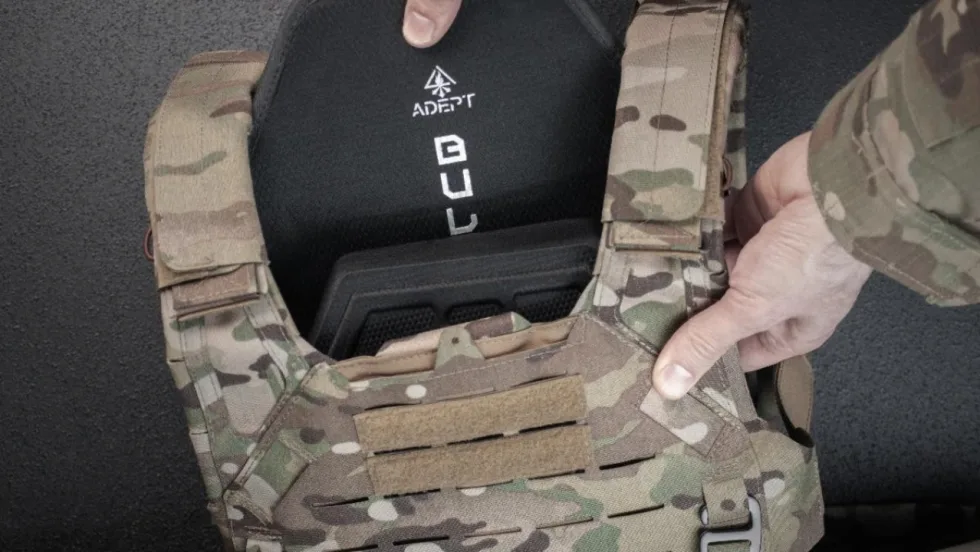
Adept Armor Introduces Two New Rifle Plates
Adept Armor has launched two new Level IV ballistic plates, the Emperor and the Archon Mark 2, which brings Adept Armor’s new Quatroid ceramic to the high-threat, performance-value center of the range at 5.2 pounds.
Read More →
POLICE Product Test: Benchmade Bailout
The Benchmade Bailout is a slim, lightweight carry knife with a deep-ride pocket clip and comes in a variety of blade steels and scales. Here is a detailed review of the Taiga Green Bailout, released earlier this year.
Read More →
NLEOMF Announces July 2026 Officer of the Month
NLEOMF honored a Michigan deputy sheriff as the July 2026 Officer of the Month for rescuing a trapped driver from a burning vehicle following a Fourth of July crash.
Read More →
Streamlight to Showcase Newest Lighting Products at National Safety Council’s Safety Congress & Expo 2026
Streamlight will showcase its latest lights, including the Portable Scene Light III and the LiteBox 1Million, at the 2026 National Safety Council (NSC) Safety Congress & Expo.
Read More →
The 2027 World Police & Fire Games Set for Perth, Australia
The 2027 World Police & Fire Games (WPFG) will take place in Perth, Western Australia, from Friday, March 12 through Sunday, March 21, 2027.
Read More →
5.11 Partners with National Fallen Firefighters Foundation to Support #ForThe343
5.11 has joined the nationwide movement honoring the 343 New York City Fire Department firefighters lost on Sept. 11, 2001.
Read More →
Team Wendy Announces Title Sponsorship of the Jorge Pastore Foundation
Team Wendy’s 3-year partnership with the Jorge Pastore Foundation expands access to programs that strengthen those who serve.
Read More →
National Law Enforcement Memorial and Museum Hosting 9/11 25th-Year Commemoration Ceremony
The National Law Enforcement Memorial and Museum is hosting a 9/11 25th Year Commemoration Ceremony on Sept. 11 at 4 p.m.
Read More →
National Law Enforcement Officers Memorial Fund Announces June 2026 Officers of the Month
The National Law Enforcement Officers Memorial Fund (NLEOMF) named 15 officers of the Chico Police Department (California) as the Officers of the Month for June 2026 for their roles in responding to an active-shooter incident at a public library.
Read More →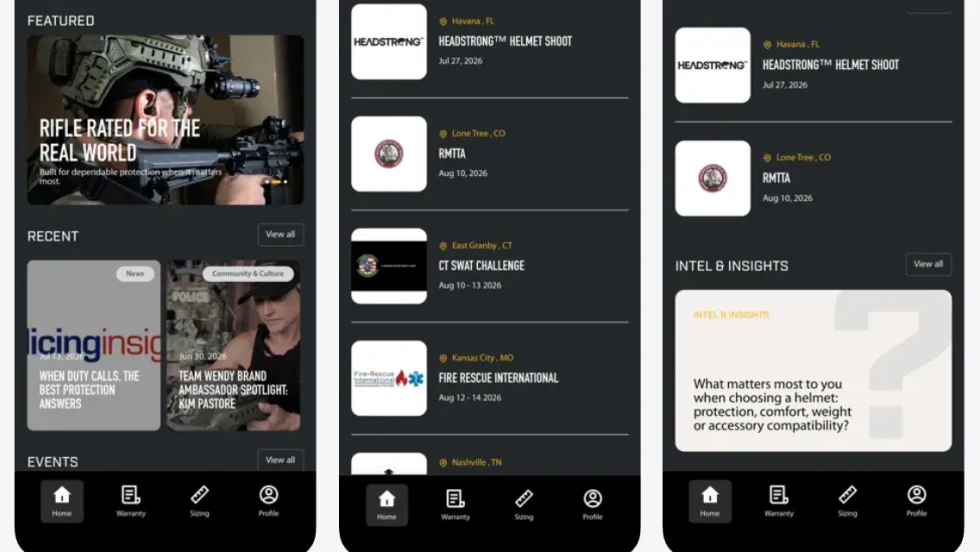
Team Wendy App Creates New Digital Hub for Helmet Owners
The Team Wendy Community App provides one location for warranty registration, size-fit tools, product updates, and community connection. For helmet owners, the new app creates a simpler path to the information and tools that matter most.
Read More →