



Coping With Stress on the Job
Law enforcement is becoming an increasingly difficult profession, and officers need to know how to decompress in healthy ways.

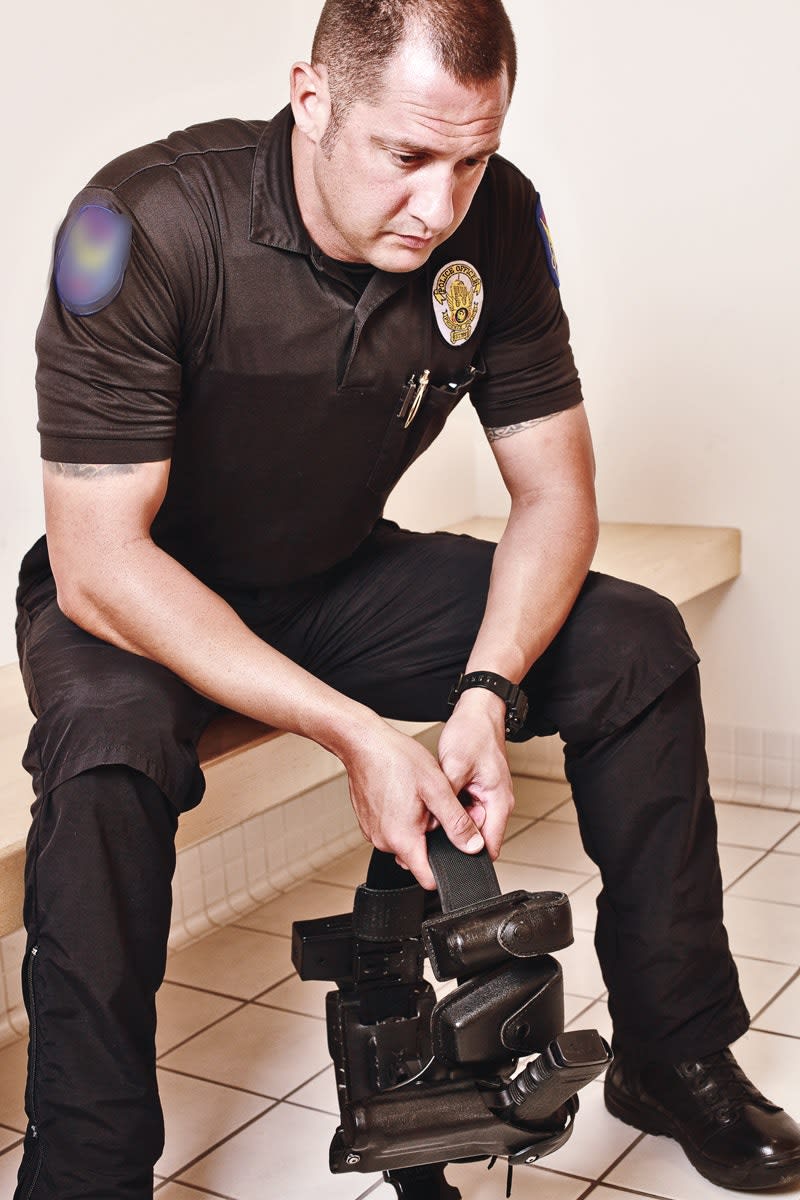
Photo: Police File
The civilian definition of emotional stress as defined by Merriam-Webster is "A state of mental tension and worry caused by problems in your life, work, etc. or something that causes strong feelings of worry or anxiety." But there's another
definition of stress as defined by Urban Dictionary (and my father) that specifically applies to law enforcement: "The confusion caused when one's mind overrides the body's natural desire to choke the living shit out of some asshole that desperately needs it."
Stress and its effects on officers have been some of the most discussed topics in law enforcement over the past few years. And the stress level of officers is only increasing as society's scrutiny of police increases.
Most departments have policies that prohibit officers from talking to the media. So when a member of the public videos an officer using force and decries that action as "excessive" to the media, the officer can't present his or her side of the story. These officers, their colleagues, and their families have to watch as they are vilified and tried 1,000 times by civilians who know nothing about law enforcement and aren't ever going to be exposed to the facts.
Human Design
Somewhere things got horribly turned around and officers became the villains, and the perpetrators the heroes. That is making law enforcement a much more stressful profession.
Dr. Judith Herman addresses this phenomenon in her book, "Trauma and Recovery," when she states, "when the events are natural disasters or 'acts of God,' those who bear witness sympathize readily with the victim. When the traumatic events are of human design, those who bear witness are caught in the conflict between victim and perpetrator. It is morally impossible to remain neutral in this conflict. The bystander is forced to take sides."
Herman then states (keep in mind the book was published in 1992) that, "Three times over the past century, a particular form of psychological trauma surfaced into public consciousness and each time the investigation of that trauma has flourished in affiliation with a political movement." First was hysteria that grew out of the republican, anticlerical political movement of the late nineteenth century in France. The second was shell shock or combat neurosis, a condition that was renamed post-traumatic stress disorder by the American Psychiatric Association in 1980. The third, according to Herman, was sexual and domestic violence, which led to the feminist movement in Western Europe and North America.
Should an updated version of this book be published, I believe Herman would list a fourth example, Black Lives Matter, an organization that was established to protest the shooting of Trayvon Martin by a civilian and grew exponentially after the fatal police shooting in Ferguson, MO.
Post-Ferguson Morale

Officers facing stress from feeling that they are always on duty often begin to isolate themselves, and their loved ones don't understand. Photo via Getty Images.
A recent survey conducted by Louisiana State University titled "Policing in a Post-Ferguson Society Survey," examined the effects the Black Lives Matter movement and post-Ferguson scrutiny of officers has had on various aspects of policing. Although 95% of the officers surveyed said they were confident in determining the appropriate use of force, 52% were apprehensive about using it. More alarmingly, however, 43% of the surveyed officers didn't feel safe while conducting their duties. The effects of Ferguson on morale have also been substantial, as 45% of respondents said they were less motivated to do police work, and 51% enjoyed going to work less.
As a population, officers are reluctant to seek help, and when forced, they remain guarded and hypervigilant for the most part. Many departmental programs are not trusted if they are affiliated with the department itself. Officers fear losing their jobs or other retaliatory actions for seeking treatment.
The LSU survey reveals that after the attacks in Dallas and Baton Rouge, only 3% of those surveyed sought professional help while 70% talked to colleagues and 72% talked to a family member or friend.
I was on call for Copline, a national confidential hotline for police officers (See "The Officer Lifeline" on page 60), the day of the Dallas shooting. I would like to consider myself a pretty seasoned professional, but one call rattled me, and few things actually do. Through her tears, an unidentified female yelled, "They're killing my brothers and sisters, you have to do something, you have to make this stop!" and she continued to cry. I was silent, that eerie, awkward silent one gets when they are helpless and trying to compose themselves in order to not show emotions through their voice. I knew I had no answer; I was going to fail this caller. It is a helplessness that officers avoid at all costs which leads to their need for control, and mine, too, I'm afraid.
The Officer Lifeline
Copline Inc. is a national, nonprofit, and confidential hotline for police officers that is manned 24/7, 365 days a year by retired police officers who have been trained in active listening.
Copline was created with the needs of both active and retired officers in mind and this union has proven to be successful. Retired officers answer the lines because Copline understands an officer's reluctance to speak to just anyone about the multiple psychosocial stressors they deal with both on and off the job.
If a retired officer wants to get involved, but doesn't want to answer phones, there are many ways he or she can help. Copline is always looking for grant writers or someone to assist with a fundraiser, the annual 5K Run for the Call.
Officers can support Copline by making it their favorite charity on Amazon Smile and by liking it on Facebook.
For more information about Copline, as well as more information about how you can get involved, go to www.copline.org or e-mail Stephanie Samuels at copline@optonline.net.
Maladaptive Behaviors
So, how do officers deal with stress? There is the Disney version and the real version. And although most of the officers I see are huge Disney fans, I just don't understand the appeal. Maybe it's because I can't not know what I know. Disney doesn't represent to me what it does to them, but I give them the Disney version, without the spoon full of sugar.
I have found that many of the maladaptive behaviors that officers have are ways they deal with stress. Many of them are dealing with undiagnosed PTSD, which makes them numb; the only time they feel is when they have an adrenaline rush. It takes more and more to give them that rush as they get exposed to more and more critical incidents over time.
I have seen this many times with officers who are having an affair. It is not that they don't love their spouse; they seek the adrenaline, not the sex. Although this is very difficult to understand, they love their wives and family and don't want to hurt them.
Many officers have a hard time finding somebody to talk to about what they are coping with. They don't want to burden their families with the details of what they have seen because they don't want them to worry and most don't want to have to relive the experience.
Sadly, many officers find comfort in the bottle. When speaking to my officers, they often address when they went from drinking to be social and have fun to drinking to sleep and forget.
Every job is stressful, but I only know of one that requires a person to carry a gun and "act," even when off duty; failure to do so can potentially result in being fired. This requires an officer to be on duty 24/7. That's impossible. But society expects officers to do the impossible.
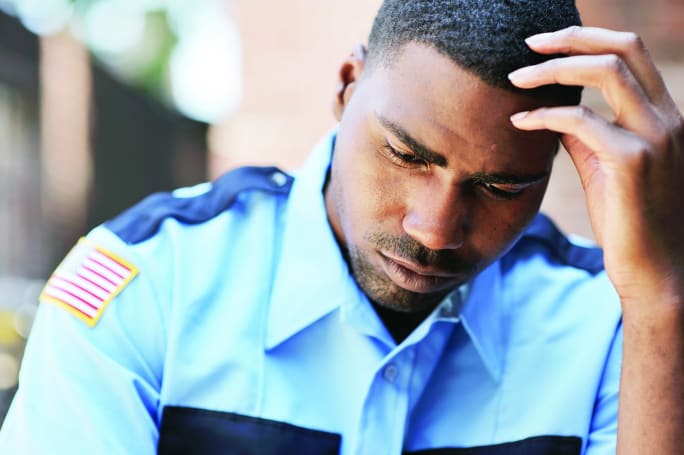
Many officers have a hard time finding somebody to talk to about what they are coping with. And most don't want to have to relive what precipitated the problem. Photo via Getty Images.
Officers facing this stress often begin to isolate themselves, and their loved ones don't understand. The officers are unable to relax when they are in public. They worry about who they will see, whether they should take a firearm, needing to sit in a specific location or at a specific seat, and run scenarios through their minds for every "what if." Eventually, it's not worth going out. Because of this, officers tend to hang together, and they lose their civilian friends as they have less and less in common with them. Normal gets reset, just like it did for all of us after 9/11. We are a resilient group, and for this we are blessed.
PTG
A fascinating article on this topic, "Growth After Trauma" by Lorna Collier, was published in the November 2016 journal the American Psychological Association publishes called Monitor on Psychology. The article talks about post-traumatic growth (PTG), a term I had never heard of, and compares it to resiliency.
"Resiliency" was defined as the personal attribute or ability to bounce back by Kanako Taku. Collier says that "PTG on the other hand, refers to what can happen when someone who has difficulty bouncing back experiences a traumatic event that challenges his or her core beliefs, endures psychological struggle (even a mental illness such as post-traumatic stress disorder) and then ultimately finds a sense of personal growth."
Richard Tedeschi goes on to say, "Someone who is already resilient when trauma occurs won't experience PTG because a resilient person isn't rocked to the core by an event and doesn't have to seek a new belief system." There lies the double-edged sword. Most officers are resilient because they are no longer "rocked" to the core by the events they bear witness to. They are numb and detached and they don't know how to reattach when they get home.
Some of the best research on stress and the effects it has on the body has been conducted by John Violanti. He emphasizes the importance of getting enough sleep and exercise, eating healthy, maintaining social networks/relationships, limiting second jobs, as well as letting officers know it is OK to be human. Officers are amazing at telling stories and playing jokes on each other. It is imperative to note if this behavior changes.
Seeking Help
Officers must not lose sight of the importance of seeking spiritual help, not just in times of despair, but throughout their careers. It is equally important to make talking about feelings normal and stuffing them down abnormal. Having a confidante outside of law enforcement is essential as well. This person can be a friend or loved one, but many times, there is a need to talk to a professional. Find someone familiar with law enforcement who has been vetted by others.
After … well, let's just say many years of doing this, I am proud to write that I have never had an officer lose his or her job or be skipped for promotion because of being in therapy. I have also been told by officers they believe that therapy saved their marriages, careers, and even lives.
Individuals pursue careers in law enforcement to help others, and truthfully, this rarely changes throughout their time on the job. Their innocence and the reality of what being a mere mortal really means is what changes.
It is an officer's job to keep his or her mind, body, and soul healthy to not only perform the duties of a law enforcement professional, but more importantly, to perform the duties of being a parent, spouse, family member, and friend.
Stephanie Samuels is a psychotherapist who works exclusively with police officers. She has lectured nationwide on PTSD and the fallout from departmental silence after officers are involved in critical incidents. Samuels is the creator and president of Copline: the National Law Enforcement Officers Hotline (www.copline.org).
More Patrol

Streamlight Portable Scene Light III Wins 2026 OH&S New Product of the Year Award
Streamlight’s Portable Scene Light III has won the 2026 Occupational Health & Safety (OH&S) New Product of the Year Award in the Lighting category.
Read More →
Adept Armor Introduces Two New Rifle Plates
Adept Armor has launched two new Level IV ballistic plates, the Emperor and the Archon Mark 2, which brings Adept Armor’s new Quatroid ceramic to the high-threat, performance-value center of the range at 5.2 pounds.
Read More →
POLICE Product Test: Benchmade Bailout
The Benchmade Bailout is a slim, lightweight carry knife with a deep-ride pocket clip and comes in a variety of blade steels and scales. Here is a detailed review of the Taiga Green Bailout, released earlier this year.
Read More →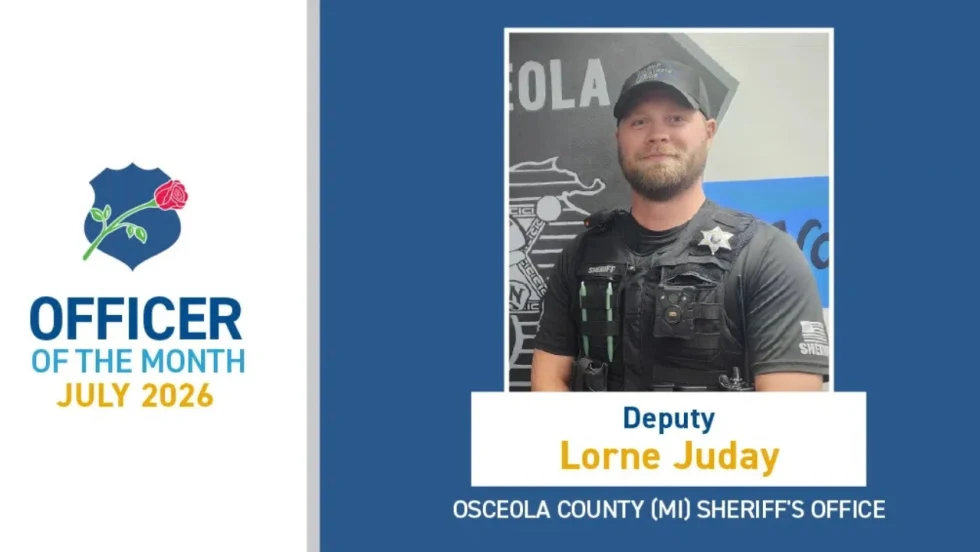
NLEOMF Announces July 2026 Officer of the Month
NLEOMF honored a Michigan deputy sheriff as the July 2026 Officer of the Month for rescuing a trapped driver from a burning vehicle following a Fourth of July crash.
Read More →
Streamlight to Showcase Newest Lighting Products at National Safety Council’s Safety Congress & Expo 2026
Streamlight will showcase its latest lights, including the Portable Scene Light III and the LiteBox 1Million, at the 2026 National Safety Council (NSC) Safety Congress & Expo.
Read More →
The 2027 World Police & Fire Games Set for Perth, Australia
The 2027 World Police & Fire Games (WPFG) will take place in Perth, Western Australia, from Friday, March 12 through Sunday, March 21, 2027.
Read More →
5.11 Partners with National Fallen Firefighters Foundation to Support #ForThe343
5.11 has joined the nationwide movement honoring the 343 New York City Fire Department firefighters lost on Sept. 11, 2001.
Read More →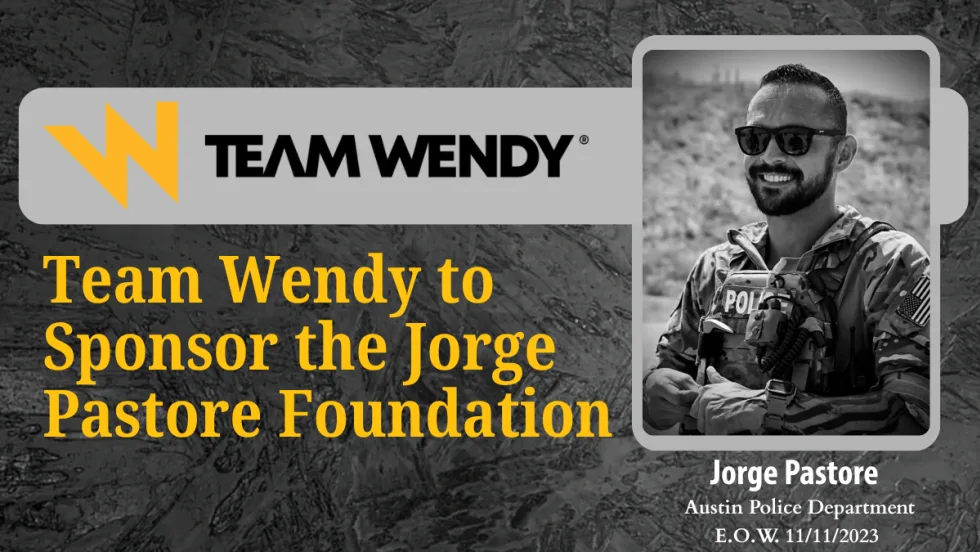
Team Wendy Announces Title Sponsorship of the Jorge Pastore Foundation
Team Wendy’s 3-year partnership with the Jorge Pastore Foundation expands access to programs that strengthen those who serve.
Read More →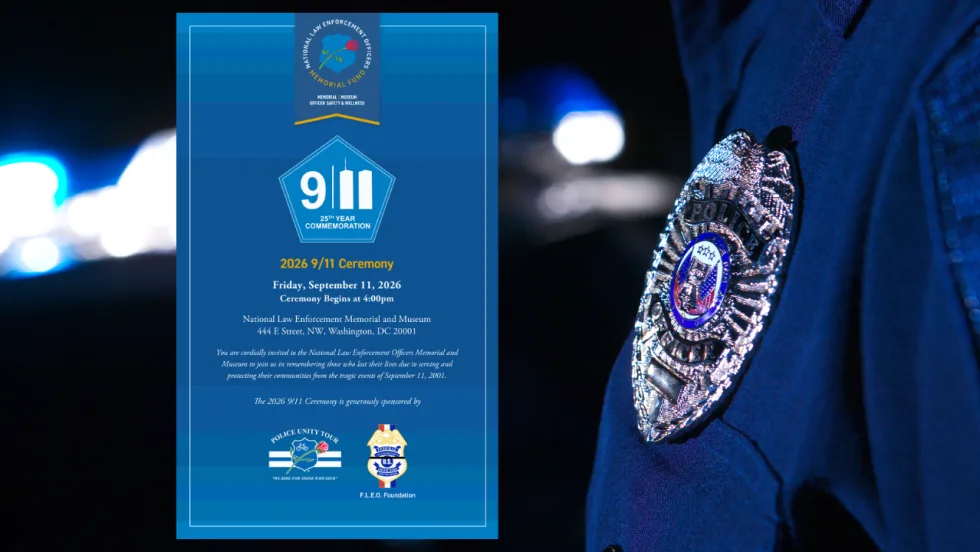
National Law Enforcement Memorial and Museum Hosting 9/11 25th-Year Commemoration Ceremony
The National Law Enforcement Memorial and Museum is hosting a 9/11 25th Year Commemoration Ceremony on Sept. 11 at 4 p.m.
Read More →
National Law Enforcement Officers Memorial Fund Announces June 2026 Officers of the Month
The National Law Enforcement Officers Memorial Fund (NLEOMF) named 15 officers of the Chico Police Department (California) as the Officers of the Month for June 2026 for their roles in responding to an active-shooter incident at a public library.
Read More →