



Beware of False Headlines
So far, the U.S. Supreme Court has left it to the states and the federal appellate circuits to make their own rulings on the issue of whether officers may make a stop to investigate a reported drunk driver, without having any independent observations to corroborate the anonymous tip. This has led to a split of authority on the issue.

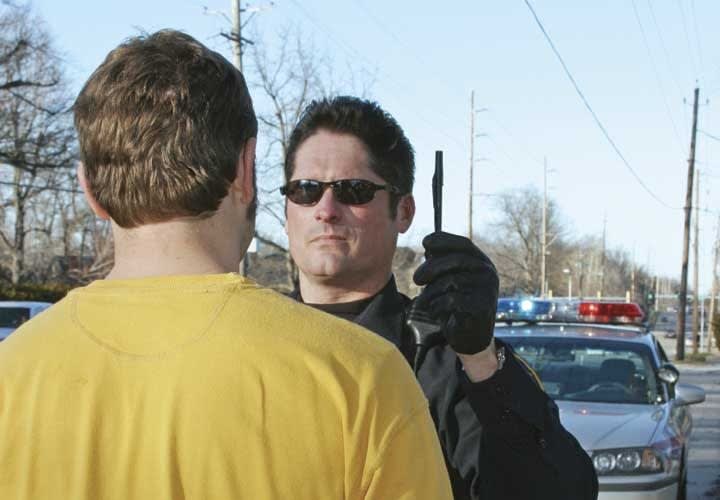
Some newspapers and at least one online source of law enforcement information recently ran the same headline: "Supreme Court upholds ban on traffic stops based on a caller's tip." The reporters were referring to the fact that the U.S. Supreme Court did not vote to hear an appeal from a decision of the Virginia Supreme Court. The Virginia ruling had held that an anonymous telephone report did not justify a traffic stop of a suspected impaired driver because the officer himself did not see the kind of erratic driving the caller had described. This ruling in Harris v. Commonwealth was not accepted for the Supreme Court's docket of cases to review. (Virginia v. Harris)
Under the rules as to what does and what does not constitute a holding of the Supreme Court, the fact that the state court ruling was not acted upon does not mean that the Supreme Court "upholds" the state's ruling. It means that the Supreme Court is not expressing either approval or disapproval, and nothing is to be inferred from the denial of review.
Since the court can take up only about one percent of the 8,000 or more cases it is asked to review each year, the court has stressed that no position is to be inferred as to its views on the issues raised in the other 99 percent of cases-which would include Virginia v. Harris. As the court has repeatedly said, the fact of non-review "imports no expression of opinion upon the merits of the case," and no one should assign "any precedential value" to the fact that a particular ruling of a lower court was not reviewed. (Teague v. Lane)
Under the rules of precedent, the decision of the Virginia Supreme Court is binding only in Virginia, and nowhere else. So far, the U.S. Supreme Court has left it to the states and the federal appellate circuits to make their own rulings on the issue of whether officers may make a stop to investigate a reported drunk driver, without having any independent observations to corroborate the anonymous tip. This has led to a split of authority on the issue.
In some future case, the Supreme Court will have to resolve the differences and settle on a uniform Fourth Amendment rule. In the meantime, here's the status of the issue, for now.
Florida v. J.L.
In 2000, the U.S. Supreme Court invalidated a detention and search of a pedestrian based on an unidentified caller's tip that a certain person at a certain location was carrying a concealed firearm. The court said that an anonymous tip is too easily fabricated to permit officers to detain someone on that basis alone, without making some observations or having other information that would corroborate the anonymous report in its description of criminal behavior.
At the same time, the court did not rule out allowing detentions and searches based on more threatening circumstances. "The facts of this case do not require us to speculate about the circumstances under which the danger alleged in an anonymous tip might be so great as to justify a search even without a showing of reliability. We do not say, for example, that a report of a person carrying a bomb need bear the indicia of reliability we demand for a report of a person carrying a firearm before the police can constitutionally conduct a frisk." (Florida v. J.L.)
Selected Cases Upholding Stops
In some jurisdictions, courts have relied on J.L. to find that certain vehicle stops of suspected drunk drivers are reasonable, even though the officer does not see any signs of erratic driving when he or she locates the reported vehicle. These courts have usually based their rulings on some combination of these factors: (1) the dangers inherent in drunk driving, which kills some 13,000 people each year in the United States; (2) detailed descriptions of the vehicle and the driving given by an eyewitness who is currently observing the erratic driving; (3) the fact that traffic stops are more common and less invasive than pedestrian stops; and (4) the reduced expectation of privacy enjoyed by those driving vehicles on public roadways.
Courts in the following jurisdictions have upheld vehicle stops based on anonymous tips of suspicious driving:
U.S. Eighth Circuit (U.S. v. Wheat, 2001)
Alabama (Cottrell v. State, 2006)
California (People v. Wells, 2006)
Delaware (Bloomingdale v. State, 2004)
Hawaii (State v. Prendergast, 2004)
Illinois (People v. Shafer, 2007)
Iowa (State v. Walshire, 2001)
Kansas (State v. Crawford, 2003)
Maine (State v. Sampson, 1996)
New Hampshire (State v. Melanson, 1995)
New Jersey (State v. Golotta, 2003)
New Mexico (State v. Contreras, 2003)
New York (People v. Rance, 1996)
South Dakota (State v. Scholl, 2004)
Texas (State v. Fudge, 2001)
Utah (Kaysville City v. Mulcahy, 1997)
Vermont (State v. Boyea, 2000)
Wisconsin (State v. Rutzinski, 2001)
Selected Cases Invalidating Stops
In other jurisdictions, courts have taken the position that the Supreme Court ruling in Florida v. J.L. is absolute, applying to every detention made on the basis of an uncorroborated anonymous tip of erratic driving. Instead of focusing on the comparatively greater danger of drunk driving, some courts have found no distinguishing difference between an anonymous tip of erratic driving and an anonymous tip that a man is carrying a firearm. Cases in this category include the following:
Indiana (Washington v. State, 2000)
Louisiana (State v. Boyle, 2001)
Massachusetts (Commonwealth v. Lubiejewski, 2000)
Montana (State v. Lee, 1997)
North Dakota (State v. Miller, 1994)
Oregon (State v. Villegas-Varela, 1994)
Virginia (Harris v. Commonwealth, 2008)
Wyoming (McChesney v. State, 1999)
To confirm the rule followed in your jurisdiction, consult local prosecutors or other legal advisers.
Increasing the Odds
Until the U.S. Supreme Court resolves the Fourth Amendment issue, what steps can 911 operators, dispatchers, and law enforcement officers take to increase the chances that a reviewing court will find an anonymous tip sufficient to justify stopping a suspected drunk driver?
Ask the caller to ID him/herself
Take a detailed description of both the vehicle and the driving
Ask whether t he errant driver has caused any near-misses, or is forcing other motorists to take defensive actions
Ask the caller, "Did you see all this yourself?"
Officers in jurisdictions that do not allow DUI stops based on anonymous tips can note whenever such a tip cannot be acted upon before a resulting crash injures or kills someone. These cases may be referred to a traffic safety advocacy organization, such as Mothers Against Drunk Driving. When a future case presents another opportunity for the Supreme Court to consider the constitutional reasonableness of stops based on anonymous tips, the record of tragedies in cases where law enforcement was prevented from taking prompt action can be brought to the court's attention to illustrate the need for favorable resolution of the conflicting rulings on this issue.
Chief Justice John Roberts, believing that the Supreme Court should have reviewed the Virginia decision, made this prediction: "It will be difficult for an officer to explain to the family of a motorist killed by [a reported drunk driver] that the police had a tip that the driver of the other car was drunk, but that they were powerless to pull him over."
Devallis Rutledge is a former police officer and veteran prosecutor who currently serves as Special Counsel to the Los Angeles County District Attorney. He is the author of 12 books, including "Investigative Constitutional Law.
More Patrol
The First Responders Children’s Foundation National First Responders Day Roll Call of Heroes Ceremony Returns to Times Square, NYC
First Responders Children’s Foundation (FRCF), in collaboration with T-Mobile, will host the Roll Call of Heroes ceremony in Times Square to commemorate National First Responders Day on Wednesday, Oct. 28. During the event, FRCF will present 18 Hero Awards.
Read More →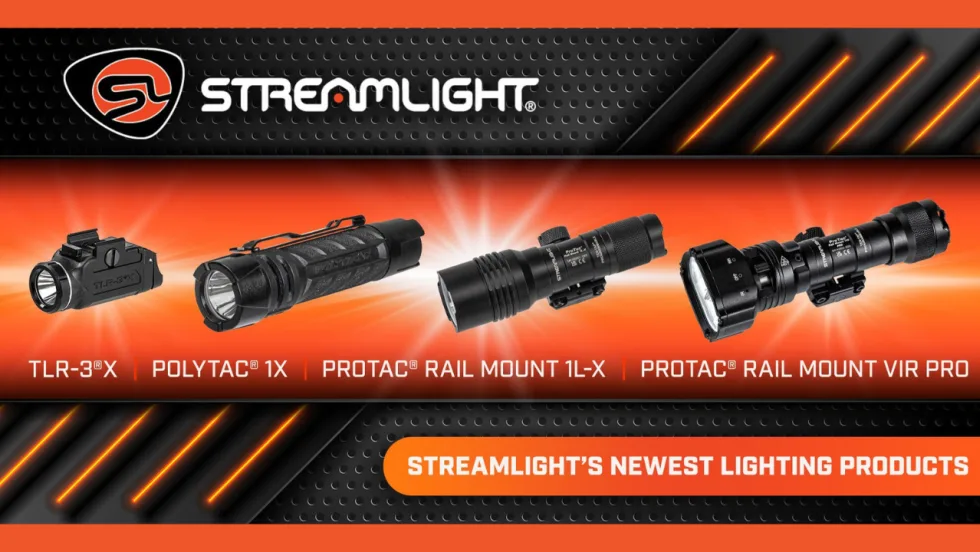
Streamlight to Showcase Newest Lighting Products for Law Enforcement Professionals at IACP 2026
Streamlight will showcase its newest lights for law enforcement at the International Association of Chiefs of Police Annual Conference & Expo. Featured lights will include the TLR-3 X, the PolyTac 1X, and more.
Read More →
Streamlight Portable Scene Light III Wins 2026 OH&S New Product of the Year Award
Streamlight’s Portable Scene Light III has won the 2026 Occupational Health & Safety (OH&S) New Product of the Year Award in the Lighting category.
Read More →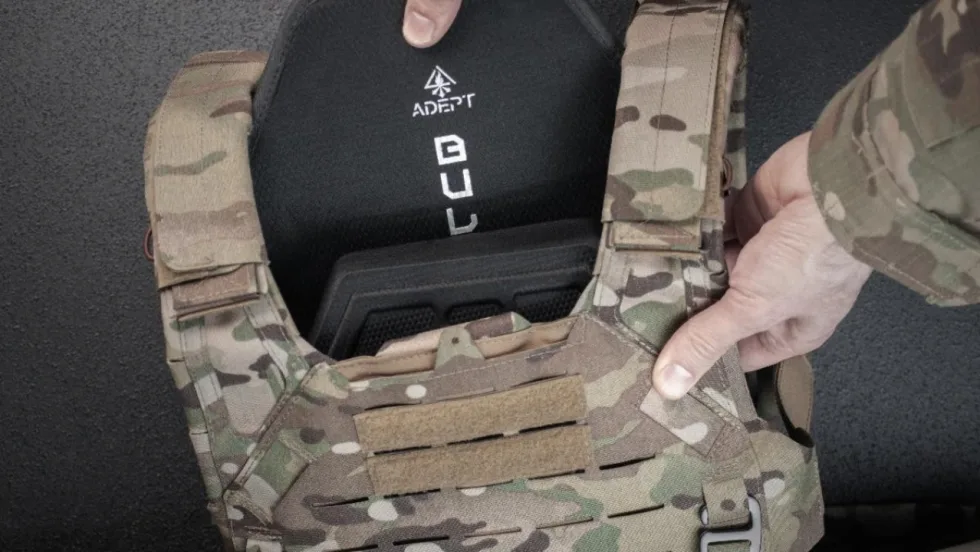
Adept Armor Introduces Two New Rifle Plates
Adept Armor has launched two new Level IV ballistic plates, the Emperor and the Archon Mark 2, which brings Adept Armor’s new Quatroid ceramic to the high-threat, performance-value center of the range at 5.2 pounds.
Read More →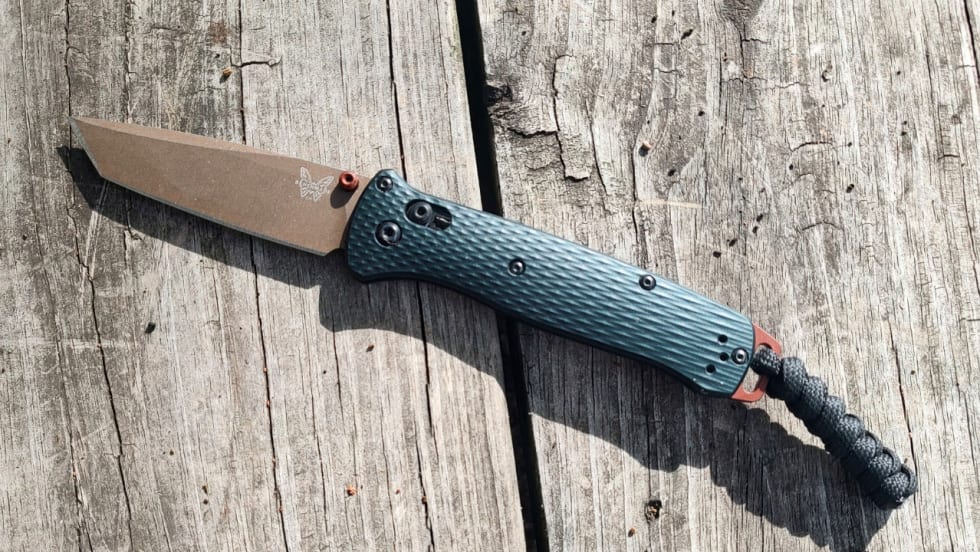
POLICE Product Test: Benchmade Bailout
The Benchmade Bailout is a slim, lightweight carry knife with a deep-ride pocket clip and comes in a variety of blade steels and scales. Here is a detailed review of the Taiga Green Bailout, released earlier this year.
Read More →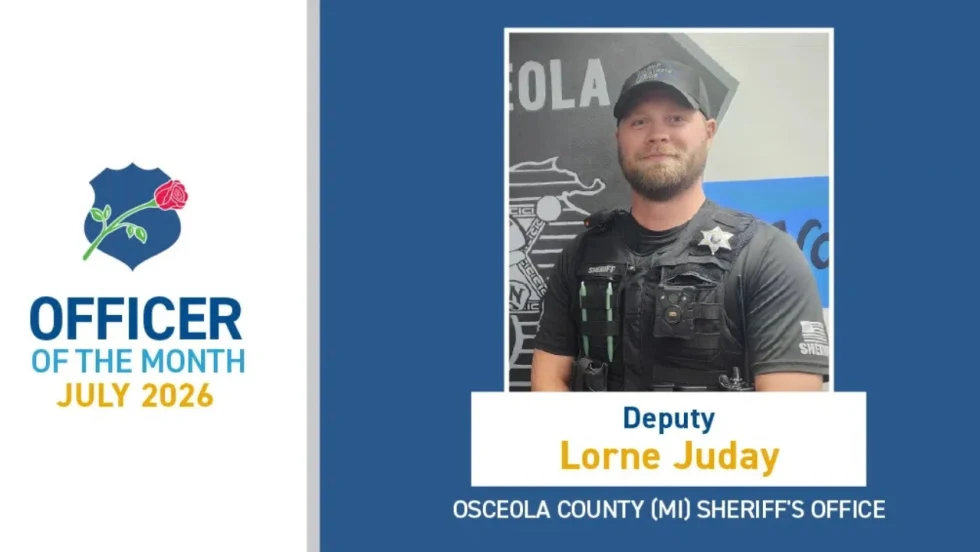
NLEOMF Announces July 2026 Officer of the Month
NLEOMF honored a Michigan deputy sheriff as the July 2026 Officer of the Month for rescuing a trapped driver from a burning vehicle following a Fourth of July crash.
Read More →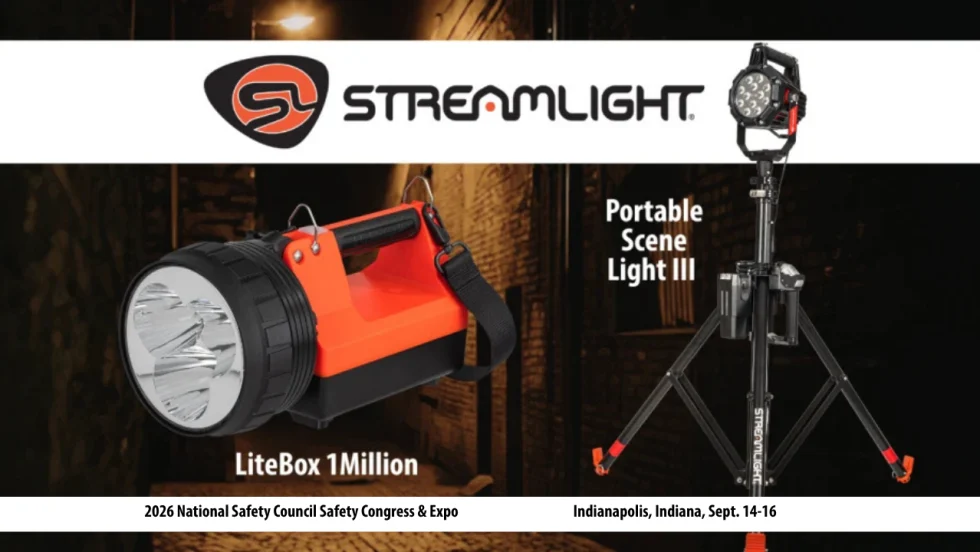
Streamlight to Showcase Newest Lighting Products at National Safety Council’s Safety Congress & Expo 2026
Streamlight will showcase its latest lights, including the Portable Scene Light III and the LiteBox 1Million, at the 2026 National Safety Council (NSC) Safety Congress & Expo.
Read More →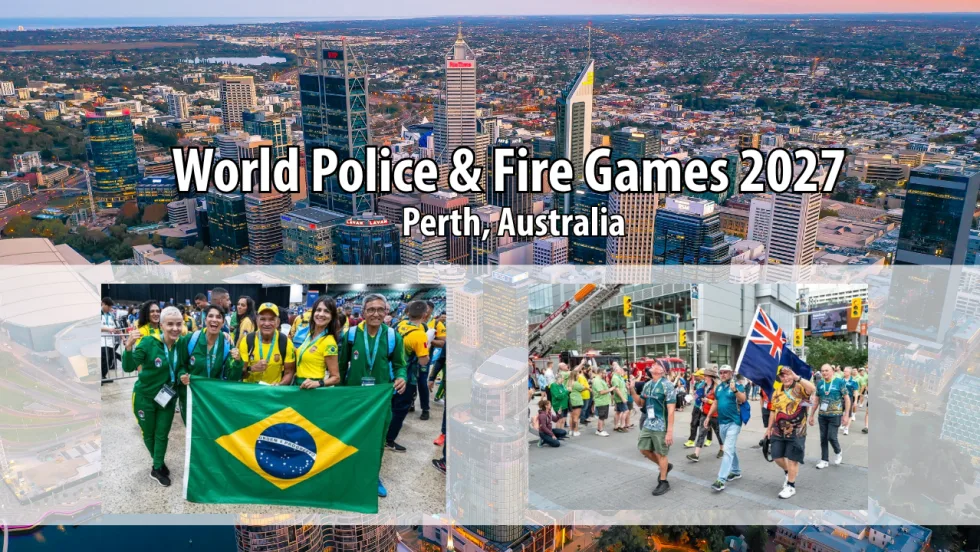
The 2027 World Police & Fire Games Set for Perth, Australia
The 2027 World Police & Fire Games (WPFG) will take place in Perth, Western Australia, from Friday, March 12 through Sunday, March 21, 2027.
Read More →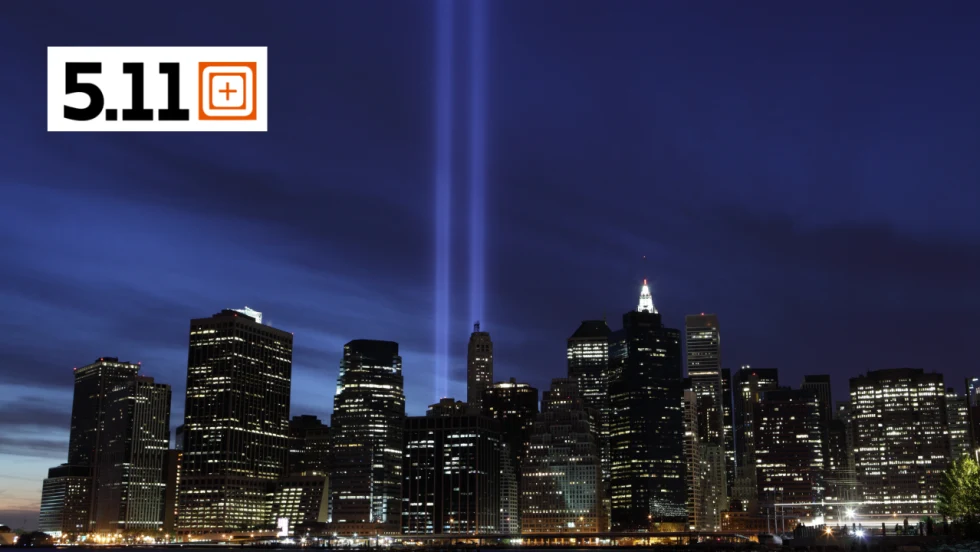
5.11 Partners with National Fallen Firefighters Foundation to Support #ForThe343
5.11 has joined the nationwide movement honoring the 343 New York City Fire Department firefighters lost on Sept. 11, 2001.
Read More →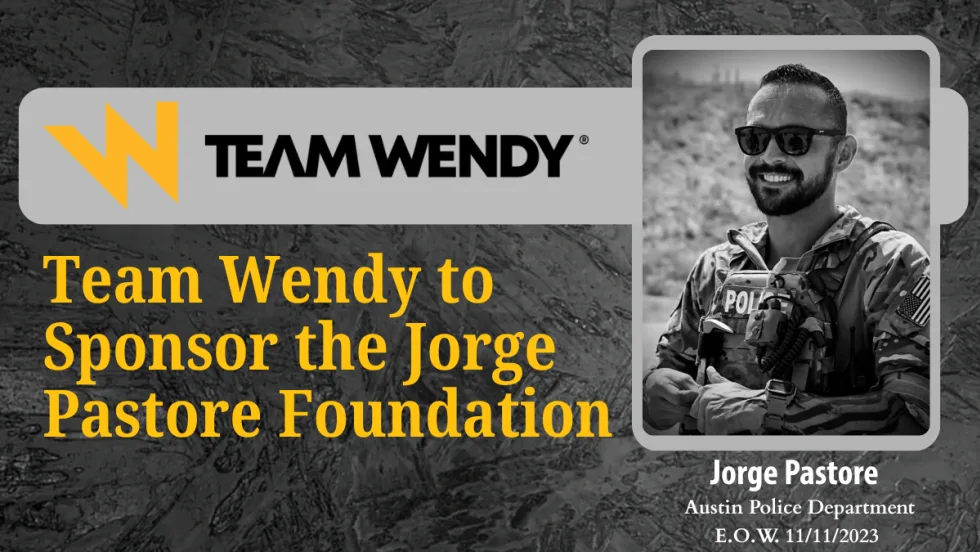
Team Wendy Announces Title Sponsorship of the Jorge Pastore Foundation
Team Wendy’s 3-year partnership with the Jorge Pastore Foundation expands access to programs that strengthen those who serve.
Read More →