



Behind the Walls
From Honolulu to New York City, prisoner incidents and uprisings have become all too common. Luckily, corrections officers are equipped better than ever to deal with such incidents.

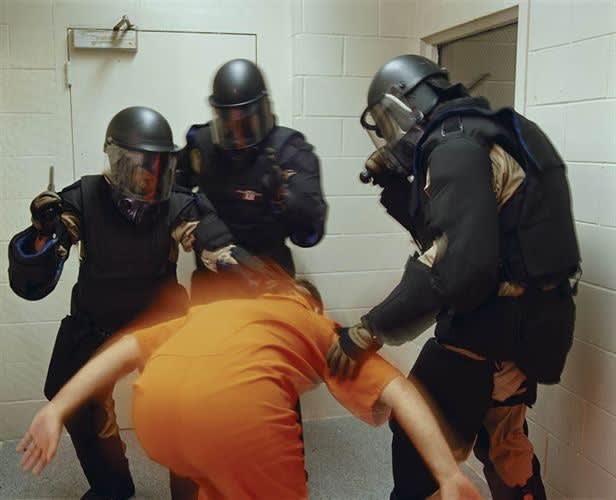
Corrections gear prevents injury from violent inmates.
As you make your rounds throughout the housing areas, it happens. Two inmates housed in the same cell assault each other. The inmate with the homemade shank emerges victorious. You sound your PBA (personal body alarm) and the control room sends additional officers.
From Honolulu to New York City, prisoner incidents and uprisings have become all too common. Luckily, corrections officers are equipped better than ever to deal with such incidents. And with 630,000 of the nation's prison population being housed in jails, it is no longer a problem only encountered by the larger penal institutions.
County jails are just as likely to benefit from today's new and improved equipment. Departments throughout the country have beefed-up the arsenals of their response teams and of the COs inside their walls in an effort to keep officers and inmates as safe as possible. Manufacturers have even gone high-tech to keep up with this demand.
Generally speaking, there are three occasions during which a corrections officer would be called upon to employ special equipment and/or less-than-lethal weapons:
Inside a housing area during routine checks
Encounters that require single cell extractions.
Large uprisings and riots.
On Patrol
The typical corrections officer conducts his or her business lightly armed with pepper spray, personal body armor, a single set of handcuffs, and his or her wits. This is especially true in a directly supervised jail where officers are inside with the inmates (as opposed to linear jails where officers are outside, looking in).
Nightsticks, batons, and ASPs, although issued, are routinely discarded due to fears of disarmament. This leaves OC spray as the most viable force option.
Defense Technology/Federal Laboratories (DefTec) makes a variety of OC products through its First Defense line. And Mace brand offers OC products in both stream and foam. Although these are the most popular brands of OC, others are also available.
Even Winchester, the gun maker, now offers its own individual size OC product with a fast-draw design. In fact, the Winchester model shoots the farthest-up to 25 feet- while the others fall within the range of 10 to 12 feet. Regardless of manufacture, a 10 percent formula seems to be the standard.
Pepper spray is quite effective in corrections, and most COs would rather use it than even a baton. There is far less likelihood of an inmate or officer being injured with these aerosol weapons than with a baton.
The handcuffs carried by most COs are are of nickel-plated carbon steel and generally made by one of three major companies: Smith & Wesson, Hiatt-Thompson, and Peerless Handcuff Co. All are very good brands and appear to be a matter of personal preference. Self-locking action allows swift cuffing while double locks prevent accidental over-tightening and discourage tampering.
Some COs, however, do not even carry handcuffs for the same reason they elect not to carry batons. If recovered by an inmate, handcuffs can easily be transformed into a pair of brass knuckles.
Another piece of equipment commonly carried by the individual corrections officer is a rescue knife, better known as a "911 knife." It's designed to cut rope, cloth, and webbing without endangering the user or the inmate. It is especially useful in cutting down suicidal inmates who attempt to hang themselves.
Resembling a barbless fish hook, a rescue knife's outer edge is unsharpened. Only the inner edge is sharp. Because of this unique design, it cannot be used as a weapon to stab or slash a disarmed officer. Rescue knives are manufactured by many knife companies.
Lastly, the individual CO should be equipped with personal body armor, or "stab vests." Remember, a CO rarely encounters a gun inside a corrections facility, so corrections armor is primarily designed to stop a shank or a razor.
American Body Armor (ABA) sells a concealable stab vest that offers protection from pointed edge weapons with an Ice Pick Standard of 60 ft/lbs as well as an Xtreme stab/ballistic vest with ballistic protection rated at NIJ Level II and thrust resistance of 81.1 ft/lbs. The excellent performance of this vest is made possible by the combined use of three fibers: Quadralink, Kevlar Correctional, and Spectrashield Plus.
PACA also offers a lightweight thrust guard concealable vest and a thrust guard high coverage vest with three laminated layers: a Kevlar strike face, an H.T.S. cobalt alloy core, and 3/4-inch fire retardant foam. PACA's next generation line of corrections vests consists of the Deflex concealed vest, which provides stab, slash, and blunt trauma protection with DuPont Kevlar Correctional panels in ratings of 41, 61, and 81 ft/lbs.
Cell Extractions
Oftentimes, corrections officers will be required to extract inmates from their cells. The reasons for this are many. For example, when an inmate is acting deranged and is a danger to himself or others, for disciplinary reasons, or when an inmate is being reclassified to a new area and does not want to cooperate.
During these encounters, the watch commander or shift supervisor may assemble an entry team using available personnel or may call for a dedicated response team specifically formed for such tasks. The specialized equipment at this team's disposal reads like a grocery list of police tools. It includes: shields, OC products, Tasers, pepper-ball-guns, pro-straint chairs, and emergency response belts (ERBs).
Before entering the cell and after numerous attempts to talk the inmate out, the team will don protective gear, consisting of special cell extraction vests (CERTS) and helmets with face shields.
Helmets are also a must. Second Chance Body Armor now offers two models of lighweight ballistic helmets suitable for both tactical police operations and corrections duty. The Second Chance Commando and PST helmets are bullet resistant to NIJ IIIA standards and offer shock absorption against blunt object attacks.
Premier Crown markets two helmets: the model 906 Riot Helmet and the FXR Riot Helmet. Both feature three-layer head protection with a polycarbonate shell. The FXR model offers superior protection of the ears and neck.
Another favorite helmet of COs is ProTech's Delta Force helmet. Constructed of Spectra, the Delta Force is the lightest ballistic helmet in the market at only 2.43 pounds.
The Second Chance, Premier Crown and Protech helmets can be fitted with face shields, including ProTech's ballistic face shield, Paulson's riot face shield, and the Second Chance face shield.
Once the COs on a cell extraction team are suited up, they will devise a plan of attack. Teams that utilize capture shields usually insert five men (one with the shield and one man for each of the inmate's four limbs) while teams that don't carry capture shields only insert four. Capture shields have reverse curves to allow team members to pin a subject against a wall or the ground.
Whether a capture shield is to be used or not, the inmate will be routinely sprayed with pepper-spray first. Many of the aforementioned brands of OC products offer large 12- and 16- ounce foggers that resemble small hand-held fire extinguishers perfect for these conditions.
If an inmate backs himself against a wall and attempts to shield himself with a mattress, a pepper-ball gun can be employed. The Jaycor SA200 is essentially a paint ball gun that operates on compressed air and fires small balls of OC powder. In this scenario, an officer would fire a number of OC balls at the wall above the subject, causing the OC to disperse on top of the target.
There are also occasions when electronic stun devices may be employed.
One excellent stun device is the M26 Advanced Taser manufactured by Taser International. I recently had an opportunity to train with this less-than-lethal weapon and found it very impressive. It has a range of 21 feet, operates on 8 AAs, can be fired one-handed (left or right), and utilizes laser sighting for easy aiming.
In addition to Tasers and stun guns, shock shields are sometimes used by entry teams. Similar to riot shields, these shields are 36 inches high and 20 inches wide. Constructed of tough polycarbonate, they have ergonomic non-conductive handles and a high-powered electronic contact panel affixed to the front of the shield. This is triggered upon touching an inmate's body. Usually the mere sight of one can elicit cooperation.
Once apprehended, inmates are often restrained in Prostraint chairs or ERBs. Constructed of metal, Prostraint chairs secure a subject in a sitting position utilizing arm and leg straps. Once secure, the chair (and subject) are simply wheeled away. An ERB (Emergency Response Belt) works on the same premise. Constructed of durable nylon webbing, this belt is slid underneath an inmate's body and secured in place with three Velcro straps. The straps contain built-in handles, allowing officers to carry the inmate away.[PAGEBREAK]
Riots
All prison administrators make efforts to avoid disturbances, but also prepare for their occurrence. Riot control takes organization, teamwork, and the acquisition of information; but it's the equipment that gets the job done.
The officers who deploy riot equipment in corrections settings are usually called: TAC (Tactical Action Control), CERT (Corrections Emergency Response Team), or ESU (Emergency Services Unit). The size of a facility will dictate the size of the team, and the size of a team will dictate exact deployment. However, the concept is basically the same.
The first wave of riot control will consist of a line of officers dressed in vests and helmets and armed with shields. These shields have the standard curved design and are constructed of Lexan plastic 150 inches thick to protect against impact and fragmentation. Gas masks are also standard. The No. 69 Advantage 1000 gas mask from MSA is very popular, as are the masks made by IDF. U.S. Army M-17 gas masks are also widely used.
The second wave consists of a line of officers armed with batons and OC. The batons may be standard 16-inch nightsticks, ASP tactical batons (available in four sizes), or special riot batons, such as Monadnock's 36-inch two-handed baton (made of "Monpac").
In a typical prison riot, OC, not surprisingly, is used in large quantities. DefTec's Mark 46, for example, is a 46 ounce canister of 10 percent formula worn either on the back or carried via the MK-46 sling. A hose and wand allows the projection of OC under doors, through windows, and other access openings.
The final wave of riot control officers is the capture team. Lightly armed, these officers move in (under the protection of the first two waves) and apprehend the subjects. For this undertaking, officers usually use Flexcuffs such as the ones made by NIK Public Safety or Monadnock. Flexcuffs are easy to apply, cost effective, lighter to carry, and easy to store.
Lastly, a wave of officers is sent to outflank the unruly inmates with less-lethal munitions. These munitions include 12-gauge, 37mm, and 40mm rounds, as well as hand-held grenades.
Smaller departments favor 12-gauge munitions, chambering them through Mossberg 500s or Remington 870s. The shotguns designated for less-lethal munitions only are routinely painted red. Typical 12-gauge less-lethal munitions include rubber balls (either a single .69 caliber rubber ball or 18 .32 caliber rubber balls fired from a single shell), bean bag rounds, and aerial distraction devices (called "mini-flash bangs").
Rounds fired from a 37mm/40mm launcher are not only much larger, but much more effective. Popular launchers include the M79-LF, which has a folding stock and only weighs 5 pounds. Other popular launchers include those manufactured by Smith & Wesson, and the ARWEN (Anti-Riot Weapon Enfield) launcher.
The rubber ball munitions in 37mm/40mm offer either 175 or 225 .32 caliber balls or 27 or 42 .60 caliber balls, depending on casing size. In addition, there are bean bag rounds (capable of firing No. 9 lead shot filled bags 200 feet per second), sponge grenades (used as a kinetic weapon or with CS), liquid filled chemical rounds (filled with OC, CN, or CS), and distractionary rounds (flash bangs). CTS, MK Ballistics, and Federal Cartridge are among the many brands in production.
Another less-lethal platform that's very effective at quelling prison riots is the hand-held grenade. These include "Stinger" grenades, which disperse .32 caliber rubber pellets in a 50-foot diameter pattern, Stingers with OC, smoke grenades, gas grenades (CS, CN, or OC), and flash bang grenades (which produce a 2,420,000-candle flash and a 174.5-decibel bang at 5 feet) to disorient a subject.
Like any other tool, the above listing of less-than-lethal weapons, equipment, and protective gear all have their limitations. No item will be 100 percent effective at all times.
However, manufacturers have responded magnificently to the needs of today's corrections officers. With proper training and usage, these devices will continue to keep inmates safe and manageable and officers safe and sound for a long time to come.
For More Information on Corrections Products
American Body Armor
www.americanbodyarmor.com
Armor Holdings
www.armorholdings.com
Defense Technology/Federal Laboratories
www.defense-technology.com
Electronic Defense Technology
(800) 345-7886
Federal Cartridge
www.federalcartridge.com
Hiatt-Thompson Restraints
www.h-tmfg.com
Jaycor Tactical Systems
www.pepperball.net
Mace
www.mace.com
Monadnock Lifetime Products
www.police-batons.com
Mossberg
www.mossberg.com
MK Ballistics
www.mkballistics.com
MSA
www.msanet.com
NIK
www.nikpublicsafety.com
PACA
www.paca-vest.com
Paulson Manufacturing
www.paulsonmfg.com
Peerless Handcuff
www.peerless.net
Premier Crown
www.premiercrown.com
Remington
www.remington.com
Second Chance
www.secondchance.com
Smith & Wesson
www.smith-wesson.com
Taser International
www.taser.com
Winchester
www.winchester.com
The author would like to extend special thanks to Sgt. Ray Revell (Pasco County, Fla. Sheriff's Dept.), Capt. James Salvio and CO Robert Kauer (NYCDOC).
Sgt. Craig Meissner is a 12-year veteran of the NYPD. A freelance writer on officer survival, he is the author of "Disguised Weapons: the Law Enforcement Guide to Covert Weapons" (Paladin-Press.com).
More Patrol
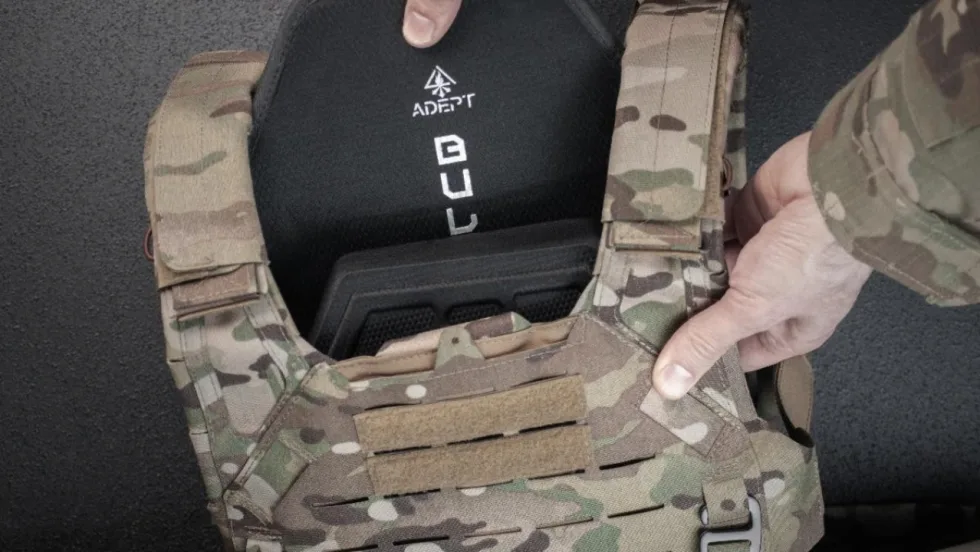
Adept Armor Introduces Two New Rifle Plates
Adept Armor has launched two new Level IV ballistic plates, the Emperor and the Archon Mark 2, which brings Adept Armor’s new Quatroid ceramic to the high-threat, performance-value center of the range at 5.2 pounds.
Read More →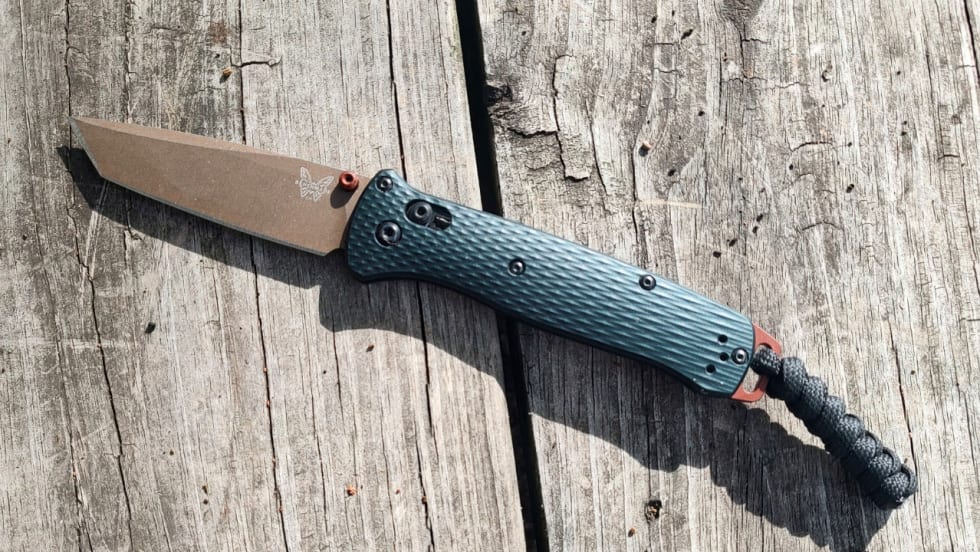
POLICE Product Test: Benchmade Bailout
The Benchmade Bailout is a slim, lightweight carry knife with a deep-ride pocket clip and comes in a variety of blade steels and scales. Here is a detailed review of the Taiga Green Bailout, released earlier this year.
Read More →
NLEOMF Announces July 2026 Officer of the Month
NLEOMF honored a Michigan deputy sheriff as the July 2026 Officer of the Month for rescuing a trapped driver from a burning vehicle following a Fourth of July crash.
Read More →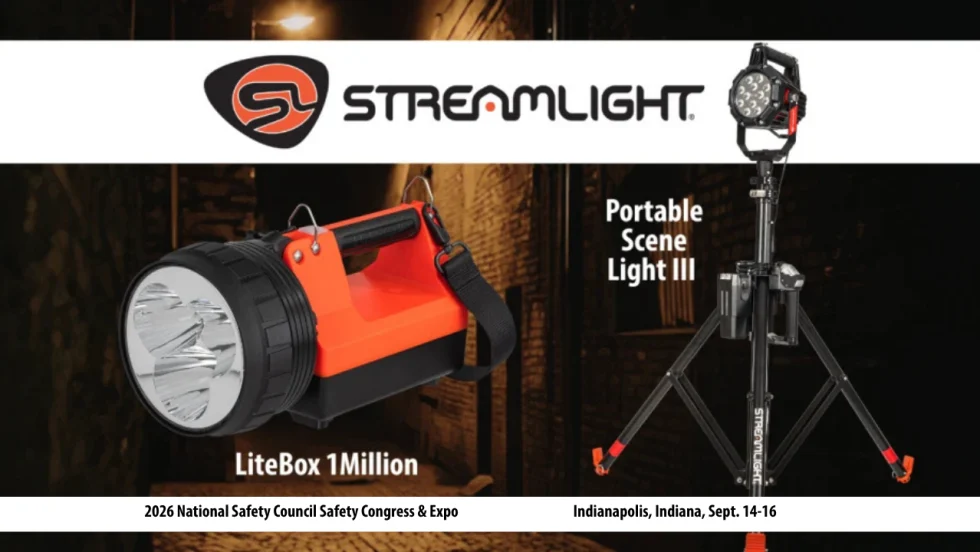
Streamlight to Showcase Newest Lighting Products at National Safety Council’s Safety Congress & Expo 2026
Streamlight will showcase its latest lights, including the Portable Scene Light III and the LiteBox 1Million, at the 2026 National Safety Council (NSC) Safety Congress & Expo.
Read More →
The 2027 World Police & Fire Games Set for Perth, Australia
The 2027 World Police & Fire Games (WPFG) will take place in Perth, Western Australia, from Friday, March 12 through Sunday, March 21, 2027.
Read More →
5.11 Partners with National Fallen Firefighters Foundation to Support #ForThe343
5.11 has joined the nationwide movement honoring the 343 New York City Fire Department firefighters lost on Sept. 11, 2001.
Read More →
Team Wendy Announces Title Sponsorship of the Jorge Pastore Foundation
Team Wendy’s 3-year partnership with the Jorge Pastore Foundation expands access to programs that strengthen those who serve.
Read More →
National Law Enforcement Memorial and Museum Hosting 9/11 25th-Year Commemoration Ceremony
The National Law Enforcement Memorial and Museum is hosting a 9/11 25th Year Commemoration Ceremony on Sept. 11 at 4 p.m.
Read More →
National Law Enforcement Officers Memorial Fund Announces June 2026 Officers of the Month
The National Law Enforcement Officers Memorial Fund (NLEOMF) named 15 officers of the Chico Police Department (California) as the Officers of the Month for June 2026 for their roles in responding to an active-shooter incident at a public library.
Read More →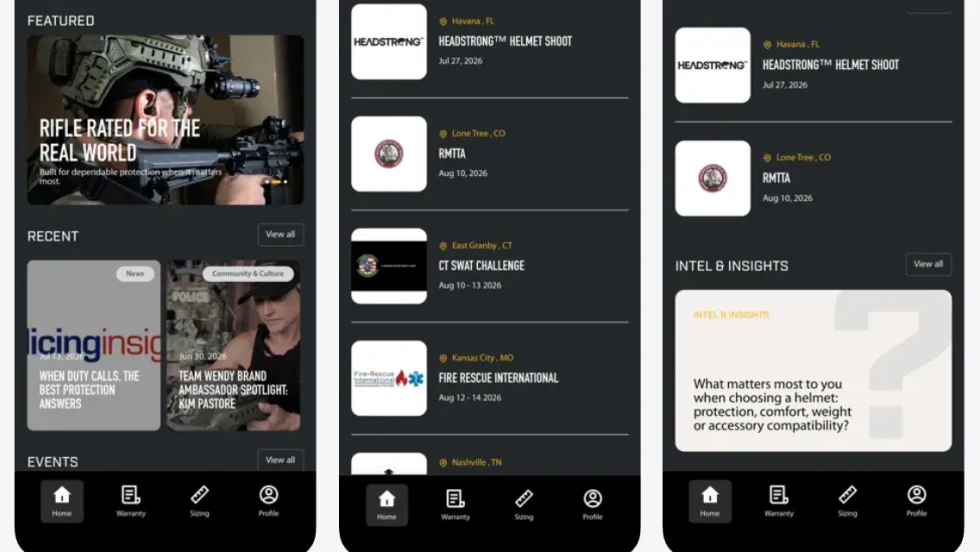
Team Wendy App Creates New Digital Hub for Helmet Owners
The Team Wendy Community App provides one location for warranty registration, size-fit tools, product updates, and community connection. For helmet owners, the new app creates a simpler path to the information and tools that matter most.
Read More →