



An Internal Affairs Investigation
No matter what steps are taken prior to patrol, you are liable to rub someone the wrong way and have a complaint lodged against you. Here's some advice on how to respond.

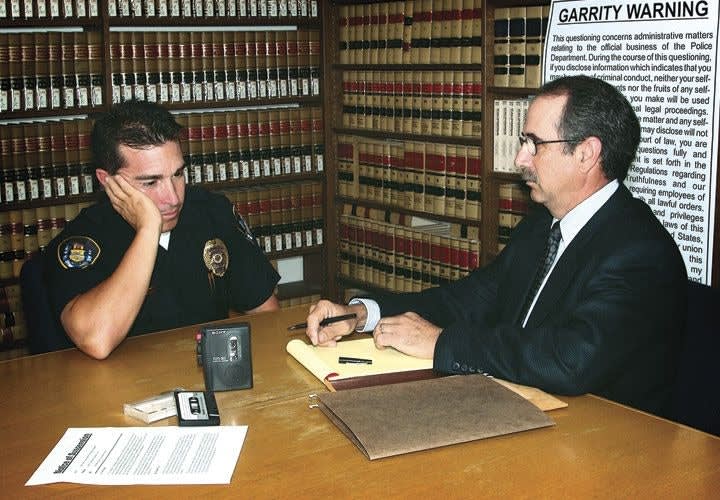
If you are a pro-active police officer, some citizen is someday going to lodge a complaint against you for something you did, something you failed to do, or something they think you did.
Many times these complaints can be handled by your first level supervisor. This process usually requires your supervisor to hear the citizen's story (several times), give the citizen a reasonable explanation for your actions, then promise the citizen that you will be spoken to. Most times when the supervisor hears your version of the event, he or she is satisfied with your professionalism and the explanation of your actions and the matter ends there.
But occasionally the matter goes to the next level of the department and that involves an official investigation by the Internal Affairs Bureau. When an officer hears her matter is being investigated by IA, she usually has two reactions: fear and defensiveness.
Complacency Kills Careers
Officers fear the IA process because of stories - many actually urban myths - about how fellow officers have been treated unfairly by the IA detectives.
This fear is exacerbated by the fact that the officer is on unfamiliar ground when being investigated by IA. Officers are used to the streets and the dangers posed by criminals; we are much less familiar with the IA process and the (real and imagined) threats posed by this type of investigation. But by taking simple steps we can be better prepared for the IA investigation process and can also lay the groundwork for a favorable outcome.
It can be argued that the number one killer of cops is complacency. At the beginning of our careers, we are alert and aware as we go through our day. Every call, no matter how mundane, is a new adventure. As new officers, we can still hear our academy instructors as they yelled, "Watch the hands," "Make a silent approach," "Always look for cover," and, "Be safe out there." But as our careers progress and we handle the same calls over and over without incident, our mindsets become soft, our reactions become soft, and our complacency endangers our lives.
An analogy can be drawn to an internal affairs investigation. Many times it is the officer's complacency that contributes to his downfall. Officers become lax in their preparation and execution and then when IA comes around, the officer is not fully prepared to defend his actions.
The first steps in defending against an internal affairs investigation are taken before you leave headquarters. You must make sure you know the laws you are enforcing. In the academy you were probably exposed to the entire traffic code manual. But when you got on the road you probably realized that you wrote the same five or six violations over and over. You should have intimate knowledge of these commonly written statutes. Make sure you know the proper wording of the statute and the intent of the statute.
Here's why: One officer had a problem with writing a summons for "failure to signal when changing lanes." He went through an entire investigation only to find out from the IA detective it is not illegal to change lanes without using a signal; it is illegal to change lanes without using a signal if that movement has an effect on other traffic. The officer did not really know the nuances of the statute and it hurt his credibility at the IA hearing.
You should also be an expert on departmental Standard Operating Procedures (SOPs). This is the standard you will be held to. It is essential that you know when your department expects you to tow a vehicle. What is the proper procedure for dealing with a person alone on an interstate? Can a juvenile be released on his own recognizance? These are matters that should be mastered before you go out on the road.
Defending Your Discretion
Another pre-patrol step you can take in preparation for a citizen complaint is to have an articulable, defensible discretion equation in place. Discretion is widely recognized as a necessary element of the criminal justice system. You are not expected to write every ticket to every person who violates every statute. Instead, you are expected to have a reasonable discretion equation in place that aids in the decision-making process.
When asked by IA "Why did you take this enforcement action?" You should have several defensible reasons in place. A professional officer may consider the severity of the offense, the driver's attitude, current departmental policies, and what else is going on at the time. Having a simple, straightforward explanation of the enforcement action taken goes a long way in an IA investigation; this explanation is further buttressed by consistent enforcement under the same guidelines.
The best thing you can do in preparing for an internal affairs investigation is make sure the dashboard camera is working. The greatest thing that ever happened to clean cops was the installation of dashcam videos. Gone are the days of "He said/She said" investigations. Now an investigation can be much shorter and much more accurate when a video of the event is available. Prior to the beginning of the patrol day, make sure your dashcam video is functional.
Complaints Happen
No matter what steps are taken prior to patrol, you are liable to rub someone the wrong way and have a complaint lodged against you. Here's some advice on how to respond.
When you first become aware of an internal affairs investigation being initiated, you must first take stock of your rights and the possible consequences. In many states you do not have the right to an attorney (or any other representation present) during an internal investigation interview. You also cannot unreasonably delay the interview or refuse to cooperate.
However, you are entitled to protections under the Garrity Warning, which basically says an officer can be compelled to give a statement by departmental regulations but those statements cannot be used against you in subsequent criminal proceedings. It is best to review your state law and departmental policies prior to any investigation being started.
How did the fish get hooked? He opened his mouth. Most of you recognize that joke from the police academy. It applies to you, too.
Think about a person who is stopped for speeding; the first thing he does is give a million excuses to explain why he was speeding. He is basically admitting to the violation. Well the same holds true in an IA investigation. When an officer is first contacted by IA, the officer's initial reaction is to talk. Do yourself a favor and keep your mouth shut.
Do not respond immediately. No matter what you are doing when you receive the phone call from IA, tell them you are too busy to talk and you will call them back in five minutes. There are very few investigations that are so pressing that the detective cannot wait five minutes. (Note: If you are involved in an investigation where the detective cannot wait five minutes to speak to you, you need a lawyer.) Remember, a person making a phone call is always at a great advantage over the person receiving the phone call. Reset the paradigm of this important first interaction by calling the detective back when you are ready.
In the five minutes you have before you call the detective back, do exactly what the detective did in the five minutes before he called you. Center yourself on this matter. Collect your thoughts. Make thorough written notes. Mentally decide what you will and will not talk about. Lay your case out on paper. Then call the IA detective back.
Needless to say, your attitude toward the detective needs to be professional, forthcoming, and honest. The first thing you must establish in this initial conversation is what you are being accused of. Do not let the detective go on a fishing expedition by asking questions like: "Tell me about your motor vehicle stop at 10 A.M." Find out what you are being accused of.
Make sure the citizen and the IA detective have clearly defined the complaint. "Harassment" is not a specific charge; it is a vague statement. Harassment has a number of definitions starting with acts defined under the Civil Rights Act of 1964 and now including computer spamming.
You want to know specifically how you allegedly harassed this person. Is the complaint specifically about your attitude and demeanor? Is the complaint about harsh language? Is the complaint about the duration of the stop? Is the complaint about the enforcement action taken? Only if you know the specific charge can you formulate a specific defense. If you do not know the specific charge you are likely to begin to talk about matters that were not originally under investigation.
Building a Defense
When you formulate your defense, formulate it from back to front. Don't try to put unrelated information forward and expect it to come out as a cogent defense. It is better to anticipate your defense and speak only to that issue.
For example, if your defense is going to be "I took this enforcement action based on the driver's attitude," get the IA detective to admit at the beginning of the interview that a driver's attitude is a reasonable factor in a discretion equation.
For example, ask something like: "Detective, if you stop a person who is truly sorry about committing the violation, is it reasonable to let that person go with a verbal warning?" In most cases the detective will agree with you that a truly contrite person could be let go with a verbal warning. The detective has also agreed that driver's attitude is a legitimate concern on a motor vehicle stop.
Now as you make your case you can show how it was the driver's negative attitude that precipitated the events being investigated. The driver was the instigator of the negative interaction by displaying such a bad attitude. This strategy can only work if you know what you ultimately want to prove and begin to lay the groundwork at the beginning of the interview.
When you think about the stop, think about all the violations, not just the primary violation. "The driver was speeding, but he also had a cracked windshield and wasn't wearing his seat belt." In this case if you only wrote one summons even though three violations were present, you come off like a focused professional who was not distracted from your mission by the driver with the bad attitude. This tactic is reinforced by your body of work.
Estimate how many motor vehicle stops you have made and how many times you have taken enforcement action. Make the IA detective aware that the vast majority of your stops do not result in complaints. You have a history of being a fair and professional officer.
Unfounded and Exonerated
If you had a number of complaints against you, there is no doubt the detective will weigh that against you. Make sure that if you have a minimal number of complaints the detective considers that also.
Ask the detective what the possible outcomes of the investigation can be. Make sure one of the possible outcomes is "exonerated." Exonerated varies greatly from "unfounded." A result of "unfounded" indicates that there really wasn't enough evidence on either side to come to a complete conclusion: the case could not be established. Exonerated means you were cleared of the charge and found free of any guilt or blame. You do not want a number of "unfounded" complaints lingering in your personnel jacket. Take steps to see that you are exonerated.
Most officers view IA detectives as pariahs in the profession. The fact is they provide a necessary and vital service to the profession and the community. A true law enforcement professional recognizes that the internal affairs detectives are an integral part of the law enforcement community.
Det. Joseph Petrocelli is a 20-year veteran of New Jersey law enforcement and the author of the books "Anatomy of a Motor Vehicle Stop" and "No One Trips Over a Mountain." You can comment on this article, suggest other topics, or reach the author by sending a message to editor@PoliceMag.com.
More Patrol

Streamlight Portable Scene Light III Wins 2026 OH&S New Product of the Year Award
Streamlight’s Portable Scene Light III has won the 2026 Occupational Health & Safety (OH&S) New Product of the Year Award in the Lighting category.
Read More →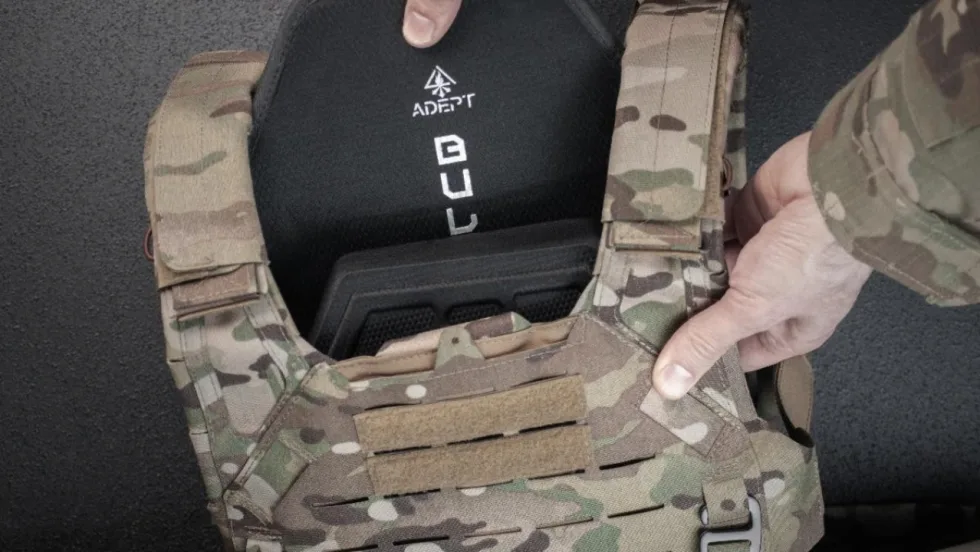
Adept Armor Introduces Two New Rifle Plates
Adept Armor has launched two new Level IV ballistic plates, the Emperor and the Archon Mark 2, which brings Adept Armor’s new Quatroid ceramic to the high-threat, performance-value center of the range at 5.2 pounds.
Read More →
POLICE Product Test: Benchmade Bailout
The Benchmade Bailout is a slim, lightweight carry knife with a deep-ride pocket clip and comes in a variety of blade steels and scales. Here is a detailed review of the Taiga Green Bailout, released earlier this year.
Read More →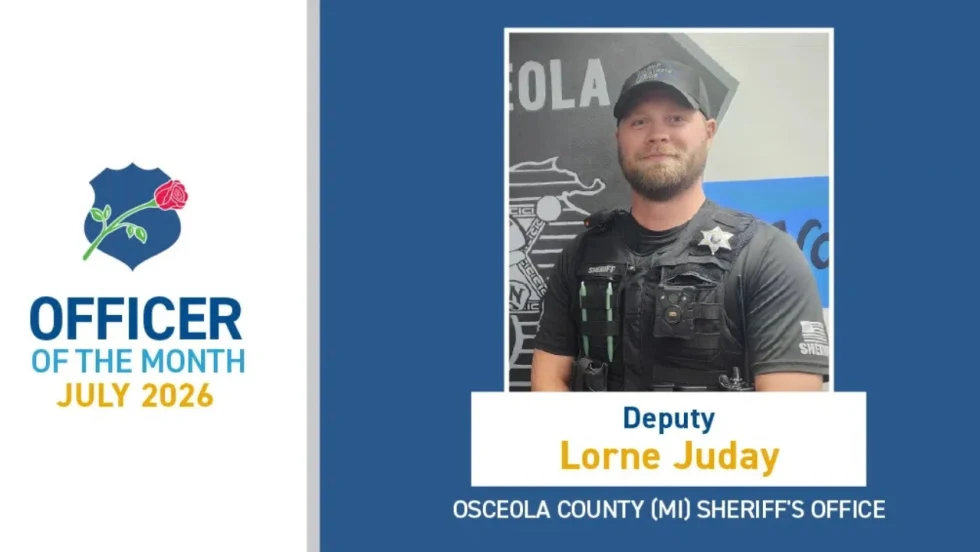
NLEOMF Announces July 2026 Officer of the Month
NLEOMF honored a Michigan deputy sheriff as the July 2026 Officer of the Month for rescuing a trapped driver from a burning vehicle following a Fourth of July crash.
Read More →
Streamlight to Showcase Newest Lighting Products at National Safety Council’s Safety Congress & Expo 2026
Streamlight will showcase its latest lights, including the Portable Scene Light III and the LiteBox 1Million, at the 2026 National Safety Council (NSC) Safety Congress & Expo.
Read More →
The 2027 World Police & Fire Games Set for Perth, Australia
The 2027 World Police & Fire Games (WPFG) will take place in Perth, Western Australia, from Friday, March 12 through Sunday, March 21, 2027.
Read More →
5.11 Partners with National Fallen Firefighters Foundation to Support #ForThe343
5.11 has joined the nationwide movement honoring the 343 New York City Fire Department firefighters lost on Sept. 11, 2001.
Read More →
Team Wendy Announces Title Sponsorship of the Jorge Pastore Foundation
Team Wendy’s 3-year partnership with the Jorge Pastore Foundation expands access to programs that strengthen those who serve.
Read More →
National Law Enforcement Memorial and Museum Hosting 9/11 25th-Year Commemoration Ceremony
The National Law Enforcement Memorial and Museum is hosting a 9/11 25th Year Commemoration Ceremony on Sept. 11 at 4 p.m.
Read More →
National Law Enforcement Officers Memorial Fund Announces June 2026 Officers of the Month
The National Law Enforcement Officers Memorial Fund (NLEOMF) named 15 officers of the Chico Police Department (California) as the Officers of the Month for June 2026 for their roles in responding to an active-shooter incident at a public library.
Read More →