



5 Fundamentals of Making an Arrest
Always remember we need to Immobilize, Control, Handcuff, and then Search. Once handcuffed, search the subject's immediate area where he or she can retrieve a weapon while handcuffed. This includes the waist area, the groin area, pants pockets, and the small of the back-all favorite spots that criminals like to hide their firearms and other weapons.

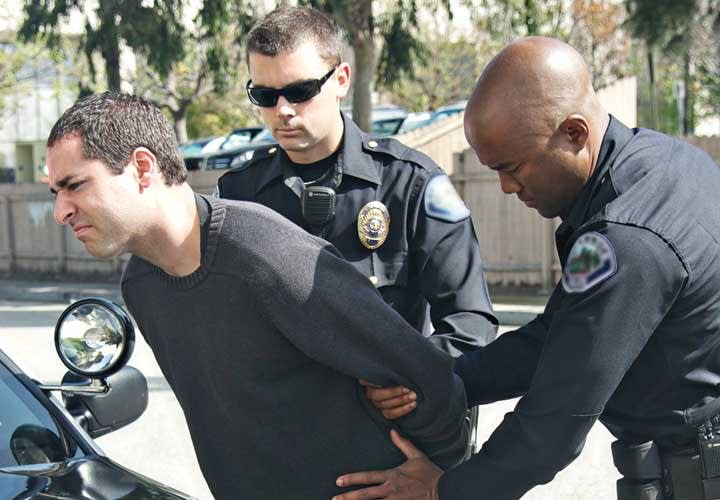
Photo: Vince Taroc.
"Ah, the good ole days when you could just cuff the bad guy and stuff him in the back of the paddywagon. You didn't have to worry about being shot back then."
Maybe you've heard some older or retired cops talk like that. The truth is not quite so rosy as their hazy nostalgia. Those really weren't the good old days, at least not in terms of officer safety and survival tactics. Such training was really lacking back then. It took some officer injuries, and unfortunately some fatalities, for us to learn a better way.
We in law enforcement don't have sterilized laboratories or expensive wind tunnels in which to conduct our experiments to see what works and doesn't work out on the street. We've had to pay for those mistakes with our blood, and sometimes our lives.
One such mistake is the improper search of an arrestee. We know criminals carry weapons and contraband, and we need to search them thoroughly before we place them in the back of our cruisers. But have we really learned that lesson, or are we still committing the mistakes of the past? Have we really learned from "the good ole days?"
Casualties
Consider the case of a Houston officer who in September 2006 arrested an illegal immigrant, searched him, placed him in handcuffs, and put him in the back of the police cruiser. The subject was able to retrieve a 9mm handgun from his waistband and fire eight rounds, killing the officer.
In January 2007, a Los Angeles officer was attacked by a handcuffed suspect who managed to reach for a gun hidden in his pants, open fire, and wound the officer before being shot dead by other officers. The officer was shot four times. Fortunately, his badge, his firearm, and his ballistic vest protected him from three of the rounds. The last round went through his right armpit and exited his chest, missing any vital structures.
That same year, a Kentucky state trooper arrested an intoxicated subject and "pat searched" him before putting him in handcuffs and placing him in the backseat of his cruiser. During transport, the man pulled out a concealed handgun and demanded to be released. The trooper stopped the vehicle, and once outside of the vehicle, was forced to shoot the man. The suspect died later at a hospital.
These are just three examples of officers paying the price of bad searches. Unfortunately, this seems to be one of those issues from "the good ole days" that continues to plague us today. The FBI does extensive research into officers that have been assaulted and killed in the line of duty, and discovered some alarming trends about suspect searches.
The FBI found that we are reluctant to search persons who appear to be very dirty or appear to be "street people." We are also reluctant to search perceived narcotic abusers. Who among us wants to search the guy who has urinated or defecated on himself? Arresting officers admitted that searching some subjects became secondary to their perceived need to gain physical control over the individual. Both male and female officers admitted that they were reluctant to search the groin area of male and female arrestees.
Bad guys knew this before we did. Several individuals interviewed by the FBI for the study stated they knew that both male and female officers were reluctant to search the groin area of a male or female offender, and therefore carried their weapons and contraband in this area.
Of the offenders interviewed for the FBI study, 70 percent stated the major area that male officers neglected to search on male prisoners was the groin area. Only eight percent-four out of 50-stated that law enforcement searches were conducted properly. These were not just simple "pat downs" out on the street, but full in-custody arrest searches.
Five Fundamentals
Whenever you make an arrest, follow these fundamentals: Immobilize, Control, Handcuff, Search, and Transport.
Just as you would take the steps to gather the proper evidence needed to build a solid case, you need to take the proper steps during the arrest process to ensure your safety. Follow these five steps and you'll be safer on the street, and not one of those officers that the bad guys get to tell the FBI about.
Immobilize: Stop the subject's movements. Whether done through verbal commands, use-of-force options such as TASERs or OC, or by some other means. You can't move onto the next step, Control, without first stopping the subject's movements.
Control: Too many officers try to handcuff someone without first gaining control, which usually results in officer injuries. Given the technologically advanced equipment we have today, including TASERs and OC spray, this is unacceptable.
Handcuffing: Handcuff everyone, no matter what the suspect's size, gender, or shape. Handcuff everyone behind his or her back. Handcuffing someone in front gives the suspect too much mobility, allowing her too much freedom of movement, giving her the opportunity of being able to reach a concealed firearm or other weapon. When handcuffing someone behind her back, be sure to place the backs of her hands together. This will prevent some of the more flexible suspects from being able to slip the handcuffs from around their backs under their legs. Handcuffed suspects are responsible for stealing more than 100 police vehicles each year.[PAGEBREAK]
Search: Always conduct a proper search of the person you are handcuffing. Cuff first, then search. Never search first, and then handcuff. The ages of subjects that have feloniously killed law enforcement officers ranges from 12 years old to 82 years old. You have to have the mindset that everyone, no matter the person's size, race, gender, or age, poses a possible threat.
Transport: Never let your guard down until the transport is complete, and the subject has been turned over to someone else or incarcerated. When doing a transport, we have a tendency to let our guard down the closer we get to our destination. The opposite is true of the suspect in the backseat. The closer we get to the facility, the higher his or her stress and anxiety level becomes. Often the end of the transport is one of the most dangerous times because the bad guy knows that's the end of the road.
Difficult Searches
We've talked about the importance of a proper search, but we don't always work under the most ideal of conditions. Sometimes a thorough search of the subject cannot be completed at the time of the arrest. This may be because of the arrest location. For example, suspects have been known to jump into bodies of water to try to elude us and conducting a thorough and complete search in the middle of a swamp, or lake, is never a good option.
Other factors inhibiting a proper search may be due to environmental conditions. Gale force winds or heavy downpours make it difficult to search someone.
Another factor may be the presence of hostile others in the area. Conducting a thorough, systematic search of some gangbanger on a street corner in front of 20 of his homies is never a good idea. Lastly, conducting a proper search of a combative subject is always difficult.
But there are some tactics you can use to make yourself safer. Always remember we need to Immobilize, Control, Handcuff, and then Search. Once handcuffed, search the subject's immediate area where he or she can retrieve a weapon while handcuffed. This includes the waist area, the groin area, pants pockets, and the small of the back-all favorite spots that criminals like to hide their firearms and other weapons.
Once you clear the suspect's immediate area where he or she can retrieve a weapon, conduct a more thorough, systematic search of the subject. This includes going back over the areas that were immediately checked the first time. If this second search cannot be conducted properly because of the environment, the location, the presence of hostile others, or a combative arrestee, then at the very least frisk the subject entirely for possible weapons, and complete a more thorough search of the subject when it is more tactically sound to do so.
This may mean moving the subject to a better location. If you're in a swamp, move him to higher ground. If you're out in a downpour, move him to one of those gas stations with a big canopy. There you'll be dry, and most of those areas are also very well lit. If other hostile subjects are present, quickly move the subject out of the area after conducting your initial frisk for weapons, and conduct a more thorough search at another location. This may just mean moving the subject a couple of blocks to an area where his or her fellow gang members can't see you. Be sure to call off with your location, and the fact that you'll be conducting a proper search of the individual. This is done so no false accusations can be leveled against you, and dispatch knows exactly where you are and what you're doing.
If you're dealing with an actively combative person, whether mentally ill or not, you'll still want to conduct a frisk for any possible weapons. Once you've been able to calm the subject down or completely immobilize his movements through the use of restraining devices such as leg irons or other tools, you'll need to conduct a more thorough search of the subject.
Don't be afraid to search the subject more than once, or to have more than one officer search the subject. Every time the subject is transferred to another officer, or picked up or dropped off at a correctional facility or stationhouse, the subject needs to be searched. On more than one occasion a subject has been found to be in possession of a weapon or contraband while being transferred from another officer or picked up from a correctional facility.
Follow the five fundamentals of an arrest-Immobilize, Control, Handcuff, Search, and Transport-and you'll be safer for it. And everyone around you will be safer as well. The fewer of us in law enforcement that show up on those FBI statistics, the better.
Michael T. Rayburn has served more than 30 years in law enforcement and is currently an adjunct instructor for the Smith & Wesson Academy, where he teaches a handcuffing instructor program. He can be reached at editor@policemag.com.
More Patrol

Team Wendy Introduces the EXFIL Endurance Ballistic Helmet, Engineered to Reduce the Burden of Extended Wear
Team Wendy has launched its EXFIL Endurance, a new lightweight ballistic helmet engineered to deliver protection, comfort, and fit during demanding, extended operations.
Read More →
The First Responders Children’s Foundation National First Responders Day Roll Call of Heroes Ceremony Returns to Times Square, NYC
First Responders Children’s Foundation (FRCF), in collaboration with T-Mobile, will host the Roll Call of Heroes ceremony in Times Square to commemorate National First Responders Day on Wednesday, Oct. 28. During the event, FRCF will present 18 Hero Awards.
Read More →
Streamlight to Showcase Newest Lighting Products for Law Enforcement Professionals at IACP 2026
Streamlight will showcase its newest lights for law enforcement at the International Association of Chiefs of Police Annual Conference & Expo. Featured lights will include the TLR-3 X, the PolyTac 1X, and more.
Read More →
Streamlight Portable Scene Light III Wins 2026 OH&S New Product of the Year Award
Streamlight’s Portable Scene Light III has won the 2026 Occupational Health & Safety (OH&S) New Product of the Year Award in the Lighting category.
Read More →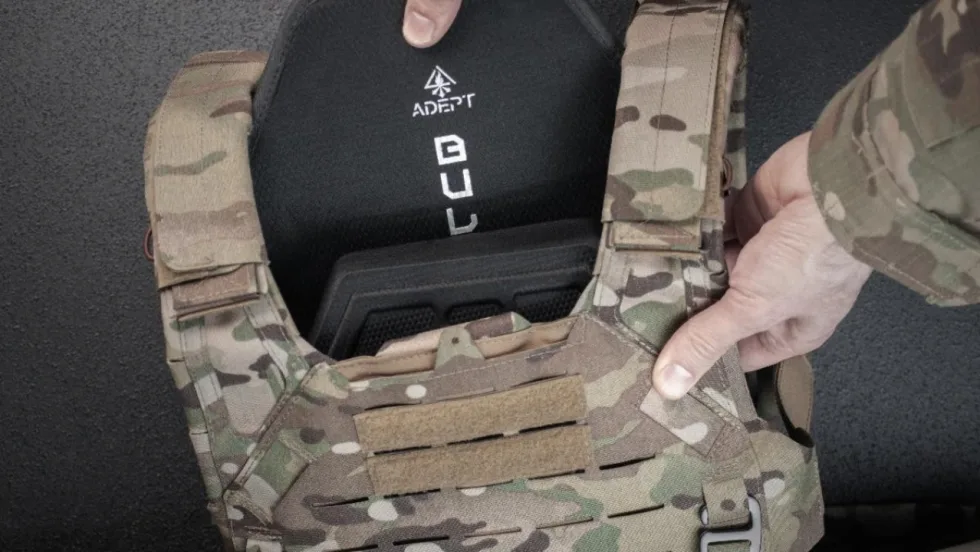
Adept Armor Introduces Two New Rifle Plates
Adept Armor has launched two new Level IV ballistic plates, the Emperor and the Archon Mark 2, which brings Adept Armor’s new Quatroid ceramic to the high-threat, performance-value center of the range at 5.2 pounds.
Read More →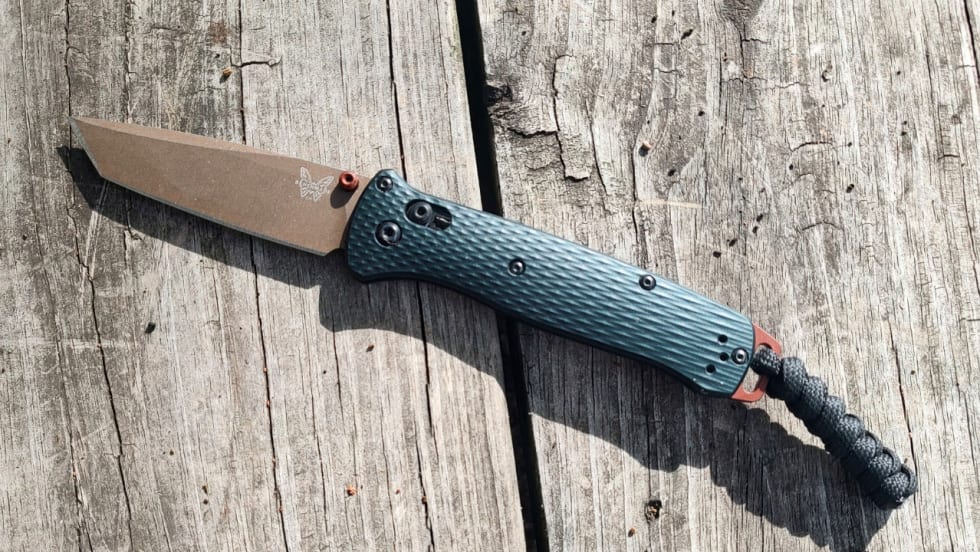
POLICE Product Test: Benchmade Bailout
The Benchmade Bailout is a slim, lightweight carry knife with a deep-ride pocket clip and comes in a variety of blade steels and scales. Here is a detailed review of the Taiga Green Bailout, released earlier this year.
Read More →
NLEOMF Announces July 2026 Officer of the Month
NLEOMF honored a Michigan deputy sheriff as the July 2026 Officer of the Month for rescuing a trapped driver from a burning vehicle following a Fourth of July crash.
Read More →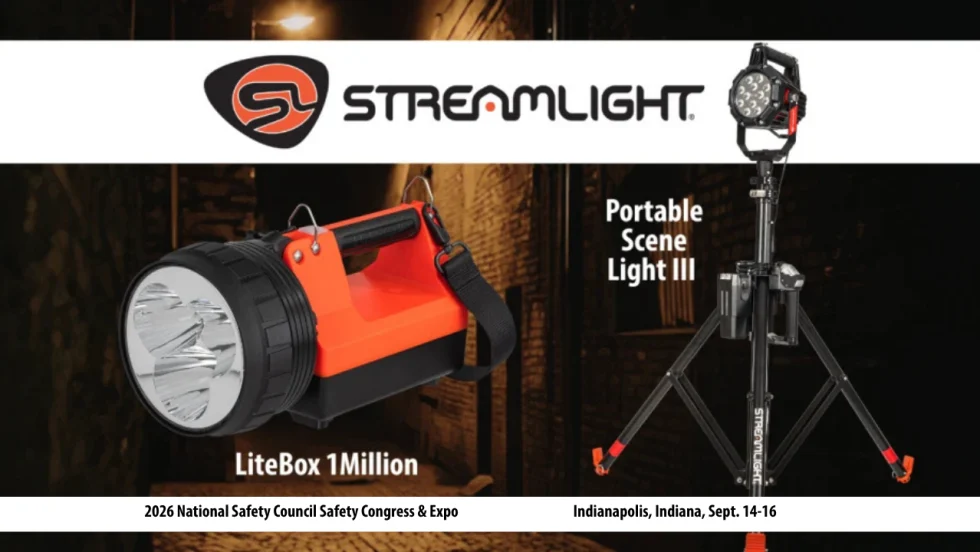
Streamlight to Showcase Newest Lighting Products at National Safety Council’s Safety Congress & Expo 2026
Streamlight will showcase its latest lights, including the Portable Scene Light III and the LiteBox 1Million, at the 2026 National Safety Council (NSC) Safety Congress & Expo.
Read More →
The 2027 World Police & Fire Games Set for Perth, Australia
The 2027 World Police & Fire Games (WPFG) will take place in Perth, Western Australia, from Friday, March 12 through Sunday, March 21, 2027.
Read More →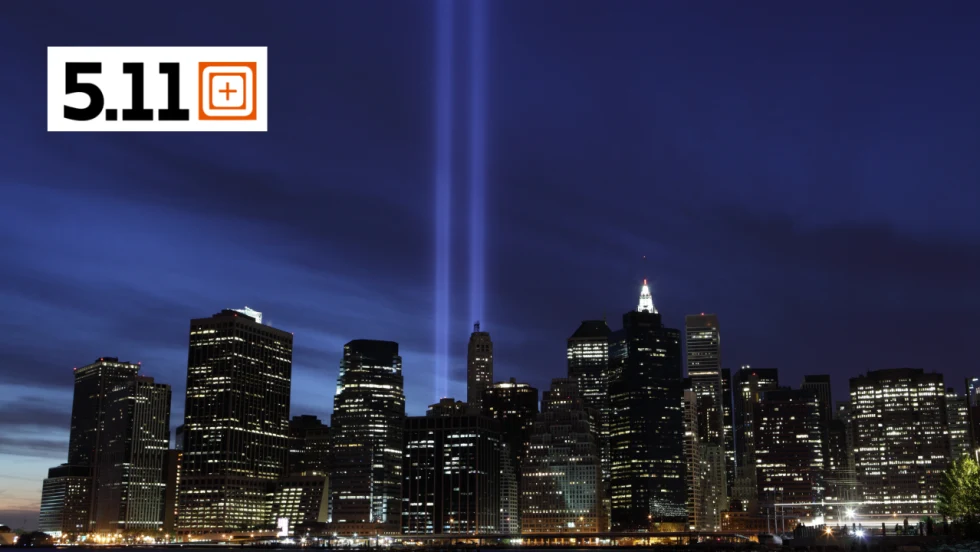
5.11 Partners with National Fallen Firefighters Foundation to Support #ForThe343
5.11 has joined the nationwide movement honoring the 343 New York City Fire Department firefighters lost on Sept. 11, 2001.
Read More →