



Federal WTC Report Says Fireproofing Needed
Improved fireproofing "hardened" to withstand the catastrophic impact of a plane should be included in high-risk buildings in the wake of the World Trade Center collapse, a federal study says.

Fireproofing that sticks to steel beams and emergency stairwells "hardened" to withstand the catastrophic impact of a plane should be included in high-risk buildings in the wake of the World Trade Center collapse, a federal study says.
The report from the Federal Emergency Management Agency and the American Society of Civil Engineers also said the trade center's unique steel supports — called trusses — "may have played a role in allowing the buildings to collapse in the manner that they did." But the report said more study was needed before a final conclusion could be drawn.
Lawmakers at the Science Committee hearing where the report was formally unveiled Wednesday said more study was needed to make buildings safer.
"If we want to ensure that the legacy of this tragedy is that future building collapses are avoided or mitigated, we need to do a better job of investigating the causes," said Rep. Anthony Weiner, D-N.Y.
He and committee chairman Rep. Sherwood Boehlert, R-N.Y., took the wraps off legislation designed to better investigate building collapses.
The federal report said investigators detected no substandard structural problems at the trade center. In fact, the towers exceeded building code requirements in some areas, the report noted.
The report confirmed the consensus that barring a windstorm or an earthquake the twin towers could have withstood the impact of the two hijacked Boeing 767 airliners that plowed into the trade center on Sept. 11. The towers succumbed to the ensuing fire — fed by thousands of gallons of aviation fuel — that softened the buildings' steel framework.
"The fact that the structures were able to sustain this level of damage and remain standing for an extended period of time is remarkable and is the reason that most building occupants were able to evacuate safely," according to the report.
Still, the report said it was unclear whether engineering ever could protect buildings from fast-moving aircraft.
"Reliably designing a building to survive the impact of the largest aircraft available now or in the future may not be possible," the report said.
Professor Jonathan Barnett of Worcester Polytechnic Institute, one of the study's investigators, said the study proved overall the trade center performed well on Sept. 11.
"We didn't find a glaring blunder," Barnett said.
Still he conceded that the overall findings "could have a chilling effect on construction" of tall buildings.
The National Institutes of Standards and Technology is poised to take over the trade center collapse investigation, which it expects to take two years and cost $16 million. Institutes director Arden Bement said Wednesday he expected the results of his investigation "could lead to major changes in both U.S. building and fire codes and in engineering practice."
One key question will revolve around the trusses, the bracket-like steel supports which held up each of the 110 floors and provided lateral support to the skyscrapers' vertical columns.
Another will be whether fireproofing and stairwell safety recommendations for buildings "evaluated or designed for extreme events" should apply to structures generally.
The impact of the jets is believed to have blown off the fluffy fireproofing material on the trade center's steel columns, making them susceptible to the intense heat from ensuing fire. Fireproofing able to withstand such impact is used in U.S. Navy destroyers but the cost could be prohibitive, Barnett said.
In theory, the team found, occupants in the floors above the impact could have escaped had the stairwells been strengthened to withstand the attack and had the emergency escape routes not been placed so close together.
The two Boeing 767s slammed into the twin towers on the morning of Sept. 11. The north tower, struck first, stood for 102 minutes. The south tower fell 56 minutes after impact.
The suicide terrorist attack left 2,823 people dead or missing, though many thousands more escaped. Most of the victims were trapped in the floors above where the jetliners struck.
A large portion of the approximately 10,000 gallons of jet fuel in each plane was quickly consumed in massive fireballs that caused structural damage. But it was the remaining fuel that spilled across floors and down elevator shafts, setting ablaze furniture, computers, paper files and the planes' cargo over multiple floors and igniting an inferno.
More Training
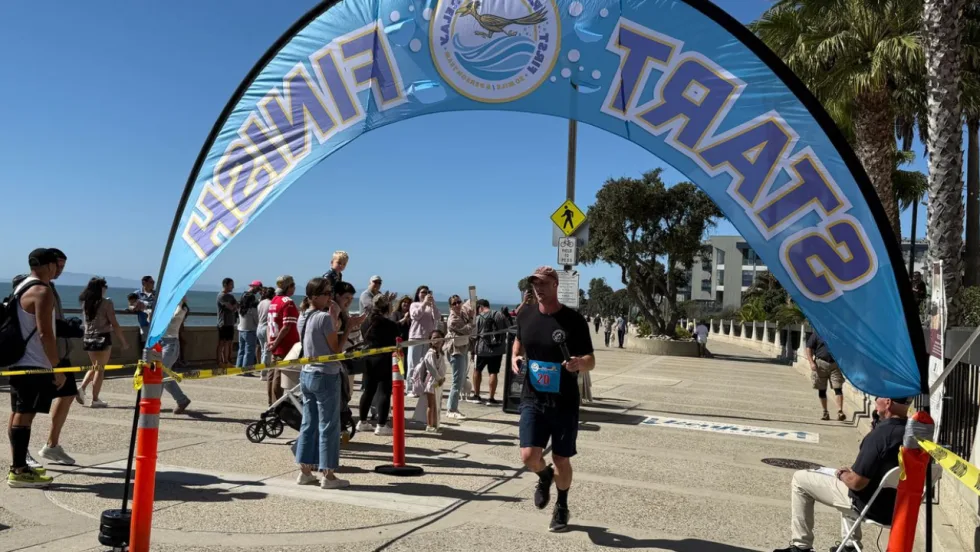
Registration Underway for Sixth Annual First Responders Relay
The California Police Athletic Federation’s annual First Responder Relay will welcome first responder teams from across the globe to compete along Ventura's scenic coastline on Oct. 11. Registration is underway.
Read More →
Vector Solutions Launches Comprehensive Online Dispatch Training Catalog for Emergency Communications Professionals
Vector Solutions’ new catalog of 35 expert-developed online courses can help emergency communication centers strengthen training, meet certification requirements, and simplify continuing education.
Read More →
Tools for Active Shooter Response Training
What technologies help prepare officers for active shooter response situations? This behind-the-scenes look at law enforcement training explores shot simulators, smart firearms, laser target systems, and the tools used to build safer, more effective training environments.
Read More →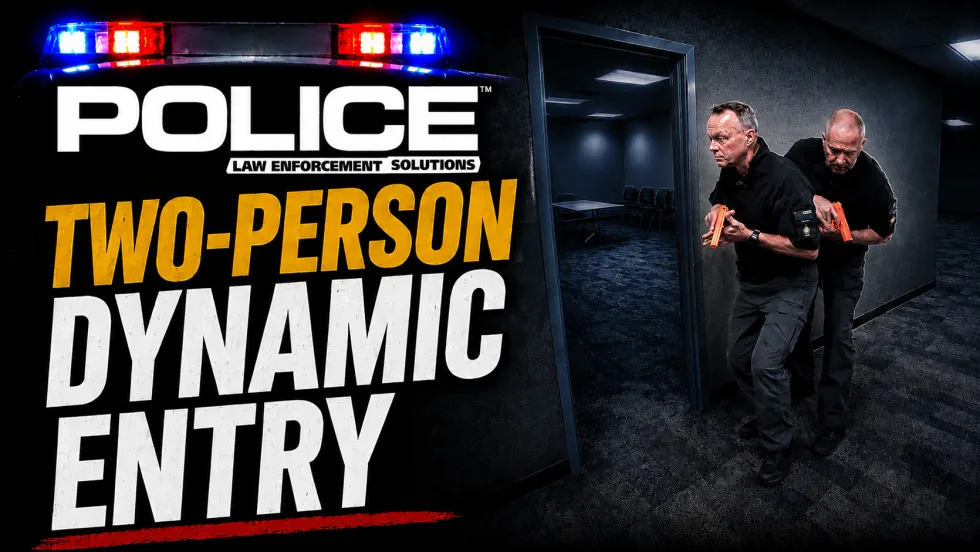
Two-Officer Tactical Doorway Entry Techniques
Entering a room during active-threat situations requires communication, coordination, and disciplined tactical movement. In this video, trainers from the United States Deputy Sheriff’s Association demonstrate critical room entry concepts, including fatal funnel awareness, team coordination, and safe tactical movement.
Read More →
High Compressed Ready Explained | Muzzle Control For Room Entry
In this video, Mike Willis, law enforcement national training and program director for the United States Deputy Sheriffs’ Association, demonstrates the high compressed ready position and discusses muzzle control during room entry.
Read More →
Why Attend the DroneSense Innovation Summit by Versaterm?
Let’s hear from Ryan Bracken, head of product, about why your agency should send someone to the first annual DroneSense Innovation Summit by Versaterm in April.
Read More →
Caswell Live Fire Spins Off from InVeris
Caswell Live Fire has spun off from parent company InVeris, coinciding with the 100th anniversary of Caswell’s founding. Over the past 100 years, Caswell has developed pioneering solutions that support military, law enforcement, and commercial clients worldwide.
Read More →
When Do You Transport a Wounded Officer Instead of Waiting for EMS?
Thumbnail for video series POLICE Topics, Tactics & Tips with a yellow headline that reads When Do You Transport a Wounded Officer Instead of Waiting for EMS?
Read More →
How to Pick Your High-Risk Stop Location for Tactical Advantage
Hear veteran trainer Mike Willis, of the United States Deputy Sheriff’s Association, explain several considerations that can help you wisely pick your best spot to initiate high-risk or felony traffic stops.
Read More →
Coffee Break with Police Experts: Using Your Patrol Vehicle for Cover
In this video, hear from Dustin Mowery, a product specialist at Team Wendy, as he discusses how to best use a patrol vehicle for cover.
Read More →