



On-Body Video: A Double-Edged Sword
Until recently the technology was limited to traffic stops and perhaps some critical incidents. Now, video can be used to document every aspect of a law enforcement officer's shift. But the question that each agency has to answer remains: Is that a good thing?

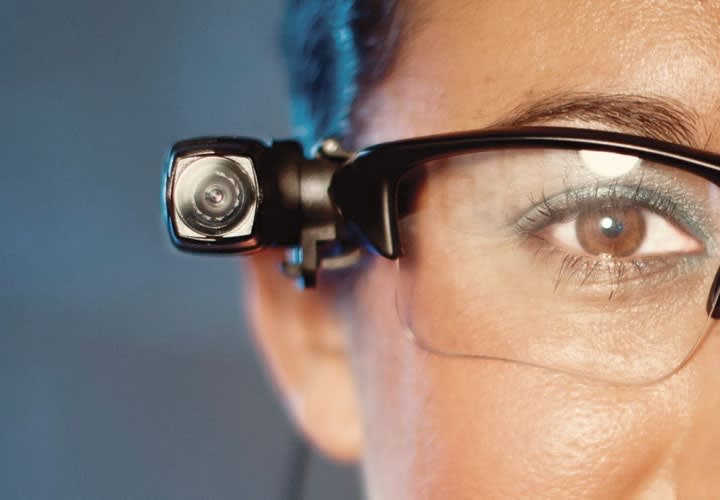
Photo: Mark W. Clark
When Sgt. Troy Burnett of the Ogden (Utah) Police Department burst through the door of a residence during a search warrant service, his response to the sight of a man charging at him and his fellow officers with a MacGregor Lite golf club was predictable: He fired his .40 caliber Glock 22 to stop the threat. About the last thing on his mind at that moment was the helmet cam he was wearing, but it was one of the first things that his supervisors and others reached for in evaluating his decision to fire.
After reviewing the images captured on video during the September 2010 drug bust, Weber County Attorney Dee Smith concluded that the suspect was a half-second away from closing the distance and making good on his threat. His opinion was reflective of most who've taken a long hard look at the incident: Burnett's shooting of 45-year-old Todd Blair was clearly justified.
But when that same footage found its way to the Internet courtesy of the Salt Lake Tribune, a less empathetic audience criticized Burnett's actions. Before long, Burnett was receiving death threats; even his children were subject to harassment.
The outcomes of our profession's growing use of videos to chronicle the actions of its personnel have varied from good to bad. Rarely is this as attributable to the technology itself as how it is used, or misused, by others. Until recently the technology was limited to traffic stops and perhaps some critical incidents. Now, video can be used to document every aspect of a law enforcement officer's shift. But the question that each agency has to answer remains: Is that a good thing?
"I am a huge fan of any camera," says Sgt. Ken Farr with the Lakeway (Texas) Police Department. "From an officer's standpoint, it gives me protection from any false allegation."
Indeed, for many years video footage taken with dashboard-mounted cameras has provided the public with greater understanding of the dangers that officers face in the field. Extending the range of the traditional dashcam, the increasing use of portable cameras worn on an officer's uniform or body has been particularly beneficial in documenting volatile situations that take place out of eye line of car-mounted cameras.
Frank West, former director of public safety (fire and police chief) with the city of Big Rapids, Mich., never had an opportunity to wear uniform cameras—but his officers did.
"It actually got to the point where they would complain if one didn't work," notes West, who became something of an advocate himself. "As an administrator, 90% of my use was positive. When the complaining citizen was shown what had happened, they went away."
Today, any officer-involved action is subject to being recorded, if not by the officer, then by others at the scene. Less favorable legacies of partially recorded events—most infamously illustrated by the Rodney King incident—include strained police-community relations, civil litigation and possibly violent unrest, as well as the potential for suspects to be given the benefit of the doubt while officers are unduly painted in a bad light. A distinct advantage to officers wearing video recording technology is the opportunity to provide objective documentation of what transpires during an incident, from start to finish.
Body-worn cameras capture the emotional state of the suspect and victims inside the house on domestic violence calls from the moment the door opens. On traffic stops, these devices record the visible interior of the car and the actions of the driver and passengers from the officer's viewpoint. Upon later review, these videos provide more convincing testimony about the precursors and causes of an officer's actions than the officer's word alone. Statements made and actions taken by people at the scene are not easily refuted later. In those incidents that take place in front of an in-car camera, additional body-worn cameras afford secondary—and more fluid—perspectives of the same event.
In addition to assisting investigators in clearing complaints against officers, the use of body-worn cameras also facilitates the collection of witness testimonies in the field. Brian Muller, a sergeant with the Los Angeles County Sheriff's Department, notes that it hasn't always been easy to conduct a supervisory investigation in the aftermath of a deputy-involved use of force, particularly as it relates to interviews of participants and onlookers.
"One nice thing about this technology is that it avails a low-profile means of getting people to speak with you candidly without being so consciously aware of the fact that they're being videotaped," says Muller. "Usually people clam up when they see a video camera in such close proximity for fear that their homies and others may end up seeing them talking with police."
There are other less obvious ancillary benefits to body-worn technology. For one, it helps reduce the time spent documenting an arrest. It has become standard practice for many narrative blocks to feature two simple words: "See video." In these instances, the picture is truly worth more than 1,000 words.
Advancements in video recording technology over the past decade have led to improved video quality using less cumbersome cameras. Most body-worn cameras today offer 640-by-480 resolution, providing a clear picture under normal lighting conditions. And companies that produce body-worn video for law enforcement are increasingly improving their products to provide better sound and picture quality in real-life field environments such as low light and inclement weather.
Particularly suited for recording low-light in the field is the Axon Flex camera developed by TASER International. Capable of recording images at .1 lux—less light than is emitted by a full moon on a clear night—the Axon Flex provides clear point-of-view images of car interiors and nighttime situations. Videos taken at dusk by the Axon Flex are as clear as if taken during daylight hours.[PAGEBREAK]
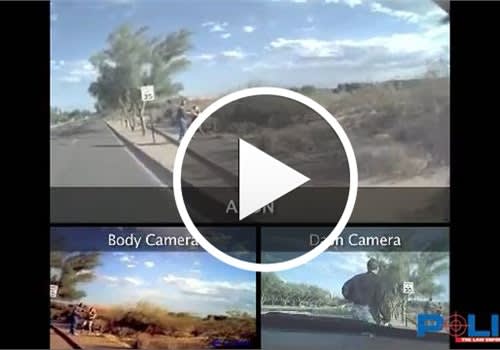
The Axon Flex also provides a multitude of mounting options on the uniform, headband, cap, and helmet. The sleek size and light weight of this camera also allow it to be integrated onto Oakley tactical eyewear. This flexibility allows officers to place the camera where they feel it is most comfortable, allowing them to concentrate on the situation at hand rather than thinking about the angle of their camera lens. With a little experience using body-worn camera technology, officers learn how to position themselves to maximize personal safety and recording evidence.
Another innovation in body-worn cameras was developed by Vidmic, sold nationally by EHS Inc. In an effort to minimize the number of gadgets that officers need to carry on their uniforms, the Vidmic combines a camera built into a standard shoulder-mounted microphone that most officers currently use. The only modification an officer needs to make is to carry the mic on the center of the chest rather than the shoulder. Training officers to use this camera is made easier by the familiarity they already have using the controls on a standard shoulder mic.
The CopVu camera by WatchGuard Video is another easy-to-use camera system. With a single sliding switch to activate the camera, there are no other controls that the officer needs to learn. With the switch in the off position, the camera lens is protected from dust and the elements.
Perhaps the most covert portable camera solution is the Scorpion Body-Worn DVR, which utilizes a camera that is disguised as a button or screw head. This camera captures high-resolution images, up to 1280-by-960 pixels. A hard wire transfers the images to a body-worn DVR for storage.
In addition to physical placement of the camera on the body, some cameras come in self-contained units while others are hard wired to controllers or battery packs that must also be carried on the officer's person. One tradeoff in using a standalone camera is limited battery life.
Because the Vidmic draws power from the officer's radio, it does not require any additional battery packs. When placed in standby mode and activating the camera only when needed, its three-hour charge should last an entire shift.
Similarly, the Vievu PVR-LE2 camera is fully self-contained in a lightweight unit smaller than a pack of cigarettes. This camera holds a four-hour charge, but can be recharged in the patrol car, in a standard outlet, or through a USB port on a computer. The next generation of Vievu camera, the LE-4G, will be wired to a controller, but will incorporate a breakaway cable for officer safety.
In contrast, TASER's Axon Flex camera is wired to a small controller which provides a 12-hour charge. The longer battery life of this unit allows it to continuously pre-record events so that when the recorder is activated by the officer, 30 seconds of activity that led up to the activation is automatically captured. Capturing the impetus for an officer's decision to turn on the recording equipment provides additional context for his or her actions thereafter.
Bringing a variety of features together is the FirstVu camera by Digital Ally. This lightweight, standalone camera includes 30-second pre-record capability, a 2.2-inch color LCD monitor, and multiple mounting options. Its built-in battery pack is easily removable for recharging and can provide 3 to 12 hours of operation.
If there was ever an era when an officer's word was as good as gold, it is safe to say that it has long since passed. More and more, skeptical jurors expect prosecuting attorneys to provide video footage of the alleged crime or the officers' reactions at the scene presented as part of their case. In the absence of such video—whether because the video equipment malfunctioned, the video file was lost, or the department didn’t utilize video technology—jurors today are more likely to discount the recollections of the officer on the witness stand.
In one unfortunate incident involving the Waukesha (Wis.) Police Department, a video recording was improperly tagged as a routine traffic crash rather than a use-of-force incident. As a result, the file was inadvertently deleted before the case went to trial. Rather than accept the officer’s account of the incident, both judge and jury cited the missing video as reason to believe that the department was covering up the officer’s actions and that charges against the suspect should be dropped. Had the video footage never existed, the suspect would likely have been sentenced.
Because video evidence is useless if it's misplaced or accidentally erased, many camera manufacturers provide proprietary software to store and catalog video files. Whether data is uploaded wirelessly when the patrol car pulls into the station parking lot, or the camera and DVR are physically plugged into a dedicated computer system inside the station, maintaining the security of the video and preserving the chain of evidence is of utmost importance in presenting that evidence later in court.
To help preserve the integrity of the video evidence, these cameras encode date and time stamps on the video. Also, most video storage systems allow officers to view the files, either through instant replay on a handheld controller or on a connected smart phone, but not make copies or in any way alter the file. Only designated administrative personnel are allowed to burn copies to CD or DVD to be sent to prosecutors or the courts. Discovery motions will still allow individuals and organizations to access court copies of these types of videos, but these data safety measures will greatly reduce instances of having unauthorized videos show up on YouTube or the local news broadcast.
With more departments implementing video recording systems, the public and the American Civil Liberties Union have expressed greater interest in how the video files are used. Additionally, departments that implement body-worn cameras are compelled to develop policies as to when and how long an officer must record an event, who can access the videos, how long video files will be retained, and under what circumstances videos can be released.
The proliferation of recorded evidence by law enforcement has brought forth a number of legal cases that will, for better or worse, help define departmental policies on the use of body-worn cameras. Several police departments across the nation have undertaken pilot programs to test the use of body-worn cameras. Their experiences will likewise inform future users of these devices and spur the camera manufacturers to further improve their products.
Steve Lovell, managing director of Vievu, believes that the benefits of recording and maintaining a video database outweigh any potential negative outcomes. "About 93 percent of complaints against officers that have video or audio documenting the officer's actions are exonerated," he says.
The Law Enforcement and Emergency Services Video Association (LEVA) is a professional organization that trains police video analysts across the country. LEVA president Blaine Davison predicts that future generations of body-worn video products will evolve to provide full HD resolution for under $1,000 per unit. Other advances may include real-time streaming to allow supervisors to monitor events in the field from the station and GPS tracking.
In the not too distant future, body-worn cameras may be standard issue for police officers—providing greater credibility in the courtroom, decreasing frivolous complaints against officers, enhancing officer safety, and improving police-community relations.
Related:
Eye of Mine
SecGru Systems
Scorpion
TASER International
Vidmic
Vievu
Watchguard Video
More Technology
A police agency's guide to data-driven fleet management
Costs are rising and the public expects more transparency into how their tax dollars are spent. This e-book shows how police agencies can use fleet data to take control of fleet expenses while improving officer safety and demonstrating fiscal responsibility to the communities they serve.
Read More →
AI and analytics for law enforcement: Turning data into insights
Law enforcement agencies are managing more video, sensor data and digital evidence than ever before. Discover how AI and analytics can help turn that data into actionable insights that strengthen situational awareness, accelerate investigations and support more informed decisions.
Read More →
Vasco Electronics Adds Automatic Language Detection to Vasco Translator Q1
Vasco Electronics’ software update introduces hands-free language switching and expanded offline translation across 45 language pairs, empowering law enforcement, healthcare, and front-office enterprise teams
Read More →

North Miami Police Department Deploys Mark43
The North Miami Police Department has deployed Mark43 as part of its Five-Year Strategic Plan that represents its collective vision and goals for a more proactive police department, anchored by a core commitment to leveraging modern technology to enhance efficiency and public safety.
Read More →
Cellebrite Genesis for Enterprise Now Generally Available
Made available to the public sector in June, Cellebrite Genesis is serving a growing mix of national, regional, and local agencies worldwide, including some of the largest regional and metropolitan police departments. It is now available for enterprise organizations.
Read More →
2026 Vision FirstNet Users Summit to Host Emerging Leaders Training on Grassroots Advocacy for Public Safety
“Emerging Leaders Training: Understanding the Importance of Grassroots Advocacy for Public Safety," a session during the 2026 Vision FirstNet Users Summit, will offer a roadmap for unified advocacy at the federal level.
Read More →
Motorola Solutions Completes Acquisition of D-Fend Solutions
Motorola Solutions has acquired D-Fend Solutions, an industry leader in counter-drone technology. This deal provides public safety and enterprise customers with access to advanced counter-unmanned aerial systems.
Read More →
ZeroEyes, Advantech & Camden Police Partner to Bring AI Gun Detection Technology to Delaware School District
ZeroEyes has partnered with Advantech and the Camden Police Department to deploy ZeroEyes’ AI gun detection and intelligent situational awareness platform at Delaware’s Caesar Rodney School District (CRSD).
Read More →
Leonardo U.S. Cyber & Security Solutions Introduces SignalTrace, the Next Evolution in Electronic Signature Detection Technology
SignalTrace reflects years of product refinement and a clearer expression of the technology’s purpose of recognizing and correlating electronic signatures in publicly broadcast wireless signals to reveal patterns, relationships, and trends that might otherwise go undetected.
Read More →
Pimloc Launches Secure File Sharing to Streamline Release of Redacted Video
Pimloc’s Secure File Sharing lets organizations deliver redacted video, audio, and documents through expiring, passcode-protected links, accelerating delivery while reducing security, compliance, and chain-of-custody risks.
Read More →