



How to...Start a SWAT Team
Somewhere between the images, the perceptions, and accusations lies a truth: If ever an entity embodied the philosophy of "hope for the best, but plan for the worst," it is the SWAT unit.

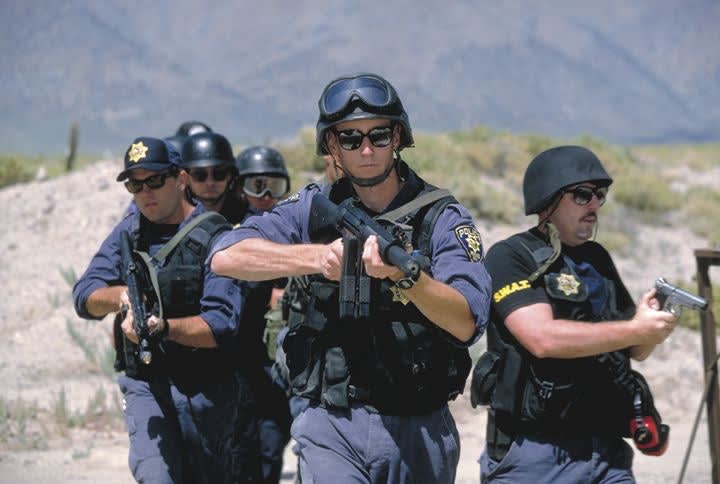
Special Weapons and Tactics (SWAT) teams have been a part of the public consciousness since "S.W.A.T." made its television debut in 1975. The images of their real-life counterparts are also embedded in our memory: shooting it out with the Symbionese Liberation Army descending onto the grounds of a Colorado high school campus; deploying at a North Hollywood bank robbery.
To the appreciative hostage whose life they have saved, SWAT team members are knights in shining ballistic armor. To their critics, they are gung-ho macho men, prone to wrong house entries and preemptive shootings. Somewhere between the images, the perceptions, and accusations lies a truth: If ever an entity embodied the philosophy of "hope for the best, but plan for the worst," it is the SWAT unit.
The new millennium has brought with it the omnipresent threats of school shootings, acts of workplace violence, and terrorist activity. It would seem that in this day and age a vast majority of police departments would have some SWAT support available to them. But of the 2027 police agencies contacted by phone in a recent study, 843 (41%) did not have a full- or-part-time SWAT/tactical unit.
There are several reasons for this. First, not every agency has the resources to man its own SWAT team. Fear of liability is also of great concern. Yet, despite the cautionary parables that might give pause, many police agencies are creating their own SWAT teams. For many, it's a smart call.
But convincing the brass that a SWAT team would be beneficial to your department and your community is a complicated matter.
Justifying a Need
Quantifying the good that comes from having a SWAT unit is difficult. For example, evaluating what might have otherwise happened in the absence of a successful SWAT deployment is speculative at best; and how many SWAT officers' lives have been saved as a result of their SWAT training is impossible to know.
Tracking the deployments of SWAT teams' is a relatively new practice and obtaining information is often difficult, as many frustrated analysts working with the National SWAT database have found out. But of those agencies responding to requests for statistics, the numbers are impressive: of 759 SWAT deployments audited, 702 were resolved without shots being fired by SWAT.
If you think a SWAT team might be good for your agency, but you're still on the fence, you might note that not having one can present its own problems. The failure to develop and maintain a SWAT unit, where viable, can be costly. Courts may not mandate that an agency have a SWAT team, but they can encourage its creation.
A 1982 barricade situation ended with an Anchorage patrol officer taking a suspect's life. The court ruled the officer's actions justifiable, but concluded that the absence of mitigators, i.e., a SWAT unit, limited the police department's options in resolving the situation. The city was held liable for the suspect's death. Such was the impetus that gave rise to the Anchorage (Alaska) Police Department's SWAT team.
As the National Tactical Officers Association (NTOA) notes, "Any community can be a victim of a major violent incident and there must be a system in place to respond immediately." This means that any agency could have to deal with incidents requiring expertise and equipment beyond that normally found in any given shift's field force.
Getting Started
Once it's been established that a SWAT team would benefit your community, how does your agency fund a unit and maintain it? What makes for a good SWAT team?
The National Tactical Officers Association (NTOA) recommends a step-by-step process that starts with community evaluation and projected costs. To determine how to develop your SWAT team, ask yourself the following questions.
What are the demographics of the area? Does its population change radically within any 24-hour period (e.g., such as in a city heavily populated with businesses)? What venues offer a strong potential for a tactical call out? Are there any prisons or half-way houses in the area? Mental institutions? Large scale sporting or entertainment events? What kind of environmental conditions can affect a team's response; in fact, precipitate it?
Unfortunately, the same sales points in favor of the development of a SWAT unit can become sticking points. Politicians may have a financial stake in venues posing greatest tactical concerns, creating a situation rife with perceived conflicts of interest. And regardless of the nature of the reticence, if city hall and residents are not supportive of a unit's development, they are apt to prove resentful once its need is realized.
This is why the police department and the community it serves need to be candid from the outset about their respective concerns, reservations, and what can-or can't-be accomplished.
Operating costs, while substantial in the short run, may ultimately prove much cheaper than lawsuits that may be incurred in the long run. Although front-end costs may be more obvious, additional capital needs to be set aside for recurrent training and equipment replacement. Training is one of the biggest operational costs, and a legitimate one.
A SWAT team has to acquire enough tactical versatility to address a variety of volatile situations. This reality, coupled with the prospect of arming personnel with weapons capable of firing 10 or 15 bullets with one pull of the trigger underscore the need for ongoing training. Especially when these bullets are capable of passing through walls or windows while other officers and citizens are in the area. There is no getting by "on the cheap."
As Lt. Douglas Cave of the Fullerton (Calif.) Police Department puts it, "If money is that much of a concern in developing a SWAT team, you're better off delaying, or foregoing, the start of a SWAT unit than to promulgate an inevitable failure."
That's not to say that agencies should not explore getting financial assistance wherever available. Agencies can apply for grants, such as the federally sponsored Bullet Proof Vest (BPV) grant, which will pay for half of an agency's body armor. Additional grant sources are available through the National Institute of Justice and the Bureau of Justice Assistance. Depending upon a SWAT unit's collateral training needs, some funding may be available through the Department of Homeland Security. Also, civic groups and local businesses may sponsor equipment requisitions.
Once undertaken, no aspect of the SWAT unit should be left open to speculation. It is imperative to have clear-cut lines of responsibility, whether it is a mission statement, a selection process, or an organizational chart. If something goes wrong, you don't want anyone to be able to second-guess your team's tactics.
Deciding on a Team
As with every aspect of starting a SWAT team, cover all your bases-for the safety of your team members and the community. There should be no question that the right type and size of SWAT team for your area has been chosen.
Agency size is subordinate to the availability of qualified personnel, and many agencies composed of 70-100 officers have proven capable of fielding 10-member teams, although a 24-person squad would be a preferred complement.[PAGEBREAK]
Regardless of the number of officers assigned to a SWAT unit, the NTOA asserts that the selection process must be based upon performance standards, not quota appeasement. Similarly, written standards should be in place for safety equipment, team incident reports, and after-incident critiques. Mutual aid policies should also be clearly defined.
Recognize that police agencies evolve at different rates. Larger police agencies have the luxury of being able to field regular SWAT rosters 24/7, availing them an opportunity to train with greater consistency. For smaller agencies incapable of individually fielding SWAT units, a regional selection process drawing from several departments may offer a collective solution and defray costs.
An example of a multi-jurisdictional team experiencing success is the North (Orange) County SWAT team in California. Lt. Douglas Cave, assistant unit commander, says that the year-and-a-half old team has proven to be mutually beneficial to all agencies involved.
"Any one of the departments-Fullerton, Brea, La Habra, or Placentia-would otherwise face severe constraints in providing a SWAT team whenever one was needed," Cave notes. "Certainly, maintaining the integrity of sensitive cases would be compromised if we weren't capable of serving warrants at multiple locations simultaneously. So far, it's worked out for the betterment of all involved."
Cave says, the agencies involved in the North (Orange) County SWAT team have each brought something to the table. "By pooling our resources together, we have brought online a SWAT unit that is cost effective and tactically effective. Logistically, we're better situated than any one of us would be otherwise. We had a mobile command post; Placentia brought in a Hostage Rescue Vehicle. Each agency brings something to the table that another might not have, but needs," he explains.
When deciding which type of SWAT team will work for your department or region, take into account the needs of the area your unit will service. Maintaining a high level of service necessitates extensive and continuous training.
Maintaining a disciplined SWAT team is a heady enough proposition. The LAPD SWAT team requires each team member to attend a minimum of four days of training each month with the .45 caliber automatic alone, in conjunction with other weapons (two days with long rifles).
Advanced tactical drills include shooting on the move, engaging moving targets, one-hand shooting, pistol-retention drills, transition drills (from shoulder weapon to .45 caliber), malfunction drills, multiple target drills, speed loading, flashlight technique, prone positions, kneeling positions, barricade positions, target selection problems, and hostage-rescue targets.
It follows that their equipment is designed to handle a variety of contingencies. Common tactical gear includes a two-piece Nomex flame-retardant combat suit, adaptable load-bearing gear, a plate-blank tactical vest with insertable ceramic plates, and a helmet equipped with an integrated Motorola personal radio/microphone.
Ask for Help
Lt. Blair Ulring oversees the Stockton (Calif.) PD SWAT unit. He recommends that any department contemplating the development of a SWAT unit contact agencies of comparable size that already have teams in place and look at how they recruit, train, and equip their units. "There is no use reinventing the wheel. Learn from those who have already taken the necessary steps to put a successful team together. Learn from their setbacks and their victories."
Fullerton PD's Cave echoes this sentiment. "The handball games of the '84 Olympics were held at Cal State Fullerton, and that served as the catalyst for our department to create its own team. We relied quite a bit on LAPD, and I can't tell you how helpful NTOA Board member Ron McCarthy was toward that end."
Lessen Liability
Whether an agency decides to go with its own SWAT team, or to be part of a multi-agency unit, it has to make sure that it has enough qualified personnel, equipment, and opportunity for training for the long haul. "Otherwise, it's just opening a can of worms for itself," says Ulring. "Accidents will happen. But the important thing is to do everything possible to minimize the likelihood of accidents while maximizing the opportunity of success in every deployment."
Ulring cautions that agencies should also anticipate that the actions taken by a SWAT team are apt to be second-guessed by the community. "And that's appropriate. Any time a life is taken there ought to be some Monday morning quarterbacking. If you're doing things right and you've done the right training, you have effectively diminished your legal anxieties."
To further ensure that its decisions and actions are proper, the Stockton SWAT unit meets regularly with other SWAT commanders. In addition, the members keep up to date on legal issues through its city attorney's office on everything from "knock-and-notice" requirements to issues surrounding the deployments of percussion grenades.
While keeping on top of federal and statewide legal issues is important, a SWAT team also needs to be aware of the specific needs of the area it serves.
Each city has its own unique personality, some of which can be schizoid in nature. As Sgt. Anthony Henry with the Anchorage SWAT unit notes, his city has a relatively small population throughout most of the year, but that changes during the summer months due to tourism.
Though geographically isolated from the continental United States, Anchorage is readily accessible through rail lines, ports, and an international airport. Because of the nature of the work that takes place in and around Anchorage, there's also a greater likelihood of confronting suspects armed with explosives than in some more metropolitan areas. All of these factors-plus the ubiquitous alcohol-have at one time or another played into the departments SWAT call outs.
And when a SWAT call out necessitates officers' presence in 25 to 30 degrees below zero temperature, environmental factors play a role in determining what type of equipment it needs to field.
While recognizing the tactical merits of one autoloader shotgun routinely deployed by SWAT teams, Sergeant Henry prefers the modified Remington 870 currently fielded by their team. "It's more environmentally compatible. A unit's decision to go with a semiauto, or a pump-action, is going to be dictated by its unique needs. For us, the Remington shotgun affords us more options when it comes to 'action/carry' decision-making."
Selecting SWAT Members
Regardless of a SWAT unit's size, configuration, or equipment, the team begins and ends with the officers selected to work this assignment. While the prestige and excitement promised by working the SWAT unit assures no shortage of interested applicants, special premiums are placed on good working attitudes and the ability to work within the team environment.
That environment and the duties expected of team members varies based on the type of team. Whereas the LAPD SWAT team can focus its attentions on entering a location quickly and securing it, then disarming bad guys, other units may end up having to pull double- and triple-duty. They may, in fact, be the detectives and investigators responsible for authoring the same search warrants they are serving.
When it comes to personnel, Lt. Ed Drain, commander of the Plano, Texas, SWAT team, places a premium on "the ability to think in crisis situations. You want someone who will not get too pumped up and will be able to think calmly through the adrenaline rush." To this end, applicants for the Plano SWAT team go through rigorous psychological and physical assessments. Drain wants to make sure that his officers have both emotional and physical stamina.
Stockton SWAT's Blair notes, "Every officer on my team is a range master and a firearms instructor. Not only does this ensure a higher degree of proficiency in each team member's performance, but it affords some latitude in scheduling of training for other departmental events."
As Capt. Kim Kolluch with the Lincoln, Neb., SWAT team notes, team members are not immune to observing incidents while off duty. Beyond giving agencies additional latitude and resources, training benefits personnel away from work, as well.
"Because of their knowledge and the availability of equipment in their vehicles," Kolluch explains, "they've been able to take action they might not otherwise have been able to-in effect, solving problems before lives were lost, or before situations escalated out of control."
The dividends of developing a SWAT unit can be considerable. Aside from the inevitable responses to the situations for which they've been trained, SWAT members enjoy collateral benefits, as their participation in attendant training exercises doubtlessly fosters better officer safety practices for those officers still working patrol. Competency and morale are boosted. Liability is lessened. And community goodwill is fostered through their success.
As Anchorage SWAT's Henry explains it, "Contrary to the views held by some, a SWAT team doesn't enhance the likelihood of deadly force — it decreases it."
Contacts for Starting a SWAT team
National Tactical Officers
Association (NTOA)
P.O. Box 797
Doylestown, PA 18901
1-800-279-9127
www.ntoa.org
Ron McCarthy and Associates
1402 N. El Camino Real
San Clemente, CA 92672
949-369-8181
mccarthy@rmmcarthy.com
Sgt. Dean Scoville is a patrol supervisor for the Los Angeles County Sheriff's Department and a frequent contributor to POLICE.
More Special Units
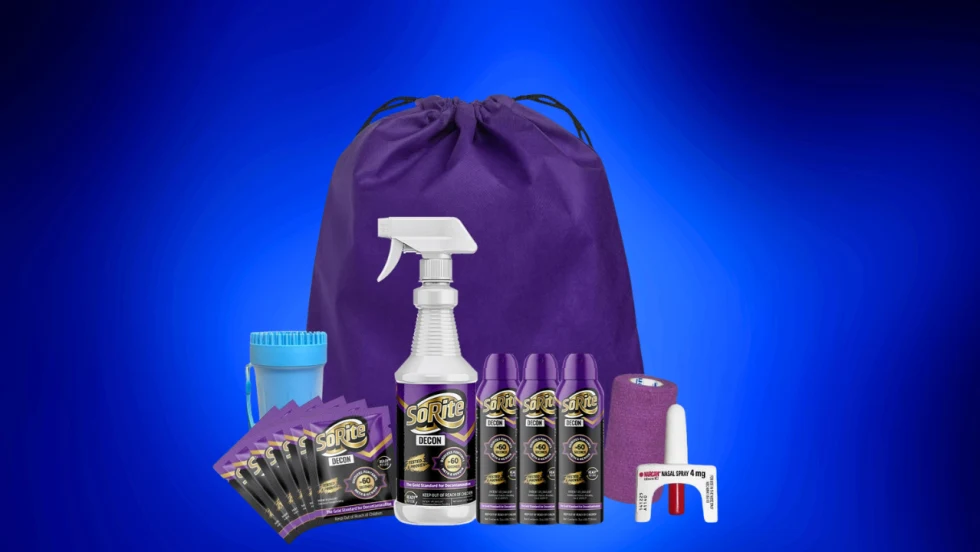
New K9 Decontamination Protocol Launched
A new K-9 protocol from the SoRite Company gives law enforcement agencies a standardized rapid-response framework to decontaminate K-9s, their handlers, and police vehicles, from dangerous narcotics.
Read More →
OZ Lifting Doubles Impact of K9 Guardian Program
In response to the positive impact the program has had on local communities. OZ Lifting Products has expanded its K9 Guardian Program by committing to fund a second police dog each year.
Read More →
Constellis’ AMK9 to Donate K9 Officer to Currituck County Sheriff’s Office
AMK9 will donate a fully trained K9 officer to the Currituck County Sheriff’s Office K9 Unit. DAX, a 20-month-old Belgian Malinois, joined his new handler and has begun training at the Constellis Training Center.
Read More →
Ohio’s Statewide Drone First Responder Program to Take Flight
Over the next two years, the Ohio DFR Pilot Program will equip municipalities with advanced drone systems, deliver comprehensive training for first responders, and enable FAA-approved Beyond Visual Line of Sight operations.
Read More →
Louisiana Motor Sergeant Dies from Injuries Suffered in June “Intentional” Crash
A motor officer, Sgt. Caleb Eisworth was on his way to participate in a funeral escort when he was struck by another vehicle.
Read More →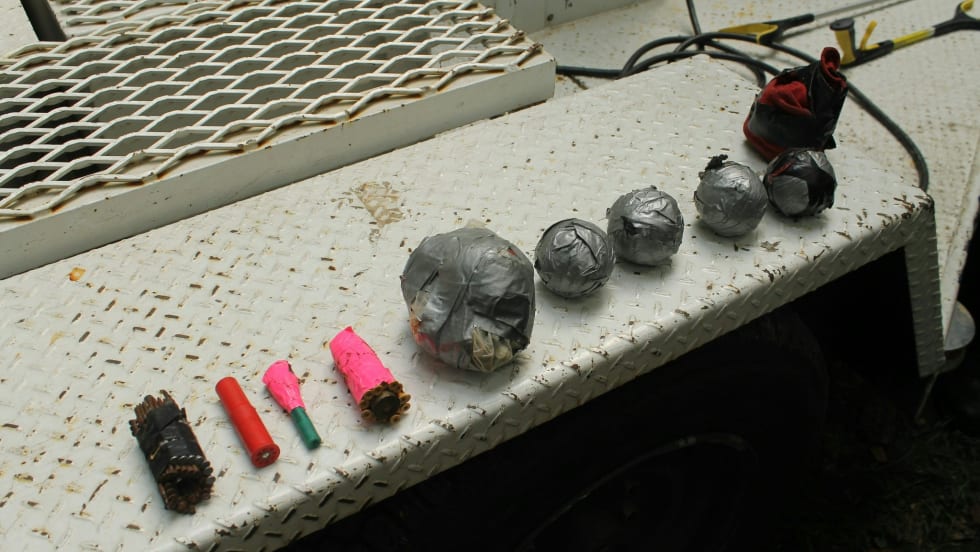
Tennessee Officers Say Man Tried to Detonate IED During Arrest
Inside the bedroom officers found what they believed to be an IED. The officers evacuated the house and called for the Chattanooga Police Bomb Squad and ATF agents.
Read More →
Florida School Officer Dies After On-Duty Medical Emergency
Sergeant Greg Graff was “preparing school leaders for the upcoming year during a safety training program at Clearwater High School,” the school district said.
Read More →
Grenade is Missing from Explosion That Killed 3 LASD Deputies
ATF Special Agent in Charge Kenny Cooper said definitively that only one grenade detonated at the facility on July 18.
Read More →
Los Angeles County Sheriff's Department Names Deputies Lost in Friday Explosion
LASD said Detective Joshua Kelley-Eklund, Detective Victor Lemus, and Detective William Osborn who were all assigned to Special Enforcement Bureau’s Arson Explosives Detail were killed in the incident.
Read More →
Maryland State Police Helicopter Rescues Victim from Overturned Boat in Chesapeake Bay
The Maryland State Police Aviation Command Trooper 7 crew, the MSP helicopter based in California, Maryland, were monitoring the county dispatch radio, overheard the dispatch, and self-launched.
Read More →