



DNA Database Benefits Outweigh Problems
A new law went into effect on Jan. 1 in Michigan. It ordered everyone convicted of a felony or sex-related misdemeanor in Michigan to give authorities a sample of their DNA. This would be very helpful to investigators -- if everything were in place to carry it out.

A new law went into effect on Jan. 1 in Michigan. It ordered everyone convicted of a felony or sex-related misdemeanor in Michigan to give authorities a sample of their DNA. This would be very helpful to investigators -- if everything were in place to carry it out.
The samples -- as many as 50,000 this year alone, Michigan State Police say -- would join hundreds of thousands of others in a searchable national database to help detectives chase down criminals based on the DNA evidence they often leave behind.
There just wasn't enough time to put everything into place.
Gov. John Engler signed the measure, an amendment to an existing law, on Sept. 20. But when Jan. 1 arrived, many Oakland County police agencies still hadn't received the swabs they needed to carry out the court orders. Most officers hadn't been trained in the procedure, which involves using special sponge-tipped sticks to swipe the inside of the offender's cheeks.
Even if local agencies had the swabs and the training, the burden of processing all the material and entering the results into the national database falls onto the Michigan State Police Crime lab. The lab had almost no time to prepare for the onslaught.
But the glitches are starting to smooth out. Oakland County authorities created standardized forms and procedures for gathering the samples. Some of those policies are now used elsewhere in the state.
Law enforcement agencies agree that the new law will make the already powerful national Combined DNA Index System, or CODIS, even better.
Not everyone is happy about that. The American Civil Liberties Union is among those concerned that the newly amended law, which originally targeted only convicted sex offenders, has expanded alarmingly.
This most recent amendment now demands a DNA swab from someone convicted of a misdemeanor indecent exposure, said ACLU spokeswoman Wendy Wagenheim.
"Now we don't delineate between the college kid who gets drunk and urinates in public and the true sexual predator," Wagenheim said. "We're very concerned about the DNA database being expanded to the point of all of us saying, 'Who's next?'"
O'Brien, of the Michigan State crime lab, said there is little difference between fingerprinting felons and taking DNA samples.
The benefits to law enforcement can be tremendous. O'Brien envisions a day when crime-fighting technology is so advanced that would-be criminals would be scared straight by science.
"If, through these laws and the samples that are taken, we can identify a rapist or a killer . . . and that saves one person from going through that, it's probably worthwhile," O'Brien said.
Charles Barna, supervisor of the State Police DNA unit in Lansing, agreed.
Barna said State Police lab workers have had to adjust to the idea of processing between 3,000 and 4,000 samples each month -- compared to between 3,000 and 4,000 each year.
Many of the program's costs are covered by the people being tested. Each person pays $60, which is split among the court, the agency that collects the sample and the State Police.
Barna hopes some of that funding will trickle down to his lab, allowing for more technicians to process the samples.
More Technology
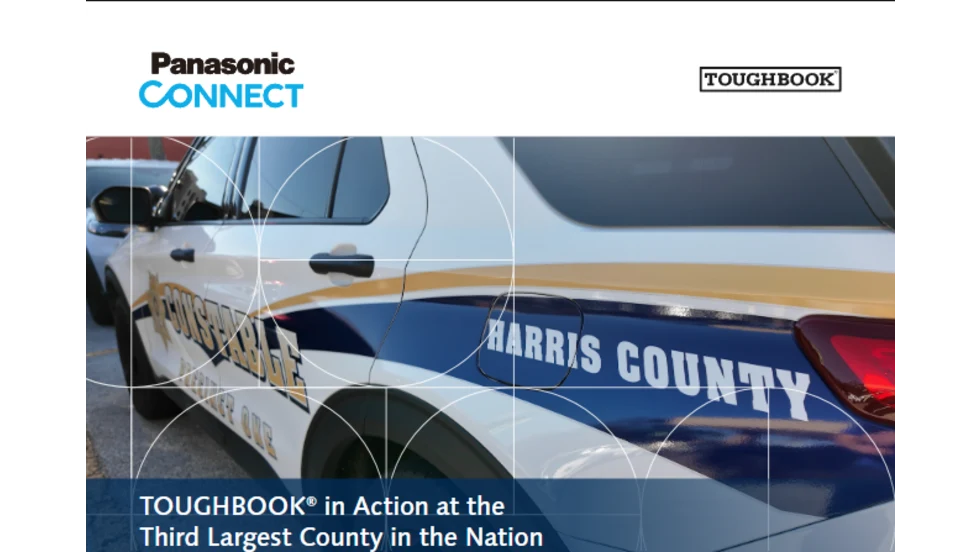
TOUGHBOOK in Action at the Third Largest County in the Nation – Harris County, TX
Learn how Harris County, one of the nation’s largest counties, modernized its law enforcement fleet with TOUGHBOOK® rugged laptops—strengthening security, productivity, and operational readiness across every unit.
Read More →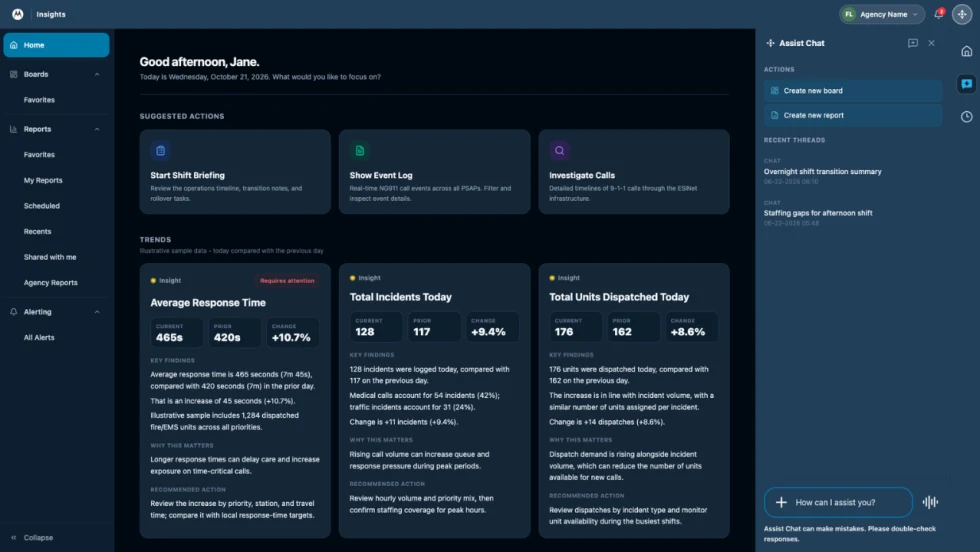
How Motorola Solutions’ New “Insights” Platform Helps Public Safety Agencies Identify Trends to Improve Their Operations
Motorola Solutions has introduced Insights, which leverages Assist, its mission-critical artificial intelligence (AI), to address these challenges and shape what’s next for public safety analytics and reporting technology.
Read More →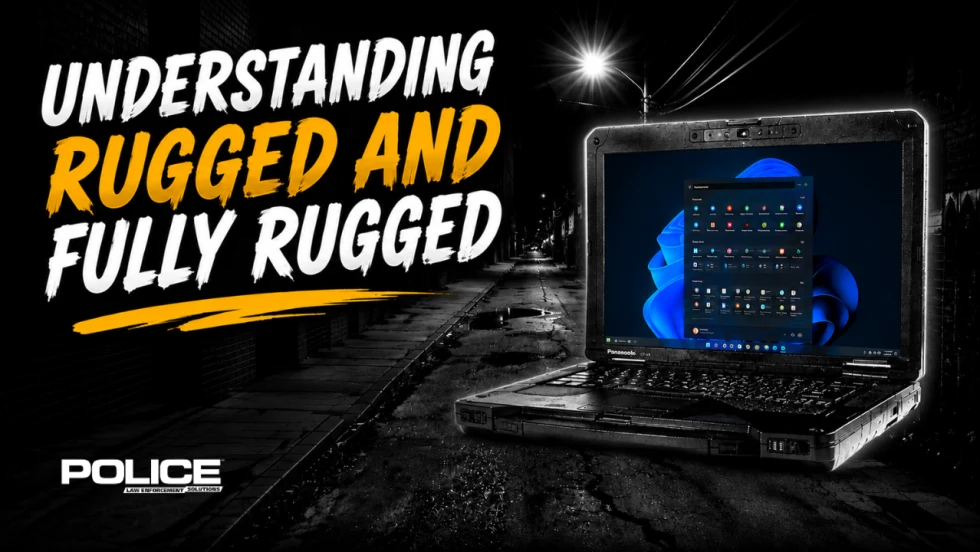
What Qualifies a Laptop as Rugged or Fully Rugged?
Police officers face a wide range of working conditions that can damage or even destroy a regular consumer laptop. Learn what qualifies a computer as rugged or fully rugged and why those devices are vital for law enforcement.
Read More →
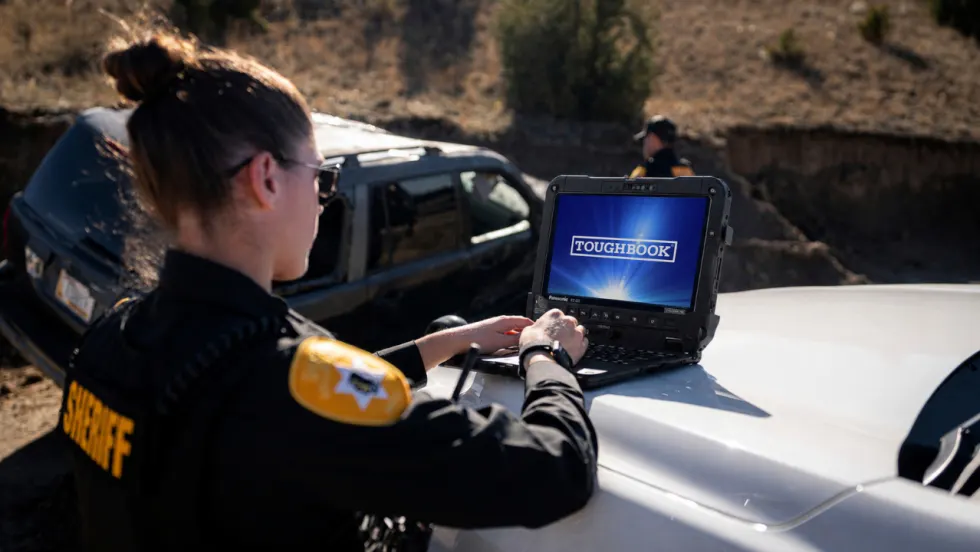
Panasonic Connect Launches the Toughbook 34 and Toughbook G3, Fully Rugged 2-in-1 Mobile Computers
Panasonic Connect has launched the Toughbook 34 and Toughbook G3 to facilitate in-vehicle dispatch, records management, and mobile command operations from any location.
Read More →
A police agency's guide to data-driven fleet management
Costs are rising and the public expects more transparency into how their tax dollars are spent. This e-book shows how police agencies can use fleet data to take control of fleet expenses while improving officer safety and demonstrating fiscal responsibility to the communities they serve.
Read More →
AI and analytics for law enforcement: Turning data into insights
Law enforcement agencies are managing more video, sensor data and digital evidence than ever before. Discover how AI and analytics can help turn that data into actionable insights that strengthen situational awareness, accelerate investigations and support more informed decisions.
Read More →
Vasco Electronics Adds Automatic Language Detection to Vasco Translator Q1
Vasco Electronics’ software update introduces hands-free language switching and expanded offline translation across 45 language pairs, empowering law enforcement, healthcare, and front-office enterprise teams
Read More →
North Miami Police Department Deploys Mark43
The North Miami Police Department has deployed Mark43 as part of its Five-Year Strategic Plan that represents its collective vision and goals for a more proactive police department, anchored by a core commitment to leveraging modern technology to enhance efficiency and public safety.
Read More →
Cellebrite Genesis for Enterprise Now Generally Available
Made available to the public sector in June, Cellebrite Genesis is serving a growing mix of national, regional, and local agencies worldwide, including some of the largest regional and metropolitan police departments. It is now available for enterprise organizations.
Read More →
2026 Vision FirstNet Users Summit to Host Emerging Leaders Training on Grassroots Advocacy for Public Safety
“Emerging Leaders Training: Understanding the Importance of Grassroots Advocacy for Public Safety," a session during the 2026 Vision FirstNet Users Summit, will offer a roadmap for unified advocacy at the federal level.
Read More →