



New Fingerprint Technology IDs the Bad Guys Faster Than Ever
The fingerprint has always been one of law enforcement’s most solid, undefeatable bits of evidence. Matching prints can be as good as gold.

Technology is revolutionizing law enforcement. It has become an almost indispensable tool and will become even more relevant as advances become more commonplace throughout the nation. Take fingerprint technology, for instance. The fingerprint has always been one of law enforcement’s most solid, undefeatable bits of evidence. Matching prints can be as good as gold.
Fingerprint technology has developed more in its past 15 years than it did in the first 100 years. Advancements in technology have led to new capabilities allowing investigators to pull prints from surfaces that used to be very difficult or even impossible.
For instance, image enhancement systems are being used to remove backgrounds that make the print difficult to distinguish, making it easier to see, and therefore accurately identify, the fingerprint. Some labs have found a creative use for Super Glue because it permanently bonds fingerprints to non-porous objects, which have always posed problems when attempts were made to lift a print. Other methods that are being used to discover latent prints involve lasers and ultraviolet light.
It’s true that the majority of fingerprint identifications simply eliminate from the investigation fingerprints belonging to the victim or the victim's family, but the remaining prints are photographed and entered into the fingerprint identification system. This was once a cumbersome file that was somewhat comparable to finding a needle in a haystack. At least that analogy seems appropriate now that computers automatically compare prints against millions of others in databases that are local, statewide and nationwide. The system generates a list of possible matches, and the technician’s job is to determine if there is a match.
Fingerprint recognition technologies, like any developing technology, can be monstrously expensive. Government grant money is often behind an agency’s efforts to implement new tools and progressive systems. However, some of these innovations are also available at prices affordable for smaller departments. At the high end are complete fingerprint identification search systems, but systems are also available with the basic fingerprint image-processing algorithms including a search/matching subsystem.
Some of the key considerations when comparing system features include:
Image processing, which captures fingerprint images and processes them to obtain a clear image of the original impression while clarifying smudged areas, removing extraneous background and even healing scars, cuts and breaks in the print. Finger placement and finger orientation may be critical for certain equipment and not for others.
Feature detection is a process that identifies ridge ends and bifurcations within the image. The software encodes them while providing critical placement, orientation and linkage information for the technician who ultimately makes the match. Whether the fingerprint is scanned, camera captured or inked they are sometimes blurred, smudgy or otherwise unclear. Certain software compensates for these irregularities while other software doesn’t. Make sure you are comparing apples to apples. The search for matching prints compares data from the input print against all appropriate records in the database. Some systems are superior when it comes to matching poor quality prints. Accuracy of search is obviously an important criterion so in the purchasing process it is wise to inquire about performance comparisons.
Fingerprint identification systems are designed to provide fingerprint scans two ways: from a ten print card (arrest card or otherwise) or from a live finger scan device. Live scanning is inkless electronic fingerprinting (capturing fingerprints by rolling the fingers on a glass platen), which allows the fingerprints to be digitized.
The system often – but not always – is linked to a database that determines if there are matching fingerprints in the criminal record database. When possible ten print matches are detected, they are displayed to a fingerprint technician who determines positive identification. If there is no match, updating to the database can be initiated and notification is produced that a new person has entered the system.
The key points to any system include accuracy, reliability, ease of use, open system design (compatibility to various computer platforms), easy serviceability and expandability.
One of the most innovative companies, and one of the leaders in identification technologies and systems, is Visionics Corporation. It has introduced several products – IBIS, TENPRINTER, FingerPrinter CMS, FaceIt and BNP – that are providing law enforcement with high tech improvements that will shape future investigation and crime prevention methodology.
The product with the greatest potential to impact officers in the short-term is IBIS, a revolutionary mobile identification system that captures forensic quality fingerprints and photographs. TENPRINTER and FingerPrinter CMS are live scan systems, which capture fingerprint images without the use of ink. Law enforcement, government agencies, airports, banks and other commercial institutions are increasingly using these systems.
FaceIt is a widely deployed facial recognition software that allows computers to rapidly and accurately detect and recognize faces. Its uses include ID verification, surveillance, information security and banking. BNP incorporates FaceIt technology for implementation over large-scale networks and real-time identification.
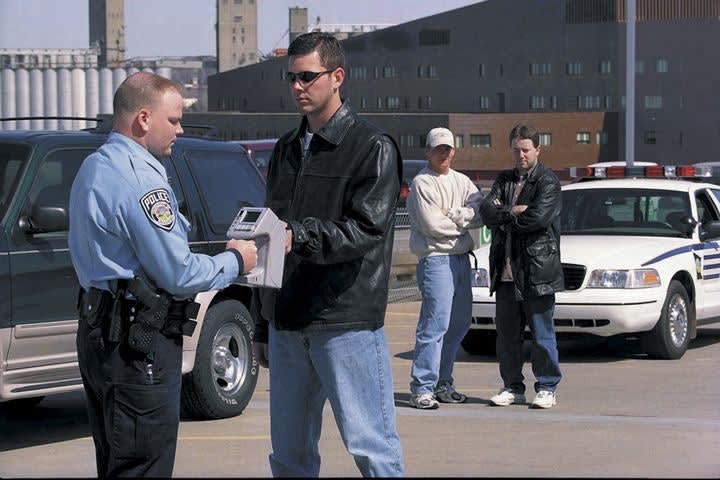
IBIS is a handheld portable device known as a remote data terminal (RDT), which captures data (including photographs), forensic-quality fingerprint images and magnetic stripe data. The data is transmitted wirelessly to a laptop in a squad car and to the central IBIS server via the police radio communication system or cellular communications. At the IBIS server, the data is processed and transferred to one or more AFIS databases. If a fingerprint match exists, identification information is transferred back to the RDT. If there is no match, the fingerprint and photo files are discarded from the system.[PAGEBREAK]
IBIS is currently being used at two California police departments — Ontario PD and Redlands PD — and in Hennepin County, Minnesota. The National Institute of Justice (NIJ) conducted a comprehensive review on the policies and procedures developed for the use of IBIS, including privacy regulations and impact to officer safety, before granting approval for the full deployment of the system.
In the California deployments, officers use the handheld devices to fingerprint and/or photograph a suspect. This information is wirelessly transmitted to the central IBIS computer located at the police department, and then it connects to AFIS. The officer in the field is immediately notified if the suspect has outstanding warrants.
Fingerprint scanning capability while officers are on patrol is highly desirable, but dependable technology is just coming around.
A report released by Visionics after the first week of operation at OPD indicated IBIS was used 173 times in test and operational scenarios, returning 71 matches, including four individuals who gave false information to officers, against the Automated Fingerprint Identification System (AFIS) provided by Cogent Systems. OPD procedures confirmed the information returned by IBIS and identified outstanding warrants against the individuals. Additionally, IBIS successfully identified a body found in an apparent suicide of an individual who had a prior criminal record.
"IBIS is the only system capable of remotely transmitting photo and fingerprint data to deliver real-time identification information," says Lt. Bob Racine, system installation manager for the Ontario Police Department. "IBIS has dramatic safety implications for law enforcement as well as border control and airport security. We are extremely encouraged by IBIS' accuracy. Soon after IBIS' deployment, we saw the benefits of giving this tool to officers in the field."
Ontario was the first municipality to activate the IBIS system. The estimated cost of providing the project’s infrastructure, according to Visionics sources, was $150,000. This included such things as putting the communications in place, providing an interface to existing AFIS systems, the purchase and installation of the central server (a Compaq Proliant), and putting laptops in the squad cars. Five squad cars were outfitted including the handheld devices, which cost approximately $8,000 each.
The costs can vary depending on how much information is obtained via the handheld devices. The more information you want brought back to the officer, the more sophisticated the software needs to be and the more expensive it becomes.
The Ontario, Redlands and Hennepin County deployments were funded by a grant awarded by the U.S. Department of Justice Office of Community Oriented Policing Service (COPS) and is administered by the National Institute of Justice (NIJ).
The Beloit (Wisc.) Police Department is using e-mail to advance the exchange of fingerprints among approximately 120 other law enforcement agencies in the state. Its live scan digital fingerprinting system was designed by Cross Match Technologies. According to the manufacturer, hundreds of thousands of fingerprints can be stored on the system, which then takes advantage of e-mail to cross-reference prints with other agencies. A $29,133 U.S. Department of Justice grant helped BPD get its system up and running.
POLICE magazine is eager to introduce a regular feature on Technology. You will find the latest news about products, people, companies and law enforcement trends. The focus will be on actual technological advances that are not only in use and on the verge of changing the way things get done, but that offer crime fighting and investigations advantages for cops on the street.
Not every department can be equipped with the latest and greatest tools, but we think it is worth showcasing the technological advancements that are within reach. You, in turn, can pass this information along to those in your departments and your communities who influence future planning.
We begin this month by examining digital fingerprinting devices that bring in-the-field identification to a higher level of efficiency and accuracy. In the following months you will find police-tested high tech products in areas such as communications, forensics, weaponry, information technologies, training and officer safety, and identification technology.
The application of these technologies will keep law enforcement current in a technology-driven world that is rapidly changing on all fronts.
Dan Burger, a former editor of POLICE, joins the magazine as a freelancer.
More Technology
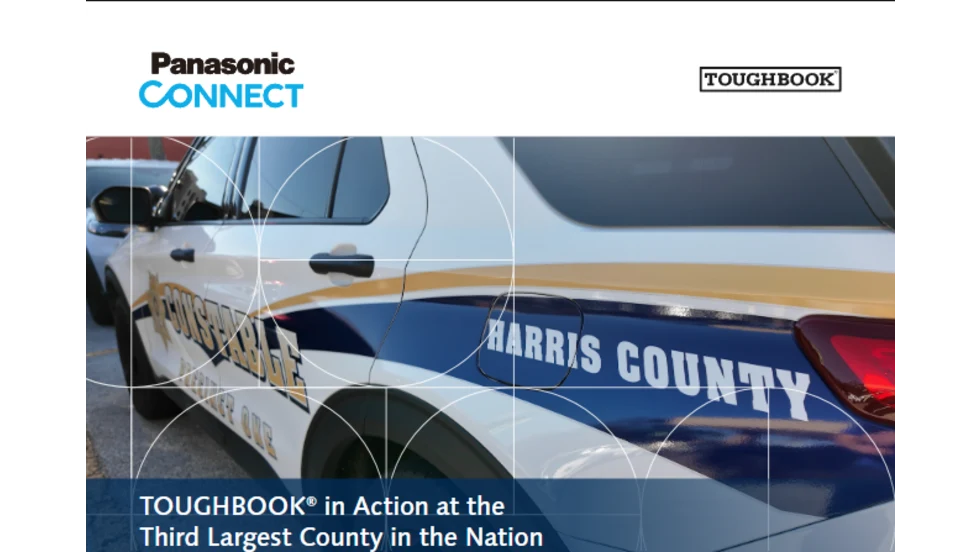
TOUGHBOOK in Action at the Third Largest County in the Nation – Harris County, TX
Learn how Harris County, one of the nation’s largest counties, modernized its law enforcement fleet with TOUGHBOOK® rugged laptops—strengthening security, productivity, and operational readiness across every unit.
Read More →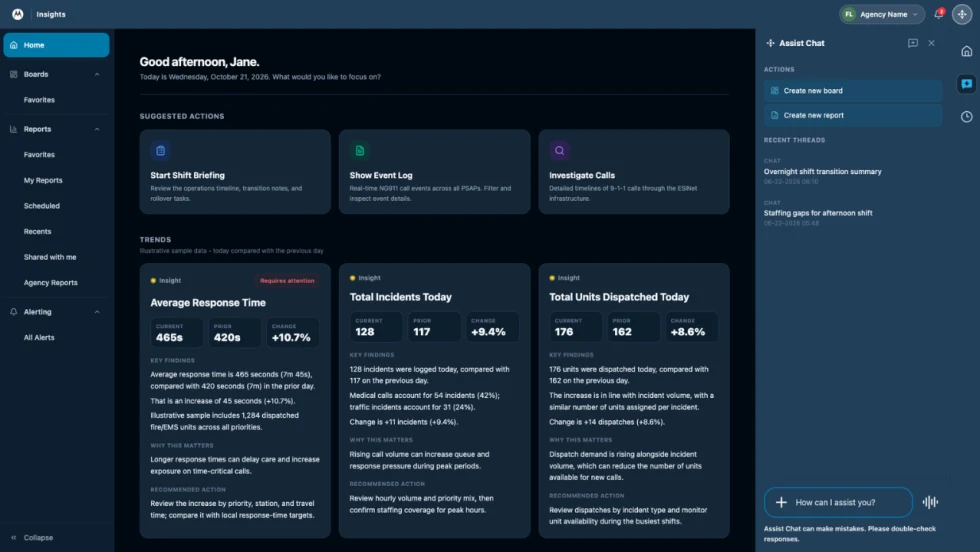
How Motorola Solutions’ New “Insights” Platform Helps Public Safety Agencies Identify Trends to Improve Their Operations
Motorola Solutions has introduced Insights, which leverages Assist, its mission-critical artificial intelligence (AI), to address these challenges and shape what’s next for public safety analytics and reporting technology.
Read More →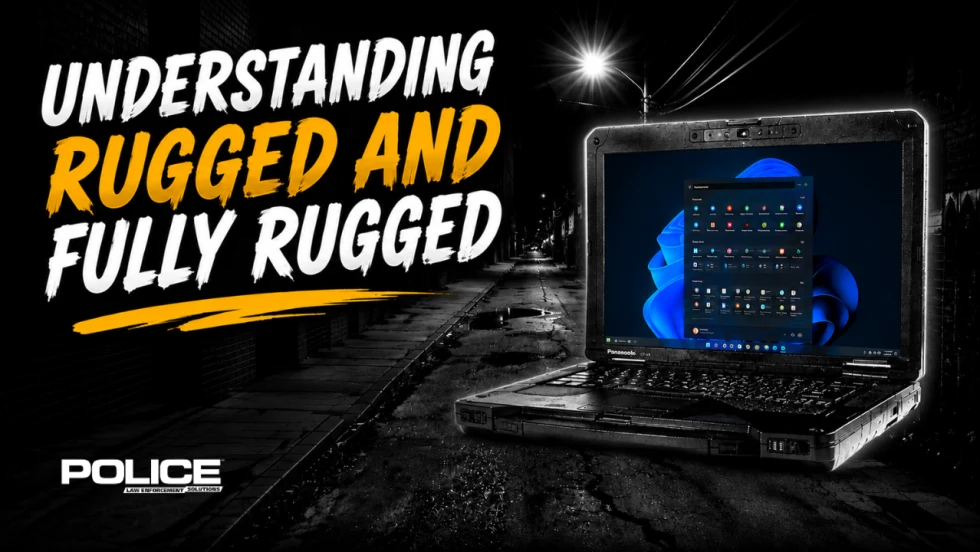
What Qualifies a Laptop as Rugged or Fully Rugged?
Police officers face a wide range of working conditions that can damage or even destroy a regular consumer laptop. Learn what qualifies a computer as rugged or fully rugged and why those devices are vital for law enforcement.
Read More →
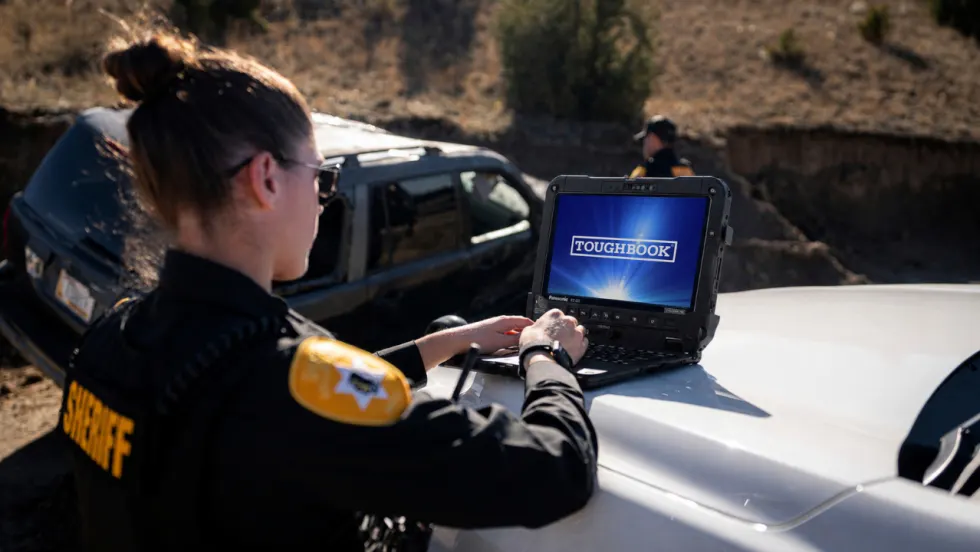
Panasonic Connect Launches the Toughbook 34 and Toughbook G3, Fully Rugged 2-in-1 Mobile Computers
Panasonic Connect has launched the Toughbook 34 and Toughbook G3 to facilitate in-vehicle dispatch, records management, and mobile command operations from any location.
Read More →
A police agency's guide to data-driven fleet management
Costs are rising and the public expects more transparency into how their tax dollars are spent. This e-book shows how police agencies can use fleet data to take control of fleet expenses while improving officer safety and demonstrating fiscal responsibility to the communities they serve.
Read More →
AI and analytics for law enforcement: Turning data into insights
Law enforcement agencies are managing more video, sensor data and digital evidence than ever before. Discover how AI and analytics can help turn that data into actionable insights that strengthen situational awareness, accelerate investigations and support more informed decisions.
Read More →
Vasco Electronics Adds Automatic Language Detection to Vasco Translator Q1
Vasco Electronics’ software update introduces hands-free language switching and expanded offline translation across 45 language pairs, empowering law enforcement, healthcare, and front-office enterprise teams
Read More →
North Miami Police Department Deploys Mark43
The North Miami Police Department has deployed Mark43 as part of its Five-Year Strategic Plan that represents its collective vision and goals for a more proactive police department, anchored by a core commitment to leveraging modern technology to enhance efficiency and public safety.
Read More →
Cellebrite Genesis for Enterprise Now Generally Available
Made available to the public sector in June, Cellebrite Genesis is serving a growing mix of national, regional, and local agencies worldwide, including some of the largest regional and metropolitan police departments. It is now available for enterprise organizations.
Read More →
2026 Vision FirstNet Users Summit to Host Emerging Leaders Training on Grassroots Advocacy for Public Safety
“Emerging Leaders Training: Understanding the Importance of Grassroots Advocacy for Public Safety," a session during the 2026 Vision FirstNet Users Summit, will offer a roadmap for unified advocacy at the federal level.
Read More →