



Networking for Information
While the old standby techniques certainly have their place in today’s police work, technology and new improvements have created some exciting new ways to track criminals and solve crime.

In police work, we tend to be creatures of habit. For example, how many times have you asked why your department does a task a specific way, only to hear this answer: “Well, because we’ve always done it that way”? Although a very familiar response, this is not a valid one. Times have changed, and with them police techniques.
Police investigation techniques especially fall into the “We’ve always done it that way” trap. Whether a simple vandalism investigation or a complex investigation of a theft ring, officers tend to take the “same old” approach to solving crime.
While the old standby techniques certainly have their place in today’s police work, technology and new improvements have created some exciting new ways to track criminals and solve crime. No, I’m not talking about the newest toy on the latest episode of “CSI.” Nobody can afford that stuff. What I’m talking about are two free and easy things available to every police officer nationwide.
For the purpose of this article, we’ll take a look at just two good resources that are commonly overlooked by today’s police officer, regardless of his or her experience. Anyone can use them and, combined with the good old standby investigation techniques, they can make your job easier and your investigations more effective.
1. Networking. Networking is becoming a lost art in police work. People in every other profession know the value and power of having a network of contacts with people relating to their profession. If you were a real estate agent, you would be smart to know good people in the home-repair business or the loan office. You could help them out with their business and, in turn, they’d help you and your clients with their services.
Police officers can also benefit from networking. The more people you know in the law enforcement community, the more effective your investigations will become, not to mention a whole lot easier.
Law enforcement has become a very specialized field, and there are investigators for just about every kind of crime. Whether it’s auto theft or computer fraud, there is a specialist that knows that crime better than you do. Knowing these people will get you access to all of their experience and knowledge, without having to learn it all yourself.
Similarly, getting to know your local district attorney can do wonders when it comes to prosecuting cases. A quick call to them can give you the exact keys to a case they will need when you’re on the stand in front of a jury.
Another great resource is other police departments. Let’s say that you’re having a crime trend in your city. You’d be surprised how much you can learn by giving a neighboring department a call and comparing notes. Too many cases are lost while a nearby agency is holding the key to solving it.
2. The Internet. The invention of the information superhighway brought the world of knowledge to your fingertips. On the Internet, almost any information you’ll ever need is just a click of the mouse away.
Even the most computer-intimidated cops should take a quick course on surfing the net. It is one of the greatest law-enforcement tools ever created. However, just knowing that the Internet is a great tool won’t get you the results you need. You have to know where to go.
The best Website to start with is Google (www.google.com). Google is a Web-searching engine that scours the entire Internet, looking for whatever you tell it to search for. Google can search for people, phone numbers, or addresses. You can even look up businesses with Google, then go to their Website and get all the information you need for your case.
There are also a large number of Internet-based law enforcement sites. Check with your department and see which of these you have access to. They can be great resources and are normally free of charge.
My advice is to be nice to your department’s tech-savvy cop and have him or her teach you a thing or two about using the Web. The tips and tricks he or she will teach you will make your life much easier at work.
More Technology
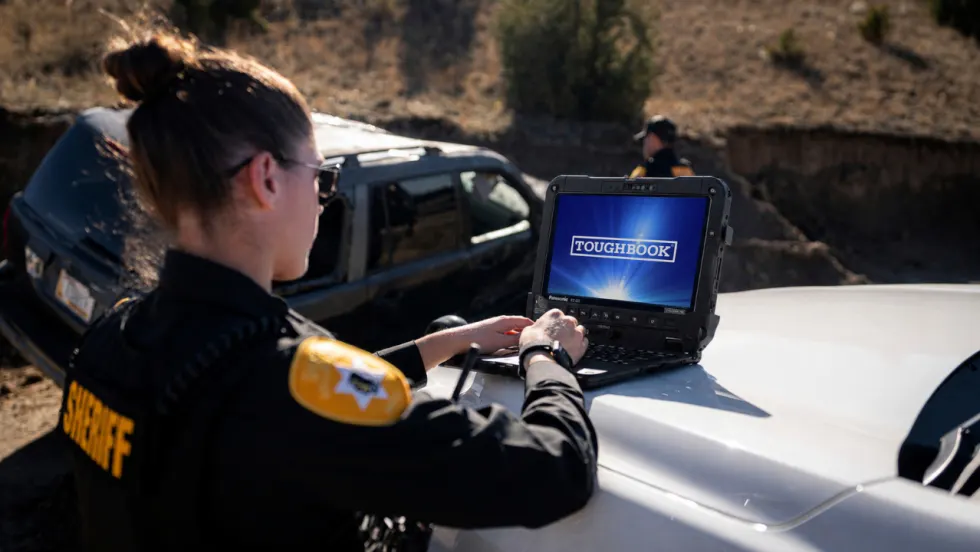
Panasonic Connect Launches the Toughbook 34 and Toughbook G3, Fully Rugged 2-in-1 Mobile Computers
Panasonic Connect has launched the Toughbook 34 and Toughbook G3 to facilitate in-vehicle dispatch, records management, and mobile command operations from any location.
Read More →
A police agency's guide to data-driven fleet management
Costs are rising and the public expects more transparency into how their tax dollars are spent. This e-book shows how police agencies can use fleet data to take control of fleet expenses while improving officer safety and demonstrating fiscal responsibility to the communities they serve.
Read More →
AI and analytics for law enforcement: Turning data into insights
Law enforcement agencies are managing more video, sensor data and digital evidence than ever before. Discover how AI and analytics can help turn that data into actionable insights that strengthen situational awareness, accelerate investigations and support more informed decisions.
Read More →

Vasco Electronics Adds Automatic Language Detection to Vasco Translator Q1
Vasco Electronics’ software update introduces hands-free language switching and expanded offline translation across 45 language pairs, empowering law enforcement, healthcare, and front-office enterprise teams
Read More →
North Miami Police Department Deploys Mark43
The North Miami Police Department has deployed Mark43 as part of its Five-Year Strategic Plan that represents its collective vision and goals for a more proactive police department, anchored by a core commitment to leveraging modern technology to enhance efficiency and public safety.
Read More →
Cellebrite Genesis for Enterprise Now Generally Available
Made available to the public sector in June, Cellebrite Genesis is serving a growing mix of national, regional, and local agencies worldwide, including some of the largest regional and metropolitan police departments. It is now available for enterprise organizations.
Read More →
2026 Vision FirstNet Users Summit to Host Emerging Leaders Training on Grassroots Advocacy for Public Safety
“Emerging Leaders Training: Understanding the Importance of Grassroots Advocacy for Public Safety," a session during the 2026 Vision FirstNet Users Summit, will offer a roadmap for unified advocacy at the federal level.
Read More →
Motorola Solutions Completes Acquisition of D-Fend Solutions
Motorola Solutions has acquired D-Fend Solutions, an industry leader in counter-drone technology. This deal provides public safety and enterprise customers with access to advanced counter-unmanned aerial systems.
Read More →
ZeroEyes, Advantech & Camden Police Partner to Bring AI Gun Detection Technology to Delaware School District
ZeroEyes has partnered with Advantech and the Camden Police Department to deploy ZeroEyes’ AI gun detection and intelligent situational awareness platform at Delaware’s Caesar Rodney School District (CRSD).
Read More →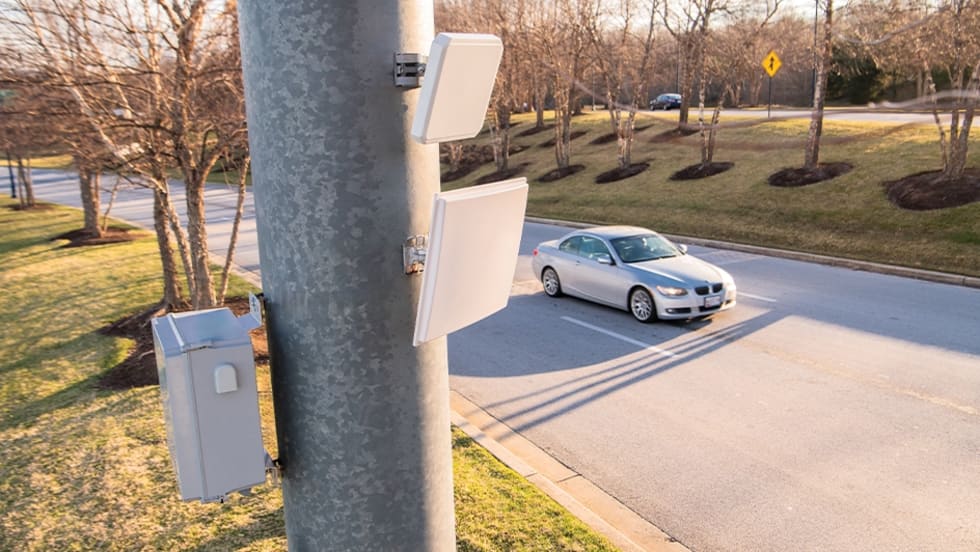
Leonardo U.S. Cyber & Security Solutions Introduces SignalTrace, the Next Evolution in Electronic Signature Detection Technology
SignalTrace reflects years of product refinement and a clearer expression of the technology’s purpose of recognizing and correlating electronic signatures in publicly broadcast wireless signals to reveal patterns, relationships, and trends that might otherwise go undetected.
Read More →