



Fraudulent Credit Card Purchases
Criminals use fraudulent credit cards to steal billions of dollars in merchandise every year. In 2007 alone, U.S. businesses absorbed $3.2 billion in losses from online credit card fraud. This staggering number does not include fraudulent purchases made from retail stores.

Criminals use fraudulent credit cards to steal billions of dollars in merchandise every year. In 2007 alone, U.S. businesses absorbed $3.2 billion in losses from online credit card fraud. This staggering number does not include fraudulent purchases made from retail stores.
An Unreported Crime
The biggest problem that police face in dealing with this crime is that victims seldom report credit fraud. Most credit fraud is reported directly to the credit card companies, who in turn rarely hold the card member responsible for the losses.
When the individual hears that he is not responsible for the payment, he is usually relieved and foregoes calling the police. Many card members assume that credit card companies work with the police to solve these crimes. Most credit card companies, however, handle the losses internally and do not contact law enforcement.
The easiest way to reduce credit card fraud would be for merchants to implement procedures to make it more difficult. But many merchants are reluctant to implement fraud prevention techniques, let alone call the police after a fraud has been committed. Store owners are afraid that fraud prevention techniques will slow down the checkout process and aggravate customers. Having police conduct fraud investigations in the store may also create a negative image for the store and affect sales.
Many stores do not report credit fraud to the police because they believe the police can't do anything about the crime. They do not think that police departments have the specialized skill set, knowledge, experience, and resources to deal with the complex security issues surrounding credit fraud. They also consider losses to fraud as a cost of doing business; the convenience granted by credit card use offsets any losses they incur.
With patrons and stores not motivated to report such crimes to authorities, a police agency may have a fraud problem in its community and not even know it.
Lucrative and Easy
Fraudsters are likely aware that only about 25 percent of fraudulent purchases are reported to the police. Research shows that credit fraud is easy to commit. In one study, 80 percent of respondents reported that credit card fraud was "easy" or "very easy" to pull off. Which means experienced fraudsters know there is a low chance of apprehension.
If on the off chance a cashier does detect credit card fraud, the fraudster usually runs from the store before being apprehended. When fraudsters are caught, punishment is usually mild. Furthermore, many criminals who perpetrate credit fraud feel little remorse because there is no incarnate victim at the scene (like at the scene of a robbery). They feel the victim is a faceless, greedy credit card company rather than a hard-working, fellow citizen.
Another obstacle that police face is the growing amount of technology available to fraudsters via the Internet. Although technology like microdot printing and hidden marking make fraud more difficult to commit, criminals have almost immediate access to techniques that can subvert such security systems. Large international organized crime syndicates with their massive resources have entered the credit card fraud business. Many of these groups lie outside the reach of local police departments.
Fighting Back
With so many factors going against you, what can you do to combat the growing crime of credit card fraud?
The first thing to do is to assess the magnitude of the problem.
For reasons previously stated, credit card fraud may be underreported. A department should conduct a brief survey of businesses in the community.
Ask the following questions: How often are you a victim of credit fraud? Do these offenses occur at certain times (weekends, closing time)? What items are obtained fraudulently? What types of establishments are being hit (large retail stores, supermarkets, small family stores)? When the crime occurs, to whom do you report it? If you don't report it to the police, then why?
Basic questions like these will help you determine if a problem exists, establish the scope of the problem, and give merchants an idea that their local police are preparing to respond proactively to the problem.
If a pattern is found, you can conduct a more intensive investigation into the factors that lead to the victimization. Your goal for this investigation is to answer some important questions. For example, how active are the fraudsters? Are the crimes committed by individuals or organized groups? Do they seem to be well organized or are the crimes carried out haphazardly? Do the crimes require any special skills or resources? Are many new items showing up in pawn shops? This should give the police an idea of whether they are dealing with low-level street criminals financing weekend parties or a sophisticated criminal organization.
Finally, you will want to interview victims whose credit was stolen. How did the victim become aware that his or her credit was being used improperly? Was the credit card stolen during the commission of another crime (auto break-in, home burglary, purse snatch)? To whom did the victim report the credit card fraud? When was the last time the user accessed the card? Did the user take the precautions recommended by the credit card companies?
Preventive Measures
The best way to fight credit fraud is to teach the people in your jurisdiction how to prevent it.
There is much that individuals can do to avoid being victims of credit card fraud. The first step is always to protect any PIN numbers associated with the account. Customers can write "CHECK FOR PHOTO ID" on the authorized signature line on the back of the card. They can also routinely check their card accounts for any unauthorized purchases.
Some fraud is perpetrated by employees of the store. So customers should remain alert as purchases are conducted and make sure that the card is swiped only once in a store-authorized machine.
Finally, online purchases should never be made from publicly accessible computers (i.e., in Internet cafes or libraries).
If people in your jurisdiction are not receptive to these tips, you may want to make them aware that companies ultimately pass the cost of credit card fraud on to the consumer. Though credit card companies do not charge the customer for fraudulent purchases, this crime results in higher card interest rates and prices passed on to the consumer.
Credit card fraud is tied to many factors outside of your control as a police officer. Just the sheer number of credit card purchases makes it extremely difficult to control. But law enforcement can educate potential victims (stores and customers) about ways to avoid credit card fraud, and should be proactive in getting this information out to the general public. Ultimately, it will take the efforts of law enforcement, credit card companies, retail stores, and credit card users to eliminate credit card fraud.
Det. Joseph Petrocelli is a 20-year veteran of New Jersey law enforcement. He can be contacted through SAFECOPS.com.
Credit Fraud Prevention
Here are some ways that police departments can work with businesses and consumers to reduce credit fraud:
Circulate flyers or conduct free classes to educate consumers who might not be aware of these simple facts and tactics about credit fraud.
Work with the local Chamber of Commerce to advise businesses of ways to reduce credit card fraud.
Suggest that cashiers ask for two forms of identification. This has proven to be an excellent deterrent to fraud.
Suggest that businesses post signs that state, "We require ID for credit card purchases."
Work with stores to come up with a generally accepted, police-issued identification card.
Train clerks on how to properly check ID and what to do when a suspicious card is presented.
Implement or streamline the process for conducting employee background checks. Almost 50 percent of retail loss is associated with employee theft.
Publish a regional newsletter that outlines credit fraud schemes, arrests, and pictures of those who have been arrested.
More Technology

What Qualifies a Laptop as Rugged or Fully Rugged?
Police officers face a wide range of working conditions that can damage or even destroy a regular consumer laptop. Learn what qualifies a computer as rugged or fully rugged and why those devices are vital for law enforcement.
Read More →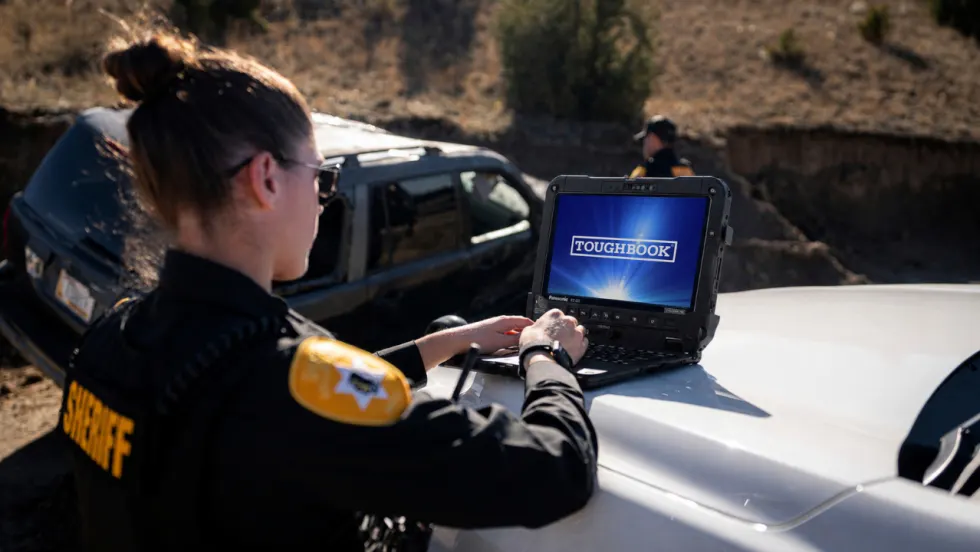
Panasonic Connect Launches the Toughbook 34 and Toughbook G3, Fully Rugged 2-in-1 Mobile Computers
Panasonic Connect has launched the Toughbook 34 and Toughbook G3 to facilitate in-vehicle dispatch, records management, and mobile command operations from any location.
Read More →
A police agency's guide to data-driven fleet management
Costs are rising and the public expects more transparency into how their tax dollars are spent. This e-book shows how police agencies can use fleet data to take control of fleet expenses while improving officer safety and demonstrating fiscal responsibility to the communities they serve.
Read More →

AI and analytics for law enforcement: Turning data into insights
Law enforcement agencies are managing more video, sensor data and digital evidence than ever before. Discover how AI and analytics can help turn that data into actionable insights that strengthen situational awareness, accelerate investigations and support more informed decisions.
Read More →
Vasco Electronics Adds Automatic Language Detection to Vasco Translator Q1
Vasco Electronics’ software update introduces hands-free language switching and expanded offline translation across 45 language pairs, empowering law enforcement, healthcare, and front-office enterprise teams
Read More →
North Miami Police Department Deploys Mark43
The North Miami Police Department has deployed Mark43 as part of its Five-Year Strategic Plan that represents its collective vision and goals for a more proactive police department, anchored by a core commitment to leveraging modern technology to enhance efficiency and public safety.
Read More →
Cellebrite Genesis for Enterprise Now Generally Available
Made available to the public sector in June, Cellebrite Genesis is serving a growing mix of national, regional, and local agencies worldwide, including some of the largest regional and metropolitan police departments. It is now available for enterprise organizations.
Read More →
2026 Vision FirstNet Users Summit to Host Emerging Leaders Training on Grassroots Advocacy for Public Safety
“Emerging Leaders Training: Understanding the Importance of Grassroots Advocacy for Public Safety," a session during the 2026 Vision FirstNet Users Summit, will offer a roadmap for unified advocacy at the federal level.
Read More →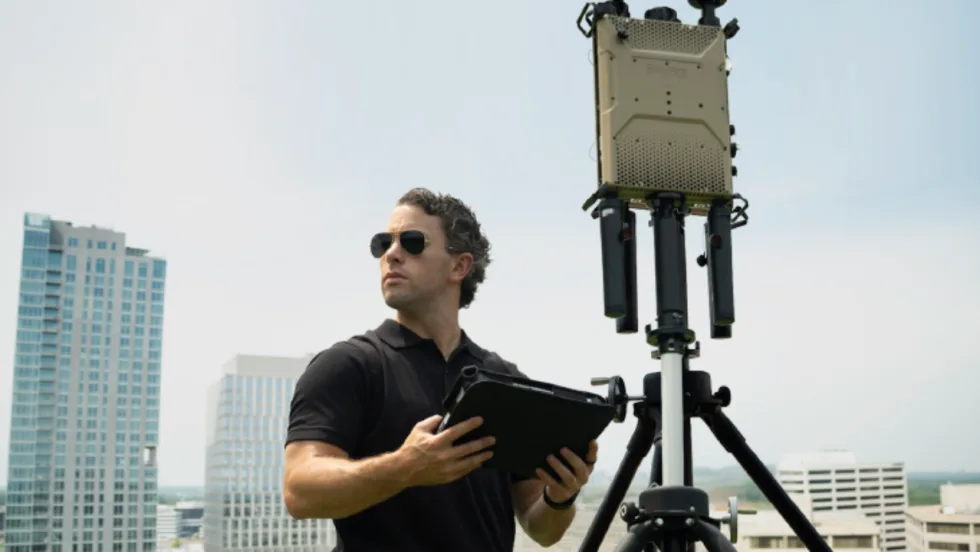
Motorola Solutions Completes Acquisition of D-Fend Solutions
Motorola Solutions has acquired D-Fend Solutions, an industry leader in counter-drone technology. This deal provides public safety and enterprise customers with access to advanced counter-unmanned aerial systems.
Read More →
ZeroEyes, Advantech & Camden Police Partner to Bring AI Gun Detection Technology to Delaware School District
ZeroEyes has partnered with Advantech and the Camden Police Department to deploy ZeroEyes’ AI gun detection and intelligent situational awareness platform at Delaware’s Caesar Rodney School District (CRSD).
Read More →