



The Bandwidth Debate
Today, bandwidth is so precious that Congress and the FCC recently dictated the conversion of analog TV transmission to digital in order to free up the 700 MHz band for other uses, including 4G cellphones and public safety communications.

The most valuable real estate in the world is not a beach in Hawaii, a hotel in Dubai, or a villa in Monaco. It's bandwidth.
All of the 21st century communication gadgets that we have come to know and love such as high-speed Internet, smart phones, and live streaming video devices require bandwidth in order to work their miracles. And here's the rub, there's only so much of it available.
For law enforcement, the concept of bandwidth has always been an issue. Each public safety agency in the United States is assigned a frequency band for its communications that is specifically for its use in that geographic location. That way there's no danger of crosstalk between public safety and local commercial radio and TV. At least that's the theory.
Of course, it's never really been that cut and dried in practice. And today, bandwidth is so precious that Congress and the FCC recently dictated the conversion of analog TV transmission to digital in order to free up the 700 MHz band for other uses, including 4G cellphones and public safety communications.
The D Block
Under this plan public safety was supposed to be allocated 20 MHz of spectrum in the 700 MHz band. One block of 10 MHz (five transmit and five receive) is licensed to the Public Safety Communications Trust (PSST), a consortium of 15 associations representing police agencies and fire departments. The other block is the "D Block," another 10 MHz of spectrum that butts up against the PSST.
In the original FCC plan, the D Block was supposed to be reserved for law enforcement use. But the FCC changed its mind because a lot of money will pour into government coffers if the D Block is auctioned to commercial interests such as cell phone companies. The other blocks of 700 MHz bandwidth sold for a cumulative $19 billion. Commercial carriers lust after 700 MHz bandwidth because it is uniquely capable of sending a strong 4G or LTE (Long-Term Evolution, essentially a supercharged 3G) signal over a wide area and even into buildings.
Public Safety Roaming
Public safety associations, major public safety communications providers such as Harris Corp. and Motorola, and even Attorney General Eric Holder oppose the FCC's plan. They argue that the D Block is ideal for carrying streaming video on 4G communication devices that can be used during critical incidents and other operations. (See "Live and in Color" on page 34). But the FCC is determined to auction off the D Block to the highest bidder.
The FCC has, however, made one nod to the concerns of public safety: The winner of the proposed auction will have to agree to let public safety users roam on its network and give them priority in case of an emergency. Experts say they are not exactly sure how this would work. "I would hate to be at the customer service centers the day they shut off 20,000 users in a geographical area because of an emergency," says Kevin Tenbrunsel of Motorola.
Proponents of assigning the D Block specifically to public safety say there are several flaws in the FCC's plan, including issues of who controls the network and assigns communication priority in case of an incident. "The concern is that in the event of an emergency, public safety would be competing with the other users for the network," says Tenbrunsel. "That means a chief of police could have the same priority as a third-grader listening to Pandora on a 4G phone. It's in public safety's interest to have their own LTE core."
Harris Corp. vice president Dennis Martinez agrees, and he points out a few other problems with the FCC's plan. In a recent PoliceMag.com podcast Martinez explained that he is concerned about uniformity of coverage for public safety users in a given jurisdiction. Another major drawback to the FCC's plan involves security. If public safety is sharing a network with commercial users, it could open the door for data theft.
Crisis Overload
But the predominant concern voiced by those who oppose the FCC's plan to auction the D Block to commercial carriers is what happens during a crisis when multiple public safety agencies converge on the scene and need to use high-bandwidth applications.
"Engineering analysis shows that 10 MHz (the PSST) may not be enough to handle the traffic generated by for example a refinery explosion," Tenbrunsel says. "And that's the time when public safety needs the full 20 MHz of spectrum the most. You don't need 20 MHz at 3 in the morning for the mundane."
Congress Stepping In
The FCC expects to auction off the D Block to a commercial carrier early next year. And it expects to garner billions from the sale. But that's not a sure thing. Last year it tried to auction off the spectrum but no one submitted a bid that met the reserve price. Harris Corp.'s Martinez says the FCC placed "onerous restrictions" on the buyer and that's why it had no takers. For the upcoming auction, the FCC has relaxed and even eliminated some of those restrictions, so it expects buyers to make lucrative bids.
Still, there is one major drawback to the D Block for commercial carriers. Because it butts up against the Public Safety Spectrum Trust, any commercial carrier that buys the D Block may need to assign part of it to a guard band-a dead zone-in order to prevent crosstalk and interference from public safety users in the same geographic location. That means the buyer is not really getting 10 MHz of spectrum.
Also the FCC may face a legislative hurdle. Rep. Peter King (R-NY) has sponsored a bill that, if passed, would require the FCC to license the D Block to public safety. The Broadband for First Responders Act of 2010 (H.R. 5081) is cosponsored by Rep. Yvette Clark (D-NY); it has been referred to the House Committee on Commerce and Energy. The Association of Public Safety Communications Officials (APCO) is urging all public safety professionals to contact their representatives and senators and ask them to support the bill.
Whether H.R. 5081 passes will likely come down to money. Some in Congress favor using the money from the auction of the D Block to fund the construction of public safety broadband infrastructure in the spectrum that has been licensed to the PSST. The total price tag for that is estimated at $6.5 billion.
FOR MORE INFORMATION:
AT&T
Visit AT&T Online
Harris Corp.
Visit Harris Corp. Online
Motorola
Visit Motorola Online
Sprint
Visit Sprint Online
Verizon
Visit Verizon Online
More Technology
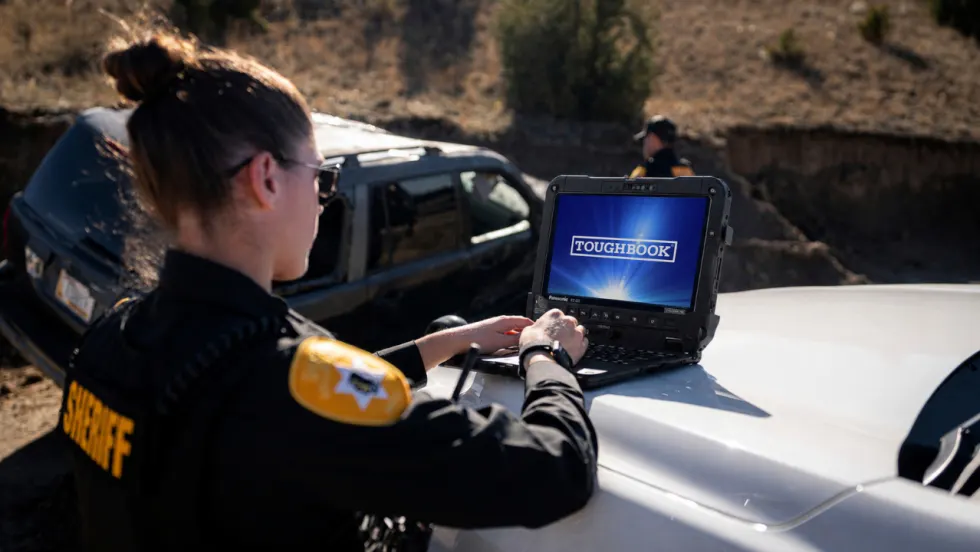
Panasonic Connect Launches the Toughbook 34 and Toughbook G3, Fully Rugged 2-in-1 Mobile Computers
Panasonic Connect has launched the Toughbook 34 and Toughbook G3 to facilitate in-vehicle dispatch, records management, and mobile command operations from any location.
Read More →
A police agency's guide to data-driven fleet management
Costs are rising and the public expects more transparency into how their tax dollars are spent. This e-book shows how police agencies can use fleet data to take control of fleet expenses while improving officer safety and demonstrating fiscal responsibility to the communities they serve.
Read More →
AI and analytics for law enforcement: Turning data into insights
Law enforcement agencies are managing more video, sensor data and digital evidence than ever before. Discover how AI and analytics can help turn that data into actionable insights that strengthen situational awareness, accelerate investigations and support more informed decisions.
Read More →
Vasco Electronics Adds Automatic Language Detection to Vasco Translator Q1
Vasco Electronics’ software update introduces hands-free language switching and expanded offline translation across 45 language pairs, empowering law enforcement, healthcare, and front-office enterprise teams
Read More →
North Miami Police Department Deploys Mark43
The North Miami Police Department has deployed Mark43 as part of its Five-Year Strategic Plan that represents its collective vision and goals for a more proactive police department, anchored by a core commitment to leveraging modern technology to enhance efficiency and public safety.
Read More →
Cellebrite Genesis for Enterprise Now Generally Available
Made available to the public sector in June, Cellebrite Genesis is serving a growing mix of national, regional, and local agencies worldwide, including some of the largest regional and metropolitan police departments. It is now available for enterprise organizations.
Read More →
2026 Vision FirstNet Users Summit to Host Emerging Leaders Training on Grassroots Advocacy for Public Safety
“Emerging Leaders Training: Understanding the Importance of Grassroots Advocacy for Public Safety," a session during the 2026 Vision FirstNet Users Summit, will offer a roadmap for unified advocacy at the federal level.
Read More →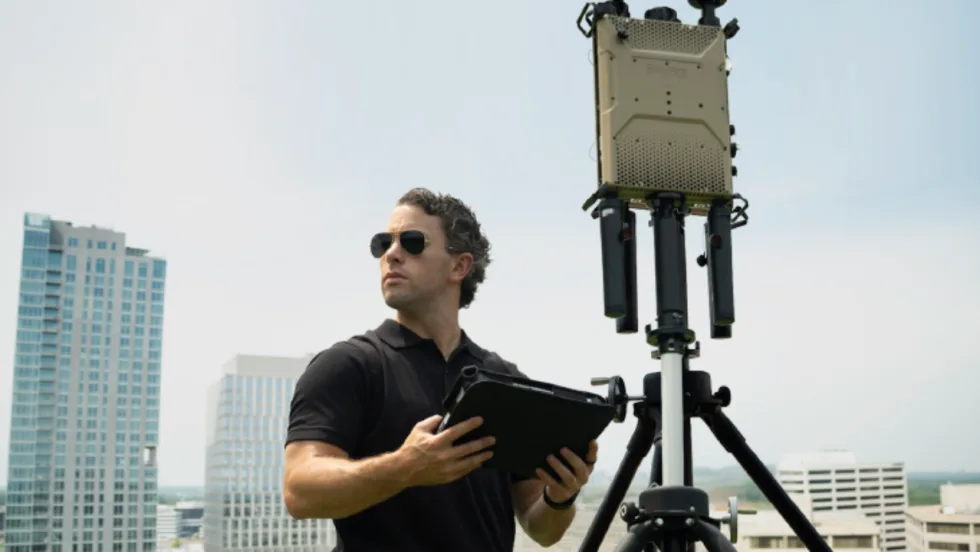
Motorola Solutions Completes Acquisition of D-Fend Solutions
Motorola Solutions has acquired D-Fend Solutions, an industry leader in counter-drone technology. This deal provides public safety and enterprise customers with access to advanced counter-unmanned aerial systems.
Read More →
ZeroEyes, Advantech & Camden Police Partner to Bring AI Gun Detection Technology to Delaware School District
ZeroEyes has partnered with Advantech and the Camden Police Department to deploy ZeroEyes’ AI gun detection and intelligent situational awareness platform at Delaware’s Caesar Rodney School District (CRSD).
Read More →
Leonardo U.S. Cyber & Security Solutions Introduces SignalTrace, the Next Evolution in Electronic Signature Detection Technology
SignalTrace reflects years of product refinement and a clearer expression of the technology’s purpose of recognizing and correlating electronic signatures in publicly broadcast wireless signals to reveal patterns, relationships, and trends that might otherwise go undetected.
Read More →